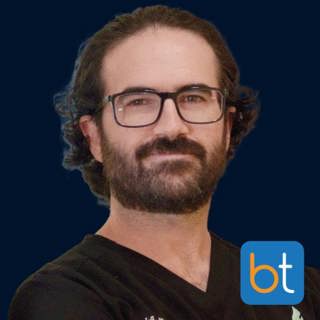


Ep. 201 Jobs: The Good, the Bad and the Snugly with Dr. Reza Rajebi and Dr. Kavi Devulapalli
We talk with Dr. Reza Rajebi and Dr. Kavi Devulapalli about what constitutes a good job in interventional radiology, how to spot red flags when you're job searching, and when to pivot in your career. --- CHECK OUT OUR SPONSOR Laurel Road for Doctors https://www.laurelroad.com/healthcare-banking/ --- EARN CME Reflect on how this Podcast applies to your day-to-day and earn AMA PRA Category 1 CMEs: https://earnc.me/gTvtfF --- SHOW NOTES In this episode, host Dr. Aaron Fritts interviews interventional radiologists Drs. Reza Rajebi and Kavi Devulapalli about what constitutes a good job versus a bad job in interventional radiology including red flags to look for, the importance of mentorship and when to pivot in your career. The three begin by discussing their training and various jobs they have held. Dr. Devulapalli took the first job he got out of residency, then worked with an interventional cardiologist building a multidisciplinary OBL. Now he does locums and teleradiology from home. Dr. Rajebi started in academics, then transitioned to private practice at a traditional IR and DR group. He is now at an OBL, now doing a mix of locums. Dr. Fritts currently does locums and DR in Dallas. They discuss what makes an ideal IR job, as well as what leads to job dissatisfaction. They agree that the people you work with are the most important aspect of a good job. Supportive colleagues who share your vision and a pathway for professional growth are also key requirements. Job dissatisfaction in IR is often due to lack of autonomy, inability to build your practice, private equity buyouts such as paths to partnership, and politics such as hospital contracts. They discuss how to spot red flags when job hunting. Dr. Rajebi advises to be aware of false promises, to do robust research, and to ask like minded people what they think of the position. They end by discussing when to pivot in a job you are unhappy with. Dr. Rajebi says not to pivot until you are sure you will get 3 out of 4 things that make an ideal job: location, salary, job satisfaction, and work life balance. Dr. Devulapalli shares his experience with job dissatisfaction and advice on mentorship, noting that you should not pivot too early or too often. He says that the moment you start having negative feelings about your job is when mentorship really matters. He advises to give it a year and use that time to reflect in order to pivot and find a better opportunity. --- RESOURCES Dr. Kavi Devulapalli’s blog: https://linemonkeymd.com/ Dr. Reza Rajebi’s paper on issues for the early career IR: https://pubmed.ncbi.nlm.nih.gov/33726963/
18 Huhti 20221h
Ep. 200 PAD Stenting Algorithm with Dr. Luke Wilkins
We talk with Dr. Luke Wilkins about his stenting algorithm for treating peripheral artery disease, including a step by step discussion of the decision tree when deciding whether or not to stent. --- CHECK OUT OUR SPONSOR Boston Scientific Eluvia Drug-Eluting Stent https://www.bostonscientific.com/en-US/medical-specialties/vascular-surgery/drug-eluting-therapies/eluvia/eluvia-clinical-trials.html?utm_source=oth_site&utm_medium=native&utm_campaign=pi-at-us-de_portfolio-hci&utm_content=n-backtable-n-backtable_site_eluvia_1&cid=n10008043 --- SHOW NOTES In this episode, our host Dr. Aparna Baheti interviews interventional radiologist Dr. Luke Wilkins about his treatment algorithm for Peripheral Arterial Disease (PAD). This algorithm is linked below, under “Resources.” Dr. Wilkins starts by explaining his treatment decisions for non-occlusive lesions. If the lesion is less than 10 cm he prefers to use directional atherectomy and percutaneous transluminal angioplasty (PTA). However, if the lesion is greater than 10 cm, directional atherectomy poses the risk of distal embolization, so he will only perform PTA. In both cases, he recommends using IVUS to evaluate the efficacy of the treatment and then proceeding with a drug-coated balloon (DCB) to prevent re-stenosis. On the other hand, if the disease is occlusive, Dr. Wilkins first attempts to cross the lesion. This can be achieved by going through microchannels with a guidewire or boring through the occlusion with a crossing device. If the lesion is unable to be crossed, he attempts subintimal recanalization. We discuss spontaneous re-entry into the true lumen, as well as re-entry devices like the Outback and the Pioneer catheters. We also take a detour into the Subintimal Arterial Flossing with Anterograde-Retrograde Intervention (SAFARI) technique that can be used if re-entry is challenging. After crossing is complete, Dr. Wilkins evaluates vessel diameter. In his experience, vessels that are wider than 5 mm have better stent patency, so he will place a drug eluting stent. In vessels of smaller diameters, Dr. Wilkins relies on other approaches such as interwoven stents with smaller diameters, directional atherectomy, and Tacks (to treat dissection flaps). Finally, Dr. Wilkins discusses medical management and follow-up care for PAD patients. He recommends dual antiplatelet therapy, smoking cessation, and if claudication was an initial concern, patient education on the importance of walking. He follows up with patients in 1, 6, and 9 months, and then annually. During each follow up appointment, he checks ABI, PVR, and arterial duplex for clinical improvement. --- RESOURCES PAD Stenting Algorithm Decision Tree: https://www.backtable.com/shows/vi/podcasts/200/pad-stenting-algorithm TASC Guidelines: https://journals.sagepub.com/doi/10.1177/1358863X15597877?url_ver=Z39.88-2003&rfr_id=ori:rid:crossref.org&rfr_dat=cr_pub%20%200pubmed Articles Mentioned: Schneider PA, Laird JR, Doros G, Gao Q, Ansel G, Brodmann M, Micari A, Shishehbor MH, Tepe G, Zeller T. Mortality not correlated with paclitaxel exposure: an independent patient-level meta-analysis of a drug-coated balloon. Journal of the American College of Cardiology. 2019 May 28;73(20):2550-63. Secemsky EA, Kundi H, Weinberg I, Jaff MR, Krawisz A, Parikh SA, Beckman JA, Mustapha J, Rosenfield K, Yeh RW. Association of survival with femoropopliteal artery revascularization with drug-coated devices. JAMA cardiology. 2019 Apr 1;4(4):332-40. Freisinger E, Koeppe J, Gerss J, Goerlich D, Malyar NM, Marschall U, Faldum A, Reinecke H. Mortality after use of paclitaxel-based devices in peripheral arteries: a real-world safety analysis. European heart journal. 2020 Oct 7;41(38):3732-9.
15 Huhti 202235min
Ep. 199 Advanced Minimally Invasive Pain Interventions with Dr. David Prologo
We talk with interventional radiologist Dr. David Prologo about minimally invasive pain interventions, multidisciplinary pain management, and how he built a successful pain practice. --- CHECK OUT OUR SPONSOR RADPAD® Radiation Protection https://www.radpad.com/ --- EARN CME Reflect on how this Podcast applies to your day-to-day and earn AMA PRA Category 1 CMEs: https://earnc.me/GzA4Iu --- SHOW NOTES In this episode, host Dr. Michael Barraza interviews Dr. David Prologo, director of interventional radiology at Emory about minimally invasive pain interventions, multidisciplinary pain management, and how he created a booming practice that is well known by patients and providers nationally. Dr. Prologo begins by discussing his training in obesity medicine and how his interests in pain management developed. He discusses his book, The Catching Point, which explores weight loss culture and the fault of society and medical providers in placing the blame on patients and the new options available in IR for weight loss. He says his interest in pain management was similar to his interest in obesity medicine. He was curious about how he could use his tools and skills as an IR to treat obesity and pain with minimally invasive procedures. Next, they discuss how IR fits into the multidisciplinary team that plays a role in pain management. He explains that the combination of technology and an IRs position in the hospital makes them ideal for the job. He says a key is to maintain relationships with all other specialties by focusing initially on procedures that other specialties don't perform, in order to build rapport. He also notes that the procedures he performs result in rapid pain reduction and greatly decrease length of stay which is a huge incentive for hospitals and other specialties to seek out IR and make referrals. Finally, the two discuss the types of patients Dr. Prologo treats, and the procedures he does. He divides patient population into neoplastic versus non neoplastic pain, and spine versus non spine pain. He sees 90% of patients in clinic for procedure planning. Dr. Prologo emphasizes the importance of advocating for patients and continuing to see them even if they do not need an IR procedure. He discusses his 8, 3, 3, 3 method for percutaneous cryoneurolysis and discusses the various outcomes he is able to achieve in pain reduction. Dr. Prologo minimizes non responders by doing test blocks, understanding central desensitization, and selecting patients for procedures appropriately. --- RESOURCES Interventional Cryoneurolysis: An Illustrative Approach: https://pubmed.ncbi.nlm.nih.gov/33308581/ Focused Cryo: https://gra.org/company/213/Focused_Cryo.html Nantes criteria for pudendal neuralgia: https://pubmed.ncbi.nlm.nih.gov/17828787/ The Catching Point https://www.catchingpoint.com David Prologo Website: https://www.drprologo.com/about
11 Huhti 20221h 8min
Ep. 198 Privademics and Advantages of Lesser Known Community Programs with Dr. Shamit Desai & Dr. Saud Ahmed
Interventional radiologists Dr. Shamit Desai and Dr. Saud Ahmed discuss the advantages of community training programs including practice building, resident and attending relationships, and diversity of job opportunities after training. --- CHECK OUT OUR SPONSOR DI4MDs Protect your most valuable asset, the skill and ability to practice your medical specialty. Be prepared by establishing a specialty specific disability insurance policy from the experts at DI4MDs. Contact them today at www.Di4MDS.com or call 888-934-4637. --- EARN CME Reflect on how this Podcast applies to your day-to-day and earn AMA PRA Category 1 CMEs: https://earnc.me/Bxnlqq --- SHOW NOTES In this episode, host Dr. Aaron Fritts interviews Dr. Shamit Desai and Dr. Saud Ahmed, interventional radiologists at Franciscan St. James, about advantages of community training programs including practice building, resident and attending relationships, and diversity of job opportunities after training. The three begin by discussing current IR training pathways, and what Franciscan St. James offers. Dr. Ahmed is the PD for the early specialization in interventional radiology (ESIR) spot at their program, which has been running for three years. They have 3-4 radiology residents per year, and the diagnostic radiology residency is well established. There are no fellows there, which allows residents ample hands-on experience from the beginning of residency, and facetime with attendings. Next, we discuss the advantages that a small community hospital affords. At their institution, both the IR department as well as the radiology residents have the opportunity to build rapport and trust with referring providers. This is how they are able to build the practice base that is often taken for granted at an academic institution. The community hospital also gives residents more clinical experience; they are taking the IR consults as first years, collaborating on clinical management and rounding with attendings. Lastly, we discuss the benefit of an ESIR program compared to the integrated IR pathway. They discuss how the diagnostic radiology training is uncompromised which prepares trainees very well for job opportunities after training. They argue that having trained in a community setting makes you more marketable when applying for jobs, especially in private practice. The residents at St. James are prepared to go into practice with a broad diagnostic and interventional skill set, but also understand how to be efficient with procedures and build a practice, which is a huge advantage that is simply not taught at academic institutions. --- RESOURCES Franciscan St. James Radiology: https://www.franciscanradiology.com SIR ESIR Program List: https://www.sirweb.org/learning-center/ir-residency/esir/ SIR Integrated IR Program List: https://www.sirweb.org/learning-center/ir-residency/integrated/
4 Huhti 202247min
Ep. 197 CERAB Technique for Aortoiliac Disease with Dr. Martin Schroeder
Vascular surgeon Dr. Martin Schroeder discusses the Covered Endovascular Reconstruction of Aortic Bifurcation (CERAB) technique for treating aortoiliac disease, including patient workup, procedure steps, and pitfalls to avoid with stent placement. --- CHECK OUT OUR SPONSOR RADPAD® Radiation Protection https://www.radpad.com/ --- EARN CME Reflect on how this Podcast applies to your day-to-day and earn AMA PRA Category 1 CMEs: https://earnc.me/08Esyf --- SHOW NOTES In this episode, vascular surgeon Dr. Martin Schroeder and our host Dr. Sabeen Dhand discuss the CERAB (Covered Endovascular Reconstruction of Aortic Bifurcation) procedure with all of its steps, including planning, arterial access, recanalization, reconstruction. First, Dr. Schroeder emphasizes that CERAB is ideal for patients with TASC C and TASC D lesions. For planning purposes, he prefers CT angiogram to MRI, since CT is better at showing calcifications and previous stents. At this stage, he measures the intraluminal area. Next, he gains percutaneous ultrasound-guided groin access, and he uses a ProGlide preclose system. He takes an endovascular measurement of the aortic diameter and places a covered stent above the aortic bifurcation. Generally, Dr. Schroeder says that it is ideal to stent below the inferior mesenteric artery, but it can be covered if needed. He flares the proximal end of the stent in order to oppose the graft onto the aorta, create a seal, and prevent a Type I endoleak. Finally, Dr. Schroeder reviews the placement of the iliac stents, the last step in creating a new aortic bifurcation. He shares his 15/15 rule: aortic stent placed 15mm above the aortic bifurcation, and iliac stents placed 15mm within the aortic stent. His general CERAB tips include advancing the sheath before uncovering the stent, making sure that you are always in the intimal space, and staying calm and focused. --- RESOURCES Vascupedia CERAB Webinar: https://vascupedia.com/video/the-cerab-technique-from-a-to-z-part-1/ VBX Stent: https://www.goremedical.com/products/vbx
1 Huhti 202236min
Ep. 196 Building a PE Response Team with Dr. Carin Gonsalves
We talk with Interventional Radiologist Dr. Carin Gonsalves about how her practice built a multidisciplinary Pulmonary Embolism (PE) Response team, including where to start, developing efficient workflows, and obtaining the equipment you need for success. --- CHECK OUT OUR SPONSOR Inari Medical https://www.inarimedical.com/ --- SHOW NOTES In this episode, hosts Dr. Michael Barraza and Dr. Aaron Fritts interview Dr. Carin Gonsalves, interventional radiologist, about building a pulmonary embolism response team (PERT) and the evolution of pulmonary embolism (PE) treatment including large bore suction thrombectomy devices and the importance of multidisciplinary effort in care of patients with PEs. Dr. Gonsalves discusses how she came to be Division Director of the PERT program at Jefferson University, and her collaborations with Geno Merli, cofounder of the PERT Consortium. Her interest in advancing PE treatment stemmed from her years of performing pulmonary arteriography and catheter directed thrombolysis before the inception of suction thrombectomy devices. She discusses the difficulty she had in obtaining these new devices, and how after 11 months of discussions, the hospital agreed to purchase the necessary equipment to enable the PE response team. She discusses how the PERT is activated when a patient presents with suspected PE. Her team is comprised of five subspecialties including IR, Pulmonary Critical Care, Vascular Surgery, Cardiothoracic Surgery, and Cardiology. She emphasizes how having a group of experts improves patient care by cutting down on critical decision time. She enjoys sharing the responsibility of evaluating treatment approaches based on the current literature and the diversity of experience in the group. Finally, we discuss advances in technology for treatment of PE. Dr. Gonsalves enjoys the ease of use and wide range of clots she can treat including acute, subacute and chronic. These devices have been game changers for PE; many patients are poor surgical candidates and have contraindications to thrombolysis. They end by discussing novel uses of these devices that Dr. Gonsalves performs including removal of clot in transit (mobile clot in the IVC, SVC, RA or RV) and vegetations on the tricuspid valve or a pacemaker lead. --- RESOURCES The PERT Consortium: https://pertconsortium.org Inari PEERLESS RCT: https://www.inarimedical.com/peerless/ Inari FlowTriever: https://www.inarimedical.com/flowtriever/ Inari ClotTriever: https://www.inarimedical.com/clottriever-int/ Inari FlowSaver: https://www.inarimedical.com/flowsaver/ AngioVac: https://www.angiovac.com
28 Maalis 202238min
Ep. 195 Disclosures of Conflicts of Interest with Dr. Mina Makary
Our hosts Dr. Aparna Baheti and Dr. Michael Barraza talk with Dr. Mina Makary about what constitutes a conflict of interest, and how we can reduce bias in research without stifling innovation. Reflect on how this Podcast applies to your day-to-day and engage to earn AMA PRA Category 1 Credit(s)™ via point-of-care learning activities here: https://earnc.me/WV7gzp --- CHECK OUT OUR SPONSOR RADPAD® Radiation Protection https://www.radpad.com/ --- SHOW NOTES In this episode, our hosts Dr. Ally Behati and Dr. Michael Barraza interview Dr. Mina Makary about his recent article with the Applied Ethics in IR Working Group about physician conflicts of interest and disclosures in image-guided research publications. Dr. Makary walks us through the study design. The analysis over one year of JVIR articles had two goals. Firstly, the study aimed to assess the prevalence of disclosures in US-based IR research. Additionally, the researchers inspected the level of agreement between disclosed financial relationships and open payment data for top-cited image-guided procedure research. Since 2013, the open payment data has been available on the CMS Open Payment database. Key results showed that disclosures were reported in 29% of JVIR publications in 2019. When comparing reported versus actual financial relationships, it was found that 97% of researchers failed to disclose at least one active financial relationship. Furthermore, there was an average of $58k in undisclosed payments for each publication. Finally, we discuss important takeaways from this study. While industry support is a necessary driver of IR device innovation and practice building, it can influence research agendas. Dr. Makary advises all IRs to be cognizant of the underreporting of financial relationships and how this could make authors implicitly or explicitly biased in their research. He advocates for the construction of an open global registry that automatically links payment information to research disclosures. --- RESOURCES Potential Bias in Image-Guided Procedure Research: A Retrospective Analysis of Disclosed Conflicts of Interest and Open Payment Records: https://pubmed.ncbi.nlm.nih.gov/34756998/ In Science We Trust? (A response to the above study): https://www.jvir.org/article/S1051-0443(21)01446-9/fulltext CMS Open Payments Database: https://openpaymentsdata.cms.gov/
25 Maalis 202229min
How We Talk About Race, and the Language of Oppression with Tawny Newsome and Elaine Martin
Dr. Vishal Kumar invites Tawny Newsome and Elaine Martin to the show to discuss how we talk about race, and the language of oppression. --- EARN CME Reflect on how this Podcast applies to your day-to-day and earn AMA PRA Category 1 CMEs: https://earnc.me/rnCu1p --- SHOW NOTES We begin by discussing the JAMA tweet from 2021, reading “No physician is racist, so how can there be structural racism in health care?”. Newsome relates this to arguments she hears often from the tech industry stating that algorithms and computers cannot be racist. She adds that humans created the programs and wrote the medical journals, which means that biases will be present, and that neither computers nor physicians are entirely objective, and both can indeed be racist. Next, the three discuss the power of language, and the critical relationship of language and the biases we hold. Elaine Martin speaks to her experience as a nurse in San Francisco, and what she notices about the language that is used when interacting with patients. She reflects on how medical providers' choice of language can be dismissive or hurtful to patients. She shares experiences from her family members interactions with medical providers, and how she has learned to communicate with patients differently based on these experiences. They discuss a New York Times article by Rachel Gross about the linguistic origins of the pudendal nerve and its ties to patients with pudendal neuralgia who feel shame due to their condition. Finally, our guests give advice to current medical trainees. They discuss how we can examine our current structures and systems and change them where we identify problems. They express their hope that future generations of medical providers will take the time to examine their biases and dismantle harmful and dismissive treatment of marginalized groups. --- RESOURCES Tawny Newsome's Instagram, Twitter: @trondynewman, Subscribe to Tawny's podcasts: @suboptimalpods Yo, Is This Racist? Instagram, Twitter: @yoisthisracist Elaine Martin LinkedIn: https://www.linkedin.com/in/elaine-martin-4b618128/ JAMA: https://jamanetwork.com/journals/jama Taking the 'Shame Part' Out of Female Anatomy by Rachel Gross: https://www.nytimes.com/2021/09/21/science/pudendum-women-anatomy.html Vishal Kumar, MD: https://radiology.ucsf.edu/people/vishal-kumar
21 Maalis 202234min