
Thanksgiving With Ina Garten
Leading up to Thanksgiving, we took a trip to the home of Ina Garten, the legendary cookbook author and TV star. For one glorious afternoon, the Barefoot Contessa gave us a master class on the art of hosting. She answered our questions big and small — seating arrangements, whether to have bread at the table, what to do with that difficult relative, how to zest correctly. Plus, she walked us through two of her signature recipes, which you can enjoy this holiday.For photos and recipes from our visit with Ina Garten, visit nytimes.com/thedaily. Transcripts of each episode will be made available by the next workday. Subscribe today at nytimes.com/podcasts or on Apple Podcasts and Spotify. You can also subscribe via your favorite podcast app here https://www.nytimes.com/activate-access/audio?source=podcatcher. For more podcasts and narrated articles, download The New York Times app at nytimes.com/app.
28 Nov 202429min

How Israel Uses Palestinian Detainees as Human Shields
Overnight, Israel agreed to a cease-fire with the Lebanese armed group Hezbollah — a major turning point in one of the wars the country has been fighting since Hamas attacked it on Oct. 7. But the war in Gaza shows no sign of ending, and Israel’s conduct there is coming under increased scrutiny.A New York Times investigation has examined one controversial tactic: the Israeli use of Palestinian detainees as human shields.Natan Odenheimer, a contributing reporter for The Times, explains what the investigation revealed, and what the tactic says about the nature of the conflict.Guest: Natan Odenheimer, a contributing reporter for The New York Times.Background reading: A Times investigation found that Israeli soldiers and intelligence agents, throughout the war in Gaza, have regularly forced captured Palestinians to conduct life-threatening reconnaissance missions to avoid putting Israeli soldiers at risk on the battlefield.As the cease-fire in Lebanon takes effect, follow live updates. Subscribe today at nytimes.com/podcasts or on Apple Podcasts and Spotify. You can also subscribe via your favorite podcast app here https://www.nytimes.com/activate-access/audio?source=podcatcher. For more podcasts and narrated articles, download The New York Times app at nytimes.com/app.
27 Nov 202423min

The Metamorphosis of Pete Hegseth
Now that Matt Gaetz has withdrawn from consideration as attorney general, President-elect Donald J. Trump’s most controversial cabinet pick is his selection of Pete Hegseth as secretary of defense.Dave Philipps, who reports on war and the military for The Times, discusses three major deployments that shaped how Mr. Hegseth views the military — and why, if confirmed, he’s so dead-set on disrupting its leadership.Guest: Dave Philipps, who reports about war, the military and veterans for The New York Times.Background reading: His military experiences transformed Mr. Hegseth from a critic of war crimes into a defender of the accused.What to know about Mr. Hegseth, Trump’s pick for defense secretary.For more information on today’s episode, visit nytimes.com/thedaily. Transcripts of each episode will be made available by the next workday. Subscribe today at nytimes.com/podcasts or on Apple Podcasts and Spotify. You can also subscribe via your favorite podcast app here https://www.nytimes.com/activate-access/audio?source=podcatcher. For more podcasts and narrated articles, download The New York Times app at nytimes.com/app.
26 Nov 202429min
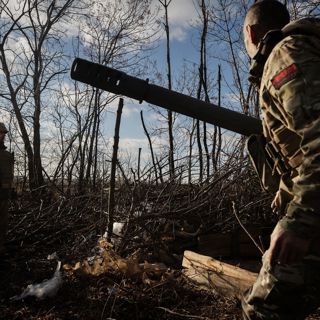
A Sudden Escalation in Ukraine Before Trump Takes Office
President-elect Donald J. Trump has promised a radically different approach to foreign policy from that of the Biden administration. In Ukraine, he has pledged to end the war in a day.But just weeks before he’s set to take office, the war has taken an unexpected turn.Anton Troianovski, the Moscow bureau chief for The New York Times, discusses the conflict’s dangerous new phase.Guest: Anton Troianovski, the Moscow bureau chief for The New York Times.Background reading: Tit-for-tat moves this week included the use of American-made ballistic missiles to strike inside Russia, and new nuclear threats from Moscow.As Ukraine fires U.S. missiles, President Vladimir V. Putin of Russia has sent a chilling message.For more information on today’s episode, visit nytimes.com/thedaily. Transcripts of each episode will be made available by the next workday. Subscribe today at nytimes.com/podcasts or on Apple Podcasts and Spotify. You can also subscribe via your favorite podcast app here https://www.nytimes.com/activate-access/audio?source=podcatcher. For more podcasts and narrated articles, download The New York Times app at nytimes.com/app.
25 Nov 202426min

From Serial: ‘The Good Whale’
After the movie “Free Willy” became a hit, word got out that the star of the film, a killer whale named Keiko, was sick and living in a tiny pool at a Mexican amusement park. Fans were outraged and pleaded for his release. “The Good Whale” tells the story of the wildly ambitious science experiment to return Keiko to the ocean — while the world watched.An epic tale that starts in Mexico and ends in Norway, the six-episode series follows Keiko as he’s transported from country to country, each time landing in the hands of well-intentioned people who believe they know what’s best for him — people who still disagree, decades later, about whether they did the right thing.“The Good Whale" is a new show from Serial Productions and The New York Times. Search for it wherever you get your podcasts, or follow it at https://lnk.to/good-whale For an exclusive look inside the making of “The Good Whale,” sign up for the newsletter at nytimes.com/serialnewsletter Subscribe today at nytimes.com/podcasts or on Apple Podcasts and Spotify. You can also subscribe via your favorite podcast app here https://www.nytimes.com/activate-access/audio?source=podcatcher. For more podcasts and narrated articles, download The New York Times app at nytimes.com/app.
24 Nov 202447min

'The Interview': K-Pop Trained Rosé to Be ‘a Perfect Girl.’ Now She’s Trying to Be Herself.
The Blackpink star strikes out on her own, away from the system that turned her into a global phenomenon. Subscribe today at nytimes.com/podcasts or on Apple Podcasts and Spotify. You can also subscribe via your favorite podcast app here https://www.nytimes.com/activate-access/audio?source=podcatcher. For more podcasts and narrated articles, download The New York Times app at nytimes.com/app.
23 Nov 202435min

Matt Gaetz Calls It Quits
After just nine days as Donald Trump’s pick for attorney general, Matt Gaetz has withdrawn from consideration.Michael S. Schmidt, an investigative reporter for The Times, discusses the revelations and the reporting that doomed the prospective nomination of Gaetz, a former representative of Florida.Guest: Michael S. Schmidt, an investigative reporter for The New York Times, covering Washington.Background reading: Matt Gaetz withdraws from consideration for attorney general.A federal inquiry traced payments from Gaetz to women.For more information on today’s episode, visit nytimes.com/thedaily. Transcripts of each episode will be made available by the next workday. Subscribe today at nytimes.com/podcasts or on Apple Podcasts and Spotify. You can also subscribe via your favorite podcast app here https://www.nytimes.com/activate-access/audio?source=podcatcher. For more podcasts and narrated articles, download The New York Times app at nytimes.com/app.
22 Nov 202421min

The Murder of Laken Riley
Warning: This episode contains graphic descriptions of violence and death.On Wednesday afternoon, a guilty verdict was reached in the death of the Georgia nursing student Laken Riley. A 26-year-old migrant from Venezuela was convicted.Rick Rojas, the Atlanta bureau chief for The Times, discusses the case, and how it became a flashpoint in the national debate over border security.Guest: Rick Rojas, the Atlanta bureau chief for The New York Times.Background reading: Ms. Riley, 22, was attacked in February while running on a trail on the University of Georgia campus in Athens. Her killer was sentenced to life in prison.Lawmakers in Georgia approved tougher rules on immigration after the killing.For more information on today’s episode, visit nytimes.com/thedaily. Transcripts of each episode will be made available by the next workday. Subscribe today at nytimes.com/podcasts or on Apple Podcasts and Spotify. You can also subscribe via your favorite podcast app here https://www.nytimes.com/activate-access/audio?source=podcatcher. For more podcasts and narrated articles, download The New York Times app at nytimes.com/app.
21 Nov 202424min