
Episode 900: Ketamine Dosing

Episode 900: Ketamine Dosing

Contributor: Travis Barlock MD

Educational Pearls:

Ketamine is an NMDA receptor antagonist with a wide variety of uses in the emergency department. To dose ketamine remember the numbers 0.3, 1, and 3.

Pain dose

  • For acute pain relief administer 0.3 mg/kg of ketamine IV over 10-20 minutes (max of 30 mg).

  • Note: There is evidence that a lower dose of 0.1-0.15 mg/kg can be just as effective.

Dissociative dose

  • To use ketamine as an induction agent for intubation or for procedural sedation administer 1 mg/kg IV over 1-2 minutes.

IM for acute agitation

  • If a patient is out of control and a danger to themselves or others, administer 3 mg/kg intramuscularly (max 500 mg).

  • If you are giving IM ketamine it has to be in the concentrated 100 mg/ml vial.

Additional pearls

  • Pushing ketamine too quickly can cause laryngospasm.

  • Between .3 and 1 mg/kg is known as the recreational dose. You want to avoid this range because this is where ketamine starts to pick up its dissociative effects and can cause unpleasant and intense hallucinations. This is colloquially known as being in the "k-hole".

References

  1. Gao, M., Rejaei, D., & Liu, H. (2016). Ketamine use in current clinical practice. Acta pharmacologica Sinica, 37(7), 865–872. https://doi.org/10.1038/aps.2016.5

  2. Lin, J., Figuerado, Y., Montgomery, A., Lee, J., Cannis, M., Norton, V. C., Calvo, R., & Sikand, H. (2021). Efficacy of ketamine for initial control of acute agitation in the emergency department: A randomized study. The American journal of emergency medicine, 44, 306–311. https://doi.org/10.1016/j.ajem.2020.04.013

  3. Stirling, J., & McCoy, L. (2010). Quantifying the psychological effects of ketamine: from euphoria to the k-Hole. Substance use & misuse, 45(14), 2428–2443. https://doi.org/10.3109/10826081003793912

Summarized by Jeffrey Olson MS2 | Edited by Jorge Chalit, OMS II

Episoder(1145)

Deep Dive #6: Bacteriuria and the Elderly

Deep Dive #6: Bacteriuria and the Elderly

Author: Heidi Wald, MD, MSPH Associate Professor of Medicine - University of Colorado School of Medicine, Physician Advisor - Colorado Hospital Association Dr. Heidi Wald explains common misconceptio...

25 Sep 201729min
Podcast #255: Posterior Vitreous Detachment

Podcast #255: Posterior Vitreous Detachment

Author: Erik Verzemnieks, M.D. Educational Pearls Posterior vitreous detachment is the tearing of the lining in the back of of the eye. Patients often present with loss of vision and floaters. Diagno...

22 Sep 20171min
Podcast #254: Myths About Antibiotic Course Length

Podcast #254: Myths About Antibiotic Course Length

Author: Chris Holmes, M.D. Educational Pearls There's little/no data about the necessary length of an antibiotic course, nor has it proven that stopping a course of antibiotics early selects for the ...

20 Sep 20174min

Podcast #253: Total Eclipse of the Eye - Solar Retinopathy

Podcast #253: Total Eclipse of the Eye - Solar Retinopathy

Author: Nick Hatch, M.D. Educational Pearls Photic or solar retinitis occurs when you stare at the sun. The refractive power of the lens of the eye concentrates the light of the sun on the retina, st...

18 Sep 20173min
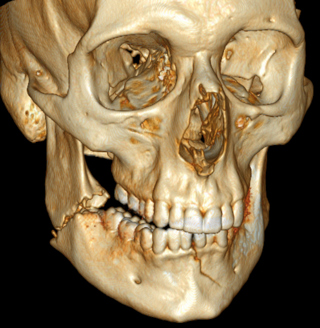
Podcast #252: Mandible Fractures

Podcast #252: Mandible Fractures

Author: Sam Killian, M.D. Educational Pearls The tongue blade test is done for mandible fractures, which make up 40-60% of facial fractures. The test is done by having the patient bite down on a tong...

15 Sep 20174min
Podcast #251: Cyanide Poisoning

Podcast #251: Cyanide Poisoning

Author: Rachel Beham, PharmD, Advanced Clinical Pharmacist – Emergency Medicine Educational Pearls Cyanide poisoning is suspected in patients who present with lactic acidosis after being trapped arou...

13 Sep 20174min
Podcast #250: Desmopressin

Podcast #250: Desmopressin

Author: Rachael Duncan, PharmD BCPS BCCCP Educational Pearls Desmopressin is an ADH mimetic and helps retain water, release von Willibrand Factor (in high doses), and treat diabetes insipidus (in low...

11 Sep 20173min

Podcast #249: Detecting Pulses

Podcast #249: Detecting Pulses

Author: Jared Scott, M.D. Educational Pearls Overall, medical providers are bad at detecting pulses. However, only 2% of patients do not have a detectable DP pulse. In one study, for patients with l...

10 Sep 20173min

Populært innen Vitenskap

fastlegen
tingenes-tilstand
rekommandert
jss
vett-og-vitenskap-med-gaute-einevoll
rss-nysgjerrige-norge
rss-rekommandert
sinnsyn
smart-forklart
nordnorsk-historie
villmarksliv
rss-paradigmepodden
forskningno
pod-britannia
fjellsportpodden
aldring-og-helse-podden
diagnose
rss-overskuddsliv
tomprat-med-gunnar-tjomlid
tidlose-historier