20VC: Klarna Founder Sebastian Siemiatkowski on Scaling Europe's Most Valuable Private Tech Company, How To Motivate and Challenge Your Team Most Effectively & The Biggest Lessons From Working with Mike Moritz

20VC: Klarna Founder Sebastian Siemiatkowski on Scaling Europe's Most Valuable Private Tech Company, How To Motivate and Challenge Your Team Most Effectively & The Biggest Lessons From Working with Mike Moritz

Sebastian Siemiatkowski is the Founder and CEO @ Klarna, the company that makes online shopping simple, allowing you to buy what you need today and pay later. To date, Sebastian has raised over $2.1Bn for the company from the likes of Sequoia, Silver Lake, Blackrock, DST, Northzone, Creandum and even Snoop Dog to name a few. Klarna has been an incredible 16-year journey for Sebastian with it now being the most valuable private technology company in Europe with over 3,500 employees.

In Today's Episode You Will Learn:

I. The Importance Of Learning To Learn Fast

What is the best way to learn fast?

"People talk about it like there's this learning curve, and the best spot is at the place where you're challenged to the precise point where you're almost giving up, but not entirely. That's exactly it.

"And I have this amazing swim teacher for my children, her name is Petra, and she's just fantastic. I just love watching her because she has this ability of taking my children in the pool and pushing them to that exact point where they are almost, almost giving up, and they're learning at such a pace. And if I can recreate such an environment in Klarna, if I can create an environment, if I can be part of creating an environment where we put people in that position where they just are exactly at that curve where they are challenged, supported, and kind of at the edge and being given the ability to learn really fast and really discover what it means to have an impact."

Does Sebastian compare his work to other companies'?

"I don't think that much about what other people or other companies or other things out there could have done different. And there's pros and cons to that. But the benefits of that is that it speeds up my learning. Because a lot of people – and I've realized that as I manage other people – is that because they're so obsessed with trying to think about what other people could have done differently, and why situations arose, and why it wasn't their responsibility and so forth, they spend a lot of time on that, because we've unfortunately been brought up in some kind of guilt that it's bad to do wrong, and it's bad if it's our fault, and you want to avoid that.

"And these psychological constraints, unfortunately, hinder people from developing much faster, because if you go into every situation and say, the only thing that's relevant here is what I could have done differently, what I could have learned from this – if that's the only thing, it's just like, whatever, I accept my responsibilities. What could I have done differently? If you only focus on that, you just learn much faster."

How does Sebastian transform his self-doubt into a positive?

"I think self-doubt is not nothing. It's not a bad thing, right? It's a very healthy thing, if it represents you continuously trying to understand, am I doing the right thing? Is this something that I want to do? Am I making the right decisions? So I think it's extremely healthy to do that. I'm not saying it's not painful or tough when you have it. But I think it's a very positive thing.

"I'm much more worried when people tell me they have no self-doubt. And then I'm like, uh-oh, because that means that you're not really reflecting on your actions, and you're not learning from them. So I wish I could give you something more comforting than that, but I would actually say enjoy it. Be happy that you have it, and it's gonna make you a better person."

II. Sebastian's Management Philosophy

What does Sebastian believe companies can learn from soccer?

"I love the fact that Michael Moritz wrote this book that I still haven't read, so it's kind of funny that I'm referring to it, but he wrote this book about Ferguson, that manager of Manchester United. And I think it's very relevant, because today, the saying is that for people to be motivated at work, they need to have a higher purpose, the company needs to do something good, and so forth. And I am not disputing that, that is very true that it contributes to people's sense of purpose, and so forth.

But before you even get to that level, we have to ask ourselves, what is it really that makes people motivated and enjoy themselves? And I think when I think about that, I often look at sports, because why do people love soccer? What's the higher purpose of winning Champions League? People say, oh, there's a massive higher purpose, but not entirely, you're not really making the planet better by winning. Still, people are massively engaged in these things. Why?

"Because it's a team effort, there are clear roles, you know exactly what you're supposed to do – I'm supposed to put the ball in that score. And then it's very clear how you win, there is a referee that stops people from cheating. And so there's a lot of things in that environment that makes it motivating, that makes people engaged, and those things are usually lacking in companies."

How do you know when someone is at that crucial point of the learning curve?

"The problem with a company is that it's a much more complex environment with a lot of other things going on in parallel in people's lives. And so I have definitely occasionally missed to see that people are beyond that point."

"In Sweden, there's this course called Situation Adopted Management, which basically means that there is no single management technique. You look into the situation, you try to understand it from multiple angles. And then depending on where that individual is, and how you perceive the mental status, and the mood of that individual, and so forth, you try to adapt. Either you coach or you challenge or you instruct or you do different things. There's not a single methodology that will allow you to deal with those situations. But a lot of it is empathy. It's the ability to look at people and read them, and try to understand, and ask them questions, and understand where they are."

III. How Sebastian Manages Complexity At Scale

What are Sebastian's biggest lessons learned from Klarna growing to 3000+ people spread across multiple offices across the world?

  1. It's the manager's job to deal with the complexity in a company
  2. It's not for everyone

What role does Sebastian believe a manager should play in a company as it scales?

"I think a lot of times as a company grows, what ends up happening is the thing just becomes so complex. So management tries to organize the company in a way that makes sense to them and that is easy to understand for them. But the consequence of that often, unfortunately, is it makes no sense for the person who's actually doing the job. So they lose the purpose. Why am I coming to work? What are we trying to achieve? All of these things get lost.

"So what we said is, we have to do the exact opposite. The critical element is that the people who are actually supposed to do something – not the manager – the people actually supposed to do something, if they program or to do a marketing campaign, or whatever they're doing, they need to come to work every day and feel I know exactly why I'm coming, I know how I'm contributing, I know who I'm contributing for, I know what value I'm creating.

"And if that thing creates tons of complexity for us, as managers, because the whole system becomes much more complex, then that's what we're getting paid for. That's the one. That's why we're getting a good salary. Because we need to manage that complexity."

What does Sebastian look for in talent?

"Keep very close on the recruitment … Especially in a country like Sweden, a country where a typical saying is, alla ska komma med, which means, everyone should come, everyone should join. And it's very nice. And I appreciate that with Swedish culture, I'm not trying to really call it. I think it's fantastic and it's a fantastic society. But as a consequence, it took us some time to conclude something which maybe in the US or maybe even in the UK as it would have been much more obvious, which is that it's not a company for everyone. It is a company for the people that want to have that challenge, that want to be in that environment, that think that's interesting, that want to learn a lot fast, and want to get a lot of things done. And that's not everyone, and that's okay.

"Like when you play soccer – some people play soccer for fun, other people play to win the Champions League. People do it for different reasons. And they have different ambitions with it and different objectives with it. And the same applies to us.

"So it took us some time to realize that we need to tell people, look, just so you know, this is not going to be your standard company, you're going to be expected to do a hell of a lot of things, you're going to be expected to be challenged, you're going to expect it to do your utmost. And we're going to try to support you and help you and grow. So just know what you're getting into, before you get into it."

IV. Retail Banking 10 Years From Now

What does Sebastian see as the future of everyday banking services?

"One thing I would say, it's going to be a much smaller industry. And that's because it is ridiculous that moving money back and forth is a trillion-dollar industry. That is ridiculous. There is no good reason for that whatsoever. This is going to be a much more cost-efficient, much smaller revenue business than it is today. But even though it would be much smaller than it is today, it's still massive, and Klarna has the opportunity to be one big player in that industry, similar to what Tesla is doing in cars or whatever, that's what I want to do. And I feel we have all the prerequisites to accomplish that."

"There's going to be this push that's going to transform this industry and the people are going to lose on it are the suits in the marble offices in the city centers. That's where the pain is going to be felt, but the winner is going to be the consumer."

What do the next five years look like for Klarna?

"It's a little bit like self-driving cars – we all know it's going to happen, the question is when. And based on what I've seen in the last 15 years, and I've seen how retail has gone from retail to ecommerce and all these trends, this decade is going to be the disruption of retail banking.

"At the end of this decade, there will be a couple of new total players that will be very dominating in this space, and the rest will either cease to exist, will merge and try to acquire some of the new ones, or maybe a few of them will manage to reinvent themselves. But this is going to be an extremely interesting time."

Sebastian's Favourite Book: The Neverending Story

As always you can follow Harry and The Twenty Minute VC on Twitter here!

Likewise, you can follow Harry on Instagram here for mojito madness and all things 20VC.

Episoder(1391)

20VC: HubSpot CEO on Where Value Accrues in SaaS AI | How HubSpot Competes Against Salesforce | Why B2B Is Not a Winner Take All Market | How to Go From SMB to Enterprise an Win | How SEO Dying Changes HubSpot's Business with Yamini Rangan

20VC: HubSpot CEO on Where Value Accrues in SaaS AI | How HubSpot Competes Against Salesforce | Why B2B Is Not a Winner Take All Market | How to Go From SMB to Enterprise an Win | How SEO Dying Changes HubSpot's Business with Yamini Rangan

Yamini Rangan is the CEO at HubSpot. The $32BN juggernaut that has revenues of $2.6BN, over 247,000 customers and 8,200 employees. Prior to Hubspot, Yamini served as Chief Customer Officer at Dropbox, and before Dropbox, she was VP of Sales Strategy and Operations at Workday. In Today's Episode We Discuss: 04:16 Taking Over the CEO Role from the Founders 07:58 Wartime vs Peacetime CEOship 11:18 How to Scale Into Enterprise: What Everyone Gets Wrong 22:20 Why is B2B Not Winner Take All 29:33 How Does HubSpot Compete Against Salesforce 33:26 Where Does Value Accrue in a World of AI 37:40 How Does Yamini Use AI Everyday 41:17 What Does HubSpot Do When It's Core SEO Channel Dies 44:10 Quickfire Round: Satya Nadella, Parenting Advice, Biggest Concern 51:35 Closing Thoughts and Reflections

18 Mar 55min

20Product: How to Design and Build Products in a World of Agents | Why AI Will Kill Many SaaS Products | What Products Will Thrive and Die in a World of 100M Developers with Matt Biilmann, Co-Founder and CEO @ Netlify

20Product: How to Design and Build Products in a World of Agents | Why AI Will Kill Many SaaS Products | What Products Will Thrive and Die in a World of 100M Developers with Matt Biilmann, Co-Founder and CEO @ Netlify

Matt Biilmann is the Co-Founder and CEO @ Netlify. Under his leadership, Netlify has become one of the fastest-growing platforms for modern web development. Matt recently introduced agent experience (AX), a new way of thinking about how software is built and experienced in the AI era. Matt is also known for coining Jamstack, a concept that redefined how developers build for the web. In Today's Episode We Discuss: 03:43 How Does the Design Process Change When Designing For Agents 06:27 How Does the Product Building Process Change When Building for Agents 12:52 Will AI Kill SaaS Tools 16:12 If Prototyping Becomes Phase 1: Does Figma Survive? 17:35 Is Chat the Best Interface for a World of AI 21:52 Why AI Services Will Be One of the Biggest Economies 27:24 Open vs. Closed Platforms in an Agent-First World 31:09 Specialization of Large Language Models 35:13 Shifting Labor Costs to Agent Spend 36:28 The Future of Stripe and What Happens with 100M Developers in the World 38:39 Quickfire Round: Insights and Predictions

14 Mar 49min

20VC: Lessons from Investing $2BN and Returning $8BN in Cash | Why Most Venture Partnerships are Broken | We Sold Salesforce Early and Lost Out on Billions | Are The Best Deals Always Expensive and Competitive with Jake Saper @ Emergence Capital

20VC: Lessons from Investing $2BN and Returning $8BN in Cash | Why Most Venture Partnerships are Broken | We Sold Salesforce Early and Lost Out on Billions | Are The Best Deals Always Expensive and Competitive with Jake Saper @ Emergence Capital

Jake Saper is a General Partner @ Emergence Capital, one of the leading venture firms of the last 20 years. Their many wins include being early investors in Salesforce, Zoom, Veeva and more. In total, the firm has invested $2BN and returned an astonishing $8BN in cash with much more to come. In Today's Episode We Discuss: 04:45 The Zoom Investment Story 10:21 Founder, Market, Traction: Rank Them 26:37 Why Market Pull is the Most Important Thing and How to Know 27:23 Are the Best Deals Always Expensive? 28:25 What is the One Framework Emergence Use for Every Investment 29:08 Lessons from the 16x DPI Zoom Fund 30:44 Why Does Every Partner Do Reference Calls on Every Deal? 35:16 We Have Lied to SaaS Founders: The Revenue Rules Changed 37:53 Where Will Value Accrue in a World of AI? 41:37 Three Reasons Why AI Will Not Replace Vertical SaaS 46:38 Who Wins in AI: Startups or Incumbents? 50:09 Why Should Every Company Aim to Be a "Board Discussion" 55:12 Why is Jake Worried About AI's FTX Moment? 56:00 What Losing Billions on Salesforce Taught Us About Selling 01:00:07 Why Most VC Partnerships are Broken 01:03:07 Grok vs Anthropic vs OpenAI: Buy and Sell? 01:14:25 Quickfire Round: Insights and Reflections Please read the offering circular and related risks at invest.modemobile.com. This is a paid advertisement for Mode Mobile's Regulation A+ Offering. Past performance is no guarantee of future results. Investing in private company securities is not suitable for all investors because it is highly speculative and involves a high degree of risk. It should only be considered a long-term investment. You must be prepared to withstand a total loss of your investment. Private company securities are also highly illiquid, and there is no guarantee that a market will develop for such securities. DealMaker Securities LLC, a registered broker-dealer, and member of FINRA | SIPC, located at 105 Maxess Road, Suite 124, Melville, NY 11747, is the Intermediary for this offering and is not an affiliate of or connected with the Issuer. Please check our background on FINRA's BrokerCheck.

10 Mar 1h 28min

20Sales: Everything You Know About Sales Playbooks is Wrong | How to Hire and Train Your First Sales Hires | How to Crush Pipeline and Deal Reviews as a Team | How to Structure Sales Teams and Sales Comp Plans with Julian Teixeira, CRO @ 1Password

20Sales: Everything You Know About Sales Playbooks is Wrong | How to Hire and Train Your First Sales Hires | How to Crush Pipeline and Deal Reviews as a Team | How to Structure Sales Teams and Sales Comp Plans with Julian Teixeira, CRO @ 1Password

Julian Teixeira is the Chief Revenue Officer at 1Password, where he has grown B2B revenue over 8x and scaled a team of more than 450 in go-to-market. 1Password set the record for the largest raise in Canadian history at the start of 2022 and has raised nearly $1B in capital throughout his time with the company. Prior to 1Password, Julian served as the head of global sales at Lightspeed Commerce, a company he helped scale from startup to IPO and through over 10 acquisitions throughout his decade-long tenure. In Today's Episode We Discuss: 04:27 Sales Lessons from Scaling to $1BN in ARR 05:20 How to Create and Master a Sales Playbook 07:53 Lessons on First Sales Hires 09:41 Setting Goals and Targets for Sales Teams 13:22 The Reality of Tech Sales Today 16:19 Evaluating and Managing Sales Reps 19:07 Outbound Prospecting and Pipeline Generation 22:22 Hunter vs. Farmer Sales Models 24:15 Compensation and Specialization in Sales Teams 28:56 Outbound vs Inbound Sales 32:47 Pipeline and Deal Reviews 37:37 Sales Tech Stack and Tools 38:40 Maintaining Sales Morale 44:55 Are Remote Sales Teams Less Effective 46:44 Final Thoughts and Advice This episode is brought to you by: Gong, the revenue AI platform centralising all your revenue workflows in a single unified platform. Capchase, helping SaaS companies grow without dilution. Learn more at capchase.com/20vc

7 Mar 51min

20VC: Lovable on Hitting $17.5M in ARR in 3 Months | Adding $2.1M ARR Every Week | Hitting 85% Day 30 Retention: Better than ChatGPT | The Story of Europe's Fastest Scaling Company with Anton Osika

20VC: Lovable on Hitting $17.5M in ARR in 3 Months | Adding $2.1M ARR Every Week | Hitting 85% Day 30 Retention: Better than ChatGPT | The Story of Europe's Fastest Scaling Company with Anton Osika

Anton Osika is the Co-Founder and CEO @ Lovable, the fastest growing startup in Europe. With Lovable, you can turn your idea into an app in seconds with just a prompt. After just 3 months, the company has scaled to $17.5M in ARR. They are adding $2M in net new revenue every single week. Even better, Lovable has 85% Day 30 retention rate, making it more retentive than ChatGPT. In Today's Episode We Discuss: 03:41 How a Side Project Turned into a $200M Company 05:39 Why Talent is 10x More Valuable Than Experience 08:57 How to Use a Waitlist Pre-Launch to 10x Growth 12:29 How to Master a Public Launch: $0 - $1M ARR in a Week 18:02 Why Raise a Large Seed Round 22:22 How Sustainable is Lovable and AI Revenue 25:22 What are Lovable's Biggest Threats: Incumbents or Open Source 27:00 Raising Series A: Should You Always Take the Money 27:46 How to Compete in the US from Europe 28:25 Is Europe as F****** as the World Thinks 29:02 Building in Europe vs. Silicon Valley 31:20 The Future of Foundation Models: Who Wins 33:47 Grok vs OpenAI vs Anthropic: Buy and Short 41:37 Quickfire Round: Insights and Reflections

5 Mar 50min
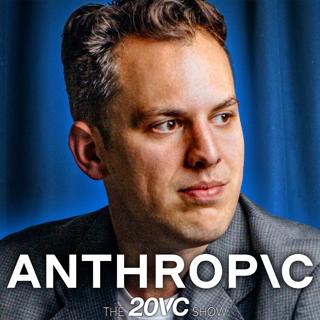
20VC: Anthropic CPO Mike Krieger: Where Will Value Be Created in a World of AI | Have Foundation Models Commoditized | When Do Model Providers Become Application Providers | What Anthropic Learned from Deepseek

20VC: Anthropic CPO Mike Krieger: Where Will Value Be Created in a World of AI | Have Foundation Models Commoditized | When Do Model Providers Become Application Providers | What Anthropic Learned from Deepseek

Mike Krieger is the Co-Founder of Instagram and now CPO @ Anthropic. In Today's Episode with Mike Krieger We Discuss: 03:07 Where Will Value Be Created and Sustained in a World of AI? 04:59 Are Foundation Models Commoditised Today? 08:36 Should Founders Build for the Models of Today or Build for Models of the Future 12:19: Why Will Models Become More Different Than More Similar 16:38: Will Human or Synthetic Data Be More Prominent in the Future 19:28 Model Quality vs. Product UX 23:36 The Competitive Landscape of AI 32:27 Do We Underestimate China's AI Capabilities 33:59 What Did Anthropic Learn from Deepseek 34:07 Is Deepseek a Sustaining and Credible Threat? 37:04 Transitioning from Model Provider to Application Provider 38:26 Where Has Anthropic Chronically Under-Invested 39:08 Why Has Anthropic Been Slow On Consumer Product Development 43:50 What is the Role of a Software Developer in the Future 48:29 Balancing API and Consumer Products 51:09 Is Europe Stronger or Weaker in a World of AI 52:40 Quickfire Round: Insights and Reflections

3 Mar 1h 6min

20Growth: Inside Ramp's Growth Engine: How Ramp Became the Fastest Growing SaaS Company Ever | What Worked & What Did Not Work | How to Hire for Growth | How to Find Alpha in Channels Where No One Else Can with George Bonaci

20Growth: Inside Ramp's Growth Engine: How Ramp Became the Fastest Growing SaaS Company Ever | What Worked & What Did Not Work | How to Hire for Growth | How to Find Alpha in Channels Where No One Else Can with George Bonaci

George Bonaci is the VP of Growth at Ramp, where he's helping one of the fastest-growing fintech companies scale even further. Prior to Ramp, George was VP of Growth at Gong. Before Gong, George was at Samsara where he helped grow revenue from $650M ARR, and played a pivotal role in the company's successful IPO. In Today's Growth Masterclass We Discuss: 03:57 How the Best Growth Teams Experiment 05:10 How to Allocate Bets and Resources for Growth 07:09 Velocity vs. Quality in Growth 15:05 The Role of Postmortems and How to Do Them 19:16 Growth Team Structure and Standalone or Not?  20:01 The Three Ways to Find Alpha in Growth 30:01 How to Hire for the Best Growth Hires 31:30 How to do Take-Home Assignments When Hiring for Growth 32:51 Common Pitfalls in Hiring Growth Talent 34:16 Investing in Management and Learning 42:43 How AI Changes Growth Products and Strategies 46:43 Quick Fire Round: Common Mistakes and Growth Channels

28 Feb 55min

20VC: The Insane Story of Glovo: Selling 30% of the Company for €100K | The McDonalds Deal That Saved Them | Running out of Money Three Times | Burning $1M Per Day | Being Acquired for $2.2BN with Oscar Pierre, Founder @ Glovo

20VC: The Insane Story of Glovo: Selling 30% of the Company for €100K | The McDonalds Deal That Saved Them | Running out of Money Three Times | Burning $1M Per Day | Being Acquired for $2.2BN with Oscar Pierre, Founder @ Glovo

Oscar Pierre is the Founder and CEO @ Glovo, the food delivery site that will get you anything you want to your doorstep. This story is insane, the company was started by Oscar 11 years ago, in their pre-seed round they sold ⅓ of the company for €100K. The company was later saved by a deal they made with McDonald's. The company nearly ran out of money on several occasions, one time the funding round came from the CEO of Rakuten who Oscar met an FC Barcelona drinks. Today, they are a part of DeliveryHero who acquired them for $2.2BN, they have delivered 1BN orders and have almost 60M customers. In Today's Episode We Discuss: 04:27 Starting with Nothing 07:30 The First Funding Round: Selling ⅓ of the Company for €100K 09:23 Marketplace Dynamics and Expansion 15:34 The McDonald's Deal That Saved the Company 18:38 Running out of Money Three Times: Fundraising Hell 25:57 International Expansion: What Worked 29:25 Lessons from Failures: What Brazil Taught Us 31:36 How to Win in Emerging Markets 32:02 The Burn Rate (Burning $1M per day) and Investor Concerns 33:29 Scaling Challenges and Competitor Threats 34:29 The Biggest BS Elements of Company Values 35:40 How I Ruined the Culture of the Company 41:14 Layoffs and Talent Management 42:06 Biggest Lessons from M&A 44:41 The Future of Quick Commerce 45:38 Acquisition by Delivery Hero 48:56 Post-Acquisition Reflections 54:47 The CEO on Trial and Facing Prison

26 Feb 1h 7min

Populært innen Business og økonomi

stopp-verden
dine-penger-pengeradet
lydartikler-fra-aftenposten
e24-podden
rss-penger-polser-og-politikk
rss-borsmorgen-okonominyhetene
finansredaksjonen
rss-vass-knepp-show
livet-pa-veien-med-jan-erik-larssen
pengepodden-2
tid-er-penger-en-podcast-med-peter-warren
morgenkaffen-med-finansavisen
okonomiamatorene
utbytte
rss-markedspuls-2
lederpodden
rss-sunn-okonomi
rss-fri-kontantstrom
rss-impressions-2
aksjepodden