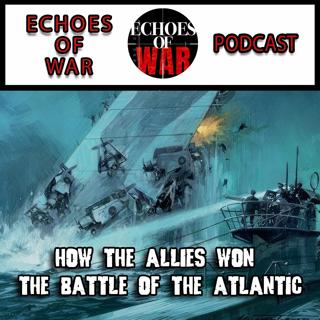
How Allies Won the Battle of the Atlantic 1944-1945 | Battle of the Atlantic Part 3
Echoes of War19 Joulu 2025

How Allies Won the Battle of the Atlantic 1944-1945 | Battle of the Atlantic Part 3

The Battle of the Atlantic, the longest campaign of World War II, spanned from 1939 to 1945, primarily in the North Atlantic but extending to Arctic convoys and the Mediterranean. This conclusion episode recaps Allied resilience against German U-boats and surface raiders. Britain implemented early rationing and the "Dig for Victory" campaign, increasing food production and reducing import reliance. Key turning points included capturing the Enigma machine from U-110 in 1941, sinking U-boat aces, and U.S. adoption of convoys post-1941. Despite setbacks like Operation Torch diverting escorts in late 1942, commanders like Admiral Max Horton and sub-hunters Donald McIntyre and Frederick "Johnny" Walker turned the tide with aggressive tactics. Technological advances sealed Germany's fate: Allied Hedgehog mortars (far more effective than depth charges), radar, and air cover from B-24 Liberators closed the mid-Atlantic gap by May 1943, forcing U-boat retreats. German innovations like snorkels, Type XXI U-boats, and acoustic torpedoes (e.g., T5 Zaunkönig) arrived too late, yielding high losses (e.g., 39 U-boats for minimal gains in late 1943). In the Arctic, the Scharnhorst's defeat at North Cape secured Soviet supply lines. The episode details D-Day's naval arm (Operation Neptune): Over 6,000 vessels from eight navies, led by Admiral Bertram Ramsay, bombarded Normandy beaches with battleships like HMS Warspite and USS Texas. Despite mines and minor German torpedo boat attacks, it succeeded, ferrying 132,000 troops on June 6, 1944, with Mulberry harbors enabling logistics. The "Hunt for Tirpitz," the Bismarck's sister ship, highlights Allied obsession: Multiple failed raids (e.g., Operation Tungsten) culminated in Operation Catechism (November 1944), where RAF Lancasters dropped 12,000-pound Tallboy "earthquake" bombs, capsizing the "Lonely Queen of the North" and killing up to 1,200 crew. Losses were staggering: Allies lost 3,500 merchant ships (21.6 million tons), 175 warships, and ~7,200 sailors; Germany lost 783 U-boats, 47 warships, and 30,000 men. Submarines sank two-thirds of Allied tonnage, but superior Allied strategy, resources, and innovation prevailed, ensuring victory in this critical supply war.

Tämä jakso on lisätty Podme-palveluun avoimen RSS-syötteen kautta eikä se ole Podmen omaa tuotantoa. Siksi jakso saattaa sisältää mainontaa.

Suosittua kategoriassa Historia

olipa-kerran-otsikko
gogin-ja-janin-maailmanhistoria
mayday-fi
huijarit
mystista
rss-ikiuni
totuus-vai-salaliitto
konginkangas
tsunami
rss-subjektiivinen-todistaja
sotaa-ja-historiaa-podi
rouva-diktaattori
rss-i-dont-like-mondays-2
rss-historian-pitka-oppimaara
rss-sattuu-sita-suomessakin
rss-peter-peter
historiaa-suomeksi
apinan-vuosi
maailmanpuu
rss-kirkon-ihmeellisimmat-tarinat