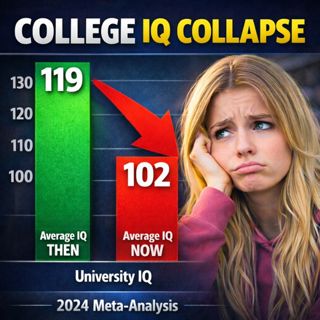

E176: College Student IQ Has Collapsed: Researcher Breaks Down His New Meta-Analysis - Dr. Bob Uttl
El Podcast6 Tammi

E176: College Student IQ Has Collapsed: Researcher Breaks Down His New Meta-Analysis - Dr. Bob Uttl

A cognitive psychologist explains why college student IQ now averages about 102, why that shift is mathematically inevitable as enrollment expands, and how outdated testing norms and student-evals can quietly wreck both education and clinical decisions.

GUEST BIO
Dr. Bob Uttl is a cognitive psychologist and professor at Mount Royal University (Canada) who researches psychometrics, assessment, and how intelligence tests are interpreted and misused in real-world settings.

TOPICS DISCUSSED (IN ORDER)

  • What IQ is, how it’s measured, and why scores are standardized (mean 100, SD 15)
  • The Flynn Effect and why “raw ability” rose over the last century
  • Why expanding university enrollment mathematically lowers the average IQ of undergrads
  • The meta-analysis: how the team compiled WAIS results over time and what they found (down to ~102)
  • The Frontiers controversy: accepted, posted, went viral, then “un-accepted” after social media blowback
  • Clinical misuse: comparing modern test-takers to decades-old norms and the harms that follow
  • Impacts inside universities: wider ability range, teaching to the lower tail, boredom at the top
  • Grades + incentives: student evaluations as satisfaction metrics that push standards downward
  • Employers adapting: degrees losing signaling value; rise of employer-run assessments/training
  • Differences across majors and institutions: SAT/GRE as IQ-proxies; fields with feedback/standardized licensure
  • “Reverse Flynn” talk: why some skills crater (speeded arithmetic, fluency) as tools replace practice
  • AI and learning: hallucinations, the need for human judgment, and the possible return of oral exams
  • European exam models vs North American incentives
  • Final takeaways: fix misinformation about undergrad IQ; remove harmful incentives; reintroduce standards

MAIN POINTS

  • IQ tests are periodically re-normed, so “100” always tracks the current population average even as raw performance changes.
  • As a larger share of the population attends university, the average IQ of undergrads must move closer to the population mean—this is arithmetic, not an insult.
  • Uttl’s meta-analysis argues today’s undergrads average around 102 IQ, far closer to “average” than older assumptions (e.g., 115+).
  • Outdated norms and sloppy cross-era comparisons can shave ~20+ points off a person “on paper,” creating bogus diagnoses and high-stakes harm (disability decisions, fitness-for-duty, litigation).
  • Universities now teach a wider spread of ability, which pressures instruction toward the lower end unless programs stratify or standardize outcomes.
  • Student evaluations function like customer satisfaction scores; combined with adjunct/contract insecurity, they incentivize grade inflation and lower rigor.
  • Employers respond by discounting degrees and building their own testing/training pipelines.
  • Some “reverse Flynn” patterns may reflect skill/fluency loss (e.g., speeded arithmetic) as calculators/AI replace practice—not necessarily a uniform drop in reasoning.
  • A plausible reform path: reduce reliance on student evals, adopt clearer standards, and consider more direct assessments (including oral exams) where appropriate.

BEST 3 QUOTES

  • “The decrease in average IQ of university students is a necessary consequence of increased enrollment.”
  • “Student evaluations of teaching are basically measures of satisfaction.”
  • “We need to remove the misinformation about what is the IQ of undergraduate students.”

🎙 The Pod is hosted by Jesse Wright
💬 For guest suggestions, questions, or media inquiries, reach out at https://elpodcast.media/
📬 Never miss an episode – subscribe and follow wherever you get your podcasts.
⭐️ If you enjoyed this episode, please rate and review the show. It helps others find us.

Thanks for listening!

Jaksot(186)

1 in 20 Deaths: Inside Canada’s Assisted Dying System - Dr. Ramona Coelho

1 in 20 Deaths: Inside Canada’s Assisted Dying System - Dr. Ramona Coelho

Canada’s MAiD program has expanded rapidly—Dr. Ramona Coelho argues the system increasingly serves vulnerable people, with uneven safeguards and serious ethical, legal, and social risks. Guest bio: Dr...

24 Helmi 1h
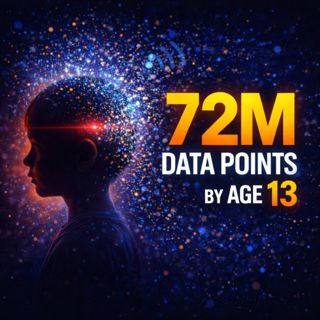
The Eavesdropper Economy: How Surveillance Built AI (E186)

The Eavesdropper Economy: How Surveillance Built AI (E186)

A lively tour from Cold War “The Thing” to today’s surveillance capitalism—showing how audio capture, too much data, and automation pressures helped turn listening into AI.Guest bios:Dr. Toby Heys — P...

18 Helmi 1h

Managerial Class Ruined Tech (E185) - Darryl Campbell

Managerial Class Ruined Tech (E185) - Darryl Campbell

A former Silicon Valley insider explains how MBA-style “spreadsheet management” is breaking software—and why it’s making tech, AI, and everyday products worse.Guest bio:Darryl Campbell is a former tec...

10 Helmi 1h 13min
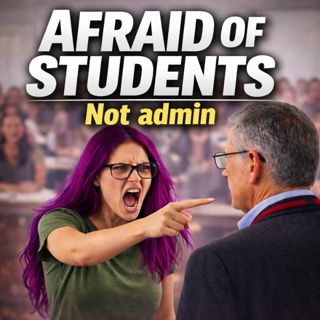
55% of MIT Faculty Self-Censor — Here’s Why (E184)

55% of MIT Faculty Self-Censor — Here’s Why (E184)

MIT Free Speech Alliance president Wayne Stargardt explains how a few high-profile cancellations can drive widespread faculty self-censorship—even at a STEM powerhouse like MIT.Guest bio:Wayne Stargar...

5 Helmi 52min

E183: Why Corporate America Will Never De-Woke | Law Prof Explains

E183: Why Corporate America Will Never De-Woke | Law Prof Explains

In this episode, Jesse talks with Fordham University School of Law corporate-law professor Sean J. Griffith about why “go woke, go broke” hasn’t really played out—and why big, publicly traded firms ca...

3 Helmi 59min
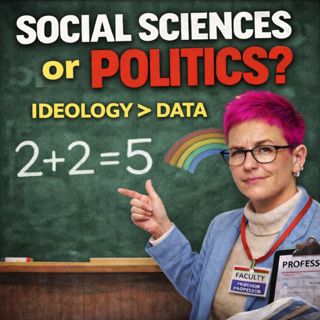
E181: Politics Is the Best Predictor of Academic Research — Prof Mark Horowitz

E181: Politics Is the Best Predictor of Academic Research — Prof Mark Horowitz

Political beliefs often matter more than data or methods in shaping how social scientists think about controversial issues. In this episode, sociologist Dr. Mark Horowitz explains why many professors ...

27 Tammi 1h 8min

E180: Attraction & Disgust: Evolutionary Psychology Explained (Dr. Deb Lieberman)

E180: Attraction & Disgust: Evolutionary Psychology Explained (Dr. Deb Lieberman)

Evolutionary psychologist Debra Lieberman explains how “disgust” and other built-in mental programs shape attraction, kinship, morality, and even law—while modern technology and social media scramble ...

20 Tammi 1h 3min

E179: Breaking the Gerontocracy: How Amanda Litman Is Getting Young People into Office

E179: Breaking the Gerontocracy: How Amanda Litman Is Getting Young People into Office

Amanda Litman argues U.S. leadership is too old, local races are dangerously uncontested, and the fastest fix is getting more young people to run—backed by better pay and campaign-finance reform.Guest...

16 Tammi 50min

Suosittua kategoriassa Liike-elämä ja talous

sijotuskasti
mimmit-sijoittaa
psykopodiaa-podcast
rss-rahapodi
pomojen-suusta
rss-rahamania
ostan-asuntoja-podcast
juristipodi
rss-myyntikoulu
rss-seuraava-potilas
rss-draivi
sijoitusovi-podcast
rss-lahtijat
rss-startup-ministerio
herrasmieshakkerit
rahapuhetta
bakkari-tarinoita-tapahtumien-takahuoneista
lakicast
rss-h-asselmoilanen
rss-turha-edes-yrittaa