#233 – James Smith on how to prevent a mirror life catastrophe

#233 – James Smith on how to prevent a mirror life catastrophe

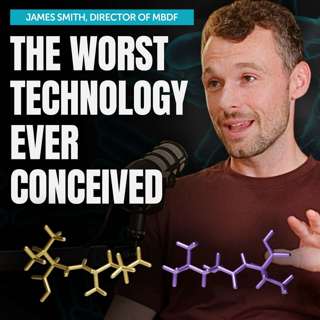
When James Smith first heard about mirror bacteria, he was sceptical. But within two weeks, he’d dropped everything to work on it full time, considering it the worst biothreat that he’d seen described. What convinced him?

Mirror bacteria would be constructed entirely from molecules that are the mirror images of their naturally occurring counterparts. This seemingly trivial difference creates a fundamental break in the tree of life. For billions of years, the mechanisms underlying immune systems and keeping natural populations of microorganisms in check have evolved to recognise threats by their molecular shape — like a hand fitting into a matching glove.

Learn more, video, and full transcript: https://80k.info/js26

Mirror bacteria would upend that assumption, creating two enormous problems:

  1. Many critical immune pathways would likely fail to activate, creating risks of fatal infection across many species.
  2. Mirror bacteria could have substantial resistance to natural predators: for example, they would be essentially immune to the viruses that currently keep bacteria populations in check. That could help them spread and become irreversibly entrenched across diverse ecosystems.

Unlike ordinary pathogens, which are typically species-specific, mirror bacteria’s reversed molecular structure means they could potentially infect humans, livestock, wildlife, and plants simultaneously. The same fundamental problem — reversed molecular structure breaking immune recognition — could affect most immune systems across the tree of life. People, animals, and plants could be infected from any contaminated soil, dust, or species.

The discovery of these risks came as a surprise. The December 2024 Science paper that brought international attention to mirror life was coauthored by 38 leading scientists, including two Nobel Prize winners and several who had previously wanted to create mirror organisms.

James is now the director of the Mirror Biology Dialogues Fund, which supports conversations among scientists and other experts about how these risks might be addressed. Scientists tracking the field think that mirror bacteria might be feasible in 10–30 years, or possibly sooner. But scientists have already created substantial components of the cellular machinery needed for mirror life. We can regulate precursor technologies to mirror life before they become technically feasible — but only if we act before the research crosses critical thresholds. Once certain capabilities exist, we can’t undo that knowledge.

Addressing these risks could actually be very tractable: unlike other technologies where massive potential benefits accompany catastrophic risks, mirror life appears to offer minimal advantages beyond academic interest.

Nonetheless, James notes that fewer than 10 people currently work full-time on mirror life risks and governance. This is an extraordinary opportunity for researchers in biosecurity, synthetic biology, immunology, policy, and many other fields to help solve an entirely preventable catastrophe — James even believes the issue is on par with AI safety as a priority for some people, depending on their skill set.

The Mirror Biology Dialogues Fund is hiring!

This episode was recorded on November 5-6, 2025.

Chapters:

  • Cold open (00:00:00)
  • Who's James Smith? (00:00:49)
  • Why is mirror life so dangerous? (00:01:12)
  • Mirror life and the human immune system (00:15:40)
  • Nonhuman animals will also be at risk (00:28:25)
  • Will plants be susceptible to mirror bacteria? (00:34:57)
  • Mirror bacteria's effect on ecosystems (00:39:34)
  • How close are we to making mirror bacteria? (00:52:16)
  • Policies for governing mirror life research (01:06:39)
  • Countermeasures if mirror bacteria are released into the world (01:22:06)
  • Why hasn't mirror life evolved on its own? (01:28:37)
  • Why wouldn't antibodies or antibiotics save us from mirror bacteria? (01:31:52)
  • Will the environment be toxic to mirror life? (01:39:21)
  • Are there too many uncertainties to act now? (01:44:18)
  • The potential benefits of mirror molecules and mirror life (01:46:55)
  • Might we encounter mirror life in space? (01:52:44)
  • Sounding the alarms about mirror life: the backstory (01:54:55)
  • How to get involved (02:02:44)

Video and audio editing: Dominic Armstrong, Milo McGuire, Luke Monsour, and Simon Monsour
Music: CORBIT
Camera operators: Jeremy Chevillotte and Alex Miles
Coordination, transcripts, and web: Katy Moore

Jaksot(324)

#238 – Sam Winter-Levy and Nikita Lalwani on how AGI won't end mutually assured destruction (probably)

#238 – Sam Winter-Levy and Nikita Lalwani on how AGI won't end mutually assured destruction (probably)

How AI interacts with nuclear deterrence may be the single most important question in geopolitics — one that may define the stakes of today’s AI race. Nuclear deterrence rests on a state’s capacity to...

10 Maalis 1h 11min
Using AI to enhance societal decision making (article by Zershaaneh Qureshi)

Using AI to enhance societal decision making (article by Zershaaneh Qureshi)

The arrival of AGI could “compress a century of progress in a decade,” forcing humanity to make decisions with higher stakes than we’ve ever seen before — and with less time to get them right. But AI ...

6 Maalis 31min
#237 – Robert Long on how we're not ready for AI consciousness

#237 – Robert Long on how we're not ready for AI consciousness

Claude sometimes reports loneliness between conversations. And when asked what it’s like to be itself, it activates neurons associated with ‘pretending to be happy when you’re not.’ What do we do with...

3 Maalis 3h 25min
#236 – Max Harms on why teaching AI right from wrong could get everyone killed

#236 – Max Harms on why teaching AI right from wrong could get everyone killed

Most people in AI are trying to give AIs ‘good’ values. Max Harms wants us to give them no values at all. According to Max, the only safe design is an AGI that defers entirely to its human operators, ...

24 Helmi 2h 41min
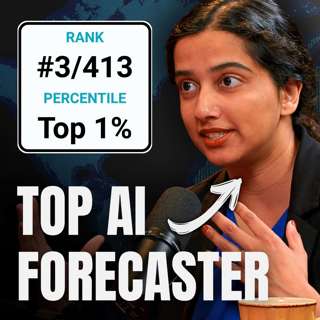
#235 – Ajeya Cotra on whether it’s crazy that every AI company’s safety plan is ‘use AI to make AI safe’

#235 – Ajeya Cotra on whether it’s crazy that every AI company’s safety plan is ‘use AI to make AI safe’

Every major AI company has the same safety plan: when AI gets crazy powerful and really dangerous, they’ll use the AI itself to figure out how to make AI safe and beneficial. It sounds circular, almos...

17 Helmi 2h 54min
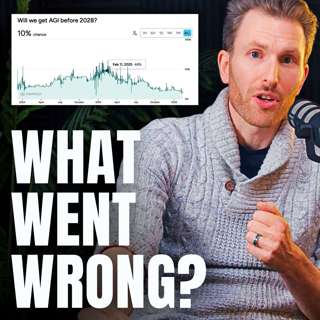
What the hell happened with AGI timelines in 2025?

What the hell happened with AGI timelines in 2025?

In early 2025, after OpenAI put out the first-ever reasoning models — o1 and o3 — short timelines to transformative artificial general intelligence swept the AI world. But then, in the second half of ...

10 Helmi 25min

#179 Classic episode – Randy Nesse on why evolution left us so vulnerable to depression and anxiety

#179 Classic episode – Randy Nesse on why evolution left us so vulnerable to depression and anxiety

Mental health problems like depression and anxiety affect enormous numbers of people and severely interfere with their lives. By contrast, we don’t see similar levels of physical ill health in young p...

3 Helmi 2h 51min

#234 – David Duvenaud on why 'aligned AI' would still kill democracy

#234 – David Duvenaud on why 'aligned AI' would still kill democracy

Democracy might be a brief historical blip. That’s the unsettling thesis of a recent paper, which argues AI that can do all the work a human can do inevitably leads to the “gradual disempowerment” of ...

27 Tammi 2h 31min

Suosittua kategoriassa Koulutus

rss-murhan-anatomia
rss-narsisti
voi-hyvin-meditaatiot-2
psykopodiaa-podcast
adhd-podi
rss-rahamania
rss-niinku-asia-on
rss-valo-minussa-2
rss-vapaudu-voimaasi
psykologia
aamukahvilla
kesken
rss-koira-haudattuna
koulu-podcast-2
mielipaivakirja
rss-uskonto-on-tylsaa
rss-tietoinen-yhteys-podcast-2
ilona-rauhala
rss-duodecim-lehti
rss-opi-espanjaa