Alex Wellerstein, "The Most Awful Responsibility: Truman and the Secret Struggle for Control of the Atomic Age" (Harper, 2025)

Alex Wellerstein, "The Most Awful Responsibility: Truman and the Secret Struggle for Control of the Atomic Age" (Harper, 2025)

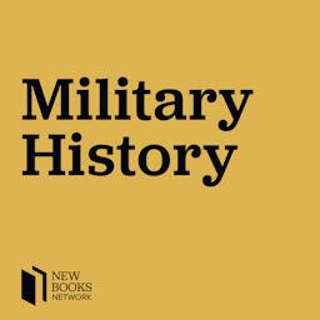
Dropping the atomic bombs on Japan during World War II was, arguably, the most controversial decision of the 20th century. The responsibility for that “decision” has logically fallen on US President Harry S. Truman. But in The Most Awful Responsibility: Truman and the Secret Struggle for Control of the Atomic Age (Harper, 2025), Alex Wellerstein argues that Truman's actual decision wasn’t what everyone thinks it was. The conventional narrative is that American leaders had a choice: Invade Japan, which would have cost millions of Allied and Japanese lives, or instead, use the atom bomb in the hope of convincing Japan to surrender. Truman, the story goes, carefully weighed the pros and cons before deciding that the atomic bomb would be used against Japanese cities, as the lesser of two evils. But nuclear historian Alex Wellerstein argues that is not what happened. Not only did Truman not take part in the decision to use the bomb, but the one major decision that he did make was a very different one — one that he himself did not fully understand until after the atomic bomb was used. The weight of that decision, and that misunderstanding, became the major reason that atomic bombs have not been used again since World War II. Based on a close reading of the historical record, The Most Awful Responsibility shows that, despite his reputation as an ardent defender of the atomic bomb, Truman: Wanted to avoid the “murder” and “slaughter” of innocent civilians Believed that the atomic bomb should never be used again Hoped that nuclear weapons would be outlawed in his lifetime Wellerstein makes a startling case that Truman was possibly the most anti-nuclear American president of the twentieth century, but his ambitions were strongly constrained by the domestic and international politics of the postwar world and the early Cold War. This book is a must-read for all who want to truly understand not only why the bomb was dropped on Japan but also why it has not been used since. Dr. Andrew O. Pace is a historian of the US in the world who specializes in the fog of war. He is currently a DPAA Research Partner Fellow at the University of Southern Mississippi and a co-host of the Diplomatic History Channel on the New Books Network. He is also working on his first book which examines why the United States pursued victory at practically all costs during World War II. He can be reached at andrew.pace@usm.edu or here. Andrew is not an employee of DPAA, he supports DPAA through a partnership. The views presented are those of the author and do not necessarily represent the views of DPAA, DoD or its components.  Learn more about your ad choices. Visit megaphone.fm/adchoices Support our show by becoming a premium member! https://newbooksnetwork.supportingcast.fm/military-history

Jaksot(1632)

Vindhya Buthpitiya, "A Volatile Picture: War and the Political Work of Photography in Sri Lanka" (U Washington Press, 2026)

Vindhya Buthpitiya, "A Volatile Picture: War and the Political Work of Photography in Sri Lanka" (U Washington Press, 2026)

A Volatile Picture: War and the Political Work of Photography in Sri Lanka (U Washington Press, 2026) by Dr. Vindhya Buthpitiya is a groundbreaking ethnography that explores how, in the context of Sri...

29 Huhti 43min

Jack Cheevers, "Kennedy’s Coup: A White House Plot, a Saigon Murder, and America's Descent into Vietnam" (Simon and Schuster, 2026)

Jack Cheevers, "Kennedy’s Coup: A White House Plot, a Saigon Murder, and America's Descent into Vietnam" (Simon and Schuster, 2026)

Based on a decade of research and writing, enriched by eyewitness interviews and revealing documents obtained through dozens of freedom of information requests, Kennedy’s Coup vividly recreates the Ke...

27 Huhti 58min

Susanna Elm and Kristina Sessa, "War and Community in Late Antiquity" (Cambridge UP, 2026)

Susanna Elm and Kristina Sessa, "War and Community in Late Antiquity" (Cambridge UP, 2026)

Susanna Elm and Kristina Sessa, War and Community in Late Antiquity (Cambridge UP, 2026) Late Antiquity (ca. 250–600 CE) was a world at war: barbarian migrations, civil wars, raids, and increasingly ...

27 Huhti 1h 51min

A Shakeup Is Coming for the Nation-State: A Conversation with Stephen Sims

A Shakeup Is Coming for the Nation-State: A Conversation with Stephen Sims

Stephen Sims’ New Atlantis essay examines how emerging technologies are reshaping the structure and authority of the modern nation-state. He argues that innovations such as artificial intelligence, dr...

27 Huhti 40min

Douglas Waller, "The Determined Spy: The Turbulent Life and Times of CIA Pioneer Frank Wisner" (Penguin, 2026)

Douglas Waller, "The Determined Spy: The Turbulent Life and Times of CIA Pioneer Frank Wisner" (Penguin, 2026)

Frank Wisner was one of the most powerful men in 1950s Washington, though few knew it. Reporting directly to senior U.S. officials--his work largely hidden from Congress and the public-- Wisner master...

26 Huhti 1h 2min

Zaakir Tameez, "Charles Sumner: Conscience of a Nation" (Henry Holt, 2025)

Zaakir Tameez, "Charles Sumner: Conscience of a Nation" (Henry Holt, 2025)

A landmark biography of Charles Sumner, the unsung hero of the American Civil War and ReconstructionCharles Sumner is mainly known as the abolitionist statesman who suffered a brutal caning on the Sen...

25 Huhti 1h 7min

Mia Martin Hobbs and Joan Beaumont, "Challenging Anzac: Stories That Don't Fit the Legend" (NewSouth, 2026)

Mia Martin Hobbs and Joan Beaumont, "Challenging Anzac: Stories That Don't Fit the Legend" (NewSouth, 2026)

Challenging Anzac: Stories that don’t fit the legend Edited by Mia Martin Hobbs, Carolyn Holbrook, The Anzac legend has shaped Australia’s national identity for more than a century. Yet many experien...

25 Huhti 1h 1min

Jan Cress Dondi, "The Navigator's Letter" (Union Square, 2026)

Jan Cress Dondi, "The Navigator's Letter" (Union Square, 2026)

One of the riskiest air raids of World War II occurred on August 1, 1943, over the oil fields at Ploesti, Romania--Nazi Germany's primary fuel source. The Allies believed that the destruction of Hitle...

22 Huhti 38min

Suosittua kategoriassa Yhteiskunta

i-dont-like-mondays
sita
olipa-kerran-otsikko
kaksi-aitia
siita-on-vaikea-puhua
hupiklubi
uutiscast
ihme-ja-kumma
poks
antin-palautepalvelu
gogin-ja-janin-maailmanhistoria
kolme-kaannekohtaa
mamma-mia
rss-murhan-anatomia
yopuolen-tarinoita-2
aikalisa
rss-palmujen-varjoissa
meidan-pitais-puhua
loukussa
kummitusjuttuja