Fun Facts About Skeleton

Fun Facts About Skeleton

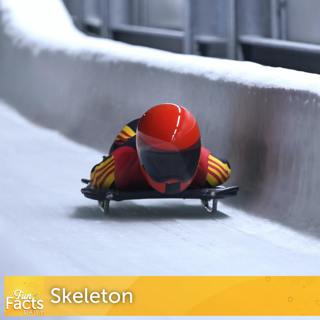
The skeleton sliding event, originating in the 19th century in St. Moritz, Switzerland, is a high-speed winter sport characterized by athletes descending an ice track head-first on a specialized sled. The sport's name is derived from the "skeletal" appearance of the early metal sleds, which featured a stripped-down, ribbed design reminiscent of a human rib cage. Skeleton athletes navigate high-G turns at speeds of 80 to 90 miles per hour, utilizing a technique known as pronation. This steering method involves subtle shifts in body weight, primarily through the shoulders and knees, to guide the sled, as it lacks a traditional steering wheel or rudder. Protective gear, including reinforced chin guards on helmets, is essential due to the athlete's proximity to the ice, often hovering just an inch above the track. The outcome of a skeleton race is frequently determined in the initial 50 meters during an explosive running start. Athletes wear specialized shoes with up to 250 needle-like spikes for traction, sprinting on the ice before performing a precise "load" onto the sled to maintain momentum and prevent "fishtailing". Each sled is custom-molded to the individual athlete's body dimensions using 3D scanning technology to ensure maximum control and even distribution of G-force pressure. Although skeleton debuted at the 1928 Winter Olympics, it was absent from the program for over 50 years, largely due to its dangerous reputation, before becoming a permanent Olympic fixture in 2002. The sport also highlights the effectiveness of mental rehearsal, as elite racers often visualize every curve and bump of the track to strengthen neural pathways and enhance performance under pressure. Be sure to email funfactsdailypod@gmail.com with the word of the day, pronation, for your chance to win a $50 gift card. Want to learn more? Head over to my website www.funfactsdailypod.com and be sure to listen to my other podcasts Who ARTed: Weekly Art History for All Ages or Art Smart. For family fun, check out my son's podcast Rainbow Puppy Science Lab Fun Facts Daily is an Airwave Media Podcast. If you are interested in advertising on this or any other Airwave Media show, email: advertising@airwavemedia.com Learn more about your ad choices. Visit megaphone.fm/adchoices

Jaksot(241)

Fun Facts About Maracas

Fun Facts About Maracas

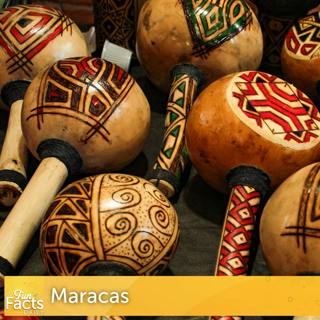
The maraca is a percussion instrument with deep roots in Caribbean history, originally developed by the indigenous Taíno people. Traditionally used by shamans known as Boetís or Behique during Cohoba ...

23 Maalis 14min

Fun Facts About the Dead Sea

Fun Facts About the Dead Sea

The Dead Sea stands as the lowest point on the Earth's surface, with shores and water levels resting approximately 1,410 feet below sea level. Situated along a fault line where the African and Arabian...

20 Maalis 14min
Fun Facts About Lobsters

Fun Facts About Lobsters

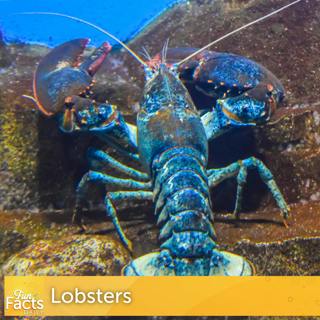
Lobsters are truly amazing with a number of shocking traits, including a form of biological immortality. They produce the enzyme telomerase, which repairs their DNA indefinitely, allowing them to main...

19 Maalis 13min

Fun Facts About March Madness

Fun Facts About March Madness

While March Madness is now a global phenomenon, the term actually originated with Illinois high school basketball in 1939. Henry V. Porter, an official with the Illinois High School Association, first...

18 Maalis 15min
Fun Facts About Shamrock Shakes

Fun Facts About Shamrock Shakes

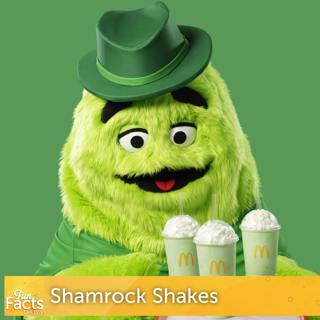
The McDonald’s Shamrock Shake has evolved from a local holiday experiment into a global seasonal phenomenon since its inception in 1967. Originally created by Connecticut franchise owner Hal Rosen, th...

17 Maalis 13min

Fun Facts About Sabrina Gonzalez Pasterski

Fun Facts About Sabrina Gonzalez Pasterski

Sabrina Gonzalez Pasterski is a world-renowned theoretical physicist celebrated for her groundbreaking contributions to our understanding of the universe's fundamental structures. A graduate of the Ma...

16 Maalis 14min
Fun Facts About Pi

Fun Facts About Pi

The mathematical constant pi is defined as the ratio of a circle's circumference to its diameter, characterized by an infinite and non-repeating decimal sequence. As a transcendental number, it cannot...

13 Maalis 15min

Fun Facts About AI

Fun Facts About AI

AI is revolutionizing diverse fields by identifying patterns beyond human perception. In medicine, deep learning models have scanned millions of chemical compounds to discover Halicin, a powerful new ...

12 Maalis 14min

Suosittua kategoriassa Koulutus

rss-murhan-anatomia
voi-hyvin-meditaatiot-2
rss-narsisti
adhd-podi
psykopodiaa-podcast
rss-uskonto-on-tylsaa
rss-rahamania
rss-valo-minussa-2
rss-duodecim-lehti
rss-niinku-asia-on
mielipaivakirja
rahapuhetta
aamukahvilla
rss-liian-kuuma-peruna
rss-vapaudu-voimaasi
aloita-meditaatio
kesken
dear-ladies
rss-eron-alkemiaa
rss-arkea-ja-aurinkoa-podcast-espanjasta