Fun Facts About Ski Jumping

Fun Facts About Ski Jumping

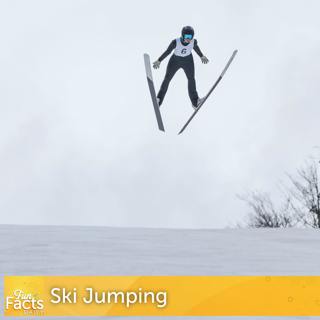
Ski jumping originated as a show of military courage in 1808, when Norwegian lieutenant Olaf Rye launched himself 9.5 meters into the air to impress his fellow soldiers. This daring feat transformed skiing from a practical mode of transportation into a competitive sport that eventually became a cornerstone of the 1924 Winter Olympics. While traditionalists initially focused on rigid form, the sport underwent a revolution in the 1980s with the introduction of the V-style technique. By angling the tips of their skis outward, jumpers discovered they could generate approximately 30% more lift, effectively turning their skis into wings that allow them to glide through the air for up to 10 seconds. The physics of a successful jump rely on a delicate balance between aerodynamics and environmental conditions. Athletes achieve flight by creating a cushion of high-pressure air beneath their bodies, mimicking the lift of an airplane wing. Because of this sensitivity to air currents, modern competitions utilize a wind compensation system to ensure fairness; judges adjust scores based on real-time sensor data to account for lucky gusts that might carry a jumper further. Safety is also a primary concern in hill design, as the parabolic arc of the landing slope is engineered to match the jumper's flight path. This ensures that even when traveling at speeds over 60 mph, athletes are rarely more than 10 to 15 feet above the ground, converting downward energy into forward momentum for a safe landing. Want to learn more? Head over to my website www.funfactsdailypod.com and be sure to listen to my other podcasts Who ARTed: Weekly Art History for All Ages or Art Smart. For family fun, check out my son's podcast Rainbow Puppy Science Lab Fun Facts Daily is an Airwave Media Podcast. If you are interested in advertising on this or any other Airwave Media show, email: advertising@airwavemedia.com Learn more about your ad choices. Visit megaphone.fm/adchoices

Jaksot(241)

Fun Facts About Maracas

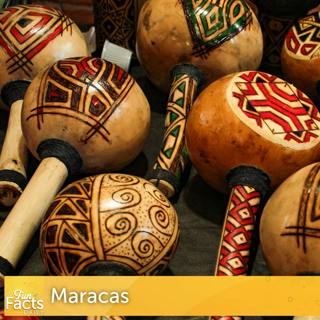
Fun Facts About Maracas

The maraca is a percussion instrument with deep roots in Caribbean history, originally developed by the indigenous Taíno people. Traditionally used by shamans known as Boetís or Behique during Cohoba ...

23 Maalis 14min

Fun Facts About the Dead Sea

Fun Facts About the Dead Sea

The Dead Sea stands as the lowest point on the Earth's surface, with shores and water levels resting approximately 1,410 feet below sea level. Situated along a fault line where the African and Arabian...

20 Maalis 14min
Fun Facts About Lobsters

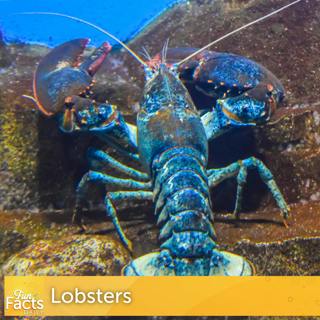
Fun Facts About Lobsters

Lobsters are truly amazing with a number of shocking traits, including a form of biological immortality. They produce the enzyme telomerase, which repairs their DNA indefinitely, allowing them to main...

19 Maalis 13min

Fun Facts About March Madness

Fun Facts About March Madness

While March Madness is now a global phenomenon, the term actually originated with Illinois high school basketball in 1939. Henry V. Porter, an official with the Illinois High School Association, first...

18 Maalis 15min
Fun Facts About Shamrock Shakes

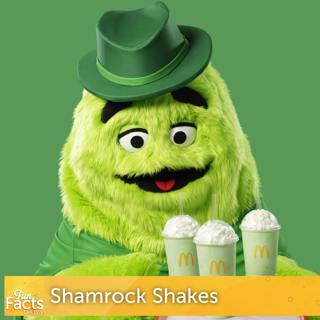
Fun Facts About Shamrock Shakes

The McDonald’s Shamrock Shake has evolved from a local holiday experiment into a global seasonal phenomenon since its inception in 1967. Originally created by Connecticut franchise owner Hal Rosen, th...

17 Maalis 13min

Fun Facts About Sabrina Gonzalez Pasterski

Fun Facts About Sabrina Gonzalez Pasterski

Sabrina Gonzalez Pasterski is a world-renowned theoretical physicist celebrated for her groundbreaking contributions to our understanding of the universe's fundamental structures. A graduate of the Ma...

16 Maalis 14min
Fun Facts About Pi

Fun Facts About Pi

The mathematical constant pi is defined as the ratio of a circle's circumference to its diameter, characterized by an infinite and non-repeating decimal sequence. As a transcendental number, it cannot...

13 Maalis 15min

Fun Facts About AI

Fun Facts About AI

AI is revolutionizing diverse fields by identifying patterns beyond human perception. In medicine, deep learning models have scanned millions of chemical compounds to discover Halicin, a powerful new ...

12 Maalis 14min

Suosittua kategoriassa Koulutus

rss-murhan-anatomia
voi-hyvin-meditaatiot-2
rss-narsisti
adhd-podi
psykopodiaa-podcast
rss-uskonto-on-tylsaa
rss-rahamania
rss-valo-minussa-2
rss-duodecim-lehti
rss-niinku-asia-on
mielipaivakirja
rahapuhetta
aamukahvilla
rss-liian-kuuma-peruna
rss-vapaudu-voimaasi
aloita-meditaatio
kesken
dear-ladies
rss-eron-alkemiaa
rss-arkea-ja-aurinkoa-podcast-espanjasta