On Reading "A Wrinkle in Time"
The Book Review24 Helmi 2023

On Reading "A Wrinkle in Time"

Some books find us at the right age and in the right frame of mind to lodge an enduring hold on our imagination; these are the books we turn to again and again, which become the cherished classics of our personal canon.

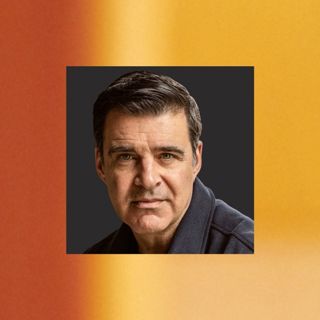
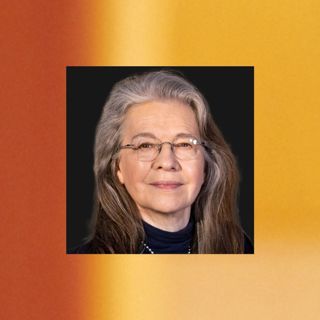
On this week's episode, the Book Review's thriller columnist and writer at large Sarah Lyall talks to the host Gilbert Cruz about Madeleine L'Engle's 1962 novel "A Wrinkle in Time," in which the protagonist and her younger brother set out to rescue their father from the supernatural embodiment of evil that is holding him captive. Lyall first read the book when she was 9 years old and returned to it repeatedly throughout her childhood.

"I used to write my name in it every time I read the book," Lyall says. "I probably had 10 signatures there. And I could watch my signature change, I could try new types of signature. I tried cursive and I tried capitals, and I put a little flourish next to it."

Lyall says that what first drew her to "A Wrinkle in Time" was the book's "fantastic heroine," Meg: "She's really smart, but sort of unkempt. She has messy hair, she has glasses, she has braces, people think she's weird. ... But what really happens in the book that I think resonated with me, that I realize now, is that it's a book about two children who've lost their father. And I read the book quite soon after my father died. He died when I was 8. And it was a really lost time. And I think what mostly appealed to me about the book was the notion that you actually could get your father back. And that you as the girl, as the girl who felt so clueless, actually had means within yourself to pull yourself together and be brave enough to do it."

We would love to hear your thoughts about this episode, and about the Book Review’s podcast in general. You can send them to books@nytimes.com.

Subscribe today at nytimes.com/podcasts or on Apple Podcasts and Spotify. You can also subscribe via your favorite podcast app here https://www.nytimes.com/activate-access/audio?source=podcatcher. For more podcasts and narrated articles, download The New York Times app at nytimes.com/app.

Jaksot(575)

The Books We're Excited About in Early 2026

The Books We're Excited About in Early 2026

A new year means new books are on the way! So many new books. On this week’s episode, host Gilbert Cruz talks with fellow Book Review editors Joumana Khatib and MJ Franklin about the upcoming fiction and nonfiction titles they’re most anticipating between now and April.Here are the books discussed in this week’s episode:“Vigil,” by George Saunders“Where the Serpent Lives,” by Daniyal Mueenuddin“Fear and Fury: The Reagan Eighties, the Bernie Goetz Shootings and the Rebirth of White Rage,” by Heather Ann Thompson“Five Bullets,” by Elliot Williams“Lost Lambs,” by Madeline Cash”Half His Age,” by Jennette McCurdy“A World Appears: A Journey Into Consciousness,” by Michael Pollan“On Morrison,” by Namwali Serpell“Language as Liberation: Reflections on the American Canon,” by Toni Morrison“Clutch,” by Emily Nemens“Murder Bimbo,” by Rebecca Novack“Kin,” by Tayari Jones“Cave Mountain: A Disappearance and a Reckoning in the Ozarks,” by Benjamin Hale“Lake Effect,” by Cynthia D’Aprix Sweeney“Now I Surrender,” by Alvaro Enrigue“The Keeper,” by Tana French Subscribe today at nytimes.com/podcasts or on Apple Podcasts and Spotify. You can also subscribe via your favorite podcast app here https://www.nytimes.com/activate-access/audio?source=podcatcher. For more podcasts and narrated articles, download The New York Times app at nytimes.com/app.

16 Tammi 45min

'The Correspondent' Author Virginia Evans On Her Breakout Year

'The Correspondent' Author Virginia Evans On Her Breakout Year

Virginia Evans’s debut novel, “The Correspondent,” was published last April and became one of the publishing industry’s heartwarming champions of 2025: a slow-burn success story that gathered momentum over the summer and fall and finally topped the New York Times hardcover best-seller list in December. For Evans, who had written and failed to sell seven previous novels, the book’s popularity has felt magical, as she explains to host Gilbert Cruz on this week’s podcast.“I went on a kind of a brief book tour in the fall, meeting hundreds of people,” Evans says, “and … different bookstores were starting to say, this is becoming a thing, we can’t keep it in the store. We keep running out of stock. And then they were going back, reprint after reprint. So then I started to think, oh, it’s getting bigger. But I think, I just didn’t have a context. I still don’t understand publishing. So I thought every step of the way was the mountaintop. I keep getting a new mountaintop.” Subscribe today at nytimes.com/podcasts or on Apple Podcasts and Spotify. You can also subscribe via your favorite podcast app here https://www.nytimes.com/activate-access/audio?source=podcatcher. For more podcasts and narrated articles, download The New York Times app at nytimes.com/app.

9 Tammi 40min

Book Club: Let’s Talk About ‘What We Can Know’

Book Club: Let’s Talk About ‘What We Can Know’

Ian McEwan’s latest novel, “What We Can Know,” is many things at once: It’s a science fiction imagining of a future world devastated by climate catastrophe; it’s a literary mystery about a scholar’s search for a long-lost poem; it’s a deep dive into complicated marriages; and it’s a meditation on how the past lingers and how history morphs with time.“It’s the best thing McEwan has written in ages,” our critic Dwight Garner wrote in his review. “It’s a sophisticated entertainment of a high order.”In this episode of the Book Review Book Club, the host MJ Franklin discusses “What We Can Know” with his colleagues Sarah Lyall (who profiled McEwan for the Book Review this year) and Leah Greenblatt. You can follow along, and add your own comments to the discussion here.Other Books mentioned in this discussion:“Atonement,” “Saturday,” “On Chesil Beach,” “The Comfort of Strangers,” “The Cement Garden” and “Enduring Love,” by Ian McEwan“Fleishman Is in Trouble,” by Taffy Brodesser-Akner“Fates and Furies,” by Lauren Groff“Marston Meadows: A Corona for Prue,” by John Fuller“How the Word Is Passed,” by Clint Smith“The Stranger’s Child,” “The Line of Beauty” and “Our Evenings,” by Alan HollinghurstWe would love to hear your thoughts about this episode, and about the Book Review’s podcast in general. You can send them to books@nytimes.com. Subscribe today at nytimes.com/podcasts or on Apple Podcasts and Spotify. You can also subscribe via your favorite podcast app here https://www.nytimes.com/activate-access/audio?source=podcatcher. For more podcasts and narrated articles, download The New York Times app at nytimes.com/app.

27 Joulu 202551min

What Did 2025 Mean for Books?

What Did 2025 Mean for Books?

From political tell-alls to the continued triumph of romantasy novels, it’s been an eventful year in the publishing world. On this week’s episode, host MJ Franklin talks with his Book Review colleagues Alexandra Alter, Tina Jordan and John Maher about the biggest book stories and most significant reading trends of 2025.Correction: An earlier version of this podcast referred incorrectly to an arts grant from the Mellon Foundation. The $50 million initiative, launched by Mellon, is a collaborative effort with six other foundations and is intended to support nonprofit literary organizations across a range of genres and forms; it is not solely intended to support poetry. Subscribe today at nytimes.com/podcasts or on Apple Podcasts and Spotify. You can also subscribe via your favorite podcast app here https://www.nytimes.com/activate-access/audio?source=podcatcher. For more podcasts and narrated articles, download The New York Times app at nytimes.com/app.

19 Joulu 202547min

Our Book Critics on Their 2025 in Reading

Our Book Critics on Their 2025 in Reading

Here we are in mid-December, which means that along with all of the other year-end lists we produce and avidly consume at this time each year, The New York Times Book Review's staff critics are also looking back on everything they read in 2025, and toasting the books that have stayed with them.On this episode, host Gilbert Cruz talks with Dwight Garner, Alexandra Jacobs and Jennifer Szalai about their standout fiction and nonfiction of the past 12 months.Books mentioned:"What We Can Know," by Ian McEwan"Flesh," by David Szalay"The Loneliness of Sonia and Sunny," by Kiran Desai"Playworld," by Adam Ross"When the Going Was Good," by Graydon Carter"I Regret Almost Everything," by Keith McNally"When All the Men Wore Hats," by Susan Cheever"Notes to John," by Joan Didion"A Flower Traveled in My Blood," by Haley Cohen Gilliland"38 Londres Street," by Philippe Sands"Wild Thing," by Sue Prideaux"Crumb: A Cartoonist's Life," by Dan Nadel"Class Clown," by Dave Barry"Electric Spark: The Enigma of Dame Muriel," by Frances Wilson"Flagrant, Self-Destructive Gestures: A Biography of Denis Johnson," by Ted Geltner"Shadow Ticket," by Thomas Pynchon"Selected Letters of John Updike," edited by James Schiff"Troublemaker: The Fierce, Unruly Life of Jessica Mitford," by Carla Kaplan"More Everything Forever, AI Overlords, Space Empires, and Silicon Valley's Crusade to Control the Fate of Humanity," by Adam Becker Subscribe today at nytimes.com/podcasts or on Apple Podcasts and Spotify. You can also subscribe via your favorite podcast app here https://www.nytimes.com/activate-access/audio?source=podcatcher. For more podcasts and narrated articles, download The New York Times app at nytimes.com/app.

12 Joulu 202536min

The 10 Best Books of 2025

The 10 Best Books of 2025

All year long, the staff of The New York Times Book Review conducts a running discussion over what belongs on its year-end Top 10 list. In this week’s episode, host Gilbert Cruz gathers a group of fellow Book Review editors to talk about the most exciting fiction and nonfiction of the year. Here are the books discussed in this week’s episode:Fiction“The Loneliness of Sonia and Sunny,” by Kiran Desai“Angel Down,” by Daniel Kraus“The Sisters,” by Jonas Hassen Khemiri“The Director,” by Daniel Kehlmann“Stone Yard Devotional,” by Charlotte WoodNonfiction“A Marriage at Sea,” by Sophie Elmhirst“Wild Thing,” by Sue Prideaux“Mother Emanuel,” by Kevin Sack“There Is No Place for Us," by Brian Goldstone“Mother Mary Comes to Me,” by Arundhati Roy Subscribe today at nytimes.com/podcasts or on Apple Podcasts and Spotify. You can also subscribe via your favorite podcast app here https://www.nytimes.com/activate-access/audio?source=podcatcher. For more podcasts and narrated articles, download The New York Times app at nytimes.com/app.

2 Joulu 20251h 18min

Book Club: Let's Talk About 'Hamnet'

Book Club: Let's Talk About 'Hamnet'

History has not graced us with many details about Shakespeare as a person, but we do know that he and his wife had three children, including a son named Hamnet who died at the age of 11 in 1596, four years before Shakespeare went on to write his great tragedy “Hamlet.”Maggie O’Farrell’s novel “Hamnet” — one of the Book Review’s 10 Best Books of 2020, and the source of Chloé Zhao’s new movie of the same name — starts from those scant facts, and spins them into a powerful story of grief, art and family steeped in the textures of late-16th-century life.In this episode of the Book Review Book Club, host MJ Franklin discusses “Hamnet” with his colleagues Leah Greenblatt, Jennifer Harlan and Sarah Lyall. Other works mentioned in this podcast:“Hamlet,” “King Lear,” “Macbeth,” “The Winter’s Tale,” by William Shakespeare“Little Women,” by Louisa May Alcott“Grief Is the Thing With Feathers,” by Max Porter“Lincoln in the Bardo,” by George Saunders“Fi,” by Alexandra Fuller“Things In Nature Merely Grow,” by Yiyun Li“The Accidental Tourist,” by Anne Tyler“Will in the World” and “Dark Renaissance,” by Stephen Greenblatt“Gabriel,” by Edward Hirsch“Once More We Saw Stars,” by Jayson Greene“The Dutch House,” by Ann Patchett Subscribe today at nytimes.com/podcasts or on Apple Podcasts and Spotify. You can also subscribe via your favorite podcast app here https://www.nytimes.com/activate-access/audio?source=podcatcher. For more podcasts and narrated articles, download The New York Times app at nytimes.com/app.

28 Marras 20251h 2min

Welcome to Literary Award Season

Welcome to Literary Award Season

Literature isn’t a horse race. Taste is subjective, and artistic value can’t be measured in terms of “winners" and “losers.”That doesn’t mean it’s not fun to try.The book world’s awards season officially kicked off on Oct. 9, when the Hungarian novelist Laszlo Krasznahorkai won the 2025 Nobel Prize, and continued this month when the Booker Prize in England went to the novel “Flesh,” by the British writer David Szalay (also of Hungarian descent, as it happens). Then this week, five National Book Award winners were crowned in various categories at a ceremony in New York.On this episode of the podcast, the host MJ Franklin talks with his fellow Book Review editors Emily Eakin, Joumana Khatib and Dave Kim about the finalists, the winners and what this year’s big book awards might tell us about the state of literature in 2025.We would love to hear your thoughts about this episode, and about the Book Review’s podcast in general. You can send them to books@nytimes.com. Subscribe today at nytimes.com/podcasts or on Apple Podcasts and Spotify. You can also subscribe via your favorite podcast app here https://www.nytimes.com/activate-access/audio?source=podcatcher. For more podcasts and narrated articles, download The New York Times app at nytimes.com/app.

22 Marras 202546min

Suosittua kategoriassa Vapaa-aika

nikotellen
antin-matka
ihan-oikeesti
sita
the-harlin-show
unicast
eturivi
mutsiputki
tahtitehdas
rss-nikotellen
kaikkea-hyvaa
everypodi
mysteeripodcast
oral-sex
teen-spirit
junnut-pelissa
terkuin-jenna
himocast
20-30-40-podcast
kasper-ja-mikko