Scientists Who Were Ridiculed, Exiled, and Imprisoned for Being Right

Scientists Who Were Ridiculed, Exiled, and Imprisoned for Being Right

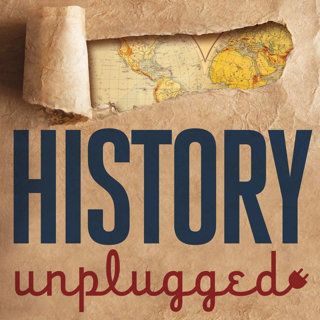
Science progresses through breakthrough discoveries, but behind many of the field's greatest advancements lies a darker history of scientific dysfunction—hostile competition, information hoarding, and criticism that has silenced revolutionary thinkers. From Alexander Gordon being forced to flee Aberdeen after proving doctors spread deadly infections, to Ignaz Semmelweis being fired and exiled for insisting doctors wash their hands between autopsies and deliveries, brilliant scientists have paid devastating personal prices for challenging medical orthodoxies. The pattern repeats across centuries: Pierre Louis was attacked for using statistics to prove bloodletting was useless, Joseph Lister faced ridicule for suggesting "invisible germs" caused infections, and Jean Toussaint suffered a nervous breakdown after Louis Pasteur appropriated his anthrax vaccine discovery. These cautionary tales reveal how the scientific community often becomes so attached to established paradigms that it rejects—or even destroys—those who dare to question consensus, no matter how strong their evidence.

Today's guest is Matt Kaplan, author of “I Told You So!: Scientists Who Were Ridiculed, Exiled, and Imprisoned for Being Right.” He has spent two decades observing dysfunction across all scientific disciplines and now calls for fundamental reform in his book "I Told You So!" He argues that personality and social connections are weighted too heavily over actual ideas and skill, with good scientists losing grants and promotions simply because they lack charisma or fail to make the right political connections. Kaplan explores how even paleontology has its bullies, pointing to cases like Alison Moyer's discovery of organic material in dinosaur bones being met with hostility for challenging established orthodoxies. Through these stories of scientists who were ultimately vindicated—from Gordon's germ theory to Semmelweis's handwashing protocols—we see how science advances faster when contrarians are allowed to have their say and when the community prioritizes rigorous debate over comfortable consensus.

See omnystudio.com/listener for privacy information.

Jaksot(1073)

Greenland is Nothing: American Nearly Acquired El Salvador, Canada, and the Kamchatka Peninsula

Greenland is Nothing: American Nearly Acquired El Salvador, Canada, and the Kamchatka Peninsula

America’s desire to expand its borders has existed since its first colonies – from attempts to settle beyond the Appalachian Mountains in the 18th century to Manifest Destiny in the 19th century down ...

2 Huhti 43min

From Big Village to Global Power: The Thousand-Year Rise of Moscow, Russia's Fortress Capital

From Big Village to Global Power: The Thousand-Year Rise of Moscow, Russia's Fortress Capital

When St. Petersburg nobility mockingly called Moscow a "big village," in the 19th century – a time when they lived in all the excess found in a Tolstoy novel -- they couldn't have imagined the provinc...

31 Maalis 56min

American Civilians Caught Behind Enemy Lines After Pearl Harbor, and How They Were Repatriated

American Civilians Caught Behind Enemy Lines After Pearl Harbor, and How They Were Repatriated

In the wake of Pearl Harbor, more than ten thousand Americans living abroad became trapped in Japanese-controlled territories, and with rumors of ill treatment and torture, the U.S. State Department w...

26 Maalis 47min

Washington's Crossing from the Other Side: Three Hessian Soldiers' Stories of Defeat and Capture at the Battle of Trenton

Washington's Crossing from the Other Side: Three Hessian Soldiers' Stories of Defeat and Capture at the Battle of Trenton

Emanuel Leutze's iconic painting Washington Crossing the Delaware shows the general standing heroically at the bow of his boat, staring toward an unseen enemy across the icy river. But who were those ...

24 Maalis 46min

From Bronze to Blood: How the Sword Became Humanity's First Murder Weapon

From Bronze to Blood: How the Sword Became Humanity's First Murder Weapon

For nearly two thousand years, swords reigned as humanity's weapon of choice—the first tools designed exclusively to kill other humans rather than hunt animals. When archaeologist Paul Gething redisco...

19 Maalis 47min

How Two California Wines Shattered Centuries of French Supremacy in a Blind Taste Test

How Two California Wines Shattered Centuries of French Supremacy in a Blind Taste Test

In 1976, nine French wine judges did the unthinkable: they blindly selected two California wines over France's most elite vintages in what became known as the Judgment of Paris. This shocking upset se...

12 Maalis 36min

How an Italian Engineer with 700 Knights Defeated 100,000 Ottoman Troops at the Siege Rhodes

How an Italian Engineer with 700 Knights Defeated 100,000 Ottoman Troops at the Siege Rhodes

Throughout the 16th century, one man stood between the Ottoman Empire and European domination, yet his name has been largely forgotten. Gabriele Tadino was an Italian military engineer whose genius tr...

10 Maalis 43min

Suosittua kategoriassa Yhteiskunta

olipa-kerran-otsikko
i-dont-like-mondays
sita
siita-on-vaikea-puhua
kaksi-aitia
gogin-ja-janin-maailmanhistoria
uutiscast
antin-palautepalvelu
poks
joku-tietaa-jotain-2
kolme-kaannekohtaa
mamma-mia
aikalisa
yopuolen-tarinoita-2
rss-murhan-anatomia
rss-palmujen-varjoissa
rss-nikotellen
meidan-pitais-puhua
naakkavalta
loukussa