Male Rape Scandal: The Boy Scouts of America-backed by churches and royalty-taught boys to trust their leaders while secretly keeping "perversion files". Hundreds of thousands of boys abused.

Male Rape Scandal: The Boy Scouts of America-backed by churches and royalty-taught boys to trust their leaders while secretly keeping "perversion files". Hundreds of thousands of boys abused.

"When an institution knows who the predators are and moves them instead of stopping them, the cover-up becomes part of the crime."

The Boy Scouts of America Abuse Scandal: A Century of Hidden Files, Predators, and the 2022 Survivor Settlement

The Boy Scouts of America abuse scandal is one of the largest child abuse cases in U.S. history. For decades, the Boy Scouts promised parents honor, safety, and leadership for their sons. Instead, court records reveal a century-long pattern of hidden abuse and institutional silence.

This episode examines the Boy Scouts abuse scandal, the secret "ineligible volunteer" files documenting suspected predators, and how thousands of boys were harmed while the organization continued to present scouting as safe. The program also traces the Boy Scouts abuse timeline, from early warnings in the 1910s to the historic bankruptcy and 2022 survivor settlement that exposed the scale of the abuse.

Using court filings, investigative reporting, and survivor testimony, the episode explores how the Boy Scouts of America sexual abuse scandal unfolded and why the warning signs were ignored for decades.

Beyond the Boy Scouts, the episode also examines a broader and often overlooked issue: the rape and abuse of boys inside trusted institutions. From scouting programs to boarding schools and church-run youth organizations, the same pattern appears again and again—warnings ignored, victims silenced, and institutions protecting themselves first.

Music: Doctor My Eyes (Remastered)

An update on our efforts to protect minors and families - YouTube Blog

On YouTube's Digital Playground, an Open Gate for Pedophiles - The New York Times

YouTube Is A Pedophile's Paradise | HuffPost Latest News

Creative Good: Google Profits from Pedophiles

Boy Scouts Abuse Survivor Shares His SHOCKING Life Story

Survivor Stories:

A Former Man City Scout Repeatedly Abused Me As A Child | Minutes With | @LADbible TV

A new documentary tells the story of Boy Scouts sexual abuse scandal | Nightline

5 Signs That A Child Is Being Abused or Groomed

Survivor Stories: I was a male victim of sexual abuse

I was abused as a child - Sharing my story to help others

***********************************************************************************

***********************************************************************************

Excellent Examples: A Survivor Story: Guerry Glover

I was sexually abused by my step-grandad in front of my family | Perry Power

INCEST: A Family Tragedy (TW: Graphic Descriptions)

Confessions of a Predator - Full Segment - YouTube

When girls do it: an examination of female sexual predators (EXCLE)

Harrison James EP1: I was being sexually abused by my stepmother at 13, then she had my baby.

***********************************************************************************

***********************************************************************************

Baden Powell - Scouting Documentary (1984)

Family History: Lord Robert Baden Powell

What Made Robert Baden Powell the Hero of Mafeking?

Named his son Peter Lord Robert Baden-Powell

Pan – Black Witch Coven

Pan is Satan – Non-Fiction – STORIES BY XPANTHER

The Dark History Of Peter Pan

Crowley: Night of Pan - Wikipedia

Aleister Crowley: His Story, His Elite Ties and His Legacy - The Vigilant Citizen

Aleister Crowley- The 'Great Beast' & the Gods of Greece | johnkruseblog

Peter Pan's Dark Origins: A Place Your Childs Mind Should Never Land - Little Light Studios

Peter Pan's dark side emerges with release of original manuscript | JM Barrie | The Guardian

The shock of the old: what the sculpture of Pan reveals about sex and the Romans | Museums | The Guardian

Pan (god) - Wikipedia

Peter Pan (character) - Wikipedia

More Satanism... the band KILLERS

Scout's Honor: The Secret Files of the Boy Scouts of America FULL MOVIE Documentary - Watch Online

'Vastly worse than other scandals': new film explores sexual abuse in Boy Scouts | Documentary films | The Guardian

Clergy Child Sexual Abuse: Jeff Anderson & Associates Questions & Answers - Jeff Anderson and Associates

Scouting America | Prepared. For Life.™

Scouting America - Wikipedia

History of Scouting America - Wikipedia

71 Years Ago Today: Hitler Youth vs. The Boy Scouts – PJ Media

FORUM FOR VICTIMS OF CHILD ABUSE: ON PEDOPHILE ORGANIZATIONS

Hitler Youth Camps in America (1935-1941)

Boy Scouts Are From Mars, Girl Scouts Are From Venus - The Atlantic

Girl Scout History | Girl Scouts

If You Like Girl Scout Cookies, Police Have a New Warning — Best Life

Boy Scouts announce name change as girls join ranks

Opus: The Cult of Dark Money, Human Trafficking, and Right-Wing Conspiracy inside the Catholic Church

[PDF] [EPUB] Opus: The Cult of Dark Money, Human Trafficking, and Right-Wing Conspiracy inside the Catholic Church Download

Amazon.com: Opus: The Cult of Dark Money, Human Trafficking, and Right-Wing Conspiracy inside the Catholic Church: 9781668016145: Gore, Gareth: Books

Do you have a psychopath in your life? The best way to find out is read my book. BOOK *FREE* Download – Psychopath In Your Life4

Support is Appreciated: Support the Show – Psychopath In Your Life

Tune in: Podcast Links – Psychopath In Your Life

Download Pods here: TOP PODS – Psychopath In Your Life

My old discussion forum with last 10 years of victim stories, is back online. Psychopath Victim Support Community | Forums powered by UBB.threads™

Google Maps My HOME Address: 309 E. Klug Avenue, Norfolk, NE 68701 SMART Meters & Timelines – Psychopath In Your Life

1890–1910 — Elite Scandals and Boarding School Concerns

One of the first major public scandals involving elite abuse of boys was the Cleveland Street scandal.

Key facts:

  • Telegraph boys were exploited in a London brothel
  • Elite clients were implicated
  • the scandal reached close to the royal court

Around the same period, educators began warning about:

  • abuse inside boarding schools
  • hazing and sexual violence among students
  • predatory teachers

However, these warnings were rarely pursued publicly.

Children in clubs, church programs, and youth organizations historically received little or no sex education, and that gap is frequently cited in survivor testimony and institutional investigations.

The key issue is that sex education is usually delivered through schools, while many abuse cases occur in extracurricular or religious environments where that education is not provided.

Youth Organizations Rarely Teach Sex Education

Programs such as:

  • Boy Scouts of America
  • Girl Scouts of the USA
  • church youth ministries
  • sports leagues

generally do not teach sex education.

Instead they focus on:

  • leadership
  • religion or moral instruction
  • outdoor activities or athletics.

Even organizations that include health badges or life-skills training typically avoid explicit sexual education topics.

Religious Programs Often Avoid Sexual Topics

Many church youth programs emphasize moral teachings rather than biological education.

For example:

  • The Church of Jesus Christ of Latter-day Saints youth instruction emphasizes chastity and modesty.
  • Catholic youth programs historically emphasized abstinence and purity.
  • Evangelical youth ministries often focus on abstinence pledges.

In many of these settings:

  • anatomical language may be avoided
  • explicit sexual discussions are discouraged.
Authority Structures in Youth Groups

Many youth organizations rely on adult authority figures and trust-based environments.

Children are often taught:

  • respect leaders
  • obey adults
  • trust mentors.

Psychologists studying abuse cases note that these structures can make it harder for children to recognize or report misconduct.

Abuse Prevention Education Is a Recent Development

Explicit teaching about abuse recognition only became common after the late 20th century.

A major turning point in the United States was the Child Abuse Prevention and Treatment Act (1974), which led to mandatory reporting systems and increased awareness.

Even after that, many youth organizations did not adopt formal abuse-prevention training until the 1990s–2010s.

School Knowledge Doesn't Always Transfer to Institutional Contexts

Even when children learn basic sex education in school, they may not connect that knowledge to abuse situations.

Researchers studying institutional abuse cases found that children often believed:

  • the adult was "teaching" them something
  • it was part of a game or special attention
  • they would get into trouble if they told.

This confusion appears frequently in testimony from survivors connected to organizations such as the Boy Scouts of America and religious institutions.

Key Takeaway

Historically:

  • schools provided limited sex education
  • youth organizations provided almost none
  • church settings often avoided sexual discussion entirely
That combination meant many children lacked the vocabulary and conceptual framework to identify abuse, which is why survivors often say they did not understand what was happening at the time. The "chartered organization" system is one of the most important — and least understood — parts of how the Boy Scouts of America operated for more than a century.

It explains why churches became deeply tied to the program.

How the charter system worked

The Boy Scouts did not usually run local troops directly. Instead, they licensed the program to outside institutions called chartered organizations.

Typical charter partners included:

  • The Church of Jesus Christ of Latter-day Saints
  • Roman Catholic Church
  • United Methodist Church
  • civic groups like Rotary, Lions Clubs, and schools

By the 2000s, about 70% of Scout units were sponsored by religious institutions.

What the charter agreement actually required

Each year the church or sponsor signed a charter agreement with the Boy Scouts. Under that agreement the church agreed to:

  • Own and operate the troop
  • Select the adult leaders
  • Provide meeting space
  • Supervise the program locally

The Boy Scouts national organization provided:

  • the program materials
  • training manuals
  • uniforms and branding
  • insurance coverage
  • background check guidance (later years)

So legally, the troop was often technically run by the church, not the national organization.

Why churches agreed to sponsor troops

For many churches the Scouts functioned as a youth ministry program.

Benefits included:

  • structured activities for boys
  • leadership training
  • moral education
  • recruitment and retention of young families

For example:

The The Church of Jesus Christ of Latter-day Saints made Scouting the official youth program for boys in the United States for decades, sponsoring tens of thousands of troops.

Why this mattered legally in abuse cases

When abuse occurred, the legal question became:

Who was responsible?

Possible defendants included:

  • the troop leader (individual offender)
  • the chartered organization (church or sponsor)
  • the local Boy Scout council
  • the national Boy Scouts organization
  • me lawsuits argued that churches shared responsibility for screening and oversight.

How this played into the bankruptcy settlement

During the bankruptcy negotiations, charter organizations sought legal protection from future lawsuits related to Scout troops they sponsored.

Different groups handled this differently:

  • The United Methodist Church negotiated a $30 million settlement to help protect its congregations.
  • Some Catholic dioceses contributed funds through local councils.
  • The The Church of Jesus Christ of Latter-day Saints reached a separate $250 million settlement in 2022 to resolve claims connected to Mormon-sponsored troops.

These payments were part of the larger $2.46 billion survivor trust.

Why critics say the system created risk

Investigations and court records showed that the charter structure sometimes produced diffused responsibility:

  • churches assumed the Boy Scouts handled safety policies
  • councils assumed churches supervised leaders
  • national leadership assumed local sponsors controlled the troops

In abuse cases, this blurred accountability, which became a central issue in litigation.

Many Scout leaders were church members

Because churches sponsored a large share of troops, many adult volunteers were:

  • members of the sponsoring church
  • parents in the congregation
  • sometimes clergy or church youth leaders

For example, troops sponsored by the The Church of Jesus Christ of Latter-day Saints were often led by adult male members of the congregation assigned by the church. Similar patterns existed in Catholic and Methodist congregations.

Some abuse cases involved those leaders

Court filings and the released "Ineligible Volunteer Files" show that some individuals accused of abuse were:

  • troop leaders
  • assistant scoutmasters
  • merit badge instructors
  • camp staff

In troops sponsored by churches, those individuals could also be members of the church that chartered the troop.

But the offenders were not limited to clergy

Most of the accused individuals documented in Boy Scouts files were volunteer leaders or adults connected to the troop, not necessarily ordained clergy.

They often included:

  • teachers
  • community volunteers
  • parents
  • youth leaders
Why this became a legal issue

Because churches sponsored the troops, lawsuits sometimes argued that the chartered organization had responsibility for screening and supervising leaders.

At the same time, the Boy Scouts of America maintained its own internal files documenting suspected offenders.

That overlapping structure — church sponsor, local council, national organization — became central to the litigation over who was responsible.

The files often called the "perversion files" were internal records maintained by the Boy Scouts of America.

Officially they were known as the Ineligible Volunteer Files (IV Files). They documented adults who were barred from participation in scouting because of suspected misconduct, including sexual abuse.

Where the Files Were Stored

For most of their existence the files were kept at BSA national headquarters.

Key locations over time:

  • early decades: New York headquarters
  • later decades: Irving, Texas national office

Local councils usually sent reports to the national office, which decided whether to place a person in the IV file system.

The files were physical paper records for most of the 20th century and were later partially digitized.

Who Had Access to Them

Access was very restricted.

Typically limited to:

  • national BSA executives
  • legal department staff
  • selected risk-management personnel
  • occasionally law enforcement (if requested)

Local troop leaders or the public did not have access.

In many cases:

  • councils were informed that a person was "ineligible"
  • but the details of the allegations were not widely shared

This limited disclosure became one of the major criticisms in later lawsuits.

What Information Was in the Files

Entries often included:

  • letters from local scout leaders reporting concerns
  • internal memos about suspected misconduct
  • witness statements
  • correspondence with police (sometimes)
  • decisions about banning the individual

However, the files did not always mean the person was reported to law enforcement.

In many cases the response was simply:

  • remove the volunteer
  • mark them "ineligible"
  • keep the record internally.

When the Files Became Public

The existence of the files became widely known after litigation in the 1980s and 1990s.

A major moment came in 2012, when an Oregon court ordered thousands of documents released in the case of Doe v. Boy Scouts of America.

That release exposed:

  • thousands of internal abuse reports
  • records dating back to the 1920s.
Did Scouts in Other Countries Use the Same System?

Not exactly.

The Boy Scouts of America is only one member organization of the global scouting movement overseen by the World Organization of the Scout Movement.

Each national scouting body operates independently.

Examples:

  • The Scout Association (UK)
  • Scouts Canada

These organizations had their own disciplinary systems.

Some also kept internal records of banned volunteers, but there was no universal global file system like the BSA IV files.

  • Historically:
  • information sharing between countries was limited
  • banned volunteers in one country could sometimes move elsewhere without the same restrictions.

Why the Files Became So Controversial

Critics argued the system showed the organization knew about many suspected offenders but handled them internally.

Major criticisms included:

  • offenders sometimes removed quietly rather than reported
  • records not shared widely enough to prevent re-entry
  • lack of transparency with parents or the public

Supporters of the system argued the files were intended to prevent known offenders from volunteering again, but the debate over whether they were used effectively became central to later lawsuits.

Key point:
The IV files show that the organization maintained internal records of suspected predators for decades, but the restricted access and limited reporting practices became one of the central issues examined during the later abuse litigation.

In the Ineligible Volunteer Files (IV Files) maintained by the Boy Scouts of America, relocation or quiet removal of a suspected offender usually appeared indirectly in correspondence and administrative notes, rather than in a formal category labeled "relocated."

The files were essentially case folders, and they often contained letters between local scout councils and the national office. When a person was moved, resigned, or quietly removed, it tended to show up in several recognizable patterns.

"Resigned" or "No Longer Registered"

One common notation in the files was language such as:

  • "volunteer has resigned"
  • "registration not renewed"
  • "leader removed from position"

This meant the individual was no longer active in that troop or council.
However, the record often did not clearly state why in the summary line.

The detailed letters inside the file sometimes contained the actual allegation.

Correspondence Between Councils

When a leader moved to another region, files sometimes contained letters like:

  • a council asking the national office if a person was eligible
  • national staff responding that the individual was "ineligible for registration."
  • Example pattern in the records:
  • complaint from local troop
  • council informs national office
  • national office adds person to IV file
  • later inquiry from another council about that person

These letters sometimes reveal that the person attempted to register elsewhere.

"Confidential" Warnings

In some files the national office sent letters to councils marked:

  • "confidential"
  • "do not register this individual"
  • The letters might say the person had been barred from scouting but often avoided explicit descriptions of the allegations.

Transfers or Moves

Relocation sometimes appeared in notes indicating:

  • the person moved to another city or state
  • the council lost contact
  • the leader transferred to another troop

The files sometimes included follow-up letters asking whether the person had reappeared in scouting elsewhere.

Not All Files Show a Completed Ban

Another important detail historians found in the IV files:

Some folders show investigations that ended without a ban.

Reasons included:

  • lack of proof
  • offender leaving before action taken
  • concern about defamation liability

In those cases, the file might simply state that the individual "left scouting."

How Researchers Identified Relocations

  • When historians and journalists later analyzed the files, they looked for patterns such as:
  • repeated registrations in different councils
  • correspondence between councils about the same person
  • notes showing a volunteer leaving one troop immediately after allegations

These patterns suggested that in some situations offenders left quietly rather than being publicly reported.

What the Files Were Designed For

The IV system was originally intended as a central blacklist to prevent known offenders from registering again.

If someone on the list attempted to volunteer:

  • their registration should be rejected by the national office.

However, the effectiveness depended on:

  • councils reporting the allegations
  • accurate identification of the individual
  • the offender attempting to re-register.

Key point:
Relocation in the files usually appears through administrative language (resigned, moved, not re-registered) and letters between councils, rather than an explicit note saying someone was "transferred after abuse."

Researchers had to piece together those movements by reading the entire correspondence chain inside each file.

The True Story Behind Peter Pan Is Crazy & A Little Creepy

Prepare yourself — we are about to enjoy (or endure, depending on your perspective) a Peter Pan renaissance.

This coming spring, Finding Neverland (the musical version of the 2005 film) comes to Broadway, starring Matthew Morrison and Kelsey Grammer. And, next summer, Pan — a Peter Pan prequel, of sorts — hits movie theaters with Hugh Jackman as its villain, Blackbeard. But, this Thursday, NBC presents Peter Pan Live! with Allison Williams playing the legendary Boy Who Never Grew Up, along with Christopher Walken as Captain Hook.

Peter Pan was last performed live on TV in 1955 and again in 1956, starring Broadway icon Mary Martin, the originator of the theatrical role. A record 65 million viewers tuned in. Will this version break records, too? Is Allison Williams the millennial Martin? We shall see. At the very least, the show will be something the entire family can hate-watch, drink-watch, and simply just regular-watch, all at the same time.

Peter Pan has had many incarnations over the years, but the origins of the tale, as well as the fates of its author, J.M. Barrie, and the children who inspired it, turn out to be much, much more interesting. Ahead, we've put together a quick primer.

Barrie & The Boys

J.M. Barrie was born in 1860, the son of Margaret and Alexander Barrie, in the Scottish town of Kirriemuir. He had an older brother, David, who was known to be one of those beautiful golden children who everyone adored. In the winter of 1867, David was hit by a fellow ice-skater. He fell, cracked his skull, and died. Barrie's mother never recovered mentally, and was said to find small comfort in the fact that David would remain a boy forever. It was here that Barrie's lifelong obsession with boys and the preservation of their innocence became anchored in his psyche.

Barrie moved to London, and, in 1894, married an actress named Mary Ansell. As a kind of wedding present, he gave her a St. Bernard dog. The couple never had children and Barrie, evidence suggests, never consummated their marriage. He just as much declared it in his story "Tommy and Grizel," (1900) about a toxic marriage, which he wrote six years into his marriage with Ansell: "Grizel, I seem to be different from all other men; there seems to be some curse upon me…You are the only woman I ever wanted to love, but apparently I can't." The marriage between J.M. and Mary did not last, and they divorced in 1909.

In 1898, Barrie met a pair of boys in Kensington Gardens, an expanse adjacent to London's Hyde Park. George and Jack Llewelyn Davies, aged 5 and 4, were walking with their nurse. Barrie began to see them there repeatedly, and he befriended them. Soon after, he met their parents, Sylvia and Arthur. Later, three more sons were born: Peter, Michael, and Nico. The Davies clan began to let Barrie into their lives, and gradually Barrie became "Uncle Jim."

In the book, a boy named David is befriended by the narrator, who pretends to have a son of his own who died. He uses this lie to create empathy with David's parents. The narrator is particularly excited that David's mother, Mary, has been duped, which allows him to "take [David] utterly from her and make him mine."

Within the novel, the narrator invents a story about a magical boy named Peter Pan who never grows old, and who lives in Kensington Gardens.

In his biography J.M. Barrie and the Lost Boys, Andrew Birkin stresses that, despite it all, he doesn't believe Barrie was a sexual predator of children. Barrie, he says, was "a lover of childhood, but was not in any sexual sense the pedophile that some claim him to have been." It's a similar defense many provide for Michael Jackson: that his obsession with boys, deep-seated and obsessive as it was, had no physical aspect to it.

But, Piers Dudgeon, in his more damning biography Neverland: J.M. Barrie, the Du Mauriers, and the Dark Side of 'Peter Pan', thinks differently, digging up incriminating evidence that there was more to Barrie's attachment to the Davies children than simple protective friendship.

First, there are the letters he wrote to Michael Llewelyn Davies, who is often thought of as Barrie's favorite Davies child. On the eve of Michael's 8th birthday, in June 1908, Barrie wrote:

"I wish I could be with you and your candles. You can look on me as one of your candles, the one that burns badly — the greasy one that is bent in the middle. But still, hurray, I am Michael's candle. I wish I could see you putting on the redskin's clothes for the first time... Dear Michael, I am very fond of you, but don't tell anybody."

And, then there is the matter of Barrie becoming the boys' guardian. Arthur Llewelyn Davies died from cancer of the jaw in 1907, and Sylvia died of lung cancer in 1910. Sylvia had left a handwritten document that said: "What I wd like wd be if Jenny wd come to Mary & that the two together wd be looking after the boys & the house." (Mary was the boys' nanny; Jenny was Mary's sister.) Barrie transcribed the will himself and sent it to the boys' maternal grandmother, altering Jenny to Jimmy, so it appeared that Sylvia wished for him to become the boys' guardian. Intentional, or just a really convenient accident? Regardless, the children became his to care for. But, amid all these machinations, there is, as of yet, no hard evidence that Barrie ever physically abused his charges.

The Fate Of The Davies

In 1915, George, the oldest of the Davies boys, was killed in the World War I, fighting with his regiment in Flanders. The death of his brother caused Michael and Barrie to grow even closer. Michael left home to attend Eton College and had a hard time adjusting. He was troubled and antisocial, but became very close with Rupert Buxton, the son of a decorated baronet. The two reportedly became inseparable, spending time both at the university and on holiday together. In May of 1921, Davies and Buxton drowned together in Sandford Pool, a body of water a few miles from Oxford. Some reports say that the bodies were found clinging to each other. Theories of how and why they died abound, but some believe that Buxton and Davies were lovers, and this was a suicide pact. In later interviews, Michael's younger brothers Peter and Nico acknowledged suicide as a likely explanation.

Years later, Peter Llewelyn Davies became a successful publisher. Many of the letters between Michael and Barrie were destroyed by him, as he grew to dislike having his name associated with Peter Pan. (He is quoted calling Peter Pan "that terrible masterpiece.") Many, including his son Ruthven, imply that the unwanted fame drove Peter to become an alcoholic. In April 1960, Peter threw himself under a subway train in London.

Barrie died of pneumonia in 1937. He bequeathed the copyright to all of his Peter Pan work to the Great Ormond Street Hospital, a hospital for children, which still greatly benefits from owning the rights.

Peter Pan & Boyology

No writer can predict the timing of their work and how it will resonate. But, Peter Pan, coinciding with a cultural obsession with boyhood at the time, struck a powerful chord with readers of the early 20th century. Amid the upper and middle classes, there was a growing paranoia that their boys were getting "soft" and losing their virile masculinity. This culminated in Henry William Gibson's book Boyology, a pseudo-science tome that insisted parents and institutions must preserve and honor the "wildness" of boyhood. "When he starts out to be a boy, he is more a little beast," writes Gibson, "He is, though, a man in the making." A wave of efforts to protect and develop a kind of organic juvenile boyhood commenced. Robert Baden-Powell writes Scouting for Boys and sparks the Boy Scout movement (1908); Father O'Flanagan creates Boys Town in Nebraska (1917).

Yet Peter Pan's placement amid this "boyology" movement is a bit more artful and slippery. "I see Barrie as being in conversation both with and against these boyologists," says Brian Herrera, a Princeton professor who teaches a course in "Queer Boyhoods." "He shares with the boyologists the idea that there is something precious and extraordinary about boyhood, but he doesn't seem to see adult masculinity as the natural next step of boyhood wildness, but as a cruel step away from the magic of boys."

Peter and the Lost Boys are the boys who, as the story goes, "fall out of their prams when the nurse is looking the other way and if they are not claimed in seven days, they are sent far away to the Never Land" where Peter Pan is their captain. To our contemporary eyes, this can be seen as a queer allegory. "Peter Pan's defiance is read as an abdication of the responsibility of maturity and, like gays, an abdication of the responsibilities of patriarchal heterosexual masculinity," observes Herrera. "That Peter finds a non-procreative, homosocial world to be ample enough for his everlasting happiness? That's pretty darn queer."

And, still, the story of Peter Pan endures. "…in Peter Pan, Barrie achieved the rarest alchemy of all, the one that no writer can plan or predict: he invented a myth," wrote Anthony Lane in his 2004 essay about the author in The New Yorker. Peter Pan, even when reading or watching it as a child, has a rare sadness to it. It feels infused with a melancholic ache not often found in the protective, parent-friendly children's literature of today. Perhaps, like all myth, it is because of the pain and tragedy woven into its creation that makes it so timeless. Under the layers of Disney fairy dust, summer blockbuster bravado, and, now, Allison Williams's pixie-cut wig, is a deeper, more complicated story. Source: The True Story Behind Peter Pan Is Crazy And A Little Creepy

Who the God Pan Was

In Greek mythology, Pan was:

  • a nature deity of forests, mountains, and shepherds
  • depicted with goat legs, horns, and a flute (pan pipes)
  • associated with wildness, sexuality, and untamed nature

the source of the word "panic," because his sudden appearance was said to frighten travelers.

Pan represented instinct, wilderness, and freedom from civilized rules.

Why J. M. Barrie Used the Name "Pan"

The author J. M. Barrie almost certainly drew on the classical myth intentionally.

Peter Pan shares several symbolic traits with the Greek god:

  • Wild child of nature
    Peter lives outside civilization in Neverland, similar to Pan living in forests.
  • Musical and playful spirit
    Pan plays pipes; Peter Pan is constantly playful and mischievous.
  • Refusal of adult society
    Both figures represent freedom from social rules and adulthood.
  • Leader of youthful followers
    Pan in myth leads nymphs and spirits; Peter leads the Lost Boys.

So the name "Pan" signals a wild, eternal spirit of youth and nature.

Why Some People Link It to Secret Societies

The speculation comes from the fact that Pan imagery appears in some occult or esoteric traditions, especially in the 19th and early-20th century when Barrie was writing.

Groups influenced by romantic mysticism sometimes used Pan as a symbol of:

  • primal nature
  • liberation from social constraints
  • ancient pagan wisdom

However, historians generally see Barrie's use of Pan as literary symbolism, not a coded reference to secret societies.

Barrie was deeply influenced by:

  • classical mythology
  • Victorian fairy traditions
  • children's fantasy literature

The Real Literary Meaning

In literature, Peter Pan = the spirit of childhood that refuses civilization.

The name "Pan" reinforces the idea that Peter is:

  • wild
  • free
  • outside adult society
  • closer to myth than reality.
In other words, Barrie used a pagan nature god as a metaphor for eternal boyhood.

Barrie first named the play The Boy Who Hated Mothers

The original title reflected Barrie's complex relationship with his mother, his two failed marriages, and the fact that, although he raised the Llewellyn Davies' children as their guardian, Barrie had no biological children. Some speculate Barrie never consummated his marriages

It seems J. M. Barrie based the character of Peter Pan on himself.

Barrie put these emotions into his art, creating Peter Pan, a week-old baby who runs away to play with the fairies and feels rejected when he returns to discover his window closed and his mother cuddling another baby. In "The Boy Who Wouldn't Grow Up," Peter Pan is a tween searching for a mother to bring back to Neverland, settling on Wendy and her descendants to care for him and his Lost Boys. Wendy isn't a proper mother. She is still a child, caring for other children, as his mother and sister once did.

Pan is also known for his ability to incite panic, leading this god into the realm of trickster gods. Peter's moral ambiguity and rebelliousness center him squarely in the realm of trickster figures (per Eva Valentova's essay). Peter Pan certainly embodies the archetype of one who revels in chaos. He regularly incites it by starting fights with Captain Hook, encouraging wildness in the Lost Boys, and insisting the only rule in Neverland is that you can't grow up!

Mermaids

Peter lures children like Wendy and her brothers to Neverland, much like Persephone was kidnapped and taken to the underworld by Hades. This connection brings us back to Peter Pan's connections to, and obsession with, death. Although Peter Pan is depicted as mischievous in Disney's sanitized version of the tale, in the original play and book, Peter is decidedly more sinister. His affinity with the mermaids who transform into sirens in the moonlight suggests Peter Pan himself might be prone to transformation as well.

He is sometimes associated with sexual excess in mythology, but classical sources do not portray him primarily as a god of rape or torture.

The name "Pan" was used mainly because Barrie wanted a wild, woodland, mischievous spirit.

Barrie was also known to have had friendships with other children, both before he met the Davies boys and after they had grown up. There has since been accusations that Barrie was a pedophile.

One source for the speculation is due to a scene in the novel "The Little White Bird", in which the protagonist (who resembles Barrie) helps a small boy undress for bed, and at the boy's request they sleep in the same bed.

Disney 's white washed version of the character has toned down the sexual perversion but still retains the "devil-like" attributes. Enticing the little girl to leave her parents authority and go to a place with no rules… "there is only one thing you have to do… leave home behind and you can never come back". It's the same lie Lucifer told the angels in heaven… "don't you want to go to a place where we don't ever have to follow the rules… all you have to do is leave home behind and you can never ever come back?" Pans friends, not accidentally called "the lost boys" inhabit an island called "Neverland". Where "selfishness" and "do what thou wilt" is the rule of the day. Kind of sounds like a similar story where a bunch of "pirates" or "Lost Angels" inhabit this "island in space" called planet earth.

Michael Jackson's was so obsessed with the story of Peter Pan that he ended up building his own private theme park in his backyard called "Neverland". Like Barrie, Jackson seems to have an infatuation with the sexual deviant god Pan, as depicted in the artwork hanging in his studio. The painting has jackson surrounded with naked little boys and girls while holding the Pan pipes. His ranch full of sculptures of little boys and girls. The very flag and logo for the Neverland Ranch is of a little boy. Coincidence?? You be the judge.

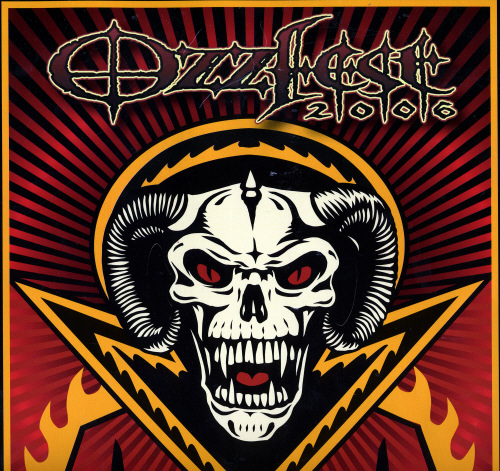
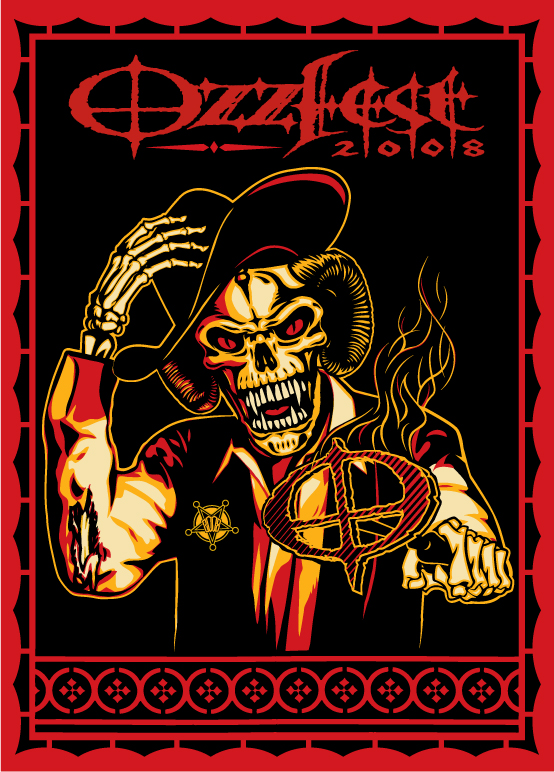
Heavy Metal rocker and known Satanist, Ozzy Osbourne, has featured Pan on all of his recent album covers (2000, 2001, 2002, 2003, 2004, 2005, 2006, 2007, 2008). Ozzy is bound for Hell. The Rock 'N' Roll industry is infamous for worshipping Pan, who is the very embodiment of Rock music. Pan represents Satan, which is what the ever-so-popular Satanic hand sign (more signs) shows, allegiance to the Beast, the coming Antichrist.

By Anthony Roe
Published at Beltane 1999

As a schoolboy looking through the pages of Picture Post, I remember being curious about the reproductions of paintings from the walls of Aleister Crowley's Abbey in Sicily, uncovered by the underground filmmaker Kenneth Anger, who produced the Crowley inspired Pleasure Dome.

There was one picture taken in the Chamber of Nightmares, with the sexologist Kinsey strategically posed in the foreground. The picture of a goat was evident. In my youth I did not recognize Pan, the son of Hermes, the Arcadian god of lust and magic who seduces men and women with his pipes and wantonness, the symbol of the libido in its sexual aspect, vagrant male sexuality, the personification of undisciplined procreation in nature, But the image remained with me, and I subsequently learnt that the herdsmen of ancient Greece adored Pan, and discovered the magick in connection with him.

Looking at such gods of the simpler Greek communities, we find them often vague in their nature and sometimes limited in their functions to a far greater degree than the better-known deities. It is noteworthy that some at least of Pan's worshippers were none too certain whether he was one or many; at all events, Aristophanes and Plato, to say nothing of later authors, have heard of the plural, Panes. But this is exactly what, under the circumstances, we should expect, and indeed find in several like cases. It is probable on the whole that his name means the Feeder or Pasturer. We can easily imagine that in Arcadia, where he was originally worshipped, many little groups of herdsmen devoutly adored each its divine Pasture, perhaps represented by some stick or stone set up in a holy place, and quite possibly each group was ready to proclaim the superiority of its own Pan to everyone else's. This might well be so, whether the god had originally been conceived as a single being or a plurality, for local cults tend to break up in this way. Nothing can be more certain than that the Virgin Mary is one person in every kind of Christian theology, and no cult is more widespread in modern Greece than hers; but I have heard of a Chian peasant who proclaimed in emphatic and not over-delicate language that the Panaghia (the All-Holy One, her popular name ) of his village church could out do all other Panaghies whomsoever.

The same divine Pasturer was never a very exalted figure, nor always treated with profound respect, or what we should regard as such, even by those who worshipped him in all sincerity. His business (a god has his duties; even Zeus is commended for 'doing well' when he sends seasonable rain) was to keep his herdsmen-worshippers well supplied with meat. The obvious way to do this was to make their flocks and herds increase abundantly, and theirs were mostly small cattle, sheep and goats, especially, it would seem, the latter. Now the obvious increaser of a herd of goats is the he-goat, and a divine he-goat is essentially what Pan was supposed to be. When represented by an image at all, he regularly had goat's legs and a shaggy beard, and his few legends make him out to be as lustful as his prototype.

His power was not unfailing, and, like that of not a few gods of sundry religions, might need stimulation and renewal at times. We know how this was done; if the meat supplies, whether got from the flock or by hunting, were scanty, the boys used to beat Pan tie his statue: or whatever object represented him) with squills (a liliaceous plant, scilla maritima, resembling the bluebell), a plant supposed to have the virtue of driving away evils. Thus they at once roused the god to further efforts and rid him, to the best of their ability, of whatever unlucky influence had hindered his activities. Later mythologers prepared a parentage for the Pasturer. Reckoned amongst the sons of Hermes was this great phallic god of the inhabitants of the Peloponnese, especially of Arcadia - a goat-horned, goat-legged god named Pan. In a story concerning Hermes set in Arcadia, Hermes pastured sheep for a mortal master, Dryops, 'oak' - the first Green Man - and whilst doing so fell in love with a local nymph. Hermetic desire found fulfilment, and a magic child was born, with goat's feet and goat's horns, crying and laughing.

When his mother had borne him, she sprang up and fled, leaving none to suckle the child, so terrified was she saw its wild and bearded face. Hermes picked up his son, wrapped him in a hare's pelt, and hastily brought him to Olympus. He sat down beside Zeus and the other gods, and introduced his son to them. The immortals were delighted with the child - Dionysus most of all. They named him Pan because 'all' had been pleased with him.

In Greek 'pan' means 'all', and the god was later identified with the physical Universe - although his name, except for its sound, has nothing to do with this. The story just told suggests that Pan was one of the youngest generation of gods. But each generation of gods must have had its own Pan, seeing that there was already a Pan in Zeus's cave, who helped Zeus against the Titans, or against Typhon, and seeing also, that a Pan was - together with Arcas - a son of Zeus and Callisto. The great poet and mythologian Aeschylus distinguished between two Pans; a son of Zeus, a twin brother of Areas; and a son of Kronos. The distinction between various Pans was also expressed in composite names such as Titanopan, Diopan, Hermopan - referring in each case to his father - or Aigipan, which was used by those who did not wish to assign any particular parentage to the god.

In the retinue of Dionysus, or in depictions of wild landscapes, there appeared not only a great Pan, but also little Pans, Paniskoi, who played the same part as the Satyrs. This resemblance to the Satyrs, of whom there must at first have been more than one, led to a dispersion and multiplication of the god Pan, who perhaps, when he originally came into being, had only a single twin brother and represented the darker half of a divine male couple. Pan belongs to that twilight world of satyrs, fauns, centaurs and sileni, who according to venerable tradition once thronged the globe, and whose descendants may still be glimpsed by the sensitive. (Crowley once confessed to having seen a faun peering at him from behind a tree at Fontainbleau.) These earlier stages of human evolution, the androgynous and semi-animal states, are yet recapitulated in the womb.

The characteristics that were ascribed to Pan in numerous lesser tales are well known: dark, terror-awakening, phallic, but not always malignant. He could, of course, sometimes be malignant, especially at noon, if he were awakened from his sleep. At night he led the dance of the nymphs, and he also ushered in the morning and kept watch from the mountain summits. Many love-stories were told of him, in which he pursued nymphs. These chases often had dramatic results. Syrinx turned herself into a reed-pipe, from which Pan fashioned the syrinx, a herdsman's flute with a row of holes; Echo, chased by Pan, became a mere voice, mere refracted sound. But Pan's greatest passion was for Selene. Of this affair it was told that the moon-goddess refused to company with the dark god. Whereupon Pan, to please her, dressed himself in white ram-skins, and thus seduced Selene. He even carried her on his back. It is however uncertain whether even in the earliest time it was necessary for him thus to change his shape in order to play the role of successful lover with a goddess who repeatedly lets herself be embraced by darkness. But the myth has traceable links with the ancient devotions of Egypt. Of all the Egyptians who were skilled in working magic. Nectanebo, the last native king of Egypt, about BCE 358, was the chief, if we may believe Greek tradition. When he saw that the end of the kingdom of Egypt was at hand, he shaved off his hair and his beard, disguised himself by putting on common apparel, took ship and fled to Pella in Macedonia, where he established himself as a physician and as an Egyptian soothsayer.

The historian Pseudo-Callisthenes tells us that there Nectanebus cast the nativity of the queen, Olympias, and sent a dream to the queen by means of a wax image. His object was to persuade the queen that the Egyptian god Amun (worshipped at Luxor in ithyphallic form in the guise or the fertility god Min) would come to her at night. Nectanebus also sent a dream to King Philip of Macedon, by means of a hawk that he had bewitched with magical words, and the king was satisfied that the child to whom his wife was about to give birth was the son of the god Amun (or Ammon) of Libya, who was regarded as the father of all the kings who ascended the throne of Egypt who did not belong to the royal stock of that country. The child was Alexander the Great.

When he conquered Egypt Alexander straightway resorted to the oasis of Siwa, to visit the shrine of Jupiter-Ammon. There he embraced the god and clothed himself in the skin of the sacred ram in which the god was incarnate. Medallions of the king ever after showed him crowned with the ram's horns of kingship and divinity. Thus Greece succumbed to the wiles of Egypt, but Hellenic ways were even so impressed upon the land of the Nile, and the goat would lie with the ram.

In an Orphic fragment preserved by Marobius, the names of Jupiter and Pan appear to be titles of the all-creating power of the sun, and Pan, the universal substance is called Kerastes, the horned Jupiter. According to Plutarch, the Jupiter-Ammon of the Africans was the same as the Pan of the Greeks. This explains the reasons why the Macedonian kings assumed the horns of that god; for, though Alexander pretended to be his son, his successors never pretended to any such honor; and yet they equally assumed the symbols, as appears from their medals. The case is, that Pan, or Ammon, being the universe, and Jupiter a title of the Supreme God, the horns, the emblems of his power, seemed the most proper symbols of that supreme and universal dominion to which they all, as well as Alexander, had the ambition to aspire.

Now Nectanebo had been a pharaoh in the XXXth dynasty, and had fought the battle of Mendes, a town in the Delta, Lower Egypt, now called Ashmoun, with Ataxerxes II, his suzerain, king of Persia, whom he had utterly defeated, and together with his army expelled from the Delta, Nectanebo forever after remained faithful to the local god. The town was sacred to the worship of the god Min and the ram Mendes. This devotion Nectanebo took with him when he fled to Greece. His god was identified with Pan. (The Greeks called Min's city in the IXth nome of Upper Egypt Panopolis, today called Akhmim.) When the Ptolomies ruled Egypt after Alexander, Min was accepted as the Egyptian Pan, and the worship of the goat was conflated with that of the ram. This gave rise to the cult of the Goat of Mendes, infamous in the West as the incarnation of the Devil, the age-old arch rival to the slave masters of Christendom.

In dynastic times, the soul of Osiris was thought to be lodged in the sacred ram that was worshipped in the Western Delta town of Djedet, and was known as Ba-neb-Djedet (Ram-lord-of-Djedet), who remained a popular deity down to the Ptolomaic period. The Greeks garbled the last three syllables of Ba-neb-Djedet's name into Mendes, and two Greeks in particular, the geographer Strabo and the poet Pindar, not to mention the Roman historian Diodorus of Sicily, made the Ram of Mendes famous. Pindar insisted that this Ram was permitted to have intercourse with women, a practice attested by Herodotus.

A tapestry fragment from Egypt of the fourth century CE, now in the Boston Museum of Fine Arts, shows Dionysus accompanied by Pan, who here carries the pedum (sheperd's crook) and a faun-skin. In the background are pan-pipes. Both wear the haloes of divinity. Such 'post-classical' works bear witness to the cult of Pan all around the Meditteranean well into the Christian era. Whether this persisting iconography was supported by a continuation of the Mysteries is another question. They were probably limited to the great centers of urban civilization where his cult flourished most strongly, such as Alexandria, Athens, Pergamurn and Ephesus. The silver 'Oceanus Dish' from the Mildenhall Treasure, around 350-375ce, now in the British Museum, shows four lithe maenads dancing with Pan and his satyrs.

It was Margaret Murray who said that the gods of the old religion become the devils of the new. Jesus ended his life on earth in the southern part of Judea in Jerusalem. The death of Christ heralded the birth of a new religion which would bear his name. As this new religion grew and spread, all, or almost all, it came into contact with became its enemy. The common people, content in their style of worship were suddenly heathens, sinners and enemies of the one true God. The pair of opposites was now Paganism and Christianity. As Christ represents Christianity, Pan represents Paganism. Pan was soon to become the Christian Devil, Satan incarnate. But before this Christian conception took hold, Pan was a god.

What was there about this frolicking god of the glen that made him so odious to the new Christians? Wherein was he Satanic? Perhaps in his sexual exploits. He is known to have seduced several nymphs. He also boasted that he had coupled with all Dionysus' drunken maenads.The episode related above wherein Pan seduces the Moon points to the Christian belief that Satan is able to disguise himself and seduce chaste women. The similarity between the Church Father Origen's description of Satan and the features of Pan is very obvious.

Pan represented freedom of spirit, natural instincts, sinless love. In some parts of the world, prior to the advent of Christianity, women were free, untrammeled by rigid rules of moral conduct, and therefore, when the new religion made its debut, women were called sinful. "The Christians found the women of Europe free and sovereign," says Elizabeth Davis in "The First Sex" (p 229). "The right to divorce, to abortion, to birth control, to property ownership, to the bearing of titles and the inheritance of estates, to the making of wills, to bringing suits at law, all these and many other rights were attrited away by the Church through the Christian centuries." We must remember that the leaders of the early church were Jews, bred in the Hebraic tradition that women were of no account and existed solely to serve men. Orthodox Judaism of the time, like Saint Augustine of Hippo, taught that women had no souls.

Now we draw closer to the reason Pan might have been viewed as Satan, why the figure of Satan as handed down to us consists of goat's feet, horns and black hair. (The statue of the god Min, the Egyptian Pan, was daubed black.) Pan came to represent the freedom of spirit and love of Nature which could be viewed only as works of the Devil. Pan and women were allies, friends, lovers. All were guiltless, without shame. As some scholars have it, guilt is the cornerstone of the early Christian faith. Woman was guilty by virtue of being woman. Saint Clement announced that "Every woman should be overwhelmed with shame at the very thought that she is woman." Here we have it in a nutshell: pagans had no guilt, no shame, no sense of sin. Thus Pan became the paragon of guilt, the embodiment of sin, and the patron of that horrendous human weakness - sex. Obviously, like gods and goddesses, and rites and ceremonies before him, Pan had to be either syncretized, suppressed or subordinated. True to form, the Christian Fathers incorporated Pan into their pantheon - as Satan. Pan could not be annihilated for too many people loved, adored and worshipped him. He could not be extirpated from the hearts and minds of men and women. So he was simply 'evilized'. This Christian act was felt everywhere; the repercussions were wide ranging. The Christian God was said to have killed Pan.

News of Pan's death came to a man named Thamus, a pilot of a ship bound for Italy by way of Paxi. As Thamus was sailing along in the Aegean on a quiet evening, he heard a loud voice announcing that "Great Pan is dead". This announced the end of Paganism; Pan with his pipes, the god of the natural, had yielded to the God of the supernatural. The story is told by a character in Plutarch's dialogue "On why oracles came to fail". When the boat Thamus was piloting came opposite Palodes, and there was neither wind nor wave, from the stern, looking toward the land, he said the words as he heard them: "Great Pan is dead". Even before he had finished there was a great cry of lamentation, not of one person but of many, mingled with exclamations of amazement. As many persons were on the vessel, the story was soon spread abroad in Rome, and Thamus was sent for by Tiberius Caesar. Tiberius became so convinced of the truth of the story that he caused an inquiry and investigation to be made about Pan, and the scholars, who were numerous at this court, conjectured that he was the son born of Hermes and Penelope, based on the mystical conclusion that the numerological value of the name Pan equates to 131, the number of lovers reputedly entertained by Penelope.

The lifetime of Plutarch (CE 45-125), who took the myth seriously, coincides with the time in which almost all the books of the New Testament were written. Speculation about the death of Pan continued in the Renaissance and afterward. Rabelais thought that Pan was Christ, for 'pan' means 'all', and Christ is mankind's all. Fontenelle, in his "Histoire critique des oracles", considered the possibility that Jesus and Great Pan might be daemons of approximately the same rank, and that the death of one would affect the other. Even if the story of Great Pan has no foundation whatsoever, it seems to sum up the mood of an entire era and its historical truth is that of a myth, albeit a late myth. To many early Christians this was the beginning of the end of paganism, and by the late Middle Ages the ancient god of the Greeks was identified with the devil. Pan did not really die. If anything, this was wishful thinking on the part of early Christians. But that they truly believed Pan to be dead cannot be denied. It was with hope and expectation of better things that they proclaimed: "Great Pan is dead". To them it prophesied the end of the world. The alleged death of Pan was not simply a matter of the end of ancient worship, the overthrow of the preceding faith, the eclipse of time-honoured religious forms, but the express hope that Nature is to disappear and life die out: the Gospel says "The day is at hand"; the Church Fathers say "Soon, very soon". The disintegration of the Roman Empire and the inroads of the barbarian invaders raised such hopes in St Augustine's breast, that soon there would be no city left but his City of God.

Yet how long a-dying the world is; how obstinately determined to live on. The old gods enshrined in the heart of nature, in the trees and streams, between the rocks and in the breeze, live on to confound the Church and cannot be driven out. Who says so? The Church herself - contradicting herself flatly. She first proclaimed them dead, then waxes indignant because they are still alive. Unable to kill them, the Church suffers the innocent-hearted to dress them up and disguise their true nature.

The nature and attributes of the god Pan, after 'diabolization', were added to the looming black figure of Satan. Century after century, by the threatening voices of Church councils, Pan was ordered to die, but he is as alive as ever. There are those who accept the definitions of the Church at face value, and in their stance against Christianity invoke devils and worship Satan. On the other hand there is that body of worshippers who call themselves witches, the worshippers of the Old Religion, the admirers of Pan. They still dance to the strains of his pipes.

In continental Europe, as well as in Britain, some worshippers of the ancient Celtic and Graeco-Roman gods had refused to convert to Christianity, and the rites they performed were interpreted as magical rites. The Celts worshipped a horned male god that may have reminded the Romans of the god Pan; a minor god to be sure, but one who could drive you into a 'panic' terror when you encountered him at noontime. This combination of horned gods, one Celtic, one classical, produced a very powerful deity around which the pagani rallied.

Up to the time of the Norman Conquest, records show that the people were openly pagan while their rulers may have been nominally Christian. A legal enactment could Christianize vast numbers of people even if they continued to practise the Old Religion. The enactment symbolized the Death of Pan, but the populace testified to his life. In his short history of Christianity, the author Marty tells us that it is possible that the Church's prohibition against representing the Crucifixion as a lamb on a cross was due to the desire to differentiate the Christian from the heathen god. The lamb, being a horned animal, was liable to be confused with the horned deity of the pagans.

The Old Religion, the worship of the Horned God, was apparently a worthy opponent for Christianity. It is said that if the word 'God' were substituted for the word 'Devil' in all Christian-written material on Paganism one would have a fairly accurate account of the prevalence and intensity of Pagan worship. Christians stigmatized the worshippers as witches, called their god Satan, and turned their groves into churches. In the process they made Satan's presence felt more, and increased his stature as well as the number of his so-called devotes. Witchcraft emerged as a black practice dangerous to followers of God.

It is in witchcraft that Pan - the symbol of Nature - still lives. His worship has ever lingered in field and fold. The new religion was left to the urban centres. Leland recorded the little prayers to Pan still intoned by devotees of 'la vecchia religione' in Tuscany. The Farrars use the name of Pan in their specimen rituals of "The Witches Way', where he is still equated with Herne and Cernunnos. The dualistic philosophy of early Christian theologians only added to the problem of evil and helped create Satan. Beginning with the Fall of Rome in 476 CE, through the Dark and Middle Ages, the Age of Reason and the Renaissance, we find only the Christian conception of Satan. It is to this Satan, 'history' tells us, that men and women sold their souls. Any references made by early theologians to ancient history after the rise of Christianity were used to l'einforce this new Satan and to fortify belief in him. So effective was this inspired campaign that the social and religious rebels of today really believe they worship Satan, and traditionalists and religionists really believe Satan is the god of these non-Christians. Such fraternities and sororities have taken the inverted pentangle as their common sigil for His Satanic Majesty as being a vestigial representation or the goat physiognomy.

Thus, with complete credulity and perhaps justification, Pope Paul VI could say "So we know that this dark and disturbing Spirit really exists, and that he still acts with treacherous cunning." This pronouncement was made in 1973. This year the Pope re-affirmed the traditional view of the Evil One. Thus the long and successful career of Satan, and hence the belief on the part of some sick souls that Satan can indwell, command, direct, use and destroy human life.

One of the first pagan sites to be re-consecrated at Rome was a temple on the Tiber island, the round Temple of Faunus, the Roman Pan, which Pope Simplicius (468-53 CE) named St Stephano Rotondo. Goats had been sacrificed there. The ancient myths were long remembered, even among those Christians with esoteric knowledge of the ancient mysteries. The grand master of Byzantine painting, who worked between 1300 and 1320 CE on the decoration of the Protaton church on Mount Athos, bore the name Panselinos, attesting knowledge of the ancient myth of Pan and the Moon Goddess. As in numberless instances in pagan art the pan-pipe is the regular accompaniment of the shepherd, so the Good Shepherd is, in Christian art, often represented with a pipe of seven reeds or straws, the classic syrinx of Pan. This primitive musical instrument with which shepherds were supposed to call back their flocks to the fold, like other pastoral emblems, soon began to be used in an allegorical sense by the early Fathers. Thus Gregory Nazianzen, after describing the anxiety of a shepherd, who, mounted on an eminence, fills the air with the melancholy strains of his pipe, recommends the spiritual pastor to follow his example and try to win souls to God by persuasion rather than the staff. The syrinx, or Pandaean pipes, was regarded as typifying the music of the Gospel, which recalls the wanderers and guides the sheep in the right way.

The Neoplatonist and Christian philosophers made Pan the synthesis of paganism. When he had lost his uncontrollable sexuality, he came to personify the grand totality of a state of being. Plutarch recorded the legend of sailors on the high seas hearing mysterious voices proclaiming the demise of Pan. No doubt the voices mourning among the waves did fortell the death of the old gods, epitomized in Pan, in the sense of the birth of a new age and one which made the Graeco-Roman world shiver with fear. The end of an era was portended. But memories of Pan remained in our sub-consciousness, sublimated but intact. Old Pan, the shepherds' god, had half human, half animal shape; bearded, horned and hairy, lively, agile, swift and crafty, he expressed animal cunning. He preyed sexually upon nymphs and boys indifferently, but his appetite was insatiable and he also indulged in solitary pleasures. Sculptures retrieved from Herculaneum reveal his bestial pursuits. The gods gave him the name Pan, meaning 'All Things', not only because all things are to some extent like him in their greed, but also because he is a universal tendency incarnate. He is the god of All Things, doubtless indicative of the procreative current charging All Things, all Gods, or all Life.

Payne Knight says that the Lycaean Pan of Arcadia is Pan the Luminous; that is, the divine essence of light incorporated in universal matter. The Arcadians called him 'the Lord of Matter', as Macrobius rightly translates it. The ancient writer Damascius tells us that the Orphic deity Phanes-Jupiter was also called Pan, the 'mingler of all things'. A late second century CE relief in Modena Museum shows this cosmic deity surrounded by a zodiacal mandala; a type of that which surrounds the Cosmic Christ in Majesty in medieval paintings. Pan is addressed in the Orphic Litanies as 'the first-begotten love', or creator incorporated in universal matter, and so forming the world. He is described as the origin and source of all things, as representing matter animated by the divine spirit. Lycaean Pan was the most ancient and revered God of the Arcadians, the most ancient people of Greece.

The modern occultist Kenneth Grant compares the Greek Pan, 'All', with the Latin 'Omne', the Sanskrit 'Aum', Egyptian 'Amoun' and Hebrew 'Amen', all designations of the Hidden God of the forest, the Abyss, the deep, the underworld; any region withdrawn and without the range of waking consciousness. Anciently Pan gave his name to the word 'panic', the terror which fills all nature and all beinigs when the feeling that this god is there disturbs the spirit and bewilders the senses.

The Arcadian god Pan is the best known Classical example of the dangerous presence dwelling just beyond the protected zone of the community boundary, 'beyond the pale'; Sylvanus and Faunus were his Latin counterparts. (In Alexandrian times Pan was identified with the ithyphallic Egyptian divinity Min, who was, among other things, the guardian of desert roads.) The emotion that he instilled in human beings who by accident adventured into his domain was 'panic' fear, a sudden groundless fright. Any trifling cause then - the break of a twig, the flutter of a leaf - would flood the mind with imagined danger, and in the frantic effort to escape from his, own aroused unconscious the victim expired in a flight of dread. His worship spread from Arcadia to Athens immediately after the Athenian and Plataean victory over the Persians at Marathon in 480 BCE, because he made the Persians flee in panic.

Yet Pan was benign to those who paid him worship, yielding the boons of the divine economy of nature, bounty to the farmers, herders, and fisher-folk who dedicated their first fruits to him, and health to all who properly approached his shrines of healing. Also wisdom, the wisdom of Omphalos, the World Navel, was his to bestow; for the crossing of the threshold is the first step into the sacred zone of the universal source.

At Lycaion was an oracle, presided over by the nymph Erato, whom Pan inspired, as Apollo did the prophetess at Delphi. And Plutarch numbers the ecstasies of the orgiastic rites of Pan along with the ecstasy of Cybele, the Bacchic frenzy of Dionysus (the great Thracian counterpart of Pan), the poetic frenzy inspired by the Muses, the warrior frenzy of the god Ares-Mars, and, fiercest of all, the frenzy of love, as illustrations of the divine 'enthusiasm' that overturns the reason and releases the forces of the destructive-creative dark.

The condition as panolepsy was suffered by ancient Greeks from Athenian teenagers to mighty Socrates himself, whereby a person in the woods would be overcome by intense elation. This was considered possession by Pan. Some would run away into the woods and never return. Pan, as god of the hellenic witches, furnishes the traditional image of the Devil; hence he must have played an important role in magical ceremonies in later antiquity although the texts do not give a coherent picture of this development.

In his book on the Tarot, Frank Lind says of The Black Magician card that the central figure of the card is that of Pan, the god of Nature, the cause of man's instinctive behaviour. In some Tarot sets the Devil is represented with the extremities of a goat - the he-goat being a prototype of Satan. The appearance of Satan as a goat was usual at the witches' Sabbat. This Goat of Mendes, a combination of faun, satyr, and Pan-goat, became in medieval times a definite synthesis of the anti-divinity. At Mendes, the city of ancient Egypt, Pan under this form was worshipped with the greatest solemnity.

Liber Oz tells us that "there is no god but man". Grant comments that the underlying doctrine is obvious. When a man, growing in consciousness by repeated acts of love under will, expands his consciousness to embrace all other consciousness, he becomes Pan, ie One with All. There is thus no essential difference between any one universe and any other. Once consciousness has become cosmic in scope the many selves vanish and the One Self alone remains. The process is detailed in the Divine Pymander of the Thrice-Greatest Hermes, the father of Pan: "After this manner, therefore, contemplate God, as having within himself the entire Cosmos - all thoughts or intellections. If thou dost not make thyself God-like, thou canst not know God; for like is intelligible only to like. Expand thyself unto the immeasurable greatest, passing beyond all body, and transcending time, enter Eternity, thus thou shalt know God. Conceive that nothing is impossible unto thee; think thyself immortal and able to know all - all sciences, all arts, the nature and way of life of every creature. Become higher than all height, lower than all depth; comprehend in thyself the qualities of all creatures, of fire and water, the dry and moist; and likewise conceive thyself to be in every place - in earth, in sea, in heaven, in the unbegotten, in the womb, in the young, in the old, in the dead, and in the after-death state. And if thou canst know all these things simultaneously - all times, places, deeds, qualities, and quantities - thou canst then know God."

A well-documented invocation of Pan by Aleister Crowley occasioned The Paris Working, a series of operations carried out by him with Victor Neuberg, a poet who had published a slim collection entitled "The Triumph of Pan". They trod violets with their bare feet to evoke the spirit of the glade through which trots the lustful Pan. (Traditionally Pan held a branch of pine, or was crowned with pine leaves.) The deity closest to Crowley's heart, he was given the appropriate colour of crimson, the colour of Geburah (Strength), the fifth sephira of the Tree of Life in the Cabala, attributed to Mars. Geburah is also called Pachad (Terror), which suggests the God Pan (opines Grant) and the peculiar nature or the strength and terror associated with the god.

The manifestation of the God Pan occurs at high noon. In Crowleyanity this is the Secret Silver Star shining at noon in the depths of the earth. When Crowley was enthroned in Berlin as Baphomet, the title he assumed when he joined the OTO, he copied as his seal the Alexandrian gem displaying the conjoined ram and goat of Mendes-Pan, that he had garnered from the "Two Essays on the Worship of Priapus" by Richard Payne Knight. This was appropriate as Baphomet, like Pan, enjoined men to lust and enjoy all things of the senses. The figure of Ammon was compounded of the forms of the ram, as that of Pan was of the goat; the reason of this is difficult to ascertain, unless we suppose that goats were unknown in the country where his worship arose, and that the ram expressed the same attribute.

Pausanias says he knew the meaning of this symbol, but did not choose to reveal it, it being part of the mystic worship. Crowley's seal design was based on an actual gem in the collection of Charles Townley, on which the head of the Greek Pan is joined to that of the ram of Ammon.

Orpheus and Hesiod composed hymns to Pan. Whilst in Moscow, Crowley wrote his own Hymn to Pan, his most effective poem, according to his biographer. Symonds says that as an evocation it achieves its aim, and was used during many a magickal operation. After two thousand years of Christianity one is thrown back by its ancient pagan frenzy; it is the dance of Pan and the dissolution of consciousness. This is the Dionysian aspect of life rediscovered by Nietzsche. Pan is the Antichrist, symbol of lust and magic. After the poet Louis Wilkinson recited the Hymn at Crowley's funeral in the chapel at Brighton crematorium on 5th December 1947, the local Council declared: "We shall take all necessary steps to prevent such an incident occurring again".

But the spirit of Pan yet walks abroad. In Egypt, away from the pyramids and the tour buses, in the vicinity of skhmim, where the god Min had his ancient cult centre Panopolis, crude phallic figurines are still set up in the fields. This custom is likely to go back to ancient times and the figures may be derived from the ithyphallic image of Min. They are probably used today because their sexuality is thought to stimulate crop growth and because an erect penis (Crowley's 'token erect of thorny thigh') is thought to frighten away the evil spirits who threaten crops.

And in a 'friendly pagan magazine from the East Midlands, a classified contact seeks 'pictures of Pan for a tattoo'.

I can hear the echo of the Old Crow's words:-

"Thrill with lissome lust of the light,

O manl My man!

Come careering out of the night

Of Pan! Io Pan!

--------------------

Sources and References

Boreard, Philippe - The Cult of Pan in Ancient Greece, University of Chicago Press, 1988.

Grant, Kenneth - Aleister Crowley and the Hidden God, Frederick Muller Ltd, 1973.

Laurence, Theodor - Satan, Sorcery and Sex, Parker Publishing Company (NY), 1974.

Payne Knight, Richard - Two Essays on the Worship of Priapus, privately printed, London, 1865.

Rose, H J - Ancient Greek Religion, Hutchinson's University Library, 1

Pan is Satan — the god of sexual deviance, rape, and torture

Despite the declaration of his death, however, Pan is widely worshiped by Neopagans and Wiccans today, where he is considered a powerful God and an archetype of male virility and sexuality.

Pan is famous for his sexual prowess, and is often depicted with an erect phallus. He was believed by the Greeks to have plied his charms primarily on maidens and shepherds, such as Daphnis. Though he failed with Syrinx and Pity's, Pan didn't fail with the Maenads—he had every one of them, in one orgiastic riot or another. To effect this, Pan was sometimes multiplied into a whole tribe of Panes.

It is likely that the demonized images of the incubus and even the horns and cloven hooves of Satan, as depicted in much Christian literature and art, were taken from the images of the highly sexual Pan.

As you've just learned, Pan is infamous for seducing all the Maenads (i.e., the female followers of Dionysus) in a gigantic sex-orgy, impregnating all of them to form a whole new tribe. Why would anyone be infatuated with such a sick character as Pan? The producer of Pan's Labyrinth finds Pan compelling.

Some of my favorite writers (Borges, Blackwood, Machen, Dunsany) have explored the figure of the god Pan and the symbol of the labyrinth. These are things that I find very compelling, and I am trying to mix them and play with them. (Del Toro message board, Answers Archive, Nov. 24, 2004)

Pan's Labyrinth producer, Guillermo Del Toro, admits the dark nature of the film . . .
There are differing ideas about the film's religious influences. Del Toro himself has said that he considers Pan's Labyrinth "a truly profane film, a layman's riff on Catholic dogma."

Yes, it is a profane (morally corrupt) movie. For anyone who understands who Pan is, what he does and the evil he embodies, it is unthinkable that someone would actually place an innocent little girl into such a setting, in a movie, portraying her as falling in love with Pan.

Please read this exhaustive study on the infatuation which Aleister Crowley had with the pagan god Pan, and the sexually immoral nature of Pan. It's really creepy and bizarre stuff.

The people who make movie's like Pan's Labyrinth, which features an innocent little girl falling in love with Pan, are sick-minded, demonically-inspired, sexually-perverted, evil individuals as far as I'm concerned. The evidence speaks for itself. There is no downplaying the facts about Pan. The occult has always been synonymous with child exploitation

Boys Town Abuse: Involved Satanic Sexual abuse, ritual murders, pedophilia!

The Franklin Cover-up—Child Abuse, Satanism, and Murder in Nebraska: Satanic sexual abuse, ritual murders, child pedophile rings, money-laundering—could these horrors be happening today, in middle America? John W. DeCamp, attorney and former state senator from Nebraska, affirms that it is, indeed occurring! In DeCamp's riveting book you'll learn of the terrible pedophile priests at Boy's Town who had "parties" with kids. You'll discover how top Washington, D.C. politicians (including George Bush Sr.) and savings and loan executives were involved; and you'll be angered about the media that covered it all up. Also included: John DeCamp's insightful analysis of the patriot movement and the police state tactics of the federal government. Alex Jones Interviews the Author.

It is tragic enough that this wickedness occurs in real life. Why in the name of decency would movie makers want to make such a filthy movie as Pan's Labyrinth? The answer is obvious, they are perverts themselves!!! The film's sexually suggestive script is frightening. The mere mention of the demonic god "Pan" is evidence enough of this fact.

The script writers deceitfully put forth the context of a little innocent girl who falls in love with a "fawn." A fawn? You mean Pan? Look at their website's main page and tell me if that looks like a fawn to you? The truth is that the term "fawn" sounds much less offense then "Pan" or "Satan."

In lieu of the sinister descriptions of Pan I've provided you from Wikipedia, it's quite obvious to see why they avoid saying that the little girl falls in love with "Pan." What if the script writers turned the context around to where Pan falls in love with the 12-year old girl. Do you see where this is going? The spirit of pedophilia is unmistakably at work in Pan's Labyrinth. This is only my opinion as a Christian.

Goat and Ram Heads are Sacred in Witchcraft and Satanism

Advertisement photo for Pan's Labyrinth, showing the entrance to the Labyrinth. Please notice the ram's horns (which represent Satan). Also, notice the little girl about to enter.
In 1966, the Beach Boys came out with their album, Pet Sounds, featuring them feeding goats on their album cover. This is no coincidence, the goat represents Satan.

"The horned and hoofed Greek goat-god, Pan, is one of the most important entities of Witchcraft. Thor, the Norse god, was worshiped before the other gods of Valhalla. Some say he existed as early as the stone-age. Thor drove a great chariot, pulled by two giant, powerful goats. They symbolized thunder and lightning. 
Medieval legends say that the Devil created the goat. Satan himself often appeared with goat's horns and sometimes changed his shape completely into a goat. "Encyclopedia Mythica

Clearly, Satan is the spiritual power behind ALL rock music, including so-called "Christian rock." There is nothing even remotely "Christian" about rock-n-roll music.

Rock-n-roll is a religion of immoral sex, drug abuse, and demonic powers summonsed through the music itself. Brian Wilson (lead singer of the Beach Boys) even admitted that he was trying to create "witchcraft music".

"We were doing witchcraft, trying to make witchcraft music." Brian Wilson quoted in Nick Kent's The Dark Stuff (pg.27.)

The music of the Beach Boys may seem harmless, but it is as demonic as all rock-n-roll music. One of the greatest dangers is that young people idolize rock band members and want to become like them (following in the steps of their mentors).

If you think I am being ridiculous, then consider the fact that Paul McCartney did the same exact thing on his 1971 album, RAM. Pictured to the left is Paul McCartney's 1971 album cover. One may contend that there is a vast difference between a goat and a ram; but, if you research the subject of witchcraft, you'll learn that both animals are extremely popular in witchcraft. Look again at the definition from the Encyclopedia Mythica of a goat.

"Medieval legends say that the Devil created the goat. Satan himself often appeared with goat's horns, and sometimes changed his shape completely into a goat. "Encyclopedia Mythica

Goat of Mendes -Origin of the Satanic Hand Sign?

"The Goat of Mendez is the god of the witches. (Mendez is another spelling of Mendes, a city of ancient Egypt where fertility worship – Baal worship — was practiced). Masons admit readily that Baphomet is a pagan fertility god and, more importantly, that Freemasonry is a fertility cult religion. At any rate, this mockery of Jesus is a satanic symbol and figures prominently in Satan worship. "Kerr Cuhulain (Occult author, police investigator, and friend of witches)

The connection between Peter Pan and Robert Baden-Powell is not accidental.

It developed in the same Edwardian social circle in Britain around 1900–1910, and Baden-Powell openly referenced the story when describing the spirit of scouting.

Peter Pan Appears First (1902–1904)

The character was created by J. M. Barrie.

Key milestones:

  • 1902 – Barrie introduces Peter Pan in the novel The Little White Bird
  • 1904 – Stage play Peter Pan, or The Boy Who Wouldn't Grow Up premieres in London

The story becomes wildly popular with British upper-class families and educators.

The central theme:

A boy who refuses to grow up and lives permanently in a world of childhood adventure.

This theme strongly overlapped with the youth culture Baden-Powell was building.

Baden-Powell Launches Scouting (1907–1908)

1907 – Baden-Powell runs the experimental Brown Sea Island Scout camp.

1908 – Publishes Scouting for Boys, the manual that launched the global Scout movement.

The book framed boyhood as a special heroic stage of life, full of:

  • adventure
  • outdoor exploration
  • games
  • secret codes
  • tribal symbolism

This was culturally very close to Barrie's fictional Neverland.

Baden-Powell Explicitly Mentions Peter Pan

By the 1910s–1920s, Baden-Powell was openly referencing the story.

In speeches and writings he used Peter Pan as a metaphor for the spirit of scouting.

One of his comments paraphrased the idea:

"The spirit of Peter Pan is the spirit of the Scout — always ready for adventure."

He used Peter Pan as an example of:

  • imagination
  • boyhood independence
  • resistance to dull adult life
The Personal Connection

Baden-Powell and Barrie moved in overlapping elite London circles.

Barrie was close to:

  • the Edward VII court
  • aristocratic families
  • the famous Llewelyn Davies boys (the real-life inspiration for Peter Pan)

These same social circles supported the early Scout movement.

In fact, Barrie publicly endorsed scouting.

Why Historians Debate This Today

Modern historians focus on a psychological angle.

The key issue is Baden-Powell's idealization of boyhood.

Several scholars argue that he:

  • romanticized childhood
  • distrusted adult life
  • built an organization centered on boys and male bonding

This is sometimes called the "Peter Pan complex."

Meaning:

  • an adult man psychologically invested in remaining emotionally connected to childhood.

Where the Symbolism Shows Up in Scouting

Several scouting themes mirror the Peter Pan world:

Peter Pan Boy Scouts Neverland adventures wilderness camping Lost Boys patrol system of boys Pirate battles mock battles, tracking games Secret hideouts camps and patrol dens Tribal symbolism totems, patrol animals

Both framed boyhood as a separate heroic universe.

Barrie's Gift to Youth Movements

One interesting fact:

  • Barrie donated the copyright of Peter Pan to the Great Ormond Street Hospital in 1929.
  • The story was widely used in youth charities and youth culture — the same ecosystem that supported scouting.

The Deeper Cultural Moment

Around 1900 Britain, there was a broad movement to shape boys into imperial citizens.

Organizations included:

  • Boy Scouts
  • Boys' Brigade (church youth groups)
  • Cadet corps
  • public-school athletic programs

Peter Pan fit perfectly into that culture:

  • eternal boyhood
  • adventure
  • loyalty
  • brotherhood

Key Takeaway

Peter Pan wasn't officially part of scouting doctrine, but Baden-Powell repeatedly used the character as a metaphor for the spirit of the movement.

The overlap happened because both were products of the same British elite culture around 1900 that idealized boyhood and adventure.

Boy Scouts of America

The BSA case exploded during bankruptcy proceedings in 2020–2022.

Key figures from court filings:

  • about 82,000 men filed abuse claims in the bankruptcy process
  • abuse reports dated back to the 1910s
  • internal files documented suspected abusers for decades

These records became known as the "Ineligible Volunteer Files" (sometimes called perversion files).

Important milestone:

  • 2022 settlement: about $2.4 billion to compensate survivors.

For the U.S., that makes it one of the largest sexual abuse settlements ever.

Catholic Church Abuse Crisis

The Catholic crisis is much larger globally, but harder to count precisely because it spans many countries.

Major investigations include:

Catholic Church sexual abuse cases

Examples:

Country investigation Estimated victims United States (John Jay report) ~10,000 documented victims France independent commission (2021) ~216,000 victims since 1950 Ireland inquiries thousands Australia royal commission thousands

Because the Church operates worldwide and has existed for centuries, the cumulative number is likely much higher.

Why These Two Institutions Appear So Often

Researchers studying institutional abuse note similar structural conditions:

Access to children

Both institutions had routine unsupervised contact with minors.

Examples:

  • scouting trips
  • confessions
  • youth camps
  • boarding schools
  • parish programs

Authority and trust

Adults were granted automatic moral authority.

  • priests seen as spiritual leaders
  • scoutmasters seen as mentors

That trust reduced suspicion.

Institutional protection

In both systems investigators found patterns such as:

  • internal reporting rather than police reports
  • moving offenders to new locations
  • protecting the reputation of the institution

This pattern is sometimes called institutional self-protection.

Other Institutions With Major Abuse Scandals

While BSA and the Catholic Church are prominent, historians and legal scholars also cite other institutions with major cases:

  • Residential and boarding schools
  • Canadian Indian residential school system
  • Youth detention facilities
  • reform schools
  • juvenile justice systems
  • Religious orphanages and reformatories
  • Youth sports programs

Many of these cases involved long periods before abuse was exposed.

A Key Historical Pattern

Across many investigations, the same pattern appears:

  • warnings are reported internally
  • leadership handles it privately
  • offenders are quietly moved or removed
  • victims are rarely believed at first
  • large lawsuits eventually expose records

This pattern appears in multiple institutions worldwide.

Baden-Powell became a national celebrity after the Siege of Mafeking (1899–1900) during the Second Boer War.

His hero status gave him credibility with:

  • British Army leadership
  • imperial administrators
  • colonial governments
  • upper-class schools

Early scouting manuals were essentially military scouting manuals rewritten for boys.

His book Scouting for Boys drew heavily from:

  • reconnaissance training
  • tracking and surveillance
  • discipline and chain of command

Many historians describe it as "military preparedness disguised as youth education."

The Aristocratic Patron Class

The Boy Scouts gained legitimacy extremely quickly because royal patrons adopted it early.

Key supporters included:

  • Edward VII
  • George V

Royal patronage did several things:

  • legitimized the organization
  • opened doors to schools and churches
  • encouraged upper-class families to send sons into the program

Once the monarchy endorsed it, local elites and clergy followed.

The Church Network

From the beginning, churches became the main infrastructure for scouting troops.

In Britain and later the United States:

  • Anglican churches
  • Methodist congregations
  • Catholic parishes
  • later Mormon congregations

served as chartering organizations.

This created a powerful institutional structure:

church building

youth troop

adult male leader

community trust

This structure allowed extremely rapid expansion.

By the 1910s, scouting had spread across:

  • Britain
  • Canada
  • Australia
  • New Zealand
  • the United States
  • Elite Boarding Schools

Britain's elite schools were already running cadet corps programs before scouting.

These schools trained future:

  • military officers
  • colonial administrators
  • politicians
  • Scouting fit perfectly into this culture.

Many early scout leaders came directly from:

  • Eton
  • Harrow
  • military academies
  • colonial officer networks

The Empire Context

Scouting appeared at a very specific moment in history:

Year Context 1902 Britain wins Boer War but realizes youth fitness is declining 1904 British military commissions warn of weak recruits 1907 Baden-Powell launches experimental scout camp 1908 Scouting spreads nationally 1914 World War I begins

Many policymakers believed youth needed discipline and outdoor training to strengthen the empire.

So scouting became part of a broader imperial culture of:

  • masculinity training
  • patriotism
  • physical conditioning
  • loyalty to crown and country

Early Funding and Organizational Backing

The early movement gained help from:

  • British publishing houses
  • aristocratic donors
  • church institutions
  • military networks

The movement was not initially run by the government, but the elite social class around the empire effectively sponsored it.

When It Came to the United States' major churches

The American organization Boy Scouts of America was created in 1910 and quickly gained backing from:

  • church leaders
  • business leaders
  • political figures
  • wealthy donors

Corporate support later included companies such as:

  • oil companies
  • banks
  • industrial corporations

because scouting was viewed as a leadership pipeline for boys.

A Key Historical Point

Originally, scouting was marketed as:

  • character building + outdoor adventure

But structurally it was also:

  • a military-influenced training culture
  • organized through church and elite institutions
  • backed by aristocratic patronage

That combination explains how it spread worldwide so quickly.

What is historically documented about Baden-Powell

Founder of the Boy Scouts movement

British military officer who founded the scouting movement in 1907–1908 after publishing Scouting for Boys.

The movement spread rapidly through Britain, the U.S., and the British Empire.

The American organization became **Boy Scouts of America in 1910.

Youth culture focus

His writings emphasized:

  • discipline
  • loyalty to authority
  • physical training
  • male bonding and outdoor survival

Those ideas reflected Edwardian British military culture, especially the belief that boys needed structured masculinity training.

The controversial parts historians debate

Several aspects of Baden-Powell's life raise questions for researchers.

Interest in "boy culture"

In Scouting for Boys and personal letters he often wrote admiringly about:

  • boys' physicality
  • shirtless athletic activity
  • the idea that adolescence was a "pure" stage of life

Some historians say this reflects Victorian romanticization of youth, which was common in early youth movements.

Others argue it sometimes reads uncomfortably close to idealization of young male bodies.

His marriage

Baden-Powell married **Olave Baden‑Powell in 1912.

Facts:

  • He was 55 years old
  • She was 23
  • They met through scouting circles

Large age-gap marriages were not unusual among British elites at the time, but modern readers often see it as uncomfortable.

Olave later became World Chief Guide of the Girl Guides movement.

Elite support networks

The early scouting movement had strong backing from:

  • British aristocracy
  • military leadership
  • churches
  • colonial administrators

This support helped the movement spread worldwide quickly.

Your observation about powerful people surrounding youth institutions is historically accurate—many youth organizations of that era were tied to state or imperial agendas.

Grooming vs. ideology

Where scholars disagree is intent.

Three interpretations exist in academic literature:

Imperial youth training model

Many historians argue scouting was primarily about:

  • preparing boys for imperial service
  • instilling obedience and nationalism
  • strengthening military readiness
Victorian moral reform movement

Others say it was part of a broader movement trying to:

  • counter urbanization
  • combat juvenile crime
  • promote outdoor health

Structural risk environment

Modern critics argue the structure created conditions predators could exploit, even if that was not Baden-Powell's intent.

Key features that created risk:

  • unsupervised camping trips
  • adult male authority figures
  • loyalty culture discouraging complaints
  • uniforms and hierarchy

These structural conditions are now recognized as risk factors for abuse in youth institutions.

The scandal that followed decades later

Long after Baden-Powell's death (1941), abuse scandals emerged.

The most significant involved internal files documenting suspected offenders inside **Boy Scouts of America.

Those records became known as the "Ineligible Volunteer Files" or "perversion files."

Major developments:

  • lawsuits beginning in the 1980s
  • release of thousands of internal records

2020 bankruptcy filing

2022 settlement of roughly $2.4 billion with survivors That scandal is one of the largest institutional abuse cases in U.S. history.

Religious institutions, particularly churches, appear repeatedly in the background of many large institutional abuse cases. But the pattern is a bit more structural than it first appears. The church often shows up not only because clergy were involved, but because churches controlled the organizational infrastructure where youth programs operated.

Churches were the primary sponsors of youth organizations

For much of the 20th century, many youth programs were physically and administratively embedded inside churches.

Example: Boy Scouts of America

About 60–70% of Boy Scout troops were chartered by religious organizations.

The largest sponsors historically were:

  • Protestant churches
  • The Church of Jesus Christ of Latter-day Saints (LDS)
  • Catholic parishes
  • Methodist and Baptist congregations

Churches provided:

  • meeting spaces
  • adult volunteers
  • recruitment pipelines
  • community legitimacy

So when abuse cases later surfaced, church institutions often appeared in the legal background because they were the chartering bodies.

Religious authority amplified trust

Churches historically carried strong moral authority, especially in the early-mid 1900s.

Parents were encouraged to trust:

  • clergy
  • scoutmasters
  • youth ministers
  • teachers in church schools

That trust structure created what researchers call "institutional guardianship" — the belief that someone inside the institution was already protecting the children.

In many scandals, that assumption proved false.

Internal handling of misconduct

A recurring pattern across institutions (not just churches) was internal resolution rather than criminal reporting.

Investigations in several organizations found:

  • complaints handled internally
  • offenders quietly removed
  • transfers to other roles or locations
  • records kept confidential

The Catholic Church scandals that became widely public after 2002 (triggered by reporting from the The Boston Globe) revealed similar administrative patterns.

Similar patterns in non-religious institutions

Importantly, the same dynamics have appeared in secular organizations as well:

  • schools
  • sports programs
  • youth clubs
  • boarding schools
  • state institutions

Examples include:

  • USA Gymnastics (Larry Nassar case)
  • Pennsylvania State University (Jerry Sandusky case)
  • Boy Scouts of America abuse files

Across these systems investigators found similar structural failures:

  • protecting the organization's reputation
  • fear of scandal
  • legal liability concerns
  • weak external oversight

Why churches appear so often in historical cases

Three reasons explain the frequency:

Scale
Churches ran enormous numbers of youth programs.

Longevity
Some programs operated continuously for 100+ years.

Community integration
Churches often served as the hub for multiple activities:

  • scouting
  • schools
  • sports leagues
  • camps
  • youth groups

So when abuse occurred in those programs, the church infrastructure often formed the institutional backdrop.

Modern reforms

Since the 1990s–2000s many organizations have implemented safeguards such as:

  • mandatory reporting laws
  • background checks
  • two-adult supervision rules
  • youth-protection training

The Boy Scouts of America and many church groups adopted these policies after major lawsuits and investigations.

Key takeaway

The church often appears in these cases not just because clergy were involved, but because religious institutions historically operated much of the youth infrastructure in the United States. When systemic failures occurred inside those programs, the church inevitably shows up in the background.

Do LDS members "love Jesus"?

Yes. The Church of Jesus Christ of Latter-day Saints is explicitly Christ-centered in its theology.

Their official name itself emphasizes that:

"The Church of Jesus Christ of Latter-day Saints."

Core LDS beliefs include:

  • Jesus Christ is the Son of God and Savior of humanity
  • His atonement and resurrection are central to salvation
  • The Bible is scripture (along with additional LDS texts)

However, their theology differs from most traditional Christian denominations in several ways:

Topic Mainstream Christianity LDS Belief Trinity One God in three persons Father, Son, Holy Ghost are separate beings Additional scripture Bible only Bible + Book of Mormon and other LDS texts Prophets today No living prophets Church led by a living prophet Nature of God Eternal Trinity Humans can potentially become like God

Because of these doctrinal differences, some traditional churches debate whether LDS theology is Christian in the orthodox sense, even though LDS members clearly center their faith on Jesus.

Are they extremely wealthy?

Yes—the LDS Church is widely considered one of the wealthiest religious institutions in the world.

The biggest financial disclosure came from a whistleblower report in 2019 involving the church investment arm:

  • Ensign Peak Advisors

The report alleged that the fund controlled roughly $100 billion in investments.

Subsequent investigations and SEC filings confirmed the church had built a very large investment portfolio.

In addition to that portfolio, the church also owns:

  • vast farmland holdings in the United States
  • ranches and agriculture operations
  • real estate developments
  • media and publishing assets
  • commercial properties.

Some estimates of total LDS institutional assets run well above $150–200 billion globally, though exact numbers are not fully public.

Why the Church Became So Financially Powerful

Several structural factors contribute:

Tithing

Members are expected to donate 10% of income.

Centralized finances

Unlike many denominations, LDS finances are highly centralized.

Long-term investing

Funds have been invested aggressively for decades.

Large membership base

About 17 million members worldwide.

Compared to Other Religious Institutions

They are extremely wealthy, but not necessarily the richest if you include all assets of large religious systems.

Examples:

Catholic Church likely controls far larger total assets worldwide, though they are decentralized across thousands of dioceses.

The LDS Church is unusual because its wealth is highly centralized and transparent through one institution.

That's why its financial power stands out.

The LDS Church is deeply focused on Jesus in its own theology.

It is also one of the most financially powerful religious organizations in the world, partly because its finances are centralized and heavily invested.

The Rule They Follow: "Word of Wisdom"

LDS dietary rules come from a revelation called the Word of Wisdom, now part oftheir scripture.

Doctrine and Covenants Section 89 outlines the guidance.

The key prohibitions are traditionally interpreted as:

  • no coffee
  • no tea
  • no alcohol
  • no tobacco
  • avoiding harmful drugs.

Interestingly, the text itself does not explicitly mention caffeine.

Why Soda Became Common

Because the rule is framed around specific drinks (coffee and tea) rather than caffeine itself, many members consider:

  • cola
  • energy drinks
  • caffeinated soda

to be technically allowed.

For decades some LDS leaders discouraged caffeine informally, but it was never a formal rule.

In fact, this cultural shift became obvious in 2012 when:

Brigham Young University began selling caffeinated soda on campus after years of only offering caffeine-free options.

Why Utah Has So Many Soda Shops

  • Utah developed a unique local culture around specialty soda chains like:
  • Swig
  • Sodalicious

They sell large flavored sodas mixed with syrups, cream, and candy.

Many cultural observers think these shops became popular partly because:

  • coffee shops were discouraged
  • people still wanted a social beverage culture.

Why It Looks Odd From the Outside

To someone outside the LDS culture it can look inconsistent:

  • coffee banned
  • caffeinated sugary drinks widely consumed

But inside the tradition the rule is interpreted very literally:

  • avoid the specific drinks the revelation named.

Important Cultural Detail

Among members themselves there is actually debate about this.

Some LDS members argue:

  • high-caffeine drinks violate the spirit of the health code.

Others say:

if the scripture doesn't prohibit it explicitly, it's permitted.

Big Picture

This kind of thing happens in many religious traditions:
rules that were originally written in one context get interpreted very specifically over time.

So what looks strange externally often reflects a literal reading of the original wording rather than the underlying health principle.

Largest Institutional Abuse Cases in History (by Estimated Victims) Canadian Indian Residential Schools (Canada)

Years: 1883–1996
Institutions involved: Canadian government + multiple churches

Estimated victims of abuse

~150,000 children attended

Thousands reported sexual abuse

Accountability

Truth and Reconciliation Commission

$3+ billion compensation programs

Few criminal prosecutions.

Catholic Church Sexual Abuse Crisis (Global)

Years: documented heavily 1940s–present

Estimated victims

U.S.: ~17,000 claims

Global estimates: 100,000+ victims

Accountability

  • Thousands of priests accused
  • Hundreds criminally convicted
  • Billions in settlements

Boy Scouts of America Abuse Scandal

Years: 1910–2010s

Estimated victims

~82,000 abuse claims filed in bankruptcy

Internal files tracked ~12,000 accused leaders

Outcome

2020 bankruptcy

$2.46 billion settlement (2022)

UN Peacekeeper Abuse Allegations

Years: 1990s–present

Victims

Thousands alleged

Children abused in multiple missions

Examples of countries involved:

  • Central African Republic
  • Haiti
  • Democratic Republic of Congo

Key issue
Peacekeepers usually have immunity under UN jurisdiction, leaving prosecution to their home countries.

Australian Institutional Child Abuse (Royal Commission)

Years: 1920s–1990s primarily

Victims

60,000+ survivors reported

Institutions included:

  • churches
  • schools
  • youth groups
  • orphanages

Epstein Sex Trafficking Network

Years: 1990s–2019

Victims

Court records: 200+ known victims

However, investigators suspect the network was larger.

Convictions

Ghislaine Maxwell – 20 years

Jeffrey Epstein – died awaiting trial

U.S. Indian Boarding Schools

Years: 1819–1970s

Children affected

350,000+ Indigenous children placed in schools

Abuse included:

  • physical punishment
  • sexual abuse
  • forced assimilation

Investigations continue.

Comparison Table

Institution Victims (approx.) Time period Canadian residential schools 150,000 children exposed 1883–1996 Catholic Church abuse 100,000+ globally 1940s–present Boy Scouts of America 82,000 claims 1910–2010s Australian institutions 60,000+ 1920s–1990s UN peacekeepers thousands 1990s–present U.S. Indian boarding schools 350,000 children exposed 1819–1970s Epstein trafficking network 200+ confirmed 1990s–2019

What Historians Notice Across These Cases

Across nearly all large abuse scandals, the same institutional pattern appears:

Trusted authority structures

  • schools
  • religious institutions
  • youth organizations

Internal knowledge before exposure

  • files
  • reports
  • complaints

Quiet handling instead of police reports

Civil settlements decades later

Criminal prosecution often reaches individual offenders, but rarely organizations

Income and socioeconomic background

Studies and membership analyses show that Scouting families tended to be wealthier than the U.S. average.

One membership analysis found over half of Scouting families had incomes above $150,000, compared with about 39% of U.S. households overall.

Costs for uniforms, camping gear, dues, and summer camps often made participation easier for families with more financial resources.

This fits a broader pattern in youth activities:
children from households above 200% of the poverty line participate in extracurricular activities at much higher rates than poorer households.

Interpretation:
Scouting historically drew heavily from middle- and upper-middle-class families.

Family structure

Direct national statistics are limited, but several studies and historical analyses show:

  • Scouts were more likely to come from two-parent households.
  • Many troops were organized through churches or civic groups, which tend to draw families already involved in community institutions.
  • Early recruitment materials specifically targeted "traditional family" households with involved fathers.

Because Scouting required transportation, camping trips, meetings, and volunteer leadership, it favored families with time, stability, and parental involvement.

Race and ethnicity

Historically the organization was overwhelmingly white, especially early in the 20th century.

In the Jim Crow era many Southern troops were segregated, and Black participation was limited or organized separately.

Modern research still finds participation disproportionately white in some samples (one study found about 69% white participants).

Over time the BSA tried to expand diversity programs such as Scoutreach to recruit urban and lower-income youth.

Religion and institutions behind the families

Another major factor: who sponsored the troops.

Historically:

  • About 70% of BSA units were sponsored by religious organizations (churches, LDS congregations, etc.).
  • Roughly 30% were sponsored by civic groups or schools.

This meant many Scouts came from church-connected families, especially Protestant and Mormon communities.

Geographic patterns

Participation was strongest in:

  • Suburban communities
  • Small towns
  • religious regions of the U.S.

Urban participation historically lagged until outreach programs in the late 20th century.

What researchers say overall

If you combine multiple studies and membership reports, the typical historical Boy Scout profile looked something like this:

  • White
  • Middle- or upper-middle-class
  • Two-parent household
  • Church-connected family
  • Suburban or small-town environment
  • Parents able to volunteer and pay activity costs

That does not mean other kids were not involved — but statistically they were underrepresented.

Why this matters in abuse research

Many investigators and historians studying institutional abuse point out something interesting:

These were not primarily children from the poorest backgrounds.

They often came from families that trusted institutions (churches, civic organizations, schools).

That trust in authority was actually one of the reasons the program expanded so widely.

How the Catholic Church Internally Documented Accused Priests

Diocesan "Secret Archives"

Under Catholic canon law, every diocese maintains a restricted archive (sometimes called the secret archive).

Purpose:

  • store sensitive clergy disciplinary records
  • maintain investigation files
  • keep correspondence with the Vatican.

These archives often contained:

  • complaints from parents or parishioners
  • letters between bishops
  • psychological evaluations

records of priest transfers.

Many abuse cases were documented in these files years or decades before police became involved.

Personnel Files for Priests

Each priest typically had a clergy personnel file maintained by the diocese.

These files sometimes contained:

  • reports of inappropriate behavior with minors
  • internal investigations
  • recommendations from treatment centers
  • letters from victims' families.

In many cases, priests were:

  • removed temporarily
  • sent for counseling
  • reassigned to another parish.

This practice became known as "priest transfers."

Psychological Treatment Centers

Beginning in the 1960s–1980s, bishops often sent accused priests to church-approved psychiatric facilities.

Examples included:

  • St. Luke Institute (Maryland)
  • Servants of the Paraclete treatment center.

Records from these centers sometimes warned bishops that a priest should not return to ministry around children.

Despite those warnings, some were reassigned.

Canon Law Procedures

Internal church law allowed bishops to handle misconduct through ecclesiastical discipline rather than civil reporting.

Possible outcomes included:

  • private reprimand
  • temporary suspension
  • transfer to another parish
  • removal from ministry.

Historically, civil authorities were often not notified.

The Turning Point: Document Releases

2002 Boston Investigation

The major exposure came after reporting by the Boston Globe Spotlight team.

Court orders forced the Archdiocese of Boston to release internal documents showing:

  • priests accused multiple times
  • bishops aware of allegations
  • repeated transfers between parishes.

The investigation centered on priests such as:

  • John Geoghan
  • Paul Shanley

Both had extensive complaint histories in church records.

Grand Jury Investigations

Several state investigations later confirmed that dioceses kept extensive documentation.

Example:

Pennsylvania Catholic Church (2018)

Findings:

  • 301 priests accused
  • 1,000+ victims identified
  • documents showed bishops had recorded complaints for decades.

What the Internal Documents Showed

Across multiple investigations, files revealed a consistent pattern:

  • Complaints were documented internally
  • Bishops often believed the allegations were credible
  • Priests were frequently moved to new parishes
  • Victims' families were sometimes asked to remain quiet
  • Police were rarely contacted historically.

Important Historical Context

Until the late 20th century:

  • sexual abuse was often handled privately by institutions
  • mandatory reporting laws for clergy did not exist in many states
  • psychological treatment was believed to rehabilitate offenders.

Public attitudes toward institutional accountability also changed significantly after the 1990s and early 2000s.

Resulting Reforms

After widespread investigations:

The Vatican introduced stricter rules in 2001 and later years requiring:

  • mandatory reporting to church authorities
  • removal of credibly accused priests
  • cooperation with civil authorities in many countries.

Many countries also enacted mandatory reporting laws for clergy.

Major Abuse Scandals — Who Actually Got Charged

Boy Scouts of America (BSA)

Scale of abuse

Internal "Ineligible Volunteer Files" documented ~12,000 accused leaders.

Estimated 60,000+ victims over decades.

Criminal prosecutions
Some offenders were prosecuted locally, but there was no large national criminal case against BSA leadership.

Examples of convictions:

William O. Douglas – convicted 1980s scout leader abuse

Kenneth P. Hartley – troop leader convicted in California

Douglas P. Lorenz – convicted scout leader in Minnesota

Mark A. Seyler – scout leader convicted for molestation

Across the U.S. there were hundreds of individual prosecutions of scout leaders, but:

The organization itself was never criminally charged.

Outcome

2020: BSA filed for bankruptcy

2022: $2.46 billion survivor settlement

Catholic Church Abuse Cases

Scale

Tens of thousands of victims worldwide.

Priests convicted (examples)

John Geoghan – Boston priest, convicted 2002

Paul Shanley – convicted 2005 (Boston scandal)

Gerald Ridsdale – convicted multiple times in Australia

Marcial Maciel – founder of Legionaries of Christ (never criminally tried but sanctioned by the Vatican)

Church leadership

Rarely charged criminally.

One major exception:

  • Cardinal George Pell

Convicted in 2018 (later overturned by Australia's High Court)

Outcome

  • Billions in civil settlements
  • Very few bishops prosecuted.

Jeffrey Epstein Network

Key figures:

Jeffrey Epstein

2008 plea deal:

  • 13 months jail (work release)

2019: federal charges filed

  • Died in jail before trial.

Ghislaine Maxwell

  • Convicted 2021
  • 20-year federal sentence

Other associates:

No major criminal convictions tied to the trafficking operation.

Franklin Credit Union / Franklin Scandal

Central figure:

Lawrence E. King Jr.

Convictions:

  • 27 counts of fraud and embezzlement
  • 15-year federal sentence

Important:

Charges were not for abuse, but financial crimes.

Two accusers were later charged with perjury, which critics say chilled further investigation.

McMartin Preschool Case

Defendants:

  • Ray Buckey
  • Peggy Buckey

Outcome:

No convictions

After a 7-year investigation and trial, juries deadlocked repeatedly.

The case became the most expensive criminal trial in U.S. history at the time.

Presidio Day-Care Case (San Francisco)

Accused:

  • Gary Hambright
  • Joseph Allen

Outcome:

Charges dropped

Courts ruled interviews with children were unreliable.

Structural Pattern Across These Cases

Researchers studying institutional abuse identify four recurring structural barriers to prosecution:

Institutional shielding

Organizations protect reputation first.

Examples:

  • Boy Scouts "perversion files"
  • Catholic diocesan transfers of priests

Statutes of limitation

Many victims disclose abuse 20–40 years later, long after prosecution windows close.

This is why many cases shift to civil lawsuits instead of criminal trials.

Credibility attacks on victims

Common defense strategies:

  • claim false memory
  • claim moral panic
  • challenge child testimony reliability
Fragmented jurisdiction

Cases span:

  • multiple states
  • decades
  • private organizations

This makes coordinated criminal prosecution difficult.

Reality Check

The historical record shows:

  • Thousands of victims
  • Hundreds of offenders convicted individually
  • Very few institutions or elites prosecuted

Most accountability occurs through:

  • civil settlements
  • bankruptcy restructurings
  • internal church discipline.

Major Institutional Abuse Cases — Civil Claims and Settlements

Boy Scouts of America (USA)

Time period: 1910–2010s

Civil claims filed

82,500 survivor claims filed in bankruptcy court

Settlement

$2.46 billion survivor compensation fund (2022)

Average payout (estimated)

Roughly $20,000–$2 million depending on severity and evidence

Notes

One of the largest sexual abuse settlements in U.S. history.

Catholic Church (United States dioceses)

Time period: 1950s–present

Civil claims

17,000+ claims documented in U.S. dioceses

Total settlements

Over $4 billion paid in the United States

Examples:

Diocese Settlement Los Angeles Archdiocese $660 million (2007) Boston Archdiocese $85 million Minnesota dioceses $210 million

Global totals are difficult to calculate but exceed several billion dollars worldwide.

Canadian Residential Schools Settlement

Time period: 1883–1996

Claims

~38,000 survivors filed abuse claims

Settlement

$3.2 billion CAD compensation program

Programs included:

  • Independent Assessment Process (sexual abuse claims)
  • Common Experience Payments (attendance compensation)

Australian Institutional Abuse Compensation

Following the Royal Commission into Institutional Responses to Child Sexual Abuse.

Claims

60,000+ survivors reported abuse

National Redress Scheme

Payments up to $150,000 per survivor

Estimated total cost

~$4 billion AUD projected

Institutions involved:

  • churches
  • schools
  • orphanages
  • youth organizations

Jeffrey Epstein Victim Compensation Program

Claims

~200 victims compensated

Settlement funds

Epstein estate fund

$121 million paid to victims

Settlement with Ghislaine Maxwell related claims

Additional civil settlements undisclosed in many cases.

USA Gymnastics / Larry Nassar Case

Claims

500+ victims

Settlement

$380 million settlement (2018) with Michigan State University

One of the largest settlements for a single serial offender case.

U.S. Indian Boarding Schools (ongoing)

Investigations are ongoing, so civil compensation programs are still evolving.

Children forced into schools

350,000+

Compensation

Currently limited and under discussion federally.

Some tribal and church settlements exist but no single national fund comparable to Canada yet.

Summary Table

Institution Civil Claims Total Settlement Boy Scouts of America 82,500 $2.46 billion Catholic Church (U.S.) 17,000+ $4+ billion Canadian Residential Schools 38,000 $3.2 billion CAD Australian Institutions 60,000+ ~$4 billion AUD Epstein network ~200 $121+ million USA Gymnastics / Nassar 500+ $380 million

What Stands Out Historically

Across these cases:

Civil law became the main path to accountability

Criminal prosecutions often fail due to statutes of limitation.

Bankruptcy is commonly used by institutions

  • Boy Scouts
  • Catholic dioceses
  • youth organizations

Victims often come forward decades later

  • Average reporting delay: 20–30 years.

Churches Became Major Sponsors

One of the biggest drivers of growth was the involvement of religious institutions.

Many scout troops were "chartered" by churches, meaning the church hosted and supervised the troop.

Common sponsoring groups included:

  • Protestant churches
  • Catholic parishes
  • Jewish synagogues.

Churches saw scouting as a way to promote:

  • moral education
  • community service
  • youth leadership.

For decades, churches sponsored a large percentage of scout troops in the United States.

Schools Hosted Troops

Public schools also played a major role in the expansion of scouting.

Many troops met:

  • in school classrooms
  • in gymnasiums
  • on school grounds.

Teachers and principals sometimes served as troop leaders or advisors.

Schools often viewed scouting as complementary to education because it emphasized:

  • discipline
  • citizenship
  • teamwork.

The YMCA and Youth Organizations

Organizations such as the YMCA were deeply involved in early scouting.

The YMCA had already been running youth programs focused on:

  • physical fitness
  • character development
  • Christian moral education.

Many early scout leaders came from YMCA programs, and some early troops were organized through YMCA branches.

Government Recognition

The U.S. government also supported scouting in several ways.

The most notable example was the Congressional charter granted in 1916 to the Boy Scouts of America.

This charter:

  • formally recognized the organization
  • gave it exclusive rights to the name "Boy Scouts" in the U.S.

Although scouting was not a government agency, the charter gave it official national recognition.

Connection to Civic Education

During the early 20th century, American leaders believed youth programs could help strengthen democracy.

Scouting programs were promoted as ways to teach:

  • patriotism
  • civic responsibility
  • service to the community.

Scout activities often included:

  • flag ceremonies
  • community service projects
  • public parades.

Corporate and Philanthropic Support

Large corporations and wealthy donors also supported scouting.

Businesses often donated:

  • land for camps
  • equipment
  • funding for programs.

This support helped create major scout camps and training centers across the country.

Why This Network Helped Scouting Grow

Because scouting was connected to existing institutions, it spread quickly without needing to build new structures.

Troops could form wherever there were:

  • churches
  • schools
  • civic organizations
  • volunteers.

This network is one reason scouting became one of the largest youth movements in American history.

Key insight

Scouting did not grow as an isolated organization. It expanded because it was embedded inside the social infrastructure of American communities, including churches, schools, and civic groups.

After Robert Baden-Powell launched the scouting movement in Britain in 1907–1908, the idea spread extremely quickly across the world. Within just a few decades, scouting organizations existed in dozens of countries, eventually becoming one of the largest youth movements globally.

Investigations and court proceedings involving the Boy Scouts of America revealed that this practice did occur and was documented inside the organization's internal records.

However, the exact frequency is difficult to quantify because the files were created as administrative records rather than systematic statistics. What researchers can say with confidence is that quiet removal without police notification appears repeatedly in the files from the early 1900s through the late 20th century.

The "Ineligible Volunteer Files" system

For decades the BSA maintained confidential records commonly called the "Ineligible Volunteer Files" (sometimes referred to publicly as the "perversion files"). These files documented allegations or suspicions involving adult volunteers.

Typical actions recorded in the files included:

  • removing a volunteer from a troop
  • instructing local councils not to allow the person to register again
  • quietly dismissing the individual

In many cases the files show internal handling rather than immediate law-enforcement referral.

Patterns investigators found

When journalists, lawyers, and researchers reviewed thousands of these files after they were released in litigation, several patterns emerged:

Quiet removal

A common response was simply:

  • the volunteer resigns
  • the volunteer is told not to return
  • the incident is handled internally

In numerous cases no police report was filed.

Incomplete information sharing

Local councils sometimes failed to send full information to national headquarters.

That meant:

  • the national file might be incomplete
  • other councils might not know about the allegations

Reappearance in another troop

Some case summaries show individuals who:

  • left one troop after complaints
  • later appeared in another troop or youth program

This happened because:

  • background checks were limited before the 1990s
  • the files were internal and confidential

What the scale looked like

When portions of the files were publicly released in litigation in 2010, they contained thousands of case reports spanning decades.

Researchers studying them noted:

  • many files involve suspected abuse
  • others involve confirmed incidents
  • some describe multiple complaints about the same individual

The records demonstrate that the internal file system did identify suspected offenders, but the response often prioritized removal from scouting rather than criminal prosecution.

Why organizations handled cases internally

Historians studying youth-organization abuse point to several reasons common in the 20th century:

  • strong institutional concern about reputation
  • belief that removing the person solved the problem
  • lack of mandatory reporting laws in earlier decades
  • social reluctance to discuss sexual abuse

These factors were not unique to scouting; similar patterns appeared in cases involving schools, churches, and other youth organizations.

Later reforms

Beginning in the late 20th century and especially after major lawsuits, the Boy Scouts of America implemented changes including:

  • mandatory reporting requirements
  • criminal background checks
  • youth-protection training
  • strict rules against one-on-one contact

These reforms were designed to prevent the type of internal handling and quiet removal that occurred in earlier decades.

Key point

The released files and court testimony show that quiet removal without police reporting did occur repeatedly in earlier decades. In some cases this allowed individuals accused of abuse to move to other troops or youth organizations, which became one of the central issues raised in lawsuits and the later bankruptcy proceedings.

Rapid International Expansion

The scouting idea spread through several channels:

  • the British Empire
  • missionary networks
  • schools and churches
  • civic organizations.

Because Britain governed territories across the globe at the time, scouting programs appeared early in places such as:

  • India
  • Canada
  • Australia
  • South Africa
  • New Zealand.
  • Local leaders adapted the program to their own cultures while keeping the core structure.

World Scouting Organizations

To coordinate the growing movement, international bodies were eventually created.

The main umbrella group today is the World Organization of the Scout Movement (WOSM).

Founded in 1922, it helps coordinate national scouting groups across many countries.

A separate organization exists for girls' scouting groups:

  • World Association of Girl Guides and Girl Scouts (WAGGGS).

Together these organizations represent tens of millions of youth worldwide.

World Scout Jamborees

One of the most famous traditions of scouting is the World Scout Jamboree.

  • The first jamboree took place in 1920 in London, where scouts from many countries gathered.

These events were designed to promote:

  • international friendship
  • cultural exchange
  • cooperation among youth from different nations.

They continue today and bring together tens of thousands of scouts from around the world.

Adaptation to Different Cultures

Although the basic scouting structure remained similar worldwide, many countries adapted the program.

For example:

  • some countries emphasize national heritage or cultural traditions
  • others focus more heavily on community service or environmental work.
  • Uniforms, badges, and activities may vary depending on local customs.

Governments and Scouting

In many countries, governments supported scouting because they believed youth organizations could help develop responsible citizens.

Some governments incorporated scouting programs into:

  • school systems
  • national youth programs
  • community service initiatives.

However, scouting organizations generally remain independent nonprofit groups rather than government agencies.

Global Participation Today

Today scouting remains a large international movement.

The World Organization of the Scout Movement reports that its member organizations represent tens of millions of young people in more than 170 countries.

  • Combined with girls' scouting groups through the World Association of Girl Guides and Girl Scouts, the movement continues to reach a large global population.
  • What began as a small experiment with a group of boys on an English island in 1907 evolved into a global youth movement operating in most countries of the world.

Campouts and summer camps

Camping trips created conditions that investigators later identified as high-risk environments.

Common factors noted in reports:

  • sleeping in tents or cabins with leaders
  • nighttime supervision gaps
  • boys separated from parents for several days
  • limited outside oversight

Many survivors reported abuse late at night inside tents or cabins, or during situations where leaders claimed they were checking on scouts after lights-out.

Summer camps also concentrated large numbers of boys with rotating adult staff, which sometimes allowed offenders to move between troops or camps.

Merit badge instruction and "one-on-one mentoring"

Many scouting skills are taught through individual mentoring with an adult badge counselor.

Investigators noted that some cases occurred when:

  • a boy met alone with a counselor
  • instruction happened in homes, garages, or remote camp areas
  • counseling involved multiple meetings over time

Because merit badge counselors were often volunteers outside the troop leadership, oversight could be inconsistent.

This structure unintentionally created situations where a single adult had repeated private access to a scout.

Transportation (cars, road trips, travel)

Transportation appears in numerous abuse reports.

Typical scenarios included:

  • leaders driving a scout alone
  • long trips to camps or events
  • overnight travel stops

Cars created a setting where no other adults were present, and boys were dependent on the driver to reach home or camp.

Later youth-protection policies in scouting specifically addressed this by introducing two-deep leadership rules and prohibitions on one-on-one transport.

Overnight trips and sleepovers

Many cases described abuse during:

  • overnight troop trips
  • sleepovers at leaders' homes
  • shared sleeping quarters

The pattern investigators noticed was that abuse often happened after other scouts were asleep, when the environment was quiet and supervision minimal.

What the internal files revealed

When lawyers and journalists reviewed thousands of case summaries from the BSA records, several structural factors appeared repeatedly:

Isolation
Activities created moments where a boy and adult were alone.

Authority
Leaders held strong trust and status.

Normalization
Camping, travel, and mentoring were seen as normal parts of the program.

Limited reporting
Boys often feared embarrassment or punishment.

These conditions allowed predators to blend abusive behavior into legitimate activities.

Changes implemented later

Beginning in the late 1980s and especially after the 1990s, the Boy Scouts of America introduced major youth-protection reforms, including:

  • two-deep leadership (two adults present)
  • no one-on-one contact
  • rules against adult-youth private transportation
  • mandatory abuse-prevention training

These policies were designed specifically to address the patterns that appeared in earlier abuse cases.

Key takeaway

In the historical case records, abuse most often occurred during scouting activities that combined authority, privacy, and extended time away from parents—especially campouts, merit-badge mentoring, transportation, and overnight trips.

Once cameras were available, were there any reports in the lawsuits about boys being photographed in compromising situations and possible black mail?

In several major abuse scandals involving boys—especially the Boy Scouts of America, church institutions, and some boarding schools—court filings and investigative reports do contain references to boys being photographed in sexual or compromising situations. In some cases the photos were used for grooming, coercion, or blackmail. The documentation varies by case, but the pattern appears repeatedly once cameras became widely available in the 20th century.

Boy Scouts of America cases

When internal files from the BSA—often called the "Ineligible Volunteer Files" or "Perversion Files"—were released during litigation and later during the BSA bankruptcy proceedings (2019–2022), some reports included:

  • Scout leaders taking nude photographs of boys during camping trips or swimming activities.
  • Leaders encouraging boys to pose for "fitness," "medical," or "artistic" photos.
  • Instances where photographs were later used to intimidate boys into silence.

Investigative journalism and court summaries noted that:

  • Cameras became common in the 1930s–1950s, and some abuse cases after that period involved photography.
  • Survivors testified that predators sometimes threatened to show photos to parents or troop leaders if the boy reported the abuse.

However, it's important to note that most documented BSA abuse cases did not involve photography. The majority involved grooming, isolated camping situations, or abuse during travel.

Church and boarding school cases

In abuse cases involving Catholic clergy and religious schools—connected to institutions like the Catholic Church—there are documented incidents of:

  • Priests taking Polaroid or film photographs of boys during abuse.
  • Clergy showing pornography and then photographing children.
  • Photos being kept as trophies or for exchange among offenders.

Examples appear in court records in the U.S., Ireland, and Australia.

One reason photography appears more frequently in these cases after the 1960s is technological:

  • Polaroid cameras (introduced in 1948) made instant photos possible.
  • Small cameras became cheap and portable by the 1960s–70s.

Organized exploitation networks

In some high-profile scandals, photography was used more systematically:

Franklin child prostitution allegations (Nebraska, late 1980s): some witnesses claimed photographs and videotapes were used for coercion, though many allegations were never proven in court.

The crimes of Jeffrey Epstein involved documented use of cameras and surveillance systems in residences, according to investigators and victims.

In these environments, recording abuse served several purposes:

  • Blackmail or control
  • Trading material with other offenders
  • Personal trophies
  • Producing illegal pornography

Why photography appears in abuse cases

Researchers studying institutional abuse note several reasons cameras were used:

Control:
Threats like "I'll show this to your parents" kept victims silent.

Normalization:
Predators framed photography as part of sports, art, or medical exams.

Collection behavior:
Some offenders kept images as "trophies."

Network sharing:
In organized abuse rings, images could circulate among offenders.

Legal significance

When photographs exist, they become powerful evidence in court because they can demonstrate:

  • sexual exploitation of minors
  • production of child sexual abuse material
  • coercion or extortion

In short:
Yes—once cameras became common, some lawsuits and survivor testimonies do describe boys being photographed in compromising situations, and in certain cases the images were used for coercion or intimidation. But photography appears in a minority of documented cases; most abuse in institutions like the Boy Scouts occurred without cameras.

Boy Scouts of America – Oregon lawsuit (2010)

The landmark civil case Kelly Clark v. Boy Scouts of America forced the public release of thousands of internal Boy Scouts "Ineligible Volunteer Files."

What the records show

Court testimony and released files described several incidents where:

  • Scout leaders took nude photographs of boys during camping trips.
  • Boys were told the photos were for "health," "fitness," or "documentation."

In some cases predators kept the photographs among personal possessions.

One widely cited example involved a scout leader who photographed boys while naked during swim activities and kept the images privately.

While the files do not always explicitly describe blackmail, survivor testimony indicates fear of exposure was sometimes used to keep victims silent.

Catholic Church abuse cases – United States and Ireland

Multiple clergy abuse prosecutions revealed the use of cameras.

One example comes from the prosecution of Gerald Ridsdale, an Australian priest whose crimes became one of the largest clerical abuse cases.

Investigations and court evidence revealed:

  • Priests photographing boys during abuse.
  • Offenders keeping photographs as trophies.

In some cases, Polaroid photographs taken during assaults.

Other church investigations in the U.S. (including files released during diocesan settlements) describe clergy:

  • photographing naked boys during trips or swimming
  • keeping collections of photos of altar boys or students

Epstein case – recorded abuse used for leverage

The crimes of Jeffrey Epstein involved extensive use of cameras inside his residences.

According to victims, law-enforcement investigations, and reporting:

  • Epstein's homes had large numbers of surveillance cameras.
  • Some victims believed encounters were recorded or photographed.
  • Investigators recovered photographs of underage girls during searches.

While the majority of Epstein victims were female, the case illustrates a broader pattern: recording abuse can create leverage over victims or powerful associates.

Historical pattern

Once cameras became cheap and portable (roughly 1930s–1970s), abuse investigations across multiple institutions began to show similar behaviors:

  • Photographs used as intimidation
  • Photos kept as trophies by offenders
  • Images shared within abuse networks
  • Recorded material used for blackmail or silence

Researchers studying institutional abuse note that documentation of photography increases sharply after the Polaroid era because instant photos made concealment easier.

Bottom line

Yes—court records and investigations show that some abusers photographed boys during assaults or in compromising situations, and those images sometimes functioned as tools of control, intimidation, or personal trophies.

However, even in major scandals like the Boy Scouts case, photography was only one part of a much larger pattern of abuse, most of which occurred without cameras.

Yes—this issue does appear in internal files, survivor testimony, and historical studies of institutional abuse, but it is rarely discussed publicly. Researchers who studied the Boy Scouts of America records and similar youth-institution archives noted that ordinary program activities sometimes created environments where predators had access to boys without supervision.

Mandatory swimming and communal nudity

From the early 1900s through the 1960s, many youth programs—including scouting groups, schools, and the YMCA—required boys to swim without swimsuits in pools or lakes.

Reasons given at the time included:

  • hygiene rules for pools
  • concerns about fibers clogging filters
  • tradition in athletic training

In abuse investigations decades later, survivors and researchers noted that this environment sometimes allowed:

  • adult leaders to observe or single out boys while nude
  • photography under the pretext of "swim technique" or "training"
  • situations where boys were isolated during swim tests or instruction

In some BSA internal reports, incidents occurred during or immediately after swimming activities.

Physical exams and "health checks"

Youth organizations historically required medical checks before camp participation.

Typical procedures included:

  • hernia checks
  • height/weight measurement
  • physical inspection before swimming or sports

In most camps these were legitimate medical screenings.
However, abuse reports show that predators sometimes exploited the authority of medical procedures.

In several case files from scouting and church camps:

  • abusers claimed they were conducting "health inspections"
  • boys were told touching was part of a medical exam
  • examinations occurred without a second adult present

This tactic appears in multiple institutional abuse investigations.

Photography culture in youth programs

Photography was widely encouraged in youth programs:

  • Scouting had a photography merit badge.
  • Camps documented activities for newsletters and yearbooks.
  • Leaders often brought cameras to record events.

In most cases this was harmless documentation.
But in abuse cases investigators occasionally found that offenders:

  • used photography as a pretext to isolate boys
  • took photos during swimming or changing
  • kept images privately

Some internal BSA reports describe leaders who collected photos of boys from camps or trips, which later became evidence during investigations.

Why these environments mattered

Scholars studying institutional abuse point to a structural pattern:

  • Authority – adults had unquestioned control over youth activities.
  • Privacy – camps, locker rooms, or medical tents reduced oversight.
  • Normalization – nudity or physical contact was framed as routine.
  • Silence – boys often feared embarrassment or punishment if they spoke up.

These factors made it easier for predators to blend abuse into normal program activities.

Important context

It's also important to note:

  • Millions of boys participated safely in these programs.
  • Most leaders and staff were not abusers.
  • The problem arose when institutions failed to detect or remove predators quickly.
  • That institutional failure—documented in court cases involving groups like the Boy Scouts of America and the Catholic Church—is what allowed abuse to persist in some cases for decades.

Yes. Drugging does appear in some abuse case files, but it is much less common in the documented records than grooming or coercion. Still, investigators and court testimony in several institutional abuse cases involving boys do describe situations where victims believed they had been given alcohol, sedatives, or other substances before assaults.

Below is what appears in documented cases.

Boy Scouts of America files

Internal records from the Boy Scouts of America (the "Ineligible Volunteer Files") include a small number of incidents where boys reported:

  • being given alcohol by scout leaders during camping trips
  • becoming very drowsy or disoriented before assaults
  • waking up after being unconscious or heavily intoxicated

In most documented cases the substance mentioned was alcohol, because it was easy for adults to bring on camping trips.

There are very few confirmed cases in those files involving chemical sedatives, but survivors sometimes described sudden sleepiness or confusion, suggesting the possibility of drugging in some situations.

Church and boarding school abuse cases

In investigations involving institutions connected to the Catholic Church, several victims testified that clergy:

  • gave boys wine, alcohol, or pills
  • used alcohol as part of grooming
  • assaulted boys after they became intoxicated or sedated

In some boarding-school cases from the mid-20th century:

  • abusers used sleeping pills or tranquilizers
  • boys reported waking up during or after assaults

However, documentation can be difficult because toxicology evidence rarely existed decades later.

Organized exploitation cases

In cases involving trafficking or organized abuse networks, drugs appear more frequently.

For example, in the investigation of Jeffrey Epstein, several victims testified that:

  • they were given alcohol or substances before sexual encounters
  • they felt disoriented or unusually compliant

These cases show a pattern where drugs can be used to:

  • reduce resistance
  • impair memory
  • increase control over victims

Why drugging is rarely documented in older cases

Researchers studying institutional abuse point to several reasons:

Lack of forensic testing
Most abuse cases occurred decades before routine toxicology testing.

Victims were children
Children often could not identify substances they were given.

Evidence disappears quickly
Many drugs leave the body within hours.

Grooming was usually easier
Predators often relied on trust, authority, or intimidation rather than chemicals.

Because of this, drugging is probably underreported, but it is not the dominant pattern in most institutional abuse cases.

Bottom line

Some abuse case files do contain reports of boys being given alcohol or possibly sedatives before assaults.

Alcohol appears far more frequently than chemical drugs in documented historical cases.

Drugging was not the primary method used by most predators, who more often relied on authority, secrecy, and grooming.

The structure—small patrol groups, outdoor activities, and youth leadership—proved easy to adapt across cultures and societies.

United Kingdom

The The Scout Association (the UK scouting organization) has also dealt with abuse allegations involving volunteer leaders.

Reports and investigations have revealed:

  • cases of sexual abuse by scout leaders dating back decades
  • civil lawsuits by former members
  • criticism that earlier complaints were sometimes handled internally.

In response, the organization introduced stricter policies including:

  • background checks
  • safeguarding training
  • mandatory reporting procedures.

Australia

Australia has had some of the most extensive investigations into institutional child abuse.

The Scouts Australia appeared in the hearings of the Royal Commission into Institutional Responses to Child Sexual Abuse (2013–2017).

Findings included:

  • multiple cases of abuse by scout leaders
  • failures in earlier decades to respond adequately to complaints.

The commission recommended major reforms in safeguarding and reporting.

Canada

The national organization Scouts Canada faced lawsuits from survivors of abuse by leaders.

In the 1990s and 2000s, the organization:

  • settled multiple legal claims
  • introduced stronger youth protection policies
  • implemeted criminal background screening.

Ireland

The Scouting Ireland has faced recent controversies involving:

allegations of historical sexual abuse

internal investigations into how complaints were handled.

These issues led to:

  • government oversight
  • internal reforms
  • leadership changes.

Japan

The Scout Association of Japan has dealt with smaller-scale abuse cases involving volunteers, which were reported in Japanese media.

Like many organizations globally, it has since adopted:

  • youth protection training
  • stricter supervision rules.

Common Pattern Across Countries

Researchers studying scouting organizations internationally often find similar structural challenges:

  • volunteer leadership
  • youth activities involving camping or travel
  • strong authority relationships between leaders and youth.

When combined with inadequate oversight, those factors can create opportunities for abuse in any country.

1920s — First Known Internal Files

The earliest known files date to around 1920–1921.

Purpose of the files:

  • record adults considered unsafe to volunteer
  • prevent them from registering again as scout leaders.

The records included:

  • correspondence between local councils and national headquarters
  • allegations of misconduct
  • instructions to block individuals from future participation.

At this time there was no standardized reporting to police, and the system operated entirely within the organization.

1930s–1940s — Expansion of the File System

As the scouting movement grew rapidly, the file system expanded.

Membership during these decades reached millions of boys, and the organization received increasing numbers of complaints involving adult leaders.

The files included various categories such as:

  • suspected sexual misconduct
  • criminal activity
  • other behavior considered incompatible with scouting leadership.

Records were centralized at national headquarters.

1950s–1960s — Peak Membership Era

During the post-war decades:

scouting membership surged

thousands of local troops operated across the U.S.

Complaints about misconduct continued to accumulate in the files.

Investigators later noted that:

  • the system relied heavily on local councils reporting incidents
  • enforcement depended on manual name checks when volunteers registered.

1970s–1980s — Rising Legal Pressure

During the 1970s and 1980s:

civil lawsuits involving abuse began appearing

national leadership increasingly recognized the need for formal policies.

By the late 1980s the organization created its Youth Protection Program, introducing training materials about recognizing abuse and grooming behavior.

This marked the first major systematic prevention effort inside scouting.

1990s — Expanded Screening

In the 1990s the organization introduced:

  • criminal background checks for volunteers
  • stronger supervision rules
  • restrictions on one-on-one contact between adults and youth.
The internal file system continued to track individuals barred from participation. 2012 — Court-Ordered Release of Files

A major legal turning point occurred when courts ordered thousands of pages of internal files released during a civil case in Oregon.

The records covered 1965–1985 and showed:

  • extensive documentation of allegations
  • communication between local councils and national leadership.

The release prompted national media attention and further lawsuits.

2020 — Bankruptcy and Mass Claims

Facing tens of thousands of abuse claims, the Boy Scouts of America filed for Chapter 11 bankruptcy.

During the claims process:

  • 82,500 survivors filed abuse claims
  • allegations dated back many decades.

The bankruptcy settlement created a multi-billion-dollar trust fund to compensate victims.

What the Timeline Reveals

The internal records show that the organization:

  • began tracking suspected offenders as early as the 1920s
  • maintained the system for nearly a century.

Critics argue that keeping such records indicates institutional awareness of risk long before stronger protection policies were implemented.

Supporters of the organization's actions contend that the files were created specifically to block suspected offenders from volunteering.

Key Structural Insight

The history of these records illustrates a broader pattern seen in many institutions:

  • early recognition of misconduct problems
  • internal record-keeping systems
  • gradual development of formal prevention policies only decades later.

This pattern became central to lawsuits and historical investigations involving the Boy Scouts.

Age Distribution of Victims in Boy Scouts Abuse Cases

Analysis of court filings, internal records, and the bankruptcy claims involving the Boy Scouts of America shows that most victims were in early adolescence, particularly the ages when boys first begin advancing through scouting ranks and attending overnight camps.

Researchers who reviewed the internal files and claims data found a fairly consistent pattern.

Typical Age Range of Victims

Most reported abuse occurred between:

Ages 11–14

This age group represents the largest cluster of victims in the available records.

Approximate pattern from case reviews:

Age group Frequency 8–10 smaller number 11–14 largest concentration 15–17 moderate number

Why Ages 11–14 Were Most Vulnerable

Several structural factors explain the pattern.

Entry into troop activities

Many boys joined troops around age 11, when they transitioned from Cub Scouts to the main scouting program.

This meant:

  • new members
  • first overnight camping trips
  • first interaction with troop leaders.

Dependence on adult instruction

Advancement in scouting required adult leaders to sign off on:

  • merit badges
  • skill tests
  • rank advancement.

This created situations where adults had authority over younger scouts seeking approval.

Camping and extended trips

Early teenage scouts often participated in:

  • summer camps lasting a week or more
  • weekend campouts
  • travel to regional scouting events.

These activities placed youth in environments away from parents for extended periods.

Grooming Dynamics

Criminologists studying institutional abuse often find that offenders target youth in early adolescence because:

  • they are old enough to be independent from parents
  • but still young enough to be easily influenced by authority figures.

In scouting settings, offenders sometimes gained trust by:

  • offering special privileges
  • helping with advancement
  • mentoring boys who sought leadership roles.

Younger Children

Cases involving younger boys (under 10) appear less frequently in scouting records largely because:

younger children were typically in Cub Scouts, which had more parent involvement and fewer overnight activities.

Older Teenagers

Victims aged 15–17 also appear in records, though somewhat less frequently.

By that age many scouts:

  • had more independence
  • were nearing the end of their scouting participation
  • sometimes served as junior leaders themselves.

Delayed Disclosure

An important aspect of these cases is how long victims often waited to report the abuse.

Studies of male survivors indicate that many disclose abuse 20–40 years later, which explains why large numbers of claims emerged during the 2020 bankruptcy process.

Summary

Analysis of available data suggests:

  • most victims were early teenagers (11–14)
  • the setting often involved troop activities or overnight camps
  • abuse frequently occurred during the period when boys were new to troop life and dependent on adult leaders.

Which Positions Most Offenders Held in the Boy Scouts

Investigations of the abuse cases connected to the Boy Scouts of America looked closely at what roles the perpetrators held. Court records, internal files, and research studies consistently show that most offenders were adult troop-level volunteers, not national staff.

This matters because the organization was built around locally run troops, where volunteers had direct day-to-day access to boys.

Scoutmasters (Most Frequently Identified)

The Scoutmaster role appears most frequently in abuse records.

A Scoutmaster was the primary adult leader of a troop.

Responsibilities included:

  • supervising troop meetings
  • organizing camping trips
  • mentoring scouts advancing through ranks
  • approving merit badge work.

Because they interacted with boys regularly and often led overnight activities, they had the most sustained access to youth members.

Assistant Scoutmasters

Assistant Scoutmasters supported the troop leader.

Their duties were similar but often less visible:

  • helping run troop activities
  • supervising small groups of scouts
  • assisting during camps and travel.

Because they sometimes worked with smaller groups or individual scouts, these positions could also create opportunities for unsupervised contact in earlier decades.

Troop Committee Members

Troop committees were made up of adults who handled administrative duties.

Typical roles included:

  • treasurer
  • advancement coordinator
  • activity planners.

While these members did not always lead outdoor activities, they still had regular contact with youth members, especially during troop meetings and events.

Camp Staff and Counselors

Another category of offenders involved summer camp staff or counselors.

These positions often involved:

  • supervising cabins or tents
  • teaching skills such as archery or swimming
  • leading week-long programs at scout camps.

Because camps often ran for multiple days or weeks, counselors had extended contact with groups of boys away from parents.

Merit Badge Counselors

Merit badge counselors were adults approved to teach specific skills.

Examples:

  • wilderness survival
  • first aid
  • communications
  • engineering.

Historically these sessions could involve one-on-one instruction, which later became restricted by youth-protection policies.

Structural Pattern Researchers Found

Across the data, investigators noted several recurring conditions:

Local volunteer leadership

Most perpetrators were community volunteers rather than professional staff.

Positions with mentoring authority

Roles tied to advancement or mentorship appeared frequently.

Activities involving travel or overnight stays

Camps and extended trips created longer interactions.

Changes Introduced Later

In response to abuse cases, the Boy Scouts of America introduced structural safeguards designed specifically to address these risks.

Key policies now include:

  • Two-deep leadership (two adults required at activities)
  • No one-on-one contact between adult and youth members
  • background checks for volunteers
  • mandatory youth-protection training.

These policies are aimed primarily at the positions that historically had the most direct access to scouts.

Key Insight

The investigation records show that abuse in scouting was not concentrated in one specific job category, but it most often involved adult volunteers working directly with troops and camps, where sustained supervision of youth occurred.

Across very different institutions—churches, scouting, boarding schools, sports programs, military academies—investigators and criminologists often find the same structural risk factors that can allow abuse to occur and remain hidden. Understanding these patterns helps explain why similar scandals appeared in organizations that otherwise had very different missions.

Authority Over Youth

Many institutions place adults in positions of strong authority over children or teenagers.

Examples:

  • clergy in the Roman Catholic Church
  • troop leaders in the Boy Scouts of America
  • coaches in youth sports organizations
  • staff in boarding schools.

When an adult controls advancement, discipline, or spiritual guidance, young people may feel pressure to obey or trust the authority figure, which can make abuse harder to challenge.

Isolation From Parents

Programs involving residential settings or travel historically created more opportunities for unsupervised contact.

Examples include:

  • summer camps
  • church retreats
  • boarding schools
  • overnight scouting trips
  • sports training camps.

Isolation can reduce outside oversight and increase dependence on adult supervisors.

Institutional Reputation Protection

In many historical cases, institutions responded to allegations by prioritizing protecting the organization's reputation.

Investigations into both the Catholic Church and scouting found periods where complaints were:

  • handled internally
  • not always reported to police
  • resolved quietly.

Modern policies increasingly require mandatory reporting to law enforcement, but these rules developed gradually.

Lack of Screening in Earlier Decades

Before the late 20th century, many youth organizations relied heavily on volunteer leadership without extensive background checks.

Today most programs require:

  • criminal background checks
  • reference verification
  • training on recognizing abuse.

Those safeguards were far less common historically.

Social Stigma Around Victims

Cultural attitudes historically discouraged reporting, especially among boys.

Common barriers included:

  • fear of shame or disbelief
  • concern about being blamed
  • misunderstanding about abuse.

Research consistently shows that many survivors delay disclosure for years or decades.

Legal Barriers

For much of the 20th century, statutes of limitation often prevented victims from bringing cases once they reached adulthood.

Many states only began expanding legal deadlines and creating lookback windows in the 2000s–2010s, which allowed older cases to be filed.

Modern Prevention Efforts

Because of these scandals, many institutions now use safeguards designed to reduce risk:

  • mandatory abuse reporting laws
  • two-adult supervision policies
  • background checks
  • centralized registries for banned personnel
  • independent oversight bodies.

These measures aim to address the structural weaknesses that earlier investigations revealed.

Key takeaway

Across institutions, abuse scandals often stemmed not from a single cause but from a combination of authority, isolation, weak oversight, social stigma, and legal barriers. Recognizing those factors has shaped many of the child-protection policies used today.

Religious institutions (the largest sponsors)

Roughly 60–70% of Scout troops historically were chartered by religious organizations.

Major sponsors included:

  • The Church of Jesus Christ of Latter-day Saints (for decades the largest sponsor in the U.S.)
  • Roman Catholic Church dioceses and parishes
  • United Methodist Church
  • Southern Baptist Convention
  • Jewish synagogues and other local faith groups

These institutions hosted troops, provided leaders, and gave the program legitimacy in communities.

Corporate sponsors and donors

For much of the 20th century, large American companies funded scouting programs, camps, and national events.

Examples of corporate supporters historically connected to scouting programs or funding drives include:

  • ExxonMobil
  • AT&T
  • Ford Motor Company
  • General Electric
  • JPMorgan Chase

Corporate executives often served on local BSA councils or national advisory boards.

This corporate involvement was part of a broader American tradition where companies supported civic youth programs.

Civic institutions and community groups

Another large share of troops were sponsored by local civic groups such as:

  • Rotary International
  • Lions Clubs International
  • American Legion
  • Kiwanis International

These groups often recruited adult leaders and helped fund local programs.

Government and national recognition

Scouting also had unusually strong recognition from the U.S. government.

The organization received a federal charter from the U.S. Congress in 1916, through:

  • United States Congress

This charter gave the organization a kind of official national endorsement, which reinforced its reputation as a trusted civic institution.

Insurance and legal structures

Another layer that became important later involved insurance and liability systems.

Large insurers covered many scouting activities, including:

  • Hartford Financial Services
  • Century Indemnity Company

When abuse lawsuits expanded decades later, these insurers became central to settlement negotiations in the BSA bankruptcy case.

Why critics say this created a "protective wall"

Researchers often point out that the organization sat at the intersection of four powerful pillars:

  • religion
  • business
  • civic organizations
  • government legitimacy

Because of that structure, complaints against leaders sometimes had to pass through layers of respected institutions, which made allegations harder to challenge socially.

Something many historians point out

This structure was not unique to scouting. Many early-20th-century youth programs were designed as coalitions of church, business, and civic leadership to shape youth development.

But when abuse cases surfaced decades later, that same network meant responsibility was spread across many institutions, complicating accountability.

Key Structural Pattern

1920s: Organization already documenting abuse internally.

1940s–1980s: Thousands of cases accumulate quietly.

1991: First major national investigation.

2010–2012: Courts force internal records public.

2019–2020: Scale becomes undeniable.

2020–2022: Bankruptcy and massive settlement.

Timeline of the Boy Scouts Abuse Scandal (1910–2022)

1910

Boy Scouts of America founded in the United States.

1920s–1940s

Internal records begin documenting leaders accused of sexual misconduct.
The organization starts maintaining confidential files on suspected abusers.

1960s–1980s

The internal "Ineligible Volunteer Files" expand significantly as reports of abuse increase.

Instead of consistently reporting accusations to law enforcement, many cases are handled internally and individuals are quietly removed or reassigned.

1985

A confidential internal Boy Scouts memo warns that the organization could face major liability if abuse cases become public.

1991

The Washington Times "Scouts Honor" investigation exposes the existence of internal abuse files.

This is one of the first major national media investigations into the issue.

2007

A civil lawsuit in Oregon begins pushing for the release of internal Boy Scouts abuse files.

2010

An Oregon jury awards damages to abuse survivor Kerry Lewis, leading to the public release of thousands of pages of internal documents.

2012

Court orders release of approximately 20,000 pages of internal Boy Scouts files, covering abuse allegations between 1965 and 1985.

The documents confirm that the organization maintained confidential files on suspected abusers for decades.

2019

Multiple states open look-back windows allowing victims of childhood sexual abuse to file lawsuits regardless of statute of limitations.

Large numbers of claims against the Boy Scouts begin to emerge.

February 18, 2020

Boy Scouts of America files for Chapter 11 bankruptcy protection as lawsuits from abuse survivors escalate.

2020–2021

More than 82,000 sexual abuse claims are filed in the bankruptcy proceedings.

This becomes one of the largest sexual abuse cases in U.S. history.

September 2022

A federal judge approves a $2.46 billion settlement plan creating a compensation trust for survivors. The settlement is one of the largest sexual abuse settlements ever reached in the United States.

For over a century, government-run and church-run boarding schools in the United States removed Native children from their families. Boys were subjected to systematic cultural destruction, forced labor, and physical and sexual abuse.

The policy was openly assimilationist: "Kill the Indian, save the man." — the motto of Carlisle Indian Industrial School founder Richard Henry Pratt.

Forced Removal From Families

How it happened

Federal agents and missionaries removed Native children from reservations.

Some were taken by coercion or threat of withholding food rations.

Others were sent hundreds or thousands of miles away.

Key institutions included:

  • Carlisle Indian Industrial School (Pennsylvania)
  • Haskell Institute (Kansas)
  • Chilocco Indian Agricultural School (Oklahoma)

Impact on boys

Boys lost protection from families and tribal communities.

They were placed under total institutional control.

This isolation created conditions where abuse could occur with little oversight.

Cultural Erasure and Psychological Abuse

Upon arrival boys were forced to abandon their identities.

Typical procedures:

  • Hair cut (a severe cultural humiliation in many tribes)
  • Native clothing removed
  • English names assigned
  • Speaking Native languages punished

Punishments included:

  • beatings
  • solitary confinement
  • food deprivation

The goal was cultural destruction and forced identity replacement.

Forced Labor Systems

Many boys were not primarily educated—they were used as labor.

Typical assignments:

  • farming
  • blacksmithing
  • construction
  • livestock care
  • school maintenance

This was part of the "outing system", where boys were sent to work for white families or farms.

Consequences:

  • long work hours
  • minimal schooling
  • physical exhaustion
  • frequent injuries

The system essentially functioned as child labor tied to assimilation policy.

Physical Abuse

Historical records and survivor testimony document routine violence.

Common punishments:

  • whipping
  • beatings
  • confinement
  • forced military-style drills

Schools were often run like military institutions, especially early ones such as Carlisle.

Sexual Abuse of Boys

Sexual abuse occurred in several ways:

Staff abuse

Teachers, administrators, and missionaries were accused in multiple investigations.

Older student abuse

In overcrowded dormitories, older boys sometimes abused younger ones.

Labor placements

When boys were sent to farms or homes through the outing system, some were abused by employers.

Many cases were never reported because:

  • students were isolated from families
  • complaints were punished
  • authorities controlled all communication.

Disease, Neglect, and Death

Conditions were often dangerous.

Major causes of death included:

  • tuberculosis
  • influenza
  • malnutrition
  • poor sanitation

The U.S. Department of the Interior later documented thousands of deaths in boarding schools.

Many children were buried in unmarked graves.

Long-Term Effects on Boys

Survivors frequently reported lifelong consequences:

  • trauma
  • loss of language and culture
  • family separation across generations
  • addiction and mental health struggles
The schools created what researchers call intergenerational trauma.

Timeline of the Boarding School System

1819
U.S. begins funding missionary schools for Native children.

1879
Carlisle Indian Industrial School opens — model for later schools.

1880s–1920s
Boarding school system expands nationwide.

1928
The Meriam Report documents widespread abuse and neglect in the system.

1934
Indian Reorganization Act begins shifting policy away from forced assimilation.

1960s–1970s
Most federal boarding schools close or transition.

2022–present
U.S. investigations identify hundreds of burial sites linked to boarding schools.

Structural Pattern

Researchers note a common pattern across these institutions:

  • Children isolated from families
  • Authority figures with total control
  • Lack of outside oversight
  • Cultural stigma preventing reporting

These conditions created environments where physical, psychological, and sexual abuse could occur with little accountability.

For much of the 19th and 20th centuries, Catholic orphanages and reform schools housed hundreds of thousands of boys in North America and Europe. These institutions were intended to care for poor, orphaned, or "delinquent" children but investigations later revealed widespread physical violence, forced labor, and sexual abuse.

Most of these institutions were run by Catholic religious orders under the authority of the Catholic Church.

What These Institutions Were

Orphanages

Facilities for children whose parents had died or were unable to care for them.

Industrial schools

Schools for poor children designed to train them for manual labor.

Reform schools

Facilities for boys accused of petty crimes or "moral delinquency."

Many were operated by religious orders such as:

  • Christian Brothers
  • Salesians of Don Bosco
  • Congregation of the Brothers of Charity

Boys in these systems often had no family oversight, which made them highly vulnerable.

Forced Labor Systems

In many institutions boys were required to work long hours.

Typical labor assignments included:

  • farming
  • laundry work
  • construction
  • shoe making
  • printing

These systems were justified as "industrial training," but many survivors describe conditions closer to compulsory child labor.

Physical Abuse

Investigations across several countries documented routine violence.

Common punishments:

  • beatings with straps or canes
  • isolation cells
  • food deprivation
  • public humiliation

Former residents frequently reported that discipline was military-style and harsh.

Sexual Abuse of Boys

Sexual abuse occurred in multiple forms:

Clergy abuse

Some priests and brothers sexually assaulted boys in their care.

Staff abuse

Lay staff and teachers were also implicated in abuse cases.

Peer abuse

In overcrowded dormitories, older boys sometimes abused younger boys.

Survivors often said abuse continued because:

  • reporting was punished
  • clergy were protected by internal church processes
  • police were rarely involved.

Famous Cases and Institutions

Mount Cashel Orphanage (Canada)

Run by the Christian Brothers.

Abuse occurred from the 1940s–1970s.

Investigations in the 1980s–1990s uncovered widespread sexual and physical abuse.

Industrial Schools (Ireland)

Ireland operated a nationwide network of Catholic-run industrial schools.

Major investigation:

Ryan Report (2009)

Findings:

  • decades of sexual abuse of boys
  • routine beatings
  • forced labor

St. Joseph's Training School (United States)

A reform school run by Catholic clergy where boys reported severe abuse.

Multiple lawsuits were filed in the late 20th century.

Why Abuse Persisted

Researchers studying these institutions consistently identify several structural factors:

Isolation

Children were removed from families and placed in closed institutions.

Authority structure

Clergy held near-absolute authority.

Lack of oversight

External inspections were rare.

Institutional protection

Church authorities sometimes handled accusations internally rather than through criminal courts.

Timeline of Catholic Institutional Abuse

1800s
Expansion of Catholic orphanages and reform schools in Europe and North America.

1880–1930
Peak growth of institutional child care systems.

1940s–1970s
Large numbers of abuse allegations later traced to this period.

1980s–1990s
Major scandals begin emerging publicly.

2000s–present
National investigations and compensation programs in several countries.

Scale of the Problem

Different investigations have produced large estimates of victims.

Examples:

  • Ireland: thousands of survivors documented by the Ryan Report.
  • Canada: abuse cases uncovered in Catholic orphanages and residential schools.
  • United States: multiple lawsuits involving reform schools and orphanages.

Exact totals are difficult to determine because:

  • many records were destroyed or sealed
  • victims often did not report abuse for decades.

Structural Pattern

When researchers compare these institutions with other youth systems (boarding schools, scouting, reformatories), the same risk factors appear repeatedly:

  • Children isolated from families
  • Authority figures with unchecked power
  • Closed institutions with little oversight
  • Social stigma that discouraged reporting

These conditions repeatedly created environments where boys were vulnerable to physical and sexual abuse.

Timeline: Institutional Abuse of Boys (1870–2000)

This timeline places four major youth systems side-by-side to show when abuse was occurring and when it began to be publicly exposed:

  • Indian boarding schools
  • Catholic orphanages / reform schools
  • Boy Scouts
  • juvenile reformatories / cadet institutions

When mapped together, the same decades repeatedly appear: roughly 1880–1980.

1870–1890

Rise of Large Institutional Youth Systems

1879
Carlisle Indian Industrial School opens in Pennsylvania under Richard Henry Pratt.

Model for federal Native American boarding schools.

Boys removed from families and placed in military-style institutions.

1880s–1890s
Expansion of Catholic industrial schools and orphanages across Europe and North America under orders such as the Christian Brothers.

Common features across institutions:

  • dormitory living
  • strict discipline
  • limited outside oversight
  • forced labor systems.
1900–1920

Institutional Expansion

Large numbers of boys placed in institutional settings:

  • Native boarding schools
  • Catholic orphanages
  • juvenile reform schools
  • early scouting movements.

1910
Boy Scouts of America founded.

These systems were often justified as moral reform, discipline, or assimilation.

1920–1930

Early Warnings Appear

1928
Meriam Report investigates Native American boarding schools.

Findings:

  • severe overcrowding
  • child labor
  • abuse and neglect.

At the same time:

internal Boy Scout files begin documenting suspected abusive leaders.

1930–1950

Peak Institutionalization

Millions of children worldwide lived in institutional youth systems.

Common characteristics:

  • isolation from families
  • corporal punishment
  • hierarchical authority structures.

Many abuse cases later reported by survivors trace back to this era.

1950–1970

Period With the Highest Number of Later Abuse Claims

Across several systems:

  • Catholic orphanages
  • reform schools
  • Native boarding schools
  • Boy Scout troops
  • survivors later reported abuse during these decades.

Institutions were often trusted authorities, which made allegations difficult to pursue.

1970–1990

First Major Public Exposures

Investigations begin exposing long-hidden abuse.

1980s

Mount Cashel scandal in Canada exposes abuse in a Catholic orphanage run by the Christian Brothers.

1991

Journalistic investigation "Scouts Honor" exposes abuse in the Boy Scouts of America.

These events mark the beginning of wider public awareness.

1990–2010

Large National Investigations

Several countries launch official inquiries.

2009

Ryan Report documents decades of abuse in Irish Catholic industrial schools.

Findings include:

  • widespread sexual abuse of boys
  • severe physical punishment
  • systemic institutional failures.

During the same period:

  • lawsuits begin forcing the release of Boy Scouts internal abuse files.

2010–2020

Court Cases and Archival Releases

Major lawsuits lead to large document releases.

2012

Thousands of Boy Scouts abuse files are published by journalists.

2015–2022

Investigations into Native boarding schools identify hundreds of burial sites and thousands of deaths.

2020–Present

Legal Reckoning

2020

The Boy Scouts of America files for bankruptcy after tens of thousands of abuse claims.

2022

A $2.46 billion settlement is approved for survivors.

Governments continue investigations into boarding schools and church institutions.

Key Structural Pattern

Across these systems researchers repeatedly find the same four conditions:

  • Isolation from families
  • Closed institutional environments
  • Authority figures with little oversight

Cultural stigma preventing victims from reporting

These conditions appeared in:

  • boarding schools
  • orphanages
  • reformatories
  • youth organizations.
The Overlapping "Institutional Window"

When plotted historically, the peak overlap occurs between:

1880–1980

During this century:

  • governments ran assimilation schools
  • churches ran orphanages and industrial schools
  • youth movements like scouting expanded
  • reformatories housed large numbers of boys.

All shared similar institutional structures and risks.

PEDOPHILE ORGANIZATIONS

"It is best when beginning sex with a kid to do it as part of a game. Sometimes the kid will make the first move, sometimes the adult. Sometimes the adult can create a situation where a kid can ask for sex or start sex if they want. Curiosity is a big factor, exploring somebody and having them explore you is another good way to start. This can be a kind of show and tell. Just about anything that adults can do together an adult and a kid can do together. It's best to go slowly the first time - and its more exciting that way too - but of course you have to be sensitive to size differences."

This excerpt is from a pamphlet called, "How To Have Sex With Kids," written by David Sonenschein. It is an example of a dangerous philosophy that thousands of people in North America subscribe to. They believe that the laws prohibiting sexual relations between children and adults should be done away with.

PEDOPHILE GROUPS

There are a number of groups that advocate sexual activity between adults and children. The following is a list of pedophile organizations (some no longer exist):

  • North American Man - Boy Love Association - NAMBLA
  • The Rene Guyon Society
  • Childhood Sensuality Circle - CSC
  • Pedophiliacs Anonymous - PAN
  • Pedophile Information Exchange - PIE
  • Pedophile Action for Liberation - PAL
  • Pedophile Alliance League - P.A.L.
  • The Lewis Carroll Collectors Guild
  • Howard Nichols Society

Many of these organizations prepare various pamphlets and newsletters advocating, if not encouraging, sex with children. The existence of these organizations is, in itself, disgusting. These organizations claim that thousands of people, including teachers, doctors, and lawyers, belong to their groups. This is incomprehensible.

MANDATE OF PEDOPHILE ORGANIZATIONS

The overall mandate of these various organizations is to legalize sexual relations between adults and children. They want to break down the social discrimination that pedophiles face. They maintain that pedophilia (or as NAMBLA calls it, inter-generational sex) is a sexual orientation or preference just like homosexuality or heterosexuality. Age should not be a barrier to "consensual" sex between children and adults.

Such organizations argue that laws prohibiting sexual relations with children are based on mistaken notions that such relations are harmful to children. They argue that sex with kids is healthy and beneficial for them. They deny, however, that their members practice sex with children.

North American Man-Boy Love Association (NAMBLA)

NAMBLA was formed in 1978 in Boston. It held its first national conference in the same year. Over 200 people from 15 states and 3 Canadian provinces attended. The conference grew out of a defence committee that was formed for 24 men accused of being involved in a "boy prostitution" ring. It involved children who were in foster homes. They argued that the men were motivated by love, not money. NAMBLA promotes pedophilia as a lifestyle. They help defend men accused of child sexual abuse, and they lobby against laws that prohibit child sexual abuse. They also wish to educate the public on the benevolent nature of man/boy relationships. They hold marches and conferences, like the one they have in New York in June each year.

NAMBLA "neither does nor advocates anything unlawful." NAMBLA has gone as far as to try to defend men accused or convicted of sex crimes against children. For example, in a newsletter they asked for cash donations for a New England man who fled the country after his conviction of assault with intent to rape a child under 16 years of age.

NAMBLA has recently caused some concern in Canada due to its connection to the International Lesbian and Gay Association (ILGA). ILGA was recently given support for observer status by two Canadian delegates to the United Nations. The concern is not over the support for ILGA itself, but over its connection to NAMBLA.

The Rene Guyon Society

This group is named after a former judge who served on the Supreme Court of Thailand for 30 years. He was also the author of several books and papers dealing with human sexuality, including that of children. It was formed in 1962 by seven couples during a lecture on human sexuality. The Society has promoted its own summer camping program for daughters of its members. Their chilling motto is "Sex by age eight, or it's too late." Members are connected by their mutual belief in sex with children.

They push for the abolishment of laws prohibiting pedophilia. For example, they want adults to be able to perform anal sex on children as young as four. They also say that children performing oral sex on adults will end thumb-sucking. According to them, men should be able to have sex with girls as young as 10.

They have argued that if laws restricting child sexuality are not changed, there will be more kids working as prostitutes, contracting venereal diseases and committing suicide. State rape laws should be changed to allow parents and guardians to give their consent for their children to have sex. Newsletters have contained slogans such as "Children keep family sex secrets."

They believe in "child-child and child-adult bisexuality starting at age 4, 5 and 6 if protected with contraceptives." They maintain, however, that while they advocate legalizing sex with children, they "do not practice it . . . No one can come into our Society who has ever had sex with children."

Childhood Sensuality Circle (CSC)

CSC was formed in 1971 by a retired social worker calling herself Valida Davila. The CSC have several pamphlets such as "Porno for Children," and "Letters from Sucky Lucy, Age 11." They have gone so far as to draft "A Child's Sexual Bill of Rights." They list nine things that they feel should be accessible for children. Some of these are:

  • the right to experience sensual pleasures without shame or guilt.
  • the right to learn lovemaking as soon as he or she is able to understand.
  • the right to loving relationships, including sexual relationships, with parents, siblings, or other adults and children.
  • the right to a sex life based on natural desires without regard for tradition.

This "bill of rights" is nothing more than a self-serving wish list for pedophiles. Fortunately, a police raid in 1987 put Davila and the CSC out of business.

Pedophile Information Exchange (PIE)

Originating in England in 1974, PIE is one of the best known of these groups. They maintain that, "any damage to children is inflicted by society and the law," because of the restrictions on child sexuality that exist. PIE joined forces with the Pedophile Action for Liberation (PAL) in 1977 when PAL disbanded. In 1977, there was a near riot in London when PIE "came out of the closet." The crowd was shouting "kill them, kill them." At its peak, PIE only had 250 members, but it was one of the better known organizations.

They wish to build a sense of community for pedophiles, and to provide a public forum for debate. They claim that most pedophiles desire gentle, boring and mutually stable relationships. PIE said that pedophilia is a normal desire if only the rest of society would admit it. Members visit convicted pedophiles in prison. "Magpie," was a magazine PIE published which had a contact page for pedophiles (but not for children). PIE had 5 aims. They were:

to clear away, where possible, the myths connected with pedophilia by various means, including the making public of scientific, sociological and similar information;

  • to give advice and counsel to those isolated or lonely because of their pedophile orientation;
  • to help those in legal difficulties concerning sexual acts with underage partners that took place with the latter's consent;
  • to campaign, as members see fit, for the legal and social acceptance of pedophilia love;
  • to provide a means whereby pedophiles might get in contact with each other.

PIE wants the age of consent to be abolished. They would replace it with the following categories: 1.) children under 4 are unable to communicate their consent; 2.) children 4-9 can communicate consent; relationships can only be stopped by parents; and 3.) children 10-17, only minimal interference is allowed.

LEWIS CARROLL COLLECTORS GUILD

The Guild was operated by David Lechton until he died in 1988 at which time it disbanded. It was a group that supposedly served those with an innocent interest in nudity. It published a newsletter called "Wonderland." It contained some nude photos of preteens (so much for an innocent interest.) It also had contact pages for pedophiles. It had subscribers from Japan, Mexico and Canada.

HOWARD NICHOLS SOCIETY

This group was run by David Sonenschein (who was the author of the excerpt that began this paper). He was a former consultant to the 1970 Presidential Committee on Obscenity and Pornography. He is also a pedophile. The Society was formed in 1981. The name was taken from a fictional character in the movie, Fallen Angel, who preyed upon young girls.

Sonenschein was arrested in 1983 after police found copies of his pamphlet, "How to Have sex with Kids," in his apartment. Unfortunately, he beat the charges on a technicality. In this pamphlet, Sonenschein provides hints for child molesters on how to get victims. "Friends are a good source . . . It's also a good idea to get to know the parents . . . you can get babysitting tasks." He goes into further detail about the best way to sexually abuse children.

LAWS AND PEDOPHILE ORGANIZATIONS

On January 20, 1993, the Standing Committee on Justice and Solicitor General held discussions on NAMBLA. Then Justice Minister Pierre Blais said he would not recommend the banning of the NAMBLA Bulletin or criminalize its possession.

Law enforcement concerning these types of groups is very difficult because they operate largely underground. Because these groups deal largely in pornography, child pornography laws are the most commonly used legislation to combat these associations. For example, it is an offence in Canada to possess, produce or distribute pornographic material containing children. Child pornography offenses also include written material that advocates or encourages sex with children.

Pedophile organizations argue for the abolition of laws prohibiting child sexual abuse. Some laws they refer to are sexual assault, invitation to sexual touching, sexual interference, etc. These laws exist for the protection of young people. Young children are not legally capable to consent to sexual activity because they are too young to make informed decisions. The argument that they are old enough is a self-serving pedophile attempt to legalize their behaviour.

Pedophile organizations may attempt to use the Charter as a justification for their work. For example, the freedom of beliefs, opinions and expression and the freedom to associate come to mind. However, none of these guaranteed rights can permit the abuse of children. These rights have limitations, and the abuse of children is one of those limitations. It is not legal to yell "fire" in a crowded building - that is a legal limit on freedom of speech.

ARGUMENTS AGAINST PEDOPHILE ORGANIZATIONS

When one wades through the professional-sounding proclamations in favour of groups like NAMBLA, one realizes that the arguments they present are bogus images of child protection. They are contact services for pedophiles, which may mean access to more victims. Child pornography is also another service of these groups. The access they provide enables pedophiles to obtain this material that they may not otherwise get.

The existence of these organizations presents a danger to all children. The mere existence of them provides validation for pedophiles and their desires. This makes future offenses more likely. The declaration by the Rene Guyon Society that none of their members practice sex with children is very difficult to believe, especially when one considers their motto, "sex by age 8 or else it's too late." The effects of child abuse are devastating. In a previous Ontario court case involving a pedophile (the choirmaster) the court was told that two of the victims had committed suicide as a result of their childhood abuse. If childhood sex is not harmful to the children, why is there such a high suicide rate among the victims? Many of the victims never fully recover. Many abuse victims become abusers. The arguments that sex with children is healthy for them are completely false

CONCLUSION

Very few of the organizations that were listed on page one of this report are in operation today. NAMBLA is probably the best known and most active in North America. NAMBLA has attempted to make their issue an issue of gay civil rights. They have even had some success considering they are a member of the International Gay and Lesbian Association. One wonders why ILGA would allow this, or not be more vocal about their isolation from NAMBLA. Two consenting adults of the same sex can make decisions concerning their sexual relationships. Children can not.

The existence of pedophile organizations means more victimization of more innocent children through pornography, prostitution and sexual abuse. While it may not be a huge problem in Canada now, it must not be ignored. NAMBLA was able to slip its name on the membership of ILGA which was given support by two Canadian delegates at the United Nations. They cannot be allowed to go any further. While it is unlikely that pedophilia will ever become an accepted sexual preference, NAMBLA must not be given the chance to make it so.

Source: FORUM FOR VICTIMS OF CHILD ABUSE: ON PEDOPHILE ORGANIZATIONS

Girl Scouts — Corporate & Foundation Funding

The Girl Scouts of the USA operates primarily through philanthropic and corporate sponsorship, not local charter sponsors.

Major corporate and foundation supporters over time have included:

  • Alcoa
  • AT&T
  • The Coca‑Cola Company
  • MetLife
  • Rockefeller Philanthropy Advisors
  • Jessie Ball duPont Fund

Structural Model

Girl Scouts uses a non-chartered troop system:

Troops are organized through local councils

Councils receive corporate grants, foundation support, and program partnerships

Corporations often fund STEM programs, leadership initiatives, and badge development

Because of this structure, corporations influence programming and funding priorities, but they do not directly "own" or sponsor individual troops.

Boy Scouts — Chartered Sponsorship System

The Boy Scouts of America historically used a chartered organization model, which is very different.

Local units (packs, troops, crews) are legally chartered by outside institutions.

Typical Sponsorship Breakdown (historically)

Approximate distribution:

Sponsor Type Approximate Share Religious organizations ~70% Civic / community groups ~20–25% Schools / educational groups ~5–10%

Examples of chartering bodies include:

  • Churches
  • Mosques
  • Synagogues
  • Veterans organizations
  • Parent associations
  • Schools

Mormon Sponsorship (Historically Significant)

For decades, the largest single institutional partner was the
The Church of Jesus Christ of Latter‑day Saints.

At one point over one-third of all BSA units were LDS-chartered.

Mormon congregations integrated Scouting into their youth programs.

However:

In 2019, the LDS Church ended its global partnership with BSA.

This removed hundreds of thousands of youth participants.

Key Structural Difference

This difference matters when analyzing liability and oversight.

Girl Scouts

  • Centralized council structure
  • Corporate philanthropy funding
  • Troops run under regional councils

Boy Scouts

Decentralized chartered organization system

Local sponsors legally responsible for units

National organization provided program and branding

This charter system became a major legal issue during abuse litigation, because responsibility was split between:

  • local sponsors
  • local councils
  • national organization

Why This Became Important in Scouting Lawsuits

In the large bankruptcy and settlement process involving the Boy Scouts of America bankruptcy:

  • Local councils
  • Chartering churches
  • the national organization
  • all became part of the legal negotiations over liability.

Ultimately:

BSA entered bankruptcy in 2020

A $2+ billion settlement trust was created for abuse survivors.

Short summary

Girl Scouts: corporate and foundation funding through councils

Boy Scouts: locally chartered units mostly run by religious institutions

The structural difference shaped governance, funding, and legal accountability.

Every year, for six weekends starting in February, or GO! Day in Girl Scout parlance, we adults are expected to perform the same tedious duty. As our girls hawk cookies, we drink Starbucks, lurk far enough away to provide autonomy but close enough to stand guard over the money box.

To understand the phenomenon of the Girl Scout cookies, you need to go back to 1936 when a the Girl Scouts first licensed commercial bakers. 125 troops launched cookie sales that year and an American "tradition" was born. Today the Girl Scouts are "2.7 million strong" which includes 800,000 adults (yes, each troop has to have a few dues-paying adult members) and 1.9 million girls from ages five to seventeen. Each year more than 1 million girls, and an untold number of adults, are roped into the "tradition" and that makes the selling of Girl Scout cookies a bonafide racket.

Who can blame them? The Girl Scout Cookie Program is big business, worth about $800 million in annual sales.

Girl Scout Cookies were introduced over 100 years ago, per Vox, but on a much smaller scale than we see today. In 1917, a troop in Muskogee, Oklahoma, began selling homemade cookies to fund different activities. And over the next several years, Girl Scouts—often with the help of their family members—began baking simple sugar cookies to sell. In 1934, the first commercially baked cookies were introduced, but 1939 was the real red-letter year, as Thin Mints, then known as Cooky-Mints, first came on the scene. Today, the cookie program has grown to be the "largest financial investment in girls annually in the United States," according to the Girl Scouts.

Cookie names (and taste!) vary depending on where you live, but regardless of whether you recognize Tagalongs or Peanut Butter Patties, they hold the same sentimental place in our hearts. Recently, however, cookie sales turned sour in New York, and some eager buyers ended up falling for a crafty new scam.

Hitler Youth Camps in America (1935-1941)

The US National Archives recently released footage of one of the 1937 Hitler Youth summer camps that was operating in the United States at the time. This video at the end was filmed in Windham, New York in the summer of 1937.

From the National Archives Blog:

In Volks-Deutsche Jungen in U.S.A. (German Youth in the U.S.A) you'll see what first appears to be an unremarkable story of a boys' summer camp. The film starts with the camp under construction and excited children piling onto chartered buses to make the journey from New York City to Windham, New York in the summer of 1937. The boys pitch tents, unload crates of baked beans, and perform physical fitness drills. If you pay close attention, you might notice that some of the boys are wearing shorts bearing the single lightning bolt insignia that marked the younger contingent of the Hitler Youth, but it's not until the "Flaggenappell" (flag roll call) at 13:47 that the affiliation becomes clear.

After researching what we called the "Nazi Boy Scout" film, I was able to find out a bit about these American Hitler Youth. First, they were most certainly not Boy Scouts. The camp the boys and young men in this film attended was operated by the Deutsche-Amerikanische Berufsgemeinschaft (DAB), more commonly known as the German-American Vocational League or the German-American Bund. The DAB, which came to include more than 70 local chapters, was founded in 1936 to promote Germany and the Nazi party in America. The most well-known of the organization's activities was the 1939 pro-Nazi rally held at Madison Square Garden that drew a reported 20,000 attendees.

Less well-known is that the DAB also operated as somewhat of a cultural indoctrination organization for German-American children, with activities that are depicted in several of the films we hold. The summer camps, complete with the official uniforms and banners of the Hitler Youth, might be the most visual and chilling example of the DAB's attempts to instill Nazi sympathies in German-American children. Another film, intended to encourage boys to attend the camp, includes a perhaps unintentionally ominous intertitle that translates to "German boy you also belong to us." Even though it happened more than 75 years ago, it's unsettling to see American children raise a Nazi flag and know that it occurred just 150 miles outside New York City.

Since these films were the property of an independent organization, you might wonder how they ended up at the National Archives. The sequence of events that led to the film coming to the Motion Picture Preservation Lab began when the U.S. government searched the DAB's national headquarters on January 5th 1942. Under Federal Grand Jury Subpoena, agents seized scores of 16mm films and sound recordings that documented the activities of the DAB. The audiovisual material comprised what was labeled "EXHIBIT 147" in the case against the DAB's un-American activities. These films and sound recordings are held at the National Archives as records of that investigation. An archivist discovered them in the textual holdings in the late 1980s and transferred to the Motion Picture, Sound, and Video Branch at that time.

Resources & Sources

Boy Scouts Abuse, "Perversion Files," and Institutional Cover-Ups

Court Cases and Legal Settlements

Boy Scouts of America Sexual Abuse Settlement (2022) – U.S. Bankruptcy Court settlement creating a $2.46 billion compensation trust for survivors, one of the largest sexual-abuse settlements in U.S. history.

Kerry Lewis v. Boy Scouts of America (Oregon) – Landmark lawsuit that forced the release of thousands of pages of internal Boy Scouts documents known as the "Perversion Files."

Boy Scouts Chapter 11 Bankruptcy (2020) – Bankruptcy filing triggered by tens of thousands of abuse claims from former Scouts.

Internal Records and Document Databases

The "Perversion Files" / Ineligible Volunteer Files

Los Angeles Times: "Inside the Boy Scouts Perversion Files" database – searchable database of thousands of alleged abusers expelled from Scouting.

Boy Scouts Ineligible Volunteer Files (IV Files) – internal records documenting leaders accused of sexual misconduct going back decades.

Public document archive of released files – collections of scanned internal documents from abuse cases.

These records show that the Boy Scouts maintained confidential files on suspected abusers for decades, documenting accusations rather than consistently reporting them to law enforcement.

Investigative Journalism

Major Investigations

Los Angeles Times investigative series – analysis of thousands of abuse cases and the secret "perversion files."

The Washington Times – "Scouts Honor" investigation (1991) – one of the earliest major national investigations into sexual abuse in the Boy Scouts.

PBS NewsHour reports – coverage of the release of thousands of pages of abuse documentation.

TIME Magazine reporting – survivor testimony and investigation into decades of abuse inside the organization.

Documentaries and Films

"Leave No Trace" (2022 documentary) – explores survivor testimony and the scope of abuse allegations.

Netflix documentary on Boy Scouts abuse scandal – survivor and whistleblower accounts of institutional cover-ups.

Research and Academic Analysis

Academic study of Boy Scouts IV files – criminology research examining patterns of abuse and organizational failures.

Survivor Advocacy and Legal Resources

Anderson Advocates – Boy Scouts abuse documentation archive – public records and legal resources related to scouting abuse cases.

Survivor legal support resources – information for individuals seeking assistance or filing claims.

Key Findings from the Historical Record

The Boy Scouts maintained confidential files on suspected sexual abusers for decades.

Thousands of pages of these records were released by court order in 2012.

Investigations and lawsuits uncovered thousands of accused abusers and victims linked to scouting programs.

More than 82,000 abuse claims were eventually filed in the organization's bankruptcy proceedings.

Suggested Reading & Investigations

Books on the Boy Scouts Abuse Scandal

Patrick Boyle – Scout's Honor: Sexual Abuse in America's Most Trusted Institution
A major investigative history documenting abuse allegations, internal Boy Scouts files, and institutional responses to misconduct claims.

Michael D'Antonio – The State Boys Rebellion
While focused on a reform school scandal, this book explores the broader system of institutional abuse and the culture of silence around it.

Investigative Journalism Projects

Los Angeles Times Investigation

"The Boy Scouts Files" – Los Angeles Times
A major investigative series analyzing thousands of abuse allegations and internal Boy Scouts records.
Includes a searchable database of alleged abusers expelled from scouting.

The Washington Times Investigation

"Scouts Honor" Investigation (1991)
One of the earliest national investigations exposing the Boy Scouts' internal files documenting abuse allegations.

TIME Magazine Coverage

"The Boy Scouts Abuse Scandal" – TIME Magazine
Long-form reporting examining survivor stories, lawsuits, and institutional accountability.

PBS NewsHour Reports

Coverage of the release of thousands of internal Boy Scouts documents documenting abuse allegations and organizational responses.

Documentaries and Films

Leave No Trace (2022)
A documentary examining the Boy Scouts abuse scandal through survivor testimony and investigative reporting.

Scouts Honor: The Secret Files of the Boy Scouts of America (Netflix documentary)
Explores the internal files documenting abuse allegations and the institutional response.

Related Research on Institutional Abuse

These works examine broader patterns of abuse and cover-ups within institutions, providing context for the Boy Scouts case.

Jason Berry – Lead Us Not Into Temptation
A landmark investigation into abuse within the Catholic Church and institutional cover-ups.

Philip Jenkins – Pedophiles and Priests
An academic study examining abuse allegations, institutional responses, and media coverage.

Patrick J. Carnes – Betrayal Bond
Psychological research examining how abuse can persist within trusted relationships and institutions.

Key Historical Findings

The Boy Scouts maintained confidential files on suspected abusers for decades.

Court orders forced the release of thousands of pages of internal documents.

Investigations uncovered widespread abuse allegations linked to scouting programs.

More than 82,000 claims were eventually filed in the Boy Scouts bankruptcy case.

The Lies of the USA

UNITED STATES is a Corporation – There are Two Constitutions – Sovereignty – YouTube

War, Emergency Powers and Enemies of the State | AntiCorruption Society

Federal Reserve – The Enemy of America

A history lesson for Americans. You're still British. – Patriots for Truth

The Bankruptcy of The Unite…

Stop The Pirates: These documents are NOT secret! They ARE a matter of Public Record.

Did You Know the IRS and the Fed are Private Corporations?

War, Emergency Powers and Enemies of the State

US CITIZENS WERE CLASSIFIED AS ENEMIES OF THE STATE IN 1933!

United States Congressional Record, March 17, 1993 Vol. 33, page H-1303 (Rep James Traficant): The Bankruptcy of the United States

"In 1933, the federal United States hypothecated all of the present and future properties, assets and labor of their "subjects," the 14th Amendment U.S. citizen, to the Federal Reserve System."

What is a 14th Amendment U.S. citizen?

The 14th Amendment was put in place during an extremely turbulent time just after the Civil War. It was supposedly passed to free the slaves. However, it made all Americans ("persons") – who were at the time New Yorkers, Virginians, Pennsylvanians, etc – under the jurisdiction of a central Federal government for the first time.

AMENDMENT XIV – 1868

https://www.law.cornell.edu/constitution/amendmentxiv

Section 1. "All persons born or naturalized in the United States, and subject to the jurisdiction thereof, are citizens of the United States and of the State wherein they reside. No State shall make or enforce any law which shall abridge the privileges or immunities of citizens of the United States; nor shall any State deprive any person of life, liberty, or property, without due process of law; nor deny to any person within its jurisdiction the equal protection of the laws."

Section 4. "The validity of the public debt of the United States, authorized by law, including debts incurred for payment of pensions and bounties for services in suppressing insurrection or rebellion, shall not be questioned. But neither the United States nor any state shall assume or pay any debt or obligation incurred in aid of insurrection or rebellion against the United States, or any claim for the loss or emancipation of any slave; but all such debts, obligations and claims shall be held illegal and void."

We cannot however forget the 14th Amendment was not lawfully passed. This fact was exposed in the Congressional Record. See Congressional Record of June 13, 1967.

From American Patriot Friends Network (apfn.org):

MEDIA RELEASE: THE PEOPLE ARE THE ENEMY

"Since March the 9th, 1933, the United States has been in a state of declared national emergency. Under the powers delegated by these statutes, the President may: seize property; organize and control the means of production; seize commodities; assign military forces abroad; institute martial law; seize and control all transportation and communication; regulate the operation of private enterprise; restrict travel; and… control the lives of all American citizens" [from Senate Report 93-549]

This situation has continued absolutely uninterrupted since March 9, 1933. We have been in a state of declared national emergency for nearly 63 85 years without knowing it.

According to current laws, as found in 12 USC, Section 95(b), everything the President or the Secretary of the Treasury has done since March 4, 1933 is automatically approved:

"The actions, regulations, rules, licenses, orders and proclamations heretofore or hereafter taken, promulgated, made, or issued by the President of the United States or the Secretary of the Treasury since March the 4th, 1933, pursuant to the authority conferred by Subsection (b) of Section 5 of the Act of October 6th, 1917, as amended [12 USCS Sec. 95(a)], are hereby approved and confirmed. (Mar. 9, 1933, c. 1,Title 1, Sec. 1, 48 Stat. 1]".

On March 4, 1933, Franklin D. Roosevelt was inaugurated as President. On March 9, 1933, Congress approved, in a special session, his Proclamation 2038 that became known as the Act of March 9, 1933:

"Be it enacted by the Senate and the House of Representatives of the United States of America in Congress assembled, That the Congress hereby declares that a serious national emergency exists and that it is imperatively necessary speedily to put into effect remedies of uniform national application".

This is an example of the Rule of Necessity, a rule of law where necessity knows no law. This rule was invoked to remove the authority of the Constitution.

Chapter 1, Title 1, Section 48, Statute 1 of this Act of March 9, 1933 is the exact same wording as Title 12, USC 95(b) quoted earlier, proving that we are still under the Rule of Necessity in a declared state of national emergency.

12 USC 95(b) refers to the authority granted in the Act of October 6, 1917 (a/k/a The Trading with the Enemy Act or War Powers Act) which was "An Act to define, regulate, and punish trading with the enemy, and for other purposes".

This Act originally excluded citizens of the United States, but in the Act of March 9, 1933, Section 2 amended this to include "any person within the United States or any place subject to the jurisdiction thereof".

It was here that every American citizen literally became an enemy to the United States government under declaration.

According to the current Memorandum of American Cases and Recent English Cases on The Law of Trading With the Enemy, we have no personal rights at law in any court, and all rights of an enemy (all American citizens are all declared enemies) to sue in the courts are suspended, whereby the public good must prevail over private gain.

This also provides for the taking over of enemy private property. Now we know why we no longer receive allodial freehold title to our land… as enemies, our property is no longer ours to have.

The only way we can do business or any type of legal trade is to obtain permission from our government by means of a license.

So who initiated all of these emergency powers?

On March 3, 1933, the Federal Reserve Bank of New York adopted a resolution stating that the withdrawal of currency and gold from the banks had created a national emergency, and "the Federal Reserve Board is hereby requested to urge the President of the United States to declare a bank holiday, Saturday March 4, and Monday, March 6".

Roosevelt was told to close down the banking system. He did so with Proclamation 2039 under the excuse of alleged unwarranted hoarding of gold by Americans.

Then with Proclamation 2040, he declared on March 9, 1933 the existence of a national bank emergency whereas

"all Proclamations heretofore or hereafter issued by the President pursuant to the authority conferred by section 5(b) of the Act of October 6, 1917, as amended, are approved and confirmed".

Once an emergency is declared, there is no common law and the Constitution is automatically abolished. We are no longer under law. Law has been abolished. We are under a system of War Powers.

Our stocks, bonds, houses, and land can be seized as Americans are considered enemies of the state. What we have is not ours under the War Powers given to the President who is the Commander-in-Chief of the military war machine.

Whenever any President proclaims that the national emergency has ended, all War Powers shall cease to be in effect. Congress can do nothing without the President's signature because Congress granted him these emergency powers.

For over 60 80 years, no President has been willing to give up this extraordinary power and terminate the original proclamation.

United States [citizens] are all enemies subject to tribunal district courts under Martial Law wartime jurisdiction; a Constitutional Dictatorship.

Proof:

50 U.S. Code § 1701 – Unusual and extraordinary threat; declaration of national emergency; exercise of Presidential authorities

(a) Any authority granted to the President by section 1702 of this title may be exercised to deal with any unusual and extraordinary threat, which has its source in whole or substantial part outside the United States, to the national security, foreign policy, or economy of the United States, if the President declares a national emergency with respect to such threat.

(b) The authorities granted to the President by section 1702 of this title may only be exercised to deal with an unusual and extraordinary threat with respect to which a national emergency has been declared for purposes of this chapter and may not be exercised for any other purpose. Any exercise of such authorities to deal with any new threat shall be based on a new declaration of national emergency which must be with respect to such threat.

(Pub. L. 95–223, title II, § 202, Dec. 28, 1977, 91 Stat. 1626.)

From the editor of AntiCorruptionSociety.com

Trump renewed the state of emergency due to the "war on terror" on October 20, 2017 with Executive Order 13814

Conclusion

Twenty years after the state of emergency was put in place, BAR attorneys managed to get state legislatures across the country to insert the Uniform Commercial Code into their statutes. "All this was accomplished by the mid-1960s." ** Today the UCC is the law of the land – not the U.S. Constitution.

The American people cannot alter this reality. Registering as a voter only signifies that you are volunteering to be an "enemy of the state". The United States Federal corporation is run by its officers and we the people are not one of them. The best we can do till a President cancels the permanent state of emergency is to extract ourselves from the status as enemies of this Federal corporation by defining our political and legal characters. See: AntiCorruptionSociety.com Notice of Condition Precedent

Jaksot(556)

Male Rape:  Laws have excluded male victims, leaving men and boys abused in churches, prisons, schools and institutions without legal recognition or protection under the law.  Is Jesus Christ really SATAN?

Male Rape: Laws have excluded male victims, leaving men and boys abused in churches, prisons, schools and institutions without legal recognition or protection under the law. Is Jesus Christ really SATAN?

"For decades the law didn't fail male victims. It erased them."   This episode investigates the history of male rape laws and sexual assault legislation, revealing how legal definitions for decades f...

8 Maalis 2h 52min

Follow the Incest and Money - Consanguineous Marriage - The highest rates of cousin marriage in the world exceeding 40-60% across Saudi Arabia and Qatar. Is the Black Stone of Mecca SATANIC?

Follow the Incest and Money - Consanguineous Marriage - The highest rates of cousin marriage in the world exceeding 40-60% across Saudi Arabia and Qatar. Is the Black Stone of Mecca SATANIC?

"When power keeps marrying itself, corruption isn't a flaw — it's the design. Follow the incest and the money, and you don't find culture or tradition. You find a system terrified of accountability." ...

22 Helmi 3h 6min

Why Saudi Arabia, the UAE, and Qatar Dress Alike: Britain Didn't Just Influence the Middle East — It Created the Royal Families Running the Gulf Today

Why Saudi Arabia, the UAE, and Qatar Dress Alike: Britain Didn't Just Influence the Middle East — It Created the Royal Families Running the Gulf Today

"The difference between a street predator and a state predator is legal cover—not behavior."   Music:  Cher - Gypsys, Tramps & Thieves (Official Audio) Epstein and Leviathan: How the Financier Opene...

1 Helmi 2h 44min

Poisoned Lungs Are Labeled TB, Toxic Drugs Are Forced, and Doctors, Attorneys, and Governments Enforce an Administrative Eugenics System That Has Killed Millions

Poisoned Lungs Are Labeled TB, Toxic Drugs Are Forced, and Doctors, Attorneys, and Governments Enforce an Administrative Eugenics System That Has Killed Millions

"This was not ignorance. It was coordinated silence: doctors diagnosing, lawyers insulating, mine owners extracting, and the system closing ranks while the patient paid with their body. I call it euge...

18 Tammi 48min

Tuberculosis (TB), Sulfur, and the Trick: Industrial Lung Injury Was Reclassified as Tuberculosis. TB Killed Millions While Sulfur Exposure Was Omitted From Death Records.

Tuberculosis (TB), Sulfur, and the Trick: Industrial Lung Injury Was Reclassified as Tuberculosis. TB Killed Millions While Sulfur Exposure Was Omitted From Death Records.

"Nothing had to be hidden. Once tuberculosis was written on the form, everything that damaged the lungs before it stopped existing in law."   Music:    Leonard Cohen - Everybody Knows (Official Audio)...

16 Tammi 2h 11min

How U.S. and World Bank Financed Dams Destroyed Iran's Water System —Why 28 Million Iranians Now Lack Water — Eunuchs in Iran

How U.S. and World Bank Financed Dams Destroyed Iran's Water System —Why 28 Million Iranians Now Lack Water — Eunuchs in Iran

"They called it modernization, but it was deception in stone — a soft war that kills slowly, with thirst instead of bullets. And that is the legacy of the dams."   WHY does USA has 92 Nuclear Plants, ...

12 Tammi 2h 18min

America Blows Up the world with TNT—Then Claims There's No Evidence of Harm: How the World's Most Common Industrial Explosive Escaped Civilian Health Studies as Mining Expands in Alaska to Power AI.

America Blows Up the world with TNT—Then Claims There's No Evidence of Harm: How the World's Most Common Industrial Explosive Escaped Civilian Health Studies as Mining Expands in Alaska to Power AI.

"TNT is controlled as a weapon but treated as harmless to humans—because harm that's never studied can never be proven."    Music:  Simon & Garfunkel - The Sounds of Silence (Audio)     Trump Sac...

4 Tammi 1h 14min

Suosittua kategoriassa Koulutus

rss-murhan-anatomia
voi-hyvin-meditaatiot-2
rss-narsisti
adhd-podi
psykopodiaa-podcast
rss-uskonto-on-tylsaa
rss-rahamania
rss-valo-minussa-2
rss-duodecim-lehti
rss-niinku-asia-on
mielipaivakirja
rahapuhetta
aamukahvilla
rss-liian-kuuma-peruna
rss-vapaudu-voimaasi
aloita-meditaatio
kesken
dear-ladies
rss-eron-alkemiaa
rss-arkea-ja-aurinkoa-podcast-espanjasta