166: Restoration III, Re-Restoring

166: Restoration III, Re-Restoring

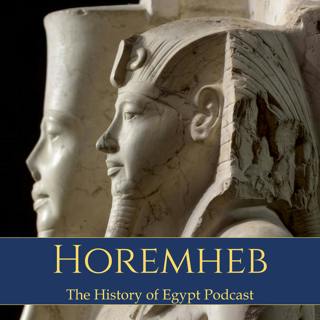
Horemheb vs Ay, Tutankhamun, and others. Everyone talks about Horemheb "erasing" Akhenaten. But the King demolished monuments of several rulers, and erased the names of others. What does it all mean? Episode details: Date: c. 1327 BCE. Website: www.egyptianhistorypodcast.com. Support the show via Patreon www.patreon.com/egyptpodcast. Make a one-time donation via PayPal payments. Music intro: Luke Chaos. Music interludes: Luke Chaos. Music outro: Keith Zizza. Select Bibliography: M. Azim, ‘La structure des pylônes d’Horemheb à Karnak’, Cahiers de Karnak VII (1982), 127—166. E. Blyth, Karnak: Evolution of a Temple (2006). P. Brand, ‘Secondary Restorations in the Post-Amarna Period’, Journal of the American Research Center in Egypt 36 (1999), 113–34. L. Cotelle-Michel, ‘Présentation préliminaire des blocs de la Chapelle de Sésostris Ier découverte dans le IXe Pylône de Karnak’, Cahiers de Karnak XI. A. Dodson, Amarna Sunrise: Egypt From Golden Age to Age of Heresy (2014). A. Dodson, Amarna Sunset: Nefertiti, Tutankhamun, Ay, Horemheb, and the Egyptian Counter-Reformation (2nd edn, 2017). C. Manassa Darnell, ‘Transition 18th—19th Dynasty’, UCLA Encyclopedia of Egyptology (2015). W. J. Murnane, ‘Tutankhamun on the Eighth Pylon at Karnak’, Varia Aegyptiaca I (1985), 59—68. R. Saad, ‘Fragments d’un monument de Toutânkhamon retrouvés dans le IXe pylône de Karnak’, Cahiers de Karnak V (1975), 93—109. R. A. Schwaller de Lubicz, The Temples of Karnak (1999). E. Sullivan, ‘Karnak: Development of the Temple of Amun-Ra’, in W. Wendrich (ed.), UCLA Encyclopedia of Egyptology (2010). C. Traunecker, ‘Rapport préliminaire sur la chapelle de Sésostris Ier découverte dans le IXe pylône’, Cahiers de Karnak VII (1982), 121—126. Learn more about your ad choices. Visit megaphone.fm/adchoices

Jaksot(408)

230: Khaemwaset & the Book of Thoth

230: Khaemwaset & the Book of Thoth

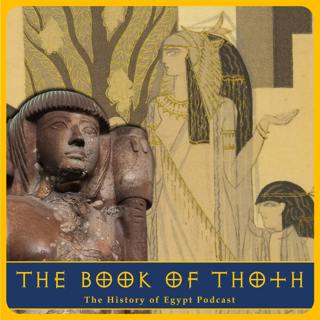
The prince Kha-em-Waset (lived c.1260 BCE) was a learned man, and an accomplished priest. Centuries after his death, storytellers remembered the prince as a sage and magician. They told tales of his a...

16 Maalis 35min
229: The First Egyptologist? Khaemwaset & the Apis Bulls

229: The First Egyptologist? Khaemwaset & the Apis Bulls

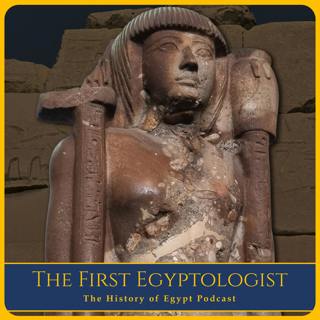
In 1263 BCE, priests announced the death of the APIS BULL. Sacred to Ptah, the bull dwelled in the temple at Men-nefer (Memphis). Now, in year 30 of Ramesses II, the King's son KHA-EM-WASET would lead...

9 Maalis 24min
228: Three Funerals & a Sed Festival

228: Three Funerals & a Sed Festival

Loss and rejuvenation. Ramesses third decade in power was a time of death. The King's Great Wife Nefertari passed around year 25. Almost simultaneously, his mother Tuya, his second wife Iset-Nofret, a...

2 Maalis 31min
227: The One Where Iset Poisons Ra

227: The One Where Iset Poisons Ra

What is the true name of god? Once upon a time, Ra ruled the earth directly. But the great goddess Iset/Isis desired to know his private name, the one hidden from all outsiders. A name that, if known,...

16 Helmi 34min
226: Nefertari's Tomb and Book of the Dead

226: Nefertari's Tomb and Book of the Dead

The tomb of Queen Nefertari is one of the masterpieces of New Kingdom funerary monuments. The tomb is stunningly preserved, with an array of exquisite images, evocative texts (from the Book of the Dea...

9 Helmi 28min
225: Nefertari Beloved of Mut

225: Nefertari Beloved of Mut

Around 1300 BCE, King Sety I selected a group of "beauties" for his son, to marry and produce children. One of these was Nefertari (Nefret-Iry, "She Has Become Beautiful"). A girl of unknown origins (...

2 Helmi 49min
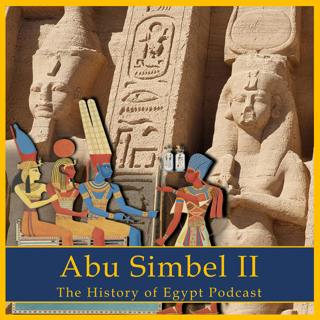
Abu Simbel: Nefertari's Temple & Ramesses' Nubian Empire

Abu Simbel: Nefertari's Temple & Ramesses' Nubian Empire

Livestream recording about the Abu Simbel Temples, with a particular focus on Nefertari's monument (Part 1) and the political-religious context of Ramesses' Nubian monuments (Part 2). We also have a f...

26 Tammi 32min
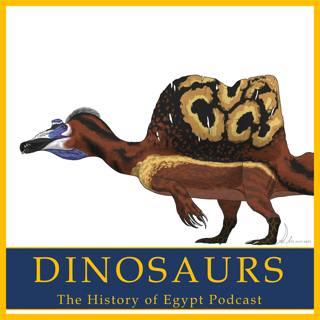
Dinosaurs of Egypt (2026 Revised Edition)

Dinosaurs of Egypt (2026 Revised Edition)

In the Cretaceous Period (c.100 million years ago) Egypt and North Africa were radically different environments. With vast tidal flats and mangroves, and a shallow sea, the continent fostered numerous...

12 Tammi 30min

Suosittua kategoriassa Yhteiskunta

olipa-kerran-otsikko
siita-on-vaikea-puhua
kaksi-aitia
gogin-ja-janin-maailmanhistoria
i-dont-like-mondays
uutiscast
poks
joku-tietaa-jotain-2
antin-palautepalvelu
kolme-kaannekohtaa
sita
mamma-mia
aikalisa
yopuolen-tarinoita-2
rss-murhan-anatomia
rss-palmujen-varjoissa
lahko
rss-nikotellen
meidan-pitais-puhua
rss-napy