1956 1.15: Socialism Stays

1956 1.15: Socialism Stays

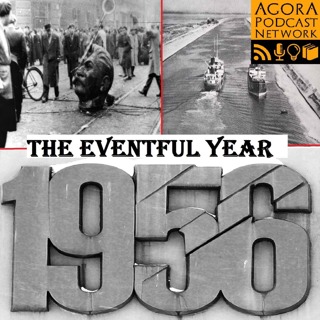
1956 Episode 1.15 examines the final moments of Imre Nagy, as the Soviet noose tightened around him.


But the Kremlin was not safe yet. Of particular concern to Moscow and to the Hungarians was the stance of Yugoslavia, as its embassy in Budapest provided asylum to Imre Nagy and 40 other individuals responsible for guiding and leading the momentarily independent Hungarian state. The revolution may have been crushed within a few days, but it was evidently not going to be so simple to remove the memory of Nagy. Although normal Hungarian citizens couldn’t know of his fate, even when he was tricked into leaving this safe haven in late November, behind the scenes the Soviet-Yugoslav diplomacy was only serving to heighten tensions in the communist world.


In addition, the Chinese, soon to visit the Eastern satellites in January 1957, had their own comments to make on the events in Hungary. The Chinese conclusion, and the conclusion which has largely survived as canon to this day, was that Vladislav Gomulka had only gone so far, whereas Imre Nagy had gone far too far in bringing reform to his country. It was not acceptable, in the Chinese mind, that reform came at the expense of Soviet power and stability – a national road to socialism was to be admired, but this road could be bumpy, and on occasion, fraught with danger.


Also worth considering was the American perspective – Eisenhower’s administration was thoroughly distracted by events in Egypt, and while he and his Secretary of State John Foster Dulles never really intended to intervene with force in Hungary, the unofficial state organs like Radio Free Europe ensured that the American or at least the Western approach and intentions remained unclear to Hungarians, who felt encouraged to challenge the Soviet domination, and were then bitterly disappointed when no Western aid materialised. Suez was of course a convenient excuse for American non-intervention, yet for Eisenhower’s new ‘rollback’ policy towards the Soviet Union, it was important to blame the Anglo-French-Israeli attack upon Egypt to the end...


At the pinnacle of our narrative was the fate of Nagy and his circle. Two years after the revolution had been put down, Nagy was executed. Even in his final moments he refused to admit error and to denounce what had been done. He went to the gallows courageously, confident that no matter what occurred after his death, one day, he would be reburied, and Hungary would be free. His legacy was to inspire Hungarian politicians and a tacit policy of non-violent resistance to Soviet rule throughout the next few decades. His words would prove correct – Imre Nagy’s reburial in June 1989 signalled the end of Soviet domination, the collapse of the Soviet Union and the end of the Cold War all at once. Nagy’s death and rehabilitation put to bed the fallout of Khrushchev’s secret speech, and it also concludes our first part of 1956. Next time, we’ll begin our examination of that other significant narrative which 1956 provided, as we count down to the Suez Crisis.

Hosted on Acast. See acast.com/privacy for more information.

Jaksot(744)

Goodbye For Now

Goodbye For Now

Between working full time and the impending arrival of baby WDF, I would be lying if I pretended as if nothing was going to change. It is, in fact, time to accept that I am only one man. But that's ok...

6 Loka 202514min
#70: July Crisis Q&A

#70: July Crisis Q&A

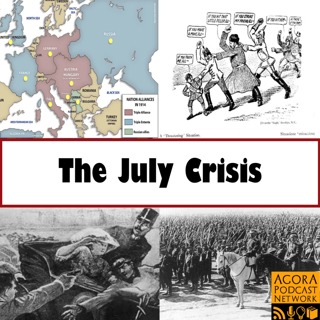
During this series we have encountered a wide variety of fascinating characters and controversial decisions, but even though the story of why the world went to war in 1914 is finally finished, that do...

30 Heinä 202558min
State of the Podcast Address 21 July 2025

State of the Podcast Address 21 July 2025

It's been a while since I last checked in with you, and I've been sitting on some incredible news for a while now. If you'd like to know how things are about to change, then make sure you listen in! H...

21 Heinä 202529min

#69: The First World War - Whose Fault Is It Anyway? Part 3

#69: The First World War - Whose Fault Is It Anyway? Part 3

In our final part, we bring this saga of a series to an end by focusing our attention on the most focused on country of all - Germany. We know what Germany did from 1 August, from the declarations of ...

21 Heinä 202549min

#68: The First World War - Whose Fault Is It Anyway? Part 2

#68: The First World War - Whose Fault Is It Anyway? Part 2

For generations, examinations of the First World War excluded arguably the most important actor - Russia. In this episode, we will hone in on the Tsar's court and his ministers. We will analyse their ...

14 Heinä 202537min

#67: The First World War - Whose Fault Is It Anyway? Part 1

#67: The First World War - Whose Fault Is It Anyway? Part 1

By now we've seen the absolute worst that Europe had to offer in 1914. We've seen naive statesmen, misinformed statesmen, distrustful statesmen, desperate statesmen, and everything in between. But whe...

7 Heinä 202545min

The Unreality of Realism w/ Alexander von Sternberg

The Unreality of Realism w/ Alexander von Sternberg

Something special for you here - Alex and I had a great conversation about realism in international relations on his History Impossible podcast, and he was good enough to let me publish it on my feed....

3 Heinä 20252h 18min

#66: The July Crisis - Conclusion

#66: The July Crisis - Conclusion

What have we learned after 65 episodes of background, analysis, and day-to-day coverage of the most consequential diplomatic failure in human history? What can we say about those responsible for what ...

30 Kesä 202541min

Suosittua kategoriassa Historia

olipa-kerran-otsikko
gogin-ja-janin-maailmanhistoria
mayday-fi
huijarit
rss-ikiuni
mystista
tsunami
konginkangas
totuus-vai-salaliitto
rouva-diktaattori
rss-i-dont-like-mondays-2
rss-kirkon-ihmeellisimmat-tarinat
historiaa-suomeksi
rss-subjektiivinen-todistaja
rss-sattuu-sita-suomessakin
apinan-vuosi
sotaa-ja-historiaa-podi
historian-nurkkapoyta
matakuu
rss-peter-peter