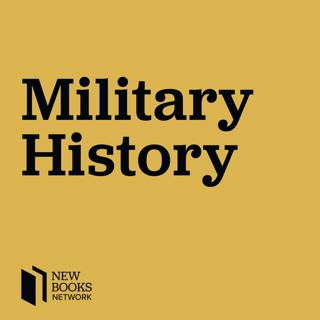
Harriet E. H. Earle, "Comics, Trauma, and the New Art of War" (UP of Mississippi, 2017)

Harriet E. H. Earle, "Comics, Trauma, and the New Art of War" (UP of Mississippi, 2017)

Conflict and trauma remain among the most prevalent themes in film and literature. Comics has never avoided such narratives, and comics artists are writing them in ways that are both different from and complementary to literature and film. Harriet E. H. Earle brings together two distinct areas of research—trauma studies and comics studies—to provide a new interpretation of a long-standing theme. Focusing on representations of conflict in American comics after the Vietnam War, Earle claims that the comics form is uniquely able to show traumatic experience by representing events as viscerally as possible. Using texts from across the form and placing mainstream superhero comics alongside alternative and art comics, Earle suggests that comics are the ideal artistic representation of trauma. Because comics bridge the gap between the visual and the written, they represent such complicated narratives as loss and trauma in unique ways, particularly through the manipulation of time and experience. Comics can fold time and confront traumatic events, be they personal or shared, through a myriad of both literary and visual devices. As a result, comics can represent trauma in ways that are unavailable to other narrative and artistic forms. With themes such as dreams and mourning, Earle concentrates on trauma in American comics after the Vietnam War. Examples include Alissa Torres’s American Widow, Doug Murray’s The ’Nam, and Art Spiegelman’s much-lauded Maus. These works pair with ideas from a wide range of thinkers, including Sigmund Freud, Mikhail Bakhtin, and Fredric Jameson, as well as contemporary trauma theory and clinical psychology. Through these examples and others, Comics, Trauma, and the New Art of War (UP of Mississippi, 2017) proves that comics open up new avenues to explore personal and public trauma in extraordinary, necessary ways. Dr. Harriet Earle is a senior lecturer in English at Sheffield Hallam University and a Research Fellow at the Centre for War, Atrocity, and Genocide at the University of Nipissing. Elizabeth Allyn Woock an assistant professor in the Department of English and American Studies at Palacky University in the Czech Republic with an interdisciplinary background in history and popular literature. Her specialization falls within the study of comic books and graphic novels. Learn more about your ad choices. Visit megaphone.fm/adchoices Support our show by becoming a premium member! https://newbooksnetwork.supportingcast.fm/military-history

Jaksot(1619)

Manuel Barcia, "Pirate Imperialism: Trade, Abolition, and Global Suppression of Maritime Raiding, 1825–1870" (Yale UP, 2026)

Manuel Barcia, "Pirate Imperialism: Trade, Abolition, and Global Suppression of Maritime Raiding, 1825–1870" (Yale UP, 2026)

In the middle decades of the nineteenth century, imperial powers around the world came into direct confrontation with local resistance in the form of maritime raiding. From the Atlantic basin to the w...

18 Huhti 38min

Jane Vaynman, "Enemies in Agreement: Political Volatility and the Design of Arms Control" (Cambridge UP, 2026)

Jane Vaynman, "Enemies in Agreement: Political Volatility and the Design of Arms Control" (Cambridge UP, 2026)

Why do adversaries sometimes cooperate to restrain their military competition? Why do they design arms control agreements with intrusive verification in some cases but rely on minimal transparency in ...

18 Huhti 39min

Lewis Sage-Passant, "Beyond States and Spies: The Security Intelligence Services of the Private Sector" (Edinburgh UP, 2024)

Lewis Sage-Passant, "Beyond States and Spies: The Security Intelligence Services of the Private Sector" (Edinburgh UP, 2024)

Scholars have long viewed intelligence as the preserve of nation states. Where the term ‘private sector intelligence’ is used, the focus has been overwhelmingly on government contractors. As such, a c...

17 Huhti 1h 2min

Andrew W. M. Smith, "Make Cheese Not War: Transnational Resistance and the Larzac in Modern France" (Manchester UP, 2026)

Andrew W. M. Smith, "Make Cheese Not War: Transnational Resistance and the Larzac in Modern France" (Manchester UP, 2026)

In 1971, the French government announced a massive extension of its military base on the Larzac plateau in southern France. Land was to be expropriated from 107 farms around the small town of La Caval...

16 Huhti 1h 3min

John Bechtold, "U.S. Militarism and the Terrain of Memory: Negotiating Dead Space" (Taylor & Francis, 2024)

John Bechtold, "U.S. Militarism and the Terrain of Memory: Negotiating Dead Space" (Taylor & Francis, 2024)

In U.S. Militarism and the Terrain of Memory: Negotiating Dead Space (Taylor & Francis, 2024), John Bechtold examines how the US military understands information and the media as a contested terrain. ...

12 Huhti 1h 2min

Thorsten Gromes, "Sustaining Peace After Civil War: Insights from 48 Recent Cases" (Springer, 2026)

Thorsten Gromes, "Sustaining Peace After Civil War: Insights from 48 Recent Cases" (Springer, 2026)

Sustaining Peace After Civil War: Insights from 48 Recent Cases (Springer, 2026) examines one of the most important questions in peace research: What leads to enduring peace after civil wars, and wha...

8 Huhti 41min

Andrew Thomas Park, "Sarah Wambaugh and the Plebiscite: The Turbulent History of a Democratic Alternative to War" (Cambridge UP, 2026)

Andrew Thomas Park, "Sarah Wambaugh and the Plebiscite: The Turbulent History of a Democratic Alternative to War" (Cambridge UP, 2026)

In Sarah Wambaugh and the Plebiscite: The Turbulent History of a Democratic Alternative to War (Cambridge UP, 2026) Dr. Andrew Park tells the story of the rise and fall of the plebiscite, once seen as...

7 Huhti 1h 3min

Hilary Matfess, "After Liberation: Women and the Politics of Expectations in Rebel-to-Party Transitions" (Stanford UP, 2026)

Hilary Matfess, "After Liberation: Women and the Politics of Expectations in Rebel-to-Party Transitions" (Stanford UP, 2026)

War offers opportunities for women to liberate their communities and build a better life for themselves. When women join rebel groups, they often take on new roles, cultivate new social networks, and ...

5 Huhti 52min

Suosittua kategoriassa Yhteiskunta

sita
olipa-kerran-otsikko
kaksi-aitia
siita-on-vaikea-puhua
ihme-ja-kumma
i-dont-like-mondays
gogin-ja-janin-maailmanhistoria
uutiscast
poks
antin-palautepalvelu
kolme-kaannekohtaa
rss-murhan-anatomia
yopuolen-tarinoita-2
mamma-mia
rss-nikotellen
aikalisa
meidan-pitais-puhua
loukussa
lahko
terapeuttiville-qa