Britain Should Not Have Fought in the First World War

Britain Should Not Have Fought in the First World War

The First World War is not called the Great War for nothing. It was the single most decisive event in modern history, as well as one of the bloodiest: by the time the war ended, some nine million soldiers had been killed. It was also a historical full stop, marking the definitive end of the Victorian era and the advent of a new age of uncertainty. By 1918, the old order had fallen: the Bolsheviks had seized power in Russia; the German, Austro-Hungarian and Ottoman empires had been destroyed; and even the victorious Allied powers had suffered devastating losses. It was supposed to be the war to end all wars. And yet barely two decades later, the world was again plunged into conflict. Little wonder then that historians still cannot agree whether Britain's engagement was worth it. For some, the war was a vitally important crusade against Prussian militarism. Had we stayed out, they argue, the result would have been an oppressive German-dominated Europe, leaving the British Empire isolated and doomed to decline. And by fighting to save Belgium, Britain stood up for principle: the right of a small nation to resist its overbearing neighbours. For others, the war was a catastrophic mistake, fought at a catastrophic human cost. It brought Communism to power in Russia, ripped up the map of Europe and left a festering sense of resentment that would fuel the rise of Nazism. We often forget that, even a few days before Britain entered the war, it seemed likely that we would stay out. H. H. Asquith's decision to intervene changed the course of history. But was it the right one? Arguing for the motion in this Intelligence Squared debate were John Charmley, Professor of Modern History at the University of East Anglia; and Dominic Sandbrook, historian, columnist and broadcaster. Arguing against them were Max Hastings, historian, journalist and former newspaper editor; and Margaret MacMillan, Warden of St Antony’s College and Professor of International History at the University of Oxford. The debate was chaired by senior editor at The Economist, Edward Lucas. Support this show http://supporter.acast.com/intelligencesquared. See acast.com/privacy for privacy and opt-out information. Learn more about your ad choices. Visit podcastchoices.com/adchoices

Tämä jakso on lisätty Podme-palveluun avoimen RSS-syötteen kautta eikä se ole Podmen omaa tuotantoa. Siksi jakso saattaa sisältää mainontaa.

Jaksot(1665)

Were Castles the Original Military-Industrial Complex? With Dan Jones

Were Castles the Original Military-Industrial Complex? With Dan Jones

For more than 3,000 years, castles and fortifications have shaped the landscapes around them. They defended cities, controlled trade and provided refuge in times of war. But they were also monuments t...

26 Loka 47min
Archive: Is Mark Zuckerberg Damaging Society?

Archive: Is Mark Zuckerberg Damaging Society?

With the release of Aaron Sorkin's new film The Social Reckoning, Mark Zuckerberg and the dark side of Facebook are back in the spotlight.In 2019, Intelligence Squared put Zuckerberg on trial, asking ...

24 Loka 1h 4min
Has America Abandoned Ukraine? With Michael McFaul

Has America Abandoned Ukraine? With Michael McFaul

Donald Trump’s growing accommodation of Vladimir Putin has raised a stark question: has the US abandoned Ukraine? Conor Boyle speaks to Michael McFaul, former US ambassador to Russia and author of Aut...

22 Loka 26min
What Must Burnham Sacrifice To Make Britain Grow? With Michael Gove

What Must Burnham Sacrifice To Make Britain Grow? With Michael Gove

Few figures in modern British politics have operated as close to the centre of power as Michael Gove. Over more than a decade in government, he has held some of the most senior offices of state – incl...

20 Loka 1h 33min
Why Are People Having Fewer Children Than They Want? With Camilla Cavendish

Why Are People Having Fewer Children Than They Want? With Camilla Cavendish

In England and Wales, the total fertility rate fell to 1.39 children per woman in 2025. More than half of the world’s countries and areas are now below the level at which a population replaces itself ...

18 Loka 44min
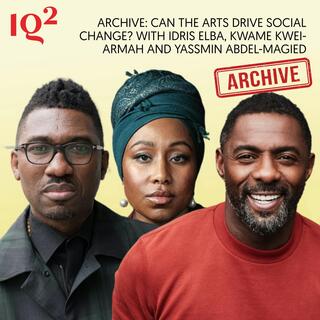
Archive: Can the Arts Drive Social Change? With Idris Elba, Kwame Kwei-Armah and Yassmin Abdel-Magied

Archive: Can the Arts Drive Social Change? With Idris Elba, Kwame Kwei-Armah and Yassmin Abdel-Magied

In the summer of 2020, as Black Lives Matter protests swept the world, the arts and creative industries faced urgent questions about racism, representation and their role in driving meaningful change....

18 Loka 1h 2min
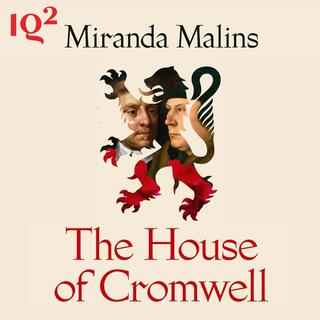
How One Family Remade Britain: Thomas and Oliver Cromwell, with Miranda Malins

How One Family Remade Britain: Thomas and Oliver Cromwell, with Miranda Malins

Thomas Cromwell helped Henry VIII break with Rome, reshape government and establish the Church of England. A century later, his distant relative Oliver Cromwell helped defeat a king, establish a repub...

15 Loka 57min
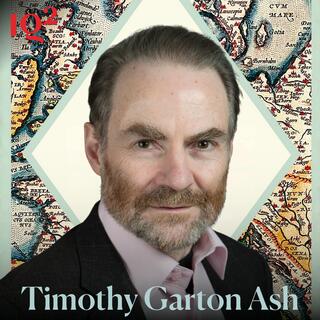
Can Europe Defend Itself? Timothy Garton Ash on Europe's Future

Can Europe Defend Itself? Timothy Garton Ash on Europe's Future

Europe’s past is not past. The borders of vanished empires still surface in election results. The European Union and Nato face a world in which Russia is aggressive, America is less dependable and Eur...

13 Loka 34min

Suosittua kategoriassa Politiikka ja uutiset

uutiscast
vallattomat
aikalisa
politiikan-puskaradio
rss-viihde-media
ootsa-kuullut-tasta-2
rss-vaalirankkurit-podcast
rss-ootsa-kuullut-tasta
otetaan-yhdet
tervo-halme
rss-voi-venaja
rss-asiastudio
rss-podme-livebox
rss-raha-talous-ja-politiikka
rikosmyytit
et-sa-noin-voi-sanoo-esittaa
rss-seksicast
rss-ulkopoditiikkaa
nakokulma-oikealta-jussi-halla-ahon-blogin-kommentaarit
rss-girls-finish-f1rst