
#40 - Katja Grace on forecasting future technology & how much we should trust expert predictions

#40 - Katja Grace on forecasting future technology & how much we should trust expert predictions

Experts believe that artificial intelligence will be better than humans at driving trucks by 2027, working in retail by 2031, writing bestselling books by 2049, and working as surgeons by 2053. But how seriously should we take these predictions?

Katja Grace, lead author of ‘When Will AI Exceed Human Performance?’, thinks we should treat such guesses as only weak evidence. But she also says there might be much better ways to forecast transformative technology, and that anticipating such advances could be one of our most important projects.

Note: Katja's organisation AI Impacts is currently hiring part- and full-time researchers.

There’s often pessimism around making accurate predictions in general, and some areas of artificial intelligence might be particularly difficult to forecast.

But there are also many things we’re able to predict confidently today -- like the climate of Oxford in five years -- that we no longer give ourselves much credit for.

Some aspects of transformative technologies could fall into this category. And these easier predictions could give us some structure on which to base the more complicated ones.

Links to learn more, summary and full transcript.

One controversial debate surrounds the idea of an intelligence explosion; how likely is it that there will be a sudden jump in AI capability?

And one way to tackle this is to investigate a more concrete question: what’s the base rate of any technology having a big discontinuity?

A significant historical example was the development of nuclear weapons. Over thousands of years, the efficacy of explosives didn’t increase by much. Then within a few years, it got thousands of times better. Discovering what leads to such anomalies may allow us to better predict the possibility of a similar jump in AI capabilities.

In today’s interview we also discuss:

* Why is AI impacts one of the most important projects in the world?
* How do you structure important surveys? Why do you get such different answers when asking what seem to be very similar questions?
* How does writing an academic paper differ from posting a summary online?
* When will unguided machines be able to produce better and cheaper work than humans for every possible task?
* What’s one of the most likely jobs to be automated soon?
* Are people always just predicting the same timelines for new technologies?
* How do AGI researchers different from other AI researchers in their predictions?
* What are attitudes to safety research like within ML? Are there regional differences?
* How much should we believe experts generally?
* How does the human brain compare to our best supercomputers? How many human brains are worth all the hardware in the world?
* How quickly has the processing capacity for machine learning problems been increasing?
* What can we learn from the development of previous technologies in figuring out how fast transformative AI will arrive?
* What should we expect from a post AI dominated economy?
* How much influence can people ever have on things that will happen in 20 years? Are there any examples of people really trying to do this?

Get this episode by subscribing to our podcast on the world’s most pressing problems and how to solve them: type 80,000 Hours into your podcasting app. Or read the transcript below.

The 80,000 Hours podcast is produced by Keiran Harris.

Jaksot(333)

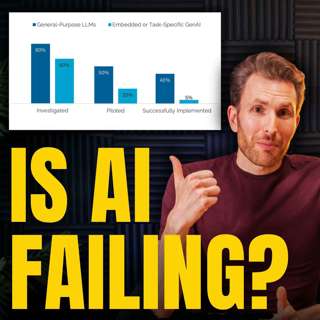
"AI doesn't work" – the story behind the stat that misled millions

"AI doesn't work" – the story behind the stat that misled millions

You might have heard that 95% of corporate AI pilots are failing. It was a widely cited AI statistic in 2025, repeated by media outlets and commentators everywhere. It helped trigger a Nasdaq selloff ...

28 Huhti 10min
#242 – Will MacAskill on how we survive the 'intelligence explosion,' AI character, and the case for 'viatopia'

#242 – Will MacAskill on how we survive the 'intelligence explosion,' AI character, and the case for 'viatopia'

Hundreds of millions already turn to AI on the most personal of topics — therapy, political opinions, and how to treat others. And as AI takes over more of the economy, the character of these systems ...

22 Huhti 3h 9min
Risks from power-seeking AI systems (article narration by Zershaaneh Qureshi)

Risks from power-seeking AI systems (article narration by Zershaaneh Qureshi)

Hundreds of prominent AI scientists and other notable figures signed a statement in 2023 saying that mitigating the risk of extinction from AI should be a global priority. At 80,000 Hours, we’ve consi...

16 Huhti 1h 29min

How scary is Claude Mythos? 303 pages in 21 minutes

How scary is Claude Mythos? 303 pages in 21 minutes

With Claude Mythos we have an AI that knows when it's being tested, can obscure its reasoning when it wants, and is better at breaking into (and out of) computers than any human alive. Rob Wiblin work...

10 Huhti 21min
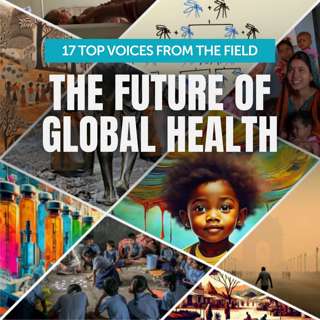
Village gossip, pesticide bans, and gene drives: 17 experts on the future of global health

Village gossip, pesticide bans, and gene drives: 17 experts on the future of global health

What does it really take to lift millions out of poverty and prevent needless deaths?In this special compilation episode, 17 past guests — including economists, nonprofit founders, and policy advisors...

7 Huhti 4h 6min

What everyone is missing about Anthropic vs the Pentagon. And: The Meta leaks are worse than you think.

What everyone is missing about Anthropic vs the Pentagon. And: The Meta leaks are worse than you think.

When the Pentagon tried to strong-arm Anthropic into dropping its ban on AI-only kill decisions and mass domestic surveillance, the company refused. Its critics went on the attack: Anthropic and its s...

3 Huhti 20min

#241 – Richard Moulange on how now AI codes viable genomes from scratch and outperforms virologists at lab work — what could go wrong?

#241 – Richard Moulange on how now AI codes viable genomes from scratch and outperforms virologists at lab work — what could go wrong?

Last September, scientists used an AI model to design genomes for entirely new bacteriophages (viruses that infect bacteria). They then built them in a lab. Many were viable. And despite being entirel...

31 Maalis 3h 7min

#240 – Samuel Charap on how a Ukraine ceasefire could accidentally set Europe up for a bigger war

#240 – Samuel Charap on how a Ukraine ceasefire could accidentally set Europe up for a bigger war

Many people believe a ceasefire in Ukraine will leave Europe safer. But today's guest lays out how a deal could potentially generate insidious new risks — leaving us in a situation that's equally dang...

24 Maalis 1h 12min

Suosittua kategoriassa Koulutus

rss-murhan-anatomia
psykopodiaa-podcast
voi-hyvin-meditaatiot-2
adhd-podi
rss-niinku-asia-on
rss-rahamania
rss-liian-kuuma-peruna
rss-valo-minussa-2
rss-tietoinen-yhteys-podcast-2
kesken
jari-sarasvuo-podcast
rss-uskonto-on-tylsaa
rss-vapaudu-voimaasi
psykologia
rss-arkea-ja-aurinkoa-podcast-espanjasta
rahapuhetta
ihminen-tavattavissa-tommy-hellsten-instituutti
rss-luonnollinen-synnytys-podcast
rss-narsisti
rss-hereilla