
#49 - Rachel Glennerster on a year's worth of education for 30c & other development 'best buys'

#49 - Rachel Glennerster on a year's worth of education for 30c & other development 'best buys'

If I told you it's possible to deliver an extra year of ideal primary-level education for under $1, would you believe me? Hopefully not - the claim is absurd on its face.

But it may be true nonetheless. The very best education interventions are phenomenally cost-effective, and they're not the kinds of things you'd expect, says Dr Rachel Glennerster.

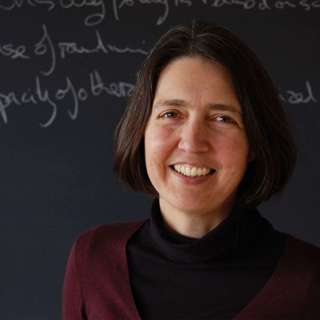
She's Chief Economist at the UK's foreign aid agency DFID, and used to run J-PAL, the world-famous anti-poverty research centre based in MIT's Economics Department, where she studied the impact of a wide range of approaches to improving education, health, and governing institutions. According to Dr Glennerster:

"...when we looked at the cost effectiveness of education programs, there were a ton of zeros, and there were a ton of zeros on the things that we spend most of our money on. So more teachers, more books, more inputs, like smaller class sizes - at least in the developing world - seem to have no impact, and that's where most government money gets spent."

"But measurements for the top ones - the most cost effective programs - say they deliver 460 LAYS per £100 spent ($US130). LAYS are Learning-Adjusted Years of Schooling. Each one is the equivalent of the best possible year of education you can have - Singapore-level."

Links to learn more, summary and full transcript.

"...the two programs that come out as spectacularly effective... well, the first is just rearranging kids in a class."

"You have to test the kids, so that you can put the kids who are performing at grade two level in the grade two class, and the kids who are performing at grade four level in the grade four class, even if they're different ages - and they learn so much better. So that's why it's so phenomenally cost effective because, it really doesn't cost anything."

"The other one is providing information. So sending information over the phone [for example about how much more people earn if they do well in school and graduate]. So these really small nudges. Now none of those nudges will individually transform any kid's life, but they are so cheap that you get these fantastic returns on investment - and we do very little of that kind of thing."

In this episode, Dr Glennerster shares her decades of accumulated wisdom on which anti-poverty programs are overrated, which are neglected opportunities, and how we can know the difference, across a range of fields including health, empowering women and macroeconomic policy.

Regular listeners will be wondering - have we forgotten all about the lessons from episode 30 of the show with Dr Eva Vivalt? She threw several buckets of cold water on the hope that we could accurately measure the effectiveness of social programs at all.

According to Vivalt, her dataset of hundreds of randomised controlled trials indicates that social science findings don’t generalize well at all. The results of a trial at a school in Namibia tell us remarkably little about how a similar program will perform if delivered at another school in Namibia - let alone if it's attempted in India instead.

Rachel offers a different and more optimistic interpretation of Eva's findings. To learn more and figure out who you sympathise with more, you'll just have to listen to the episode.

Regardless, Vivalt and Glennerster agree that we should continue to run these kinds of studies, and today’s episode delves into the latest ideas in global health and development.

Get this episode by subscribing: type '80,000 Hours' into your podcasting app.

The 80,000 Hours Podcast is produced by Keiran Harris.

Jaksot(317)

Artificial General Intelligence leads to oligarchy | David Duvenaud, ex-Anthropic team lead

Artificial General Intelligence leads to oligarchy | David Duvenaud, ex-Anthropic team lead

Democracy might be a brief historical blip. That’s the unsettling thesis of a recent paper, which argues AI that can do all the work a human can do inevitably leads to the “gradual disempowerment” of ...

27 Tammi 2h 31min

#145 Classic episode – Christopher Brown on why slavery abolition wasn't inevitable

#145 Classic episode – Christopher Brown on why slavery abolition wasn't inevitable

In many ways, humanity seems to have become more humane and inclusive over time. While there’s still a lot of progress to be made, campaigns to give people of different genders, races, sexualities, et...

20 Tammi 2h 56min

#233 – James Smith on how to prevent a mirror life catastrophe

#233 – James Smith on how to prevent a mirror life catastrophe

When James Smith first heard about mirror bacteria, he was sceptical. But within two weeks, he’d dropped everything to work on it full time, considering it the worst biothreat that he’d seen described...

13 Tammi 2h 9min

#144 Classic episode – Athena Aktipis on why cancer is a fundamental universal phenomena

#144 Classic episode – Athena Aktipis on why cancer is a fundamental universal phenomena

What’s the opposite of cancer? If you answered “cure,” “antidote,” or “antivenom” — you’ve obviously been reading the antonym section at www.merriam-webster.com/thesaurus/cancer.But today’s guest Athe...

9 Tammi 3h 30min

#142 Classic episode – John McWhorter on why the optimal number of languages might be one, and other provocative claims about language

#142 Classic episode – John McWhorter on why the optimal number of languages might be one, and other provocative claims about language

John McWhorter is a linguistics professor at Columbia University specialising in research on creole languages. He's also a content-producing machine, never afraid to give his frank opinion on anything...

6 Tammi 1h 35min

2025 Highlight-o-thon: Oops! All Bests

2025 Highlight-o-thon: Oops! All Bests

It’s that magical time of year once again — highlightapalooza! Stick around for one top bit from each episode we recorded this year, including:Kyle Fish explaining how Anthropic’s AI Claude descends i...

29 Joulu 20251h 40min

#232 – Andreas Mogensen on what we owe 'philosophical Vulcans' and unconscious beings

#232 – Andreas Mogensen on what we owe 'philosophical Vulcans' and unconscious beings

Most debates about the moral status of AI systems circle the same question: is there something that it feels like to be them? But what if that’s the wrong question to ask? Andreas Mogensen — a senior ...

19 Joulu 20252h 37min

#231 – Paul Scharre on how AI-controlled robots will and won't change war

#231 – Paul Scharre on how AI-controlled robots will and won't change war

In 1983, Stanislav Petrov, a Soviet lieutenant colonel, sat in a bunker watching a red screen flash “MISSILE LAUNCH.” Protocol demanded he report it to superiors, which would very likely trigger a ret...

17 Joulu 20252h 45min

Suosittua kategoriassa Koulutus

rss-murhan-anatomia
psykopodiaa-podcast
voi-hyvin-meditaatiot-2
rss-valo-minussa-2
adhd-podi
psykologia
rss-narsisti
salainen-paivakirja
rss-liian-kuuma-peruna
rss-duodecim-lehti
rahapuhetta
aloita-meditaatio
rss-vapaudu-voimaasi
rss-niinku-asia-on
kesken
rss-luonnollinen-synnytys-podcast
aamukahvilla
rss-uskonto-on-tylsaa
rss-selvat-savelet
rss-koira-haudattuna