#77 – Marc Lipsitch on whether we're winning or losing against COVID-19

#77 – Marc Lipsitch on whether we're winning or losing against COVID-19

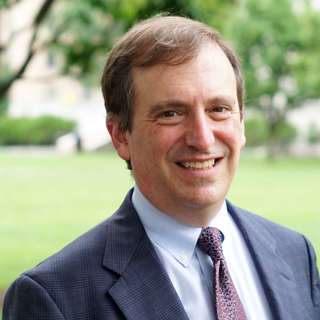
In March Professor Marc Lipsitch — Director of Harvard's Center for Communicable Disease Dynamics — abruptly found himself a global celebrity, his social media following growing 40-fold and journalists knocking down his door, as everyone turned to him for information they could trust.

Here he lays out where the fight against COVID-19 stands today, why he's open to deliberately giving people COVID-19 to speed up vaccine development, and how we could do better next time.

As Marc tells us, island nations like Taiwan and New Zealand are successfully suppressing SARS-COV-2. But everyone else is struggling.

Links to learn more, summary and full transcript.

Even Singapore, with plenty of warning and one of the best test and trace systems in the world, lost control of the virus in mid-April after successfully holding back the tide for 2 months.

This doesn't bode well for how the US or Europe will cope as they ease their lockdowns. It also suggests it would have been exceedingly hard for China to stop the virus before it spread overseas.

But sadly, there's no easy way out.

The original estimates of COVID-19's infection fatality rate, of 0.5-1%, have turned out to be basically right. And the latest serology surveys indicate only 5-10% of people in countries like the US, UK and Spain have been infected so far, leaving us far short of herd immunity. To get there, even these worst affected countries would need to endure something like ten times the number of deaths they have so far.

Marc has one good piece of news: research suggests that most of those who get infected do indeed develop immunity, for a while at least.

To escape the COVID-19 trap sooner rather than later, Marc recommends we go hard on all the familiar options — vaccines, antivirals, and mass testing — but also open our minds to creative options we've so far left on the shelf.

Despite the importance of his work, even now the training and grant programs that produced the community of experts Marc is a part of, are shrinking. We look at a new article he's written about how to instead build and improve the field of epidemiology, so humanity can respond faster and smarter next time we face a disease that could kill millions and cost tens of trillions of dollars.

We also cover:

• How listeners might contribute as future contagious disease experts, or donors to current projects
• How we can learn from cross-country comparisons
• Modelling that has gone wrong in an instructive way
• What governments should stop doing
• How people can figure out who to trust, and who has been most on the mark this time
• Why Marc supports infecting people with COVID-19 to speed up the development of a vaccines
• How we can ensure there's population-level surveillance early during the next pandemic
• Whether people from other fields trying to help with COVID-19 has done more good than harm
• Whether it's experts in diseases, or experts in forecasting, who produce better disease forecasts

Chapters:

  • Rob’s intro (00:00:00)
  • The interview begins (00:01:45)
  • Things Rob wishes he knew about COVID-19 (00:05:23)
  • Cross-country comparisons (00:10:53)
  • Any government activities we should stop? (00:21:24)
  • Lessons from COVID-19 (00:33:31)
  • Global catastrophic biological risks (00:37:58)
  • Human challenge trials (00:43:12)
  • Disease surveillance (00:50:07)
  • Who should we trust? (00:58:12)
  • Epidemiology as a field (01:13:05)
  • Careers (01:31:28)


Producer: Keiran Harris.
Audio mastering: Ben Cordell.
Transcriptions: Zakee Ulhaq.

Jaksot(321)

Why Teaching AI Right from Wrong Could Get Everyone Killed | Max Harms, MIRI

Why Teaching AI Right from Wrong Could Get Everyone Killed | Max Harms, MIRI

Most people in AI are trying to give AIs ‘good’ values. Max Harms wants us to give them no values at all. According to Max, the only safe design is an AGI that defers entirely to its human operators, ...

24 Helmi 2h 41min
Every AI Company's Safety Plan is 'Use AI to Make AI Safe'. Is That Crazy? | Ajeya Cotra

Every AI Company's Safety Plan is 'Use AI to Make AI Safe'. Is That Crazy? | Ajeya Cotra

Every major AI company has the same safety plan: when AI gets crazy powerful and really dangerous, they’ll use the AI itself to figure out how to make AI safe and beneficial. It sounds circular, almos...

17 Helmi 2h 54min
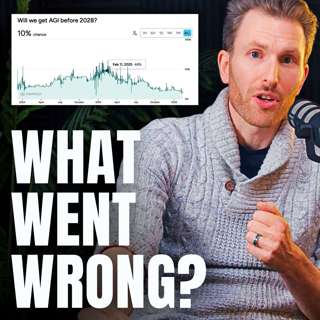
What the hell happened with AGI timelines in 2025?

What the hell happened with AGI timelines in 2025?

In early 2025, after OpenAI put out the first-ever reasoning models — o1 and o3 — short timelines to transformative artificial general intelligence swept the AI world. But then, in the second half of ...

10 Helmi 25min
#179 Classic episode – Randy Nesse on why evolution left us so vulnerable to depression and anxiety

#179 Classic episode – Randy Nesse on why evolution left us so vulnerable to depression and anxiety

Mental health problems like depression and anxiety affect enormous numbers of people and severely interfere with their lives. By contrast, we don’t see similar levels of physical ill health in young p...

3 Helmi 2h 51min
#234 – David Duvenaud on why 'aligned AI' would still kill democracy

#234 – David Duvenaud on why 'aligned AI' would still kill democracy

Democracy might be a brief historical blip. That’s the unsettling thesis of a recent paper, which argues AI that can do all the work a human can do inevitably leads to the “gradual disempowerment” of ...

27 Tammi 2h 31min
#145 Classic episode – Christopher Brown on why slavery abolition wasn't inevitable

#145 Classic episode – Christopher Brown on why slavery abolition wasn't inevitable

In many ways, humanity seems to have become more humane and inclusive over time. While there’s still a lot of progress to be made, campaigns to give people of different genders, races, sexualities, et...

20 Tammi 2h 56min
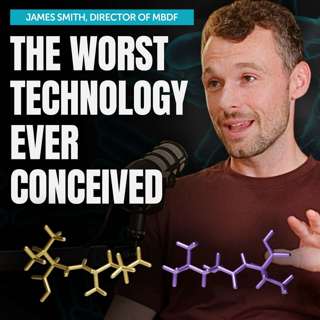
#233 – James Smith on how to prevent a mirror life catastrophe

#233 – James Smith on how to prevent a mirror life catastrophe

When James Smith first heard about mirror bacteria, he was sceptical. But within two weeks, he’d dropped everything to work on it full time, considering it the worst biothreat that he’d seen described...

13 Tammi 2h 9min
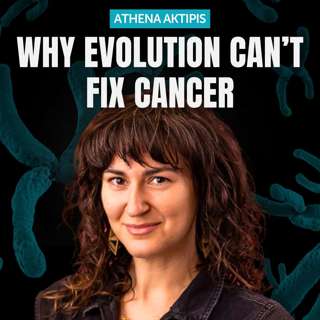
#144 Classic episode – Athena Aktipis on why cancer is a fundamental universal phenomena

#144 Classic episode – Athena Aktipis on why cancer is a fundamental universal phenomena

What’s the opposite of cancer? If you answered “cure,” “antidote,” or “antivenom” — you’ve obviously been reading the antonym section at www.merriam-webster.com/thesaurus/cancer.But today’s guest Athe...

9 Tammi 3h 30min

Suosittua kategoriassa Koulutus

rss-murhan-anatomia
psykopodiaa-podcast
voi-hyvin-meditaatiot-2
rss-narsisti
rss-liian-kuuma-peruna
rss-vapaudu-voimaasi
dear-ladies
psykologia
leveli
rss-duodecim-lehti
rss-valo-minussa-2
kesken
ihminen-tavattavissa-tommy-hellsten-instituutti
rss-uskonto-on-tylsaa
rss-hereilla
adhd-podi
rss-tietoinen-yhteys-podcast-2
rss-ai-mita-siskopodcast
rss-luonnollinen-synnytys-podcast
rss-arkea-ja-aurinkoa-podcast-espanjasta