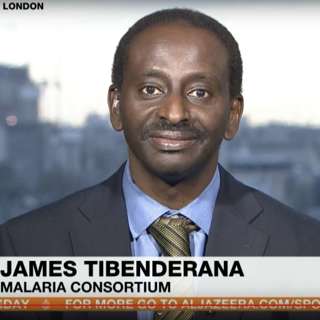

#129 – James Tibenderana on the state of the art in malaria control and elimination

#129 – James Tibenderana on the state of the art in malaria control and elimination

The good news is deaths from malaria have been cut by a third since 2005. The bad news is it still causes 250 million cases and 600,000 deaths a year, mostly among young children in sub-Saharan Africa.

We already have dirt-cheap ways to prevent and treat malaria, and the fraction of the Earth's surface where the disease exists at all has been halved since 1900. So why is it such a persistent problem in some places, even rebounding 15% since 2019?

That's one of many questions I put to today's guest, James Tibenderana — doctor, medical researcher, and technical director at a major global health nonprofit known as Malaria Consortium. James studies the cutting edge of malaria control and treatment in order to optimise how Malaria Consortium spends £100 million a year across countries like Uganda, Nigeria, and Chad.

Links to learn more, summary and full transcript.

In sub-Saharan Africa, where 90% of malaria deaths occur, the infection is spread by a few dozen species of mosquito that are ideally suited to the local climatic conditions and have thus been impossible to eliminate so far.

While COVID-19 may have an 'R' (reproduction number) of 5, in some situations malaria has a reproduction number in the 1,000s. A single person with malaria can pass the parasite to hundreds of mosquitoes, which themselves each go on to bite dozens of people each, allowing cases to quickly explode.

The nets and antimalarial drugs Malaria Consortium distributes have been highly effective where distributed, but there are tens of millions of young children who are yet to be covered simply due to a lack of funding.

Despite the success of these approaches, given how challenging it will be to create a malaria-free world, there's enthusiasm to find new approaches to throw at the problem. Two new interventions have recently generated buzz: vaccines and genetic approaches to control the mosquito species that carry malaria.

The RTS,S vaccine is the first-ever vaccine that attacks a protozoa as opposed to a virus or bacteria. It's a great scientific achievement. But James points out that even after three doses, it's still only about 30% effective. Unless future vaccines are substantially more effective, they will remain just a complement to nets and antimalarial drugs, which are cheaper and each cut mortality by more than half.

On the other hand, the latest mosquito-control technologies are almost too effective. It is possible to insert genes into specific mosquito populations that reduce their ability to reproduce. By using a 'gene drive,' you can ensure mosquitoes hand these detrimental genes down to 100% of their offspring. If deployed, these genes would spread and ultimately eliminate the mosquitoes that carry malaria at low cost, thereby largely ridding the world of the disease.

Because a single country embracing this method would have global effects, James cautions that it's important to get buy-in from all the countries involved, and to have a way of reversing the intervention if we realise we've made a mistake.

In this comprehensive conversation, Rob and James discuss all of the above, as well as most of what you could reasonably want to know about the state of the art in malaria control today, including:
• How malaria spreads and the symptoms it causes
• The use of insecticides and poison baits
• How big a problem insecticide resistance is
• How malaria was eliminated in North America and Europe
• The key strategic choices faced by Malaria Consortium in its efforts to create a malaria-free world
• And much more

Chapters:

  • Rob’s intro (00:00:00)
  • The interview begins (00:02:06)
  • Malaria basics (00:06:56)
  • Malaria vaccines (00:12:37)
  • Getting rid of mosquitos (00:32:20)
  • Gene drives (00:38:06)
  • Symptoms (00:58:00)
  • Preventing the spread (01:06:00)
  • Why we haven’t gotten rid of malaria yet (01:15:07)
  • What James is responsible for as technical director (01:30:52)
  • Malaria Consortium's current strategy (01:39:59)
  • Elimination vs. control (02:01:49)
  • Delivery and practicalities (02:16:23)
  • Relationships with governments (02:26:38)
  • Funding gap (02:31:03)
  • Access and use gap (02:39:10)
  • The value of local researchers (02:49:26)
  • Past research findings (02:57:10)
  • How to help (03:06:30)
  • How James ended up where he is today (03:13:45)

Producer: Keiran Harris
Audio mastering: Ryan Kessler
Transcriptions: Katy Moore

Jaksot(318)

#179 Classic episode – Randy Nesse on why evolution left us so vulnerable to depression and anxiety

#179 Classic episode – Randy Nesse on why evolution left us so vulnerable to depression and anxiety

Mental health problems like depression and anxiety affect enormous numbers of people and severely interfere with their lives. By contrast, we don’t see similar levels of physical ill health in young p...

3 Helmi 2h 51min

Why 'Aligned AI' Would Still Kill Democracy | David Duvenaud, ex-Anthropic team lead

Why 'Aligned AI' Would Still Kill Democracy | David Duvenaud, ex-Anthropic team lead

Democracy might be a brief historical blip. That’s the unsettling thesis of a recent paper, which argues AI that can do all the work a human can do inevitably leads to the “gradual disempowerment” of ...

27 Tammi 2h 31min

#145 Classic episode – Christopher Brown on why slavery abolition wasn't inevitable

#145 Classic episode – Christopher Brown on why slavery abolition wasn't inevitable

In many ways, humanity seems to have become more humane and inclusive over time. While there’s still a lot of progress to be made, campaigns to give people of different genders, races, sexualities, et...

20 Tammi 2h 56min

#233 – James Smith on how to prevent a mirror life catastrophe

#233 – James Smith on how to prevent a mirror life catastrophe

When James Smith first heard about mirror bacteria, he was sceptical. But within two weeks, he’d dropped everything to work on it full time, considering it the worst biothreat that he’d seen described...

13 Tammi 2h 9min

#144 Classic episode – Athena Aktipis on why cancer is a fundamental universal phenomena

#144 Classic episode – Athena Aktipis on why cancer is a fundamental universal phenomena

What’s the opposite of cancer? If you answered “cure,” “antidote,” or “antivenom” — you’ve obviously been reading the antonym section at www.merriam-webster.com/thesaurus/cancer.But today’s guest Athe...

9 Tammi 3h 30min

#142 Classic episode – John McWhorter on why the optimal number of languages might be one, and other provocative claims about language

#142 Classic episode – John McWhorter on why the optimal number of languages might be one, and other provocative claims about language

John McWhorter is a linguistics professor at Columbia University specialising in research on creole languages. He's also a content-producing machine, never afraid to give his frank opinion on anything...

6 Tammi 1h 35min

2025 Highlight-o-thon: Oops! All Bests

2025 Highlight-o-thon: Oops! All Bests

It’s that magical time of year once again — highlightapalooza! Stick around for one top bit from each episode we recorded this year, including:Kyle Fish explaining how Anthropic’s AI Claude descends i...

29 Joulu 20251h 40min

#232 – Andreas Mogensen on what we owe 'philosophical Vulcans' and unconscious beings

#232 – Andreas Mogensen on what we owe 'philosophical Vulcans' and unconscious beings

Most debates about the moral status of AI systems circle the same question: is there something that it feels like to be them? But what if that’s the wrong question to ask? Andreas Mogensen — a senior ...

19 Joulu 20252h 37min

Suosittua kategoriassa Koulutus

rss-murhan-anatomia
psykopodiaa-podcast
voi-hyvin-meditaatiot-2
rss-niinku-asia-on
kesken
rss-liian-kuuma-peruna
rss-narsisti
adhd-podi
psykologia
rss-duodecim-lehti
ihminen-tavattavissa-tommy-hellsten-instituutti
rss-psykalab
aamukahvilla
aloita-meditaatio
rss-honest-talk-with-laurrenna
rss-luonnollinen-synnytys-podcast
rss-tietoinen-yhteys-podcast-2
rahapuhetta
puhutaan-koiraa
rss-elamankoulu