#162 – Mustafa Suleyman on getting Washington and Silicon Valley to tame AI

#162 – Mustafa Suleyman on getting Washington and Silicon Valley to tame AI

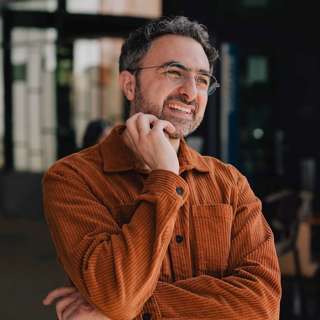
Mustafa Suleyman was part of the trio that founded DeepMind, and his new AI project is building one of the world's largest supercomputers to train a large language model on 10–100x the compute used to train ChatGPT.

But far from the stereotype of the incorrigibly optimistic tech founder, Mustafa is deeply worried about the future, for reasons he lays out in his new book The Coming Wave: Technology, Power, and the 21st Century's Greatest Dilemma (coauthored with Michael Bhaskar). The future could be really good, but only if we grab the bull by the horns and solve the new problems technology is throwing at us.

Links to learn more, summary and full transcript.

On Mustafa's telling, AI and biotechnology will soon be a huge aid to criminals and terrorists, empowering small groups to cause harm on previously unimaginable scales. Democratic countries have learned to walk a 'narrow path' between chaos on the one hand and authoritarianism on the other, avoiding the downsides that come from both extreme openness and extreme closure. AI could easily destabilise that present equilibrium, throwing us off dangerously in either direction. And ultimately, within our lifetimes humans may not need to work to live any more -- or indeed, even have the option to do so.

And those are just three of the challenges confronting us. In Mustafa's view, 'misaligned' AI that goes rogue and pursues its own agenda won't be an issue for the next few years, and it isn't a problem for the current style of large language models. But he thinks that at some point -- in eight, ten, or twelve years -- it will become an entirely legitimate concern, and says that we need to be planning ahead.

In The Coming Wave, Mustafa lays out a 10-part agenda for 'containment' -- that is to say, for limiting the negative and unforeseen consequences of emerging technologies:

1. Developing an Apollo programme for technical AI safety
2. Instituting capability audits for AI models
3. Buying time by exploiting hardware choke points
4. Getting critics involved in directly engineering AI models
5. Getting AI labs to be guided by motives other than profit
6. Radically increasing governments’ understanding of AI and their capabilities to sensibly regulate it
7. Creating international treaties to prevent proliferation of the most dangerous AI capabilities
8. Building a self-critical culture in AI labs of openly accepting when the status quo isn't working
9. Creating a mass public movement that understands AI and can demand the necessary controls
10. Not relying too much on delay, but instead seeking to move into a new somewhat-stable equilibria

As Mustafa put it, "AI is a technology with almost every use case imaginable" and that will demand that, in time, we rethink everything.

Rob and Mustafa discuss the above, as well as:

  • Whether we should be open sourcing AI models
  • Whether Mustafa's policy views are consistent with his timelines for transformative AI
  • How people with very different views on these issues get along at AI labs
  • The failed efforts (so far) to get a wider range of people involved in these decisions
  • Whether it's dangerous for Mustafa's new company to be training far larger models than GPT-4
  • Whether we'll be blown away by AI progress over the next year
  • What mandatory regulations government should be imposing on AI labs right now
  • Appropriate priorities for the UK's upcoming AI safety summit

Get this episode by subscribing to our podcast on the world’s most pressing problems and how to solve them: type ‘80,000 Hours’ into your podcasting app. Or read the transcript.

Producer and editor: Keiran Harris
Audio Engineering Lead: Ben Cordell
Technical editing: Milo McGuire
Transcriptions: Katy Moore

Jaksot(317)

Why 'Aligned AI' Would Still Kill Democracy | David Duvenaud, ex-Anthropic team lead

Why 'Aligned AI' Would Still Kill Democracy | David Duvenaud, ex-Anthropic team lead

Democracy might be a brief historical blip. That’s the unsettling thesis of a recent paper, which argues AI that can do all the work a human can do inevitably leads to the “gradual disempowerment” of ...

27 Tammi 2h 31min

#145 Classic episode – Christopher Brown on why slavery abolition wasn't inevitable

#145 Classic episode – Christopher Brown on why slavery abolition wasn't inevitable

In many ways, humanity seems to have become more humane and inclusive over time. While there’s still a lot of progress to be made, campaigns to give people of different genders, races, sexualities, et...

20 Tammi 2h 56min

#233 – James Smith on how to prevent a mirror life catastrophe

#233 – James Smith on how to prevent a mirror life catastrophe

When James Smith first heard about mirror bacteria, he was sceptical. But within two weeks, he’d dropped everything to work on it full time, considering it the worst biothreat that he’d seen described...

13 Tammi 2h 9min

#144 Classic episode – Athena Aktipis on why cancer is a fundamental universal phenomena

#144 Classic episode – Athena Aktipis on why cancer is a fundamental universal phenomena

What’s the opposite of cancer? If you answered “cure,” “antidote,” or “antivenom” — you’ve obviously been reading the antonym section at www.merriam-webster.com/thesaurus/cancer.But today’s guest Athe...

9 Tammi 3h 30min

#142 Classic episode – John McWhorter on why the optimal number of languages might be one, and other provocative claims about language

#142 Classic episode – John McWhorter on why the optimal number of languages might be one, and other provocative claims about language

John McWhorter is a linguistics professor at Columbia University specialising in research on creole languages. He's also a content-producing machine, never afraid to give his frank opinion on anything...

6 Tammi 1h 35min

2025 Highlight-o-thon: Oops! All Bests

2025 Highlight-o-thon: Oops! All Bests

It’s that magical time of year once again — highlightapalooza! Stick around for one top bit from each episode we recorded this year, including:Kyle Fish explaining how Anthropic’s AI Claude descends i...

29 Joulu 20251h 40min

#232 – Andreas Mogensen on what we owe 'philosophical Vulcans' and unconscious beings

#232 – Andreas Mogensen on what we owe 'philosophical Vulcans' and unconscious beings

Most debates about the moral status of AI systems circle the same question: is there something that it feels like to be them? But what if that’s the wrong question to ask? Andreas Mogensen — a senior ...

19 Joulu 20252h 37min

#231 – Paul Scharre on how AI-controlled robots will and won't change war

#231 – Paul Scharre on how AI-controlled robots will and won't change war

In 1983, Stanislav Petrov, a Soviet lieutenant colonel, sat in a bunker watching a red screen flash “MISSILE LAUNCH.” Protocol demanded he report it to superiors, which would very likely trigger a ret...

17 Joulu 20252h 45min

Suosittua kategoriassa Koulutus

rss-murhan-anatomia
psykopodiaa-podcast
voi-hyvin-meditaatiot-2
rss-niinku-asia-on
kesken
rss-duodecim-lehti
adhd-podi
aamukahvilla
aloita-meditaatio
rss-liian-kuuma-peruna
rss-valo-minussa-2
ihminen-tavattavissa-tommy-hellsten-instituutti
rss-elamankoulu
rss-psykalab
rss-narsisti
rahapuhetta
salainen-paivakirja
rss-uskonto-on-tylsaa
rss-vapaudu-voimaasi
rss-hereilla