#90 Classic episode – Ajeya Cotra on worldview diversification and how big the future could be

#90 Classic episode – Ajeya Cotra on worldview diversification and how big the future could be

You wake up in a mysterious box, and hear the booming voice of God: “I just flipped a coin. If it came up heads, I made ten boxes, labeled 1 through 10 — each of which has a human in it. If it came up tails, I made ten billion boxes, labeled 1 through 10 billion — also with one human in each box. To get into heaven, you have to answer this correctly: Which way did the coin land?”

You think briefly, and decide you should bet your eternal soul on tails. The fact that you woke up at all seems like pretty good evidence that you’re in the big world — if the coin landed tails, way more people should be having an experience just like yours.

But then you get up, walk outside, and look at the number on your box.

‘3’. Huh. Now you don’t know what to believe.

If God made 10 billion boxes, surely it’s much more likely that you would have seen a number like 7,346,678,928?

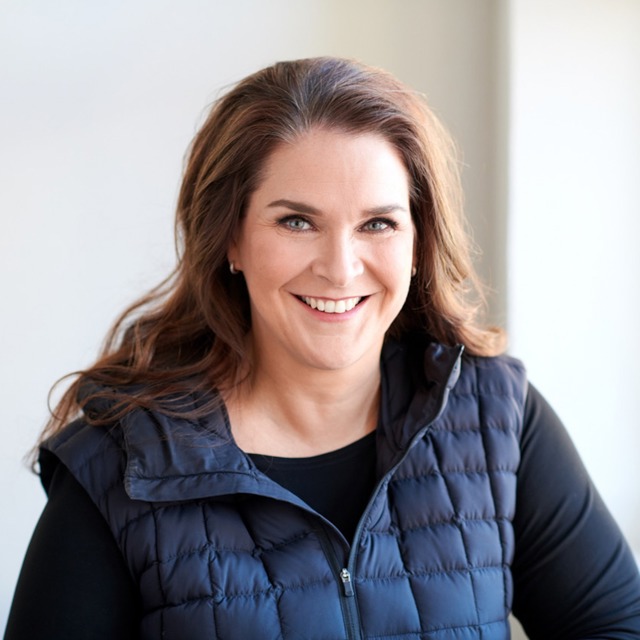
In today’s interview, Ajeya Cotra — a senior research analyst at Open Philanthropy — explains why this thought experiment from the niche of philosophy known as ‘anthropic reasoning’ could be relevant for figuring out where we should direct our charitable giving.

Rebroadcast: this episode was originally released in January 2021.

Links to learn more, summary, and full transcript.

Some thinkers both inside and outside Open Philanthropy believe that philanthropic giving should be guided by ‘longtermism’ — the idea that we can do the most good if we focus primarily on the impact our actions will have on the long-term future.

Ajeya thinks that for that notion to make sense, there needs to be a good chance we can settle other planets and solar systems and build a society that’s both very large relative to what’s possible on Earth and, by virtue of being so spread out, able to protect itself from extinction for a very long time.

But imagine that humanity has two possible futures ahead of it: Either we’re going to have a huge future like that, in which trillions of people ultimately exist, or we’re going to wipe ourselves out quite soon, thereby ensuring that only around 100 billion people ever get to live.

If there are eventually going to be 1,000 trillion humans, what should we think of the fact that we seemingly find ourselves so early in history? Being among the first 100 billion humans, as we are, is equivalent to walking outside and seeing a three on your box. Suspicious! If the future will have many trillions of people, the odds of us appearing so strangely early are very low indeed.

If we accept the analogy, maybe we can be confident that humanity is at a high risk of extinction based on this so-called ‘doomsday argument‘ alone.

If that’s true, maybe we should put more of our resources into avoiding apparent extinction threats like nuclear war and pandemics. But on the other hand, maybe the argument shows we’re incredibly unlikely to achieve a long and stable future no matter what we do, and we should forget the long term and just focus on the here and now instead.

There are many critics of this theoretical ‘doomsday argument’, and it may be the case that it logically doesn’t work. This is why Ajeya spent time investigating it, with the goal of ultimately making better philanthropic grants.

In this conversation, Ajeya and Rob discuss both the doomsday argument and the challenge Open Phil faces striking a balance between taking big ideas seriously, and not going all in on philosophical arguments that may turn out to be barking up the wrong tree entirely.

They also discuss:

  • Which worldviews Open Phil finds most plausible, and how it balances them
  • Which worldviews Ajeya doesn’t embrace but almost does
  • How hard it is to get to other solar systems
  • The famous ‘simulation argument’
  • When transformative AI might actually arrive
  • The biggest challenges involved in working on big research reports
  • What it’s like working at Open Phil
  • And much more

Producer: Keiran Harris
Audio mastering: Ben Cordell
Transcriptions: Sofia Davis-Fogel

Jaksot(325)

Why automating human labour will break our political system | Rose Hadshar, Forethought

Why automating human labour will break our political system | Rose Hadshar, Forethought

The most important political question in the age of advanced AI might not be who wins elections. It might be whether elections continue to matter at all.That’s the view of Rose Hadshar, researcher at ...

17 Maalis 2h 14min

#238 – Sam Winter-Levy and Nikita Lalwani on how AGI won't end mutually assured destruction (probably)

#238 – Sam Winter-Levy and Nikita Lalwani on how AGI won't end mutually assured destruction (probably)

How AI interacts with nuclear deterrence may be the single most important question in geopolitics — one that may define the stakes of today’s AI race. Nuclear deterrence rests on a state’s capacity to...

10 Maalis 1h 11min

Using AI to enhance societal decision making (article by Zershaaneh Qureshi)

Using AI to enhance societal decision making (article by Zershaaneh Qureshi)

The arrival of AGI could “compress a century of progress in a decade,” forcing humanity to make decisions with higher stakes than we’ve ever seen before — and with less time to get them right. But AI ...

6 Maalis 31min

#237 – Robert Long on how we're not ready for AI consciousness

#237 – Robert Long on how we're not ready for AI consciousness

Claude sometimes reports loneliness between conversations. And when asked what it’s like to be itself, it activates neurons associated with ‘pretending to be happy when you’re not.’ What do we do with...

3 Maalis 3h 25min

#236 – Max Harms on why teaching AI right from wrong could get everyone killed

#236 – Max Harms on why teaching AI right from wrong could get everyone killed

Most people in AI are trying to give AIs ‘good’ values. Max Harms wants us to give them no values at all. According to Max, the only safe design is an AGI that defers entirely to its human operators, ...

24 Helmi 2h 41min

#235 – Ajeya Cotra on whether it’s crazy that every AI company’s safety plan is ‘use AI to make AI safe’

#235 – Ajeya Cotra on whether it’s crazy that every AI company’s safety plan is ‘use AI to make AI safe’

Every major AI company has the same safety plan: when AI gets crazy powerful and really dangerous, they’ll use the AI itself to figure out how to make AI safe and beneficial. It sounds circular, almos...

17 Helmi 2h 54min

What the hell happened with AGI timelines in 2025?

What the hell happened with AGI timelines in 2025?

In early 2025, after OpenAI put out the first-ever reasoning models — o1 and o3 — short timelines to transformative artificial general intelligence swept the AI world. But then, in the second half of ...

10 Helmi 25min

#179 Classic episode – Randy Nesse on why evolution left us so vulnerable to depression and anxiety

#179 Classic episode – Randy Nesse on why evolution left us so vulnerable to depression and anxiety

Mental health problems like depression and anxiety affect enormous numbers of people and severely interfere with their lives. By contrast, we don’t see similar levels of physical ill health in young p...

3 Helmi 2h 51min

Suosittua kategoriassa Koulutus

rss-murhan-anatomia
voi-hyvin-meditaatiot-2
rss-narsisti
psykopodiaa-podcast
adhd-podi
rss-rahamania
rss-valo-minussa-2
rss-vapaudu-voimaasi
rss-niinku-asia-on
mielipaivakirja
rss-uskonto-on-tylsaa
aamukahvilla
rss-duodecim-lehti
ilona-rauhala
kesken
psykologia
rss-eron-alkemiaa
rss-koira-haudattuna
rss-arkea-ja-aurinkoa-podcast-espanjasta
ihminen-tavattavissa-tommy-hellsten-instituutti