
#181 – Laura Deming on the science that could keep us healthy in our 80s and beyond

#181 – Laura Deming on the science that could keep us healthy in our 80s and beyond

"The question I care about is: What do I want to do? Like, when I'm 80, how strong do I want to be? OK, and then if I want to be that strong, how well do my muscles have to work? OK, and then if that's true, what would they have to look like at the cellular level for that to be true? Then what do we have to do to make that happen? In my head, it's much more about agency and what choice do I have over my health. And even if I live the same number of years, can I live as an 80-year-old running every day happily with my grandkids?" — Laura Deming

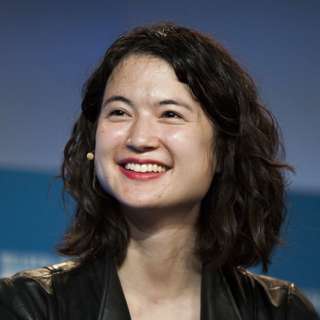
In today’s episode, host Luisa Rodriguez speaks to Laura Deming — founder of The Longevity Fund — about the challenge of ending ageing.

Links to learn more, summary, and full transcript.

They cover:

  • How lifespan is surprisingly easy to manipulate in animals, which suggests human longevity could be increased too.
  • Why we irrationally accept age-related health decline as inevitable.
  • The engineering mindset Laura takes to solving the problem of ageing.
  • Laura’s thoughts on how ending ageing is primarily a social challenge, not a scientific one.
  • The recent exciting regulatory breakthrough for an anti-ageing drug for dogs.
  • Laura’s vision for how increased longevity could positively transform society by giving humans agency over when and how they age.
  • Why this decade may be the most important decade ever for making progress on anti-ageing research.
  • The beauty and fascination of biology, which makes it such a compelling field to work in.
  • And plenty more.

Chapters:

  • The case for ending ageing (00:04:00)
  • What might the world look like if this all goes well? (00:21:57)
  • Reasons not to work on ageing research (00:27:25)
  • Things that make mice live longer (00:44:12)
  • Parabiosis, changing the brain, and organ replacement can increase lifespan (00:54:25)
  • Big wins the field of ageing research (01:11:40)
  • Talent shortages and other bottlenecks for ageing research (01:17:36)

Producer and editor: Keiran Harris
Audio Engineering Lead: Ben Cordell
Technical editing: Simon Monsour and Milo McGuire
Additional content editing: Katy Moore and Luisa Rodriguez
Transcriptions: Katy Moore

Jaksot(317)

Why 'Aligned AI' Would Still Kill Democracy | David Duvenaud, ex-Anthropic team lead

Why 'Aligned AI' Would Still Kill Democracy | David Duvenaud, ex-Anthropic team lead

Democracy might be a brief historical blip. That’s the unsettling thesis of a recent paper, which argues AI that can do all the work a human can do inevitably leads to the “gradual disempowerment” of ...

27 Tammi 2h 31min

#145 Classic episode – Christopher Brown on why slavery abolition wasn't inevitable

#145 Classic episode – Christopher Brown on why slavery abolition wasn't inevitable

In many ways, humanity seems to have become more humane and inclusive over time. While there’s still a lot of progress to be made, campaigns to give people of different genders, races, sexualities, et...

20 Tammi 2h 56min

#233 – James Smith on how to prevent a mirror life catastrophe

#233 – James Smith on how to prevent a mirror life catastrophe

When James Smith first heard about mirror bacteria, he was sceptical. But within two weeks, he’d dropped everything to work on it full time, considering it the worst biothreat that he’d seen described...

13 Tammi 2h 9min

#144 Classic episode – Athena Aktipis on why cancer is a fundamental universal phenomena

#144 Classic episode – Athena Aktipis on why cancer is a fundamental universal phenomena

What’s the opposite of cancer? If you answered “cure,” “antidote,” or “antivenom” — you’ve obviously been reading the antonym section at www.merriam-webster.com/thesaurus/cancer.But today’s guest Athe...

9 Tammi 3h 30min

#142 Classic episode – John McWhorter on why the optimal number of languages might be one, and other provocative claims about language

#142 Classic episode – John McWhorter on why the optimal number of languages might be one, and other provocative claims about language

John McWhorter is a linguistics professor at Columbia University specialising in research on creole languages. He's also a content-producing machine, never afraid to give his frank opinion on anything...

6 Tammi 1h 35min

2025 Highlight-o-thon: Oops! All Bests

2025 Highlight-o-thon: Oops! All Bests

It’s that magical time of year once again — highlightapalooza! Stick around for one top bit from each episode we recorded this year, including:Kyle Fish explaining how Anthropic’s AI Claude descends i...

29 Joulu 20251h 40min

#232 – Andreas Mogensen on what we owe 'philosophical Vulcans' and unconscious beings

#232 – Andreas Mogensen on what we owe 'philosophical Vulcans' and unconscious beings

Most debates about the moral status of AI systems circle the same question: is there something that it feels like to be them? But what if that’s the wrong question to ask? Andreas Mogensen — a senior ...

19 Joulu 20252h 37min

#231 – Paul Scharre on how AI-controlled robots will and won't change war

#231 – Paul Scharre on how AI-controlled robots will and won't change war

In 1983, Stanislav Petrov, a Soviet lieutenant colonel, sat in a bunker watching a red screen flash “MISSILE LAUNCH.” Protocol demanded he report it to superiors, which would very likely trigger a ret...

17 Joulu 20252h 45min

Suosittua kategoriassa Koulutus

rss-murhan-anatomia
psykopodiaa-podcast
voi-hyvin-meditaatiot-2
rss-niinku-asia-on
kesken
rss-duodecim-lehti
adhd-podi
aamukahvilla
aloita-meditaatio
rss-liian-kuuma-peruna
rss-valo-minussa-2
ihminen-tavattavissa-tommy-hellsten-instituutti
rss-elamankoulu
rss-psykalab
rss-narsisti
rahapuhetta
salainen-paivakirja
rss-uskonto-on-tylsaa
rss-vapaudu-voimaasi
rss-hereilla