Podcast 560:  Imaging in a COVID world

Podcast 560: Imaging in a COVID world

Contributor: Don Stader, MD

Educational Pearls:

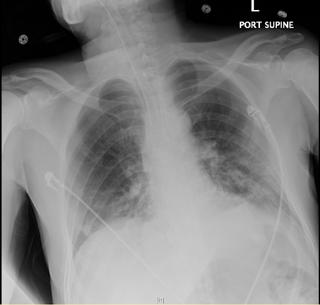
  • COVID-19 commonly appears as a bilateral patchy infiltrate on chest radiograph, but this is a non-specific finding
    • Sensitivities range from 17-70% for COVID-19
    • Many other viral pneumonias such as RSV and influenza can have similar findings
  • Point-of-care ultrasound (POCUS) demonstrates B-lines, water-fall sign, or hepatization of the lung, but these are also non-specific
  • Computerized tomography (CT) appears to be one of the more sensitive tests for detecting COVID-19, demonstrating ground-glass opacities - often before or without the patient having symptoms
    • However, routine use of CT for diagnosis COVID-19 is strongly discouraged by many medical societies and the CDC
  • Imaging may not be necessary in most patients presenting with suspected COVID-19 for multiple reasons:
    • Diagnosis is often clinical suspicion, with or without confirmatory PCR testing (if available)
    • Imaging does little to change the management in the majority of patients with COVID-19
    • Obtaining imaging exposes additional healthcare workers
    • Cleaning protocols for units (especially CT) can be extensive and require significant downtime of the machine, thereby leading to delays in care

References

  1. Farkas, Josh. "COVID-19." EMCrit Project, 21 Apr. 2020, emcrit.org/ibcc/covid19/#labs.
  2. Guan W. et al. Clinical Characteristics of Coronavirus Disease 2019 in China. February 28, 2020, updated on March 6, 2020, at NEJM.org. DOI: 10.1056/NEJMoa2002032

Summarized by Jackson Roos, MS4 | Edited by Erik Verzemnieks, MD

Suosittua kategoriassa Tiede

tiedekulma-podcast
rss-mita-tulisi-tietaa
rss-poliisin-mieli
docemilia
radio-antro
rss-duodecim-lehti
rss-ammamafia
rss-sosiopodi
utelias-mieli
ihanat-ipanat
mielipaivakirja
filocast-filosofian-perusteet
rss-bios-podcast
rss-tiedetta-vai-tarinaa