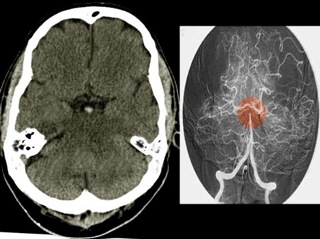
Podcast 572:  Locked In Syndrome

Podcast 572: Locked In Syndrome

Contributor: Aaron Lessen, MD

Educational Pearls:

  • Locked in syndrome results typically from an infarct of the basilar artery leading to infarction of the brainstem but typically preservation of the higher structures
  • The result is complete paralysis with preserved cognitive function, hence the name
  • Because of their location within the brainstem, ocular movements are sometimes preserved, allowing a patient who recovers from the initial injury to communicate
  • Patients typically do not regain any motor function and have a poor prognosis of recovery
  • Thrombectomy of the basilar artery is sometimes considered even late after the initial presentation given the devastating prognosis

References

Smith E, Delargy M. Locked-in syndrome. BMJ. 2005;330(7488):406‐409. doi:10.1136/bmj.330.7488.406

Buchman SL, Merkler AE. Basilar Artery Occlusion: Diagnosis and Acute Treatment. Curr Treat Options Neurol. 2019;21(10):45. Published 2019 Sep 26. doi:10.1007/s11940-019-0591-0

Meinel TR, Kaesmacher J, Chaloulos-Iakovidis P, et alMechanical thrombectomy for basilar artery occlusion: efficacy, outcomes, and futile recanalization in comparison with the anterior circulationJournal of NeuroInterventional Surgery 2019;11:1174-1180.

Summarized by Jackson Roos, MS4 | Edited by Erik Verzemnieks, MD


Suosittua kategoriassa Tiede

tiedekulma-podcast
rss-mita-tulisi-tietaa
rss-poliisin-mieli
docemilia
radio-antro
utelias-mieli
filocast-filosofian-perusteet
rss-sosiopodi
ihanat-ipanat
mielipaivakirja
rss-bios-podcast
rss-duodecim-lehti
rss-ammamafia
rss-laakaripodi
rss-opeklubi