210. Ramsay MacDonald and the coalition that split Labour

210. Ramsay MacDonald and the coalition that split Labour

The ‘flapper election’ took place on 30 May 1929. The reference was top ‘flappers’, fashionable and slightly shocking young women of the 1920s, who could vote in it because, at last, universal suffrage had been introduced for all adults of 21 or over irrespective of sex or property.

The Tories, who’d made some moves, perhaps rather more modest than many might have hoped, towards alleviating property and had been responsible for the reform that gave the flappers the vote, might have hoped to be returned to office in gratitude. They weren’t. Instead, Labour, the biggest single party but again short of a majority, formed a second government under Ramsay MacDonald.

As before, and like the Baldwin government that preceded it, it tried to cut public spending. The economy remained stuck in the doldrums and then, after the Wall Street Crash of 1929, it tanked. Workless numbers soared. In 1931, MacDonald decided that the only way to keep reducing spending was to cut unemployment benefit. That was unacceptable to the majority of Labour. The party split over the issue, a split confirmed when MacDonald accepted the king’s plea to stay on as Prime Minister but at the head of a ‘National Government’ including ministers from all three the main parties, Conservative, Labour and Liberal.

It in turn went to the country, as the National Government, seeking a ‘doctor’s mandate’ to cure the nation’s ills, on 27 October 1931. The results were spectacular: the National Government was returned to power with a colossal majority, 554 seats out of the total of 615 in the House of Commons. They were disastrous for official Labour, to a rump of just 52 seats.

But the picture wasn’t particularly encouraging for MacDonald either. He headed a group with an unassailable majority. However, among the government’s MPs, 470 – a majority of the Commons on its own – were Conservative. His own so-called National Labour group only had 13.

He was in office all right. But he was also trapped. He could do nothing without the support of the overwhelming Tory majority.


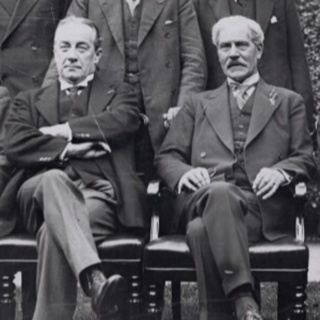
Illustration: Ramsay MacDonald, the Prime Minister, (right), in a detail from a 1931 photo of the National Government cabinet by Press Associations Photos, with Stanley Baldwin (left), the Tory leader whose clear Commons majority of his own made him the real power behind MacDonald’s throne. National Portrait Gallery, x184174.

Music: Bach Partita #2c by J Bu licensed under an Attribution-NonCommercial-No Derivatives (aka Music Sharing) 3.0 International License


Jaksot(274)

273. From a humble address to a royal arrest

273. From a humble address to a royal arrest

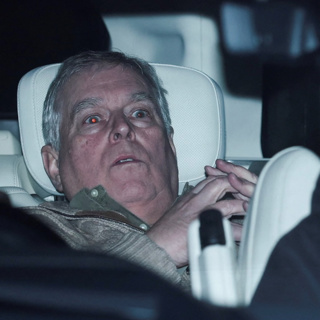
Well, we’re living in curious times.For the first time in four centuries, a member of the British royal family has been arrested in connection with a criminal investigation. Andrew Mountbatten-Windsor...

22 Helmi 14min
272. What a fine mess you've got us into

272. What a fine mess you've got us into

This is the last episode in this main series of A History of England. I may add others on specific topics – by all means use the comments to suggest any you’d like me to examine – or in response to in...

20 Joulu 202543min

271. Breaking records

271. Breaking records

Following the rather grim comedy of Boris Johnson, the Conservatives gave Britain the even more ridiculous spectacle of Liz Truss. She proceeded to push the British economy to the edge of the abyss, a...

7 Joulu 202514min
270. Phenomenal Boris

270. Phenomenal Boris

It’s the time of Boris. This episode tracks Boris Johnson’s character, starting with a less than complimentary report from his housemaster at Eton to this parents, through his time in the rich kids’ B...

30 Marras 202514min
269. Brexit

269. Brexit

In 2015, Cameron returned to office with a majority of his own even if it wasn’t particularly huge. At least it meant he no longer needed to be in a coalition with the Lib Dems, who’d taken a terrible...

23 Marras 202514min
268. The winners and the damned: peacetime coalition

268. The winners and the damned: peacetime coalition

It’s 2007, and Tony Blair is out. In his place is Gordon Brown, who’d proved his capacity as a Chancellor. Sadly, he was now to show that promotion to Prime Minister was one step too many , since he s...

16 Marras 202514min
267. Bliar

267. Bliar

As the title of this episode suggests, this is where we look at how Tony Blair’s reputation was wrecked by the growing awareness that he’d produced infamously bad justifications to launch Britain into...

9 Marras 202514min

266. A time of dodgy dossiers

266. A time of dodgy dossiers

When Tony Blair took Britain to war in Iraq in 2003, as part of a US-led and rather limited coalition of nations, it was against the will of large numbers of Brits expressed in possibly the biggest de...

2 Marras 202514min

Suosittua kategoriassa Historia

olipa-kerran-otsikko
gogin-ja-janin-maailmanhistoria
mayday-fi
huijarit
mystista
rss-ikiuni
tsunami
konginkangas
totuus-vai-salaliitto
rouva-diktaattori
rss-kirkon-ihmeellisimmat-tarinat
rss-i-dont-like-mondays-2
rss-sattuu-sita-suomessakin
sotaa-ja-historiaa-podi
apinan-vuosi
rss-peter-peter
historiaa-suomeksi
tiedetta-ja-sirkushuveja-vanhojen-aikojen-podcast
rss-subjektiivinen-todistaja
matakuu