
The dogs under the desk people, plus, Elastic, Cloudera/Hortonworks, and hotel loyalty programs and breakfast buffets

The dogs under the desk people, plus, Elastic, Cloudera/Hortonworks, and hotel loyalty programs and breakfast buffets

Changing the “culture” at a large company is impossibly hard, few get through it. And, it’s little wonder, you’re usually asking them to do completely irrational things. In the context of Google shutting down Google+ and a small write-up of Blockbuster failure fairy tales, we spend time discussion the “if it ain’t broke, don’t fix it” problem of digital transformation. We then talk about Elastic search and their recent IPO, and follow-up with some better commentary on Cloudera and Hortonworks merging - better than we did last week. Hotel breakfast buffet strategies and the Chase Sapphire series of cards. Oh, and before that Matt and Coté spend a good 10 to 15 minutes talking about hotel breakfast buffet strategies.

Also, it’s episode #150 - yay us! Our first episode was on May 27th, 2014, where Coté’s lamp played a prominent role, and we did video.

Relevant to your interests
  • Chase Sapphire Reserve, and others in the Sapphire line. AAdvantage Executive card.
  • SpringOne Platform videos are all up.
  • Coté went to Puppetizer 2018 Amsterdam. They’re really into being “a portfolio company” now. Lots of stacks presented; much discussion on managing Puppet itself. A very well run event. See also Register coverage of their SF event.
  • Google is shutting down Google+ following massive data exposure - “90 percent of Google+ user sessions last for less than five seconds.”
    • be like google prd mgmt desertion
    • effect other enterprise props?
    • legacy services
  • OpenOffice watch - ‘Back in 2015, Red Hat developer Christian Schaller called OpenOffice "all but dead."’
  • Austin Ernest says make sure you don’t cargo cult The SRE.
  • The Demise of Blockbuster, and Other Failure Fairy Tales - Strategy is hard, execution at the middle-management later is harder. Put yet another way, company executives have a lot less power than you’d think. Related: WTF is “culture”?
  • This week in IPOs: Elastic has a party, Solarwinds figuring one out.
    • Elastic: “The stock closed at $70 per share, representing a 94.4 percent rise.” Close of market on Oct. 10th: $62.50 per share.
    • 451 on Elastic revenue, Scott Denne: “The developer of open source search software for IT log analysis, security analytics and other applications nearly doubled its top line in its fiscal year (ending April 30) to $160m, up from $88m a year earlier, while increasing the share of subscription revenue in its mix.”
    • More: “Judging by Elastic’s offering, the [Q3] dry spell had little impact on investor appetites, setting up a favorable environment for Anaplan and SolarWinds as both look to price this month.”
    • 451 on Elastic’s product, Nancy Gohring: “One of the most important messages that emerged from ElasticOn is that Elastic is positioning its software to serve as a platform for collecting and analyzing a wide array of machine data that can be used in a variety of use cases. With its recently announced APM UI and the forthcoming Infra UI, as well as the Canvas visualization capabilities, SQL-like querying and advancing machine-learning techniques, the Elastic Stack will be usable as a centralized platform for collecting and analyzing logs, events and metrics by constituents within a business including IT ops, security, executive leadership, product management and others.”
      • So, Elastic is…an OSS (presumably) cheaper Splunk, but for general search not just IT? Or, wait, it is just IT stuff?
    • Solarwinds: Coté hasn’t been able to parse out the Solarwinds deal. The big question is/will be, “so, did it make sense to go private, or could that have done whatever they’re doing by staying public?”
  • Serverless and FaaS, survey shows confusion: “Despite attempts to educate the market, we still believe the word “serverless” connotes many different things, especially for the 79 percent of organizations that plan to adopt serverless architecture but have not planned to use FaaS in the next 18 months.”
    • Coté’s old saw that “serverless” has just come to mean “doing programming on-top of cloud shit.” This is what Pivotal usually means when they say “cloud native,” versus the container kids who mean just “kubernetes,” at broadest, “containers.”
  • Cloudera/Hortonworks follow-up:
    • TPM: “Cloudera has raked in $1.28 billion in revenues in the past six and a half years, while Hortonworks only brought in $808 million. Add in the venture capital of $1.31 billion in venture capital, plus $225 million that Cloudera raised in early 2017 for its IPO and the $100 million that Hortonworks raised in late 2014 from its IPO, and the total pile of cash that has come to the pair is $3.69 billion. Hortonworks still has $86 million of cash and Cloudera still has $440.1 million. But over that same time period, Cloudera has booked cumulative losses of $1.19 billion and Hortonworks has cumulative losses of $979 million, for a total of $2.16 billion. Both separately and together, these companies are burning the wood a lot faster than they can cut it.”
    • TPM’s TAM summary, as suggested by the two companies: “The core market that Hadoop is chasing is comprised of three different segments, according to Cloudera-Hortonworks, and will grow at a compound annual growth rate of 21 percent between 2017 and 2022, from $12.7 billion to $32.3 billion. Within that, cognitive and artificial intelligence workloads represent a $14.3 billion opportunity in 2022, $4.9 billion for advanced and predictive analytics software, and $13.2 billion for dynamic data management systems (what we would call modern storage). In addition to that, the Hadoop platform is also chasing relational and non-relational database management systems and data warehouses, which is another $51 billion opportunity in 2022, for a total TAM of $83 billion. Even a small slice of this, which is what Hadoop currently gets today, could be billions of dollars by then.”
    • Forrester on TAM penetration, Noel Yuhanna: “We estimate that [just] 7% of organizations have completely migrated their traditional data warehouses to big data platforms. “ That’s 93% more left, assuming 20% capture for a leader, (shoddy percentage math follows)17 to 18%, I guess?
    • Meanwhile, also from Forrester: “While 74% of global data and analytics decision makers tell us they will have invested in a big data lake by the end of 2017, we find that many of these are being kept on life support by the technology management shops that drove them.”
    • Also, Forrester on HARK (Hadoop & Spark), Noel Yuhanna & Mike Gualtieri: “Distributed computing software and services that are rooted in open source Apache Hadoop and Apache Spark to store, process, and analyze data to find and use insights to improve customer experiences, create timely business intelligence, optimize business processes, and make decision making smarter and faster.” Like traditional analytics, but bigger and with more ML?
    • 451 (Matt Aslett & James Curtis): “Although there are cross-selling opportunities and the two companies share an underlying open source foundation, there are also significant areas of product overlap and competing functionality, as well as a history of animosity to overcome.”
    • Tamped down TAM: “Another way of looking at this is that the Hadoop market hasn't expanded enough to support the growth targets of two independent publicly traded companies, especially with the cloud providers to contend with.”
    • Cloudera is the winner: “While the deal is being described by the companies as a merger, make no mistake that Cloudera is acquiring Hortonworks. After the transaction closes, Cloudera shareholders will own approximately 60% of the combined company, which will do business as Cloudera, with Hortonworks shareholders owning approximately 40%.”
    • Products, Hortnworks: “Its primary product is the Hortonworks Data Platform (HDP), which consists of core Hadoop and some 20+ open source projects. But in August 2015, the company purchased Onyara, which was based on the Apache NiFi technology, and designed to enable users to collect, process and distribute data.”
    • Products, Cloudera: “To date, Cloudera offers several products and while Hortonworks has adopted a pure 100% open source approach. Cloudera has a hybrid strategy, mixing open source with its proprietary tooling. The company's core offering is the Cloudera Enterprise Data Hub (CDH) – specifically targeted products are provided for data warehousing, operational database, and data science and engineering. Its cloud offering is Altus, a PaaS available on AWS and Azure.”
    • 451 in another report (Agatha Poon), on Cloudera, June 2018: “At present, data analytics tools and offerings are driving regional opportunities with enterprises slowly but clearly moving out from legacy data warehouse platform to a new generation of data analytics platform, which is highly distributed and open standards based, Cloudera says. For machine learning and advanced data analytics, the company believes that data scientists will be the main users and strategic partners to boost future uptake. While data scientists can make use of algorithms to train the model into production data clusters, it could be a time-consuming and complex endeavor. With that in mind, Cloudera has stepped up its game by acquiring applied machine learning research startup Fast Forward Labs in late 2017, deepening its expertise in applying machine learning to practical business problems. The bigger Cloudera says it is committed to researching new techniques to resolve real-world business problems, building codes as well as providing customers with machine learning advisory services leveraging Fast Forward Labs' domain expertise.”
    • Cloudera strategy: “Cloudera's proposition remains largely unchanged: lead machine learning in the enterprise, disrupt the data warehouse market for analytical and operational data workloads, capitalize on cloud adoption and drive innovation for simplification while mitigating data security risk. With cloud being an agent for digital transformation, the company has publicly announced its intent to lead with cloud innovation as part of the future growth strategy at the company level.”
Conferences, et. al. Nonsense Listener Feedback
  • Jermey is professor at a university in Chicago teaching cloud native and "devops" technologies to undergrads. “The Podcast has been a great benefit to the students. Could I get a few stickers to pass out to them?”
SDT news & hype Recommendations

Jaksot(512)

Episode 565: Field Engineering is the YOLO team

Episode 565: Field Engineering is the YOLO team

This week, we discuss big bets gone wrong, OpenAI buying the Python toolchain, and Claude's favorite tools. Plus, how fast should AI agents ship bug fixes? Watch the YouTube Live Recording of Episode...

27 Maalis 1h 3min
Episode 564: New Token Machines

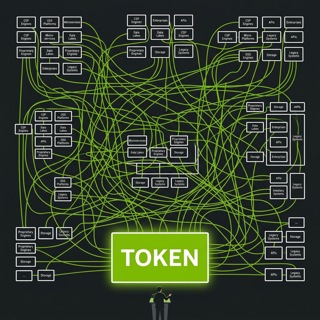
Episode 564: New Token Machines

This week, we discuss NVIDIA GTC, token machines, token budgets, and an AWS outage that may or may not involve AI. Plus, Matt reviews The Wizard of Oz at The Sphere. Watch the YouTube Live Recording ...

20 Maalis 54min
Episode 563: Claude Camp

Episode 563: Claude Camp

This week, we discuss Claude Code for non-coders, automating newsletters and status reports, and AI tax prep. Plus, Coté finds unexpected joy in a coding assistant. Watch the YouTube Live Recording o...

13 Maalis 1h 10min
Episode 562: Bureaucracy: Still Unsolved

Episode 562: Bureaucracy: Still Unsolved

This week. we discuss Claude Code's momentum, Cursor's identity crisis, and the SDLC's uncertain future. Plus, Coté finally explains how Markdown is destroying the economy. Watch the YouTube Live Rec...

6 Maalis 1h 6min
Episode 561: Two Guys and Their Tokens

Episode 561: Two Guys and Their Tokens

This week, we discuss AI-assisted COBOL migrations, the OpenClaw Foundation, and AI killing Office. Plus, is TSA PreCheck Touchless the peak of airport efficiency? Watch the YouTube Live Recording of...

27 Helmi 1h

Episode 560: You Can Feel It Coming

Episode 560: You Can Feel It Coming

This week, we discuss personal AI hype cycles, bottoms-up adoption, and "The Modern Stack" simplifying cloud. Plus, thoughts on new cars and the dogs that ride in them. Watch the YouTube Live Recordi...

20 Helmi 1h 11min
Episode 559: A series of OODA loops

Episode 559: A series of OODA loops

This week, we discuss the future of SaaS, OpenAI vs. Anthropic strategies, and cloud capex. Plus, when will you let an AI book your flights? Watch the YouTube Live Recording of Episode 559 Runner-up...

13 Helmi 1h 10min

Episode 558: Tara Raj on Amazon Nova Act

Episode 558: Tara Raj on Amazon Nova Act

Brandon interviews Tara Raj, Senior Engineering Manager at the Amazon AGI Lab. They dive into her journey into the world of AGI, how Nova Act is streamlining complex workflows, and the steps to deploy...

6 Helmi 46min

Suosittua kategoriassa Liike-elämä ja talous

sijotuskasti
mimmit-sijoittaa
psykopodiaa-podcast
rss-rahapodi
ostan-asuntoja-podcast
rss-rahamania
herrasmieshakkerit
rahapuhetta
rss-laakispodi
rss-sisalto-kuntoon
rss-sami-miettinen-neuvottelija
leadcast
rss-lahtijat
rss-bisnesta-bebeja
rss-seuraava-potilas
sijoituspodi
rss-karon-grilli
rss-juurisyy-johtamisesta-kilpailuetua
rss-draivi
rss-johtoajatuksia