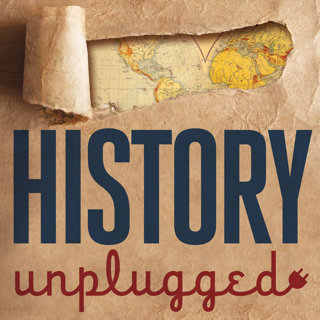
How Emperor Justinian Changed the World—Robin Pierson from The History of Byzantium Podcast

How Emperor Justinian Changed the World—Robin Pierson from The History of Byzantium Podcast

Justinian I of Byzantium is among the most towering figure of the ancient and medieval periods. His innovations in governance, architecture, law, and welding together religion with imperial power were blueprints of governance for the next thousand years of kings and emperors. He rose to imperial power in 527 AD and reacquired Roman lands in Europe that were lost a century ago to Vandal and Ostrogothic invasions. He removed the rotting branches of his administration, replacing bureaucrats from the aristocracy with independent counselors.Justinian also rewrote the Roman law, the Corpus Juris Civilis. He gathered together legal commentaries and laws of the Roman legal system into a single text that would hold the force of law. It was composed in Latin and is still the basis of civil law in many of the empire's descendant states. To talk with us about how Justinian changed the world is Robin Pierson, host of the History of Byzantium Podcast. Here are five parts of history that Justinian irrevocably changed: Laws Hagia Sophia Christianizing culture Slavs Islam ABOUT ROBIN PIERSON Robin Pierson is from London in the UK. He writes about American TV shows at thetvcritic.org and works for his father (an actor). Robin created the show to continue the narrative established by Mike Duncan’s wonderful podcast “The History of Rome.” He uses the structure of half-hour instalments told from a state-centric perspective. He pauses the narrative at the end of each century to take time to cover wider issues to do with Byzantium RESOURCES MENTIONED IN THIS EPISODE The History of Byzantium: A podcast telling the story of the Roman Empire from 476 AD to 1453

See omnystudio.com/listener for privacy information.

Jaksot(1078)

How Medieval Monks Used the 7 Deadly Sins to Map Human Behavior…and LinkedIn Weaponized them Against Us

How Medieval Monks Used the 7 Deadly Sins to Map Human Behavior…and LinkedIn Weaponized them Against Us

When medieval historian Peter Jones found himself spiraling into depression while teaching at a frigid Siberian university with icicles sprouting from his eyelashes, he asked himself what a medieval s...

21 Huhti 53min

1,000% Profit Per Voyage: The Economics of Civil War Smuggling and Blockade Running

1,000% Profit Per Voyage: The Economics of Civil War Smuggling and Blockade Running

In August 1863, as Lee's army retreated from Gettysburg and Vicksburg fell to Grant, the Union's Anaconda Plan deployed hundreds of ships to strangle 3,500 miles of Confederate coastline, triggering h...

16 Huhti 39min

The Lost Voices of Pompeii: Lives Cut Short When Vesuvius Erupted, Including a Fish Sauce Tycoon and an Isis Priest

The Lost Voices of Pompeii: Lives Cut Short When Vesuvius Erupted, Including a Fish Sauce Tycoon and an Isis Priest

Pompeii's story is usually told through the lens of catastrophe—perfectly preserved bodies frozen in ash, a civilization erased in hours, sort of like a Roman version of the Chicxulub impactor that ki...

14 Huhti 50min

The Body Worth Stealing: Why Medieval Cities Fought Over Francis of Assisi’s Corpse

The Body Worth Stealing: Why Medieval Cities Fought Over Francis of Assisi’s Corpse

When St. Francis of Assisi was near death in 1226, he joked with companions that his corpse would be practically as valuable as gold. And he was right: In medieval Europe, relics, or the physical rema...

9 Huhti 38min

The Alphabet as Artifact: How Egyptian Pictograms Became Your ABCs

The Alphabet as Artifact: How Egyptian Pictograms Became Your ABCs

The alphabet you're reading right now is a 3,800-year-old archaeological artifact, preserving ancient decisions in plain sight—from the upside-down ox head that became the letter A to the demotion of ...

7 Huhti 57min

Greenland is Nothing: American Nearly Acquired El Salvador, Canada, and the Kamchatka Peninsula

Greenland is Nothing: American Nearly Acquired El Salvador, Canada, and the Kamchatka Peninsula

America’s desire to expand its borders has existed since its first colonies – from attempts to settle beyond the Appalachian Mountains in the 18th century to Manifest Destiny in the 19th century down ...

2 Huhti 43min

From Big Village to Global Power: The Thousand-Year Rise of Moscow, Russia's Fortress Capital

From Big Village to Global Power: The Thousand-Year Rise of Moscow, Russia's Fortress Capital

When St. Petersburg nobility mockingly called Moscow a "big village," in the 19th century – a time when they lived in all the excess found in a Tolstoy novel -- they couldn't have imagined the provinc...

31 Maalis 56min

American Civilians Caught Behind Enemy Lines After Pearl Harbor, and How They Were Repatriated

American Civilians Caught Behind Enemy Lines After Pearl Harbor, and How They Were Repatriated

In the wake of Pearl Harbor, more than ten thousand Americans living abroad became trapped in Japanese-controlled territories, and with rumors of ill treatment and torture, the U.S. State Department w...

26 Maalis 47min

Suosittua kategoriassa Yhteiskunta

sita
olipa-kerran-otsikko
kaksi-aitia
ihme-ja-kumma
siita-on-vaikea-puhua
i-dont-like-mondays
uutiscast
gogin-ja-janin-maailmanhistoria
poks
antin-palautepalvelu
kolme-kaannekohtaa
mamma-mia
rss-murhan-anatomia
yopuolen-tarinoita-2
aikalisa
loukussa
rss-palmujen-varjoissa
meidan-pitais-puhua
naakkavalta
rss-nikotellen