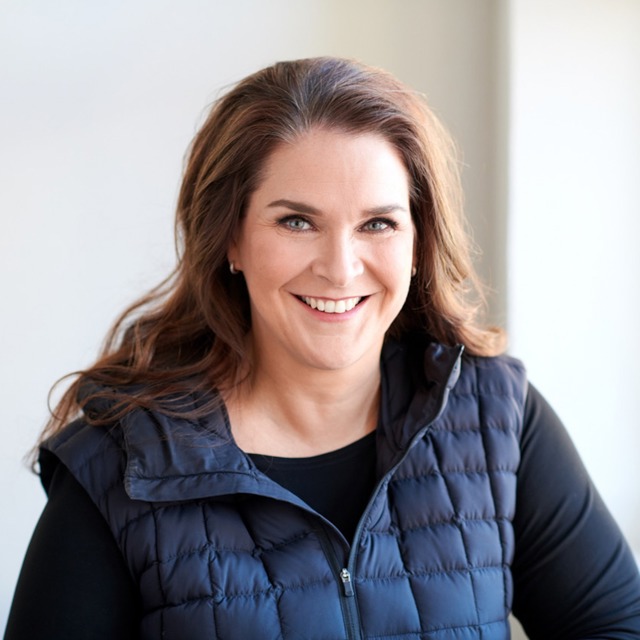

#209 – Rose Chan Loui on OpenAI’s gambit to ditch its nonprofit
80,000 Hours Podcast27 Marras 2024

#209 – Rose Chan Loui on OpenAI’s gambit to ditch its nonprofit

One OpenAI critic calls it “the theft of at least the millennium and quite possibly all of human history.” Are they right?

Back in 2015 OpenAI was but a humble nonprofit. That nonprofit started a for-profit, OpenAI LLC, but made sure to retain ownership and control. But that for-profit, having become a tech giant with vast staffing and investment, has grown tired of its shackles and wants to change the deal.

Facing off against it stand eight out-gunned and out-numbered part-time volunteers. Can they hope to defend the nonprofit’s interests against the overwhelming profit motives arrayed against them?

That’s the question host Rob Wiblin puts to nonprofit legal expert Rose Chan Loui of UCLA, who concludes that with a “heroic effort” and a little help from some friendly state attorneys general, they might just stand a chance.

Links to learn more, highlights, video, and full transcript.

As Rose lays out, on paper OpenAI is controlled by a nonprofit board that:

  • Can fire the CEO.
  • Would receive all the profits after the point OpenAI makes 100x returns on investment.
  • Is legally bound to do whatever it can to pursue its charitable purpose: “to build artificial general intelligence that benefits humanity.”

But that control is a problem for OpenAI the for-profit and its CEO Sam Altman — all the more so after the board concluded back in November 2023 that it couldn’t trust Altman and attempted to fire him (although those board members were ultimately ousted themselves after failing to adequately explain their rationale).

Nonprofit control makes it harder to attract investors, who don’t want a board stepping in just because they think what the company is doing is bad for humanity. And OpenAI the business is thirsty for as many investors as possible, because it wants to beat competitors and train the first truly general AI — able to do every job humans currently do — which is expected to cost hundreds of billions of dollars.

So, Rose explains, they plan to buy the nonprofit out. In exchange for giving up its windfall profits and the ability to fire the CEO or direct the company’s actions, the board will become minority shareholders with reduced voting rights, and presumably transform into a normal grantmaking foundation instead.

Is this a massive bait-and-switch? A case of the tail not only wagging the dog, but grabbing a scalpel and neutering it?

OpenAI repeatedly committed to California, Delaware, the US federal government, founding staff, and the general public that its resources would be used for its charitable mission and it could be trusted because of nonprofit control. Meanwhile, the divergence in interests couldn’t be more stark: every dollar the for-profit keeps from its nonprofit parent is another dollar it could invest in AGI and ultimately return to investors and staff.

Chapters:

  • Cold open (00:00:00)
  • What's coming up (00:00:50)
  • Who is Rose Chan Loui? (00:03:11)
  • How OpenAI carefully chose a complex nonprofit structure (00:04:17)
  • OpenAI's new plan to become a for-profit (00:11:47)
  • The nonprofit board is out-resourced and in a tough spot (00:14:38)
  • Who could be cheated in a bad conversion to a for-profit? (00:17:11)
  • Is this a unique case? (00:27:24)
  • Is control of OpenAI 'priceless' to the nonprofit in pursuit of its mission? (00:28:58)
  • The crazy difficulty of valuing the profits OpenAI might make (00:35:21)
  • Control of OpenAI is independently incredibly valuable and requires compensation (00:41:22)
  • It's very important the nonprofit get cash and not just equity (and few are talking about it) (00:51:37)
  • Is it a farce to call this an "arm's-length transaction"? (01:03:50)
  • How the nonprofit board can best play their hand (01:09:04)
  • Who can mount a court challenge and how that would work (01:15:41)
  • Rob's outro (01:21:25)

Producer: Keiran Harris
Audio engineering by Ben Cordell, Milo McGuire, Simon Monsour, and Dominic Armstrong
Video editing: Simon Monsour
Transcriptions: Katy Moore

Jaksot(323)

Using AI to enhance societal decision making (article by Zershaaneh Qureshi)

Using AI to enhance societal decision making (article by Zershaaneh Qureshi)

The arrival of AGI could “compress a century of progress in a decade,” forcing humanity to make decisions with higher stakes than we’ve ever seen before — and with less time to get them right. But AI ...

6 Maalis 31min

We're Not Ready for AI Consciousness | Robert Long, philosopher and founder of Eleos AI

We're Not Ready for AI Consciousness | Robert Long, philosopher and founder of Eleos AI

Claude sometimes reports loneliness between conversations. And when asked what it’s like to be itself, it activates neurons associated with ‘pretending to be happy when you’re not.’ What do we do with...

3 Maalis 3h 25min

#236 – Max Harms on why teaching AI right from wrong could get everyone killed

#236 – Max Harms on why teaching AI right from wrong could get everyone killed

Most people in AI are trying to give AIs ‘good’ values. Max Harms wants us to give them no values at all. According to Max, the only safe design is an AGI that defers entirely to its human operators, ...

24 Helmi 2h 41min

#235 – Ajeya Cotra on whether it’s crazy that every AI company’s safety plan is ‘use AI to make AI safe’

#235 – Ajeya Cotra on whether it’s crazy that every AI company’s safety plan is ‘use AI to make AI safe’

Every major AI company has the same safety plan: when AI gets crazy powerful and really dangerous, they’ll use the AI itself to figure out how to make AI safe and beneficial. It sounds circular, almos...

17 Helmi 2h 54min

What the hell happened with AGI timelines in 2025?

What the hell happened with AGI timelines in 2025?

In early 2025, after OpenAI put out the first-ever reasoning models — o1 and o3 — short timelines to transformative artificial general intelligence swept the AI world. But then, in the second half of ...

10 Helmi 25min

#179 Classic episode – Randy Nesse on why evolution left us so vulnerable to depression and anxiety

#179 Classic episode – Randy Nesse on why evolution left us so vulnerable to depression and anxiety

Mental health problems like depression and anxiety affect enormous numbers of people and severely interfere with their lives. By contrast, we don’t see similar levels of physical ill health in young p...

3 Helmi 2h 51min

#234 – David Duvenaud on why 'aligned AI' would still kill democracy

#234 – David Duvenaud on why 'aligned AI' would still kill democracy

Democracy might be a brief historical blip. That’s the unsettling thesis of a recent paper, which argues AI that can do all the work a human can do inevitably leads to the “gradual disempowerment” of ...

27 Tammi 2h 31min

#145 Classic episode – Christopher Brown on why slavery abolition wasn't inevitable

#145 Classic episode – Christopher Brown on why slavery abolition wasn't inevitable

In many ways, humanity seems to have become more humane and inclusive over time. While there’s still a lot of progress to be made, campaigns to give people of different genders, races, sexualities, et...

20 Tammi 2h 56min

Suosittua kategoriassa Koulutus

rss-murhan-anatomia
voi-hyvin-meditaatiot-2
rss-narsisti
rss-uskonto-on-tylsaa
rss-liian-kuuma-peruna
rss-vapaudu-voimaasi
psykopodiaa-podcast
psykologia
adhd-podi
rss-valo-minussa-2
aamukahvilla
kesken
rss-duodecim-lehti
rahapuhetta
rss-tietoinen-yhteys-podcast-2
rss-hereilla
dear-ladies
filocast-filosofian-perusteet
ihminen-tavattavissa-tommy-hellsten-instituutti
rss-taloustaito-podcast