229. The tide turns

229. The tide turns

The tide turned against the Axis and in favour of the Allies in the course of 1943. Victories at Stalingrad in Russia, in the Battle of the Atlantic, and in North Africa, came on top of American advances in the Pacific, from island to island towards Japan. That relieved some of the pressure on the British government, that had been coming under fire for the all the disasters of 1942: the shipping losses in the Battle of the Atlantic, the loss of Burma and Malaya culminating in the fall of Singapore, and the Eighth Army’s retreat in front of Rommel in North Africa.

Within the British government, things had changed since the start of the war, with the Conservatives Chamberlain and Halifax gone, as well as the poorly performing Labour Deputy Leader, Arthur Greenwood. Churchill and Attlee, so different in personality, had found an effective working relationship, with Attlee now officially Churchill’s deputy, and deeply loyal to him. Attlee supported his boss on the big questions, such as the strategic bombing campaign against Germany, now considerably stepped up with the arrival of the Americans. That campaign was increasingly targeting civilians, making it arguably a war crime, or even simply terrorism, but it continued even though it never achieved its aim of breaking German morale.

What it did do is divert a significant amount of German airpower from the Russian front to German home defence. The North African campaign had a similar effect: small scale though it was, it sucked in German troops who might otherwise have fought in Russia, and it cost the Luftwaffe dearly, helping the Soviets gain air superiority on the Eastern Front, as the Brits and the Americans won it in the West.

Where Attlee differed from Churchill was over questions such as India. A terrible new famine in Bengal, handled with callousness by Churchill, ensured that the question of Indian independence remained a burning one.

Attlee was also under pressure from his own party, with Labour demanding that the government adopt as immediate policy the Beveridge report, proposing major reforms to ensure the poor and workers emerged better off when Britain reconstructed itself after the war. Attlee resisted the pressure, since he felt that it was important to hold the Churchill government together, making only small changes until it had won the war, and saving the major reforms for peacetime.


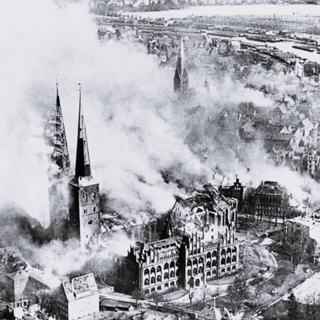
Illustration: The Cathedral of Lübeck in Germany burning after an air raid in 1942. Bundesarchiv Bild 146-1977-047-16, released for free public use.

Music: Bach Partita #2c by J Bu licensed under an Attribution-NonCommercial-No Derivatives (aka Music Sharing) 3.0 International License


Jaksot(274)

273. From a humble address to a royal arrest

273. From a humble address to a royal arrest

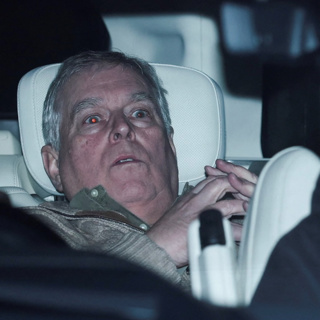
Well, we’re living in curious times.For the first time in four centuries, a member of the British royal family has been arrested in connection with a criminal investigation. Andrew Mountbatten-Windsor...

22 Helmi 14min

272. What a fine mess you've got us into

272. What a fine mess you've got us into

This is the last episode in this main series of A History of England. I may add others on specific topics – by all means use the comments to suggest any you’d like me to examine – or in response to in...

20 Joulu 202543min

271. Breaking records

271. Breaking records

Following the rather grim comedy of Boris Johnson, the Conservatives gave Britain the even more ridiculous spectacle of Liz Truss. She proceeded to push the British economy to the edge of the abyss, a...

7 Joulu 202514min
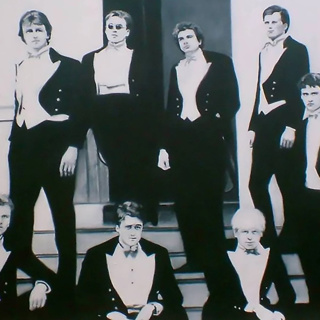
270. Phenomenal Boris

270. Phenomenal Boris

It’s the time of Boris. This episode tracks Boris Johnson’s character, starting with a less than complimentary report from his housemaster at Eton to this parents, through his time in the rich kids’ B...

30 Marras 202514min
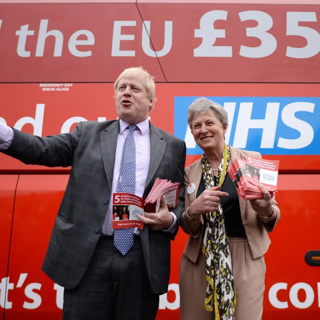
269. Brexit

269. Brexit

In 2015, Cameron returned to office with a majority of his own even if it wasn’t particularly huge. At least it meant he no longer needed to be in a coalition with the Lib Dems, who’d taken a terrible...

23 Marras 202514min
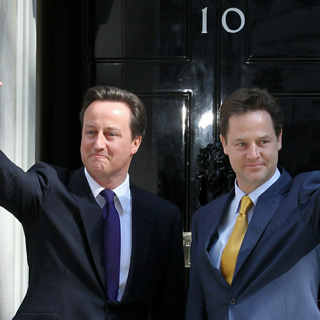
268. The winners and the damned: peacetime coalition

268. The winners and the damned: peacetime coalition

It’s 2007, and Tony Blair is out. In his place is Gordon Brown, who’d proved his capacity as a Chancellor. Sadly, he was now to show that promotion to Prime Minister was one step too many , since he s...

16 Marras 202514min
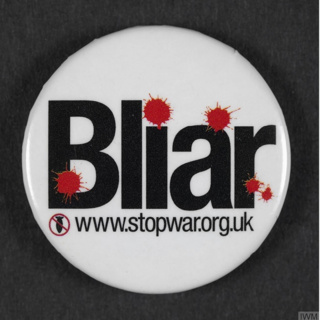
267. Bliar

267. Bliar

As the title of this episode suggests, this is where we look at how Tony Blair’s reputation was wrecked by the growing awareness that he’d produced infamously bad justifications to launch Britain into...

9 Marras 202514min

266. A time of dodgy dossiers

266. A time of dodgy dossiers

When Tony Blair took Britain to war in Iraq in 2003, as part of a US-led and rather limited coalition of nations, it was against the will of large numbers of Brits expressed in possibly the biggest de...

2 Marras 202514min

Suosittua kategoriassa Historia

olipa-kerran-otsikko
gogin-ja-janin-maailmanhistoria
mayday-fi
huijarit
mystista
rss-ikiuni
tsunami
konginkangas
totuus-vai-salaliitto
rouva-diktaattori
rss-kirkon-ihmeellisimmat-tarinat
rss-i-dont-like-mondays-2
rss-sattuu-sita-suomessakin
historiaa-suomeksi
apinan-vuosi
maailmanpuu
rss-peter-peter
tiedetta-ja-sirkushuveja-vanhojen-aikojen-podcast
rss-subjektiivinen-todistaja