
Mythbusting the social credit system
Chinese Whispers13 Kesä 2022

Mythbusting the social credit system

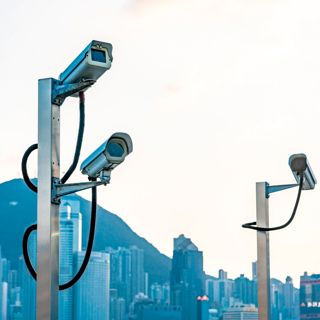
China's social credit system is notorious. This Black Mirror-esque network supposedly gives citizens a score, based on an opaque algorithm that feeds on data from each person's digital and physical lives. With one billion Chinese accessing the Internet and the growing prevalence of facial recognition, it means that their every move can be monitored – from whether they cross the road dangerously, to whether they play too many video games and buy too much junk food. Those with low scores have lower socio-economic status, and may not be able to board planes and trains, or send their children to school. It's all part of a Chinese Communist Party directive to further control and mould its citizens.

Except it's not. Speak to any Chinese person and you'll quickly realise that their lives are not dictated by some score, with their every move monitored and live-feeding to some kind of governmental evaluation of their social worth. In fact, the western narrative of the social credit system has deviated so far from the situation on the ground that Chinese Internet users went viral mocking western reporting on Weibo: '-278 points: Immediate execution'.

Telling me this story on this episode of Chinese Whispers is Vincent Brussee, a researcher at the Mercator Institute for China Studies (Merics), who has recently released a detailed paper looking at what the social credit system really entails on the ground (Merics was part of the group of European organisations and individuals sanctioned by Beijing last year).

The reality of social credit is unfortunately much less exciting and sexy than you might fear. For one, the technology simply isn't there. ' When the social credit system was envisioned, or when it was designed in the early 2000s, government files in China were still held in dusty drawers… In 2019 when I worked in China I still had to use a fax machine. That was the first time in my life that I ever saw a fax machine', Vincent tells me. The system is not linked with someone's digital data, but fundamentally only their interactions with the government (for example, permits and licences). Data that e-commerce and social media companies collect on their users, which must be extensive, are not connected with the government's own data (probably because of the CCP's growing suspicion of Chinese tech firms).

But more fundamentally, the social credit system is not just one system. 'It's more of an umbrella term', Jeremy Daum tells me on the episode. He is the senior research fellow at Yale Law School's Paul Tsai China Center, who also runs the blog China Law Translate (which does what it says on the tin). Jeremy has spent years myth-busting the social credit system. He says that for some institutions, social credit is a financial record ('credit' as in 'credit card'); for others, it is a way of black-marking unscrupulous companies that in the past fell short of, say, food safety standards (a particularly sensitive topic in China, given the milk powder scandal). In fact, social credit often functionally works as a way of determining how trustworthy a company is, like a government-run Yelp or Trustpilot system ( the Merics report found that most targets of are companies rather than individuals).

So how did reporters get the social credit story so wrong? In reality, though the social credit system itself is fairly boring, the way this narrative exploded and took hold is a cautionary tale for the West in our understanding of China. 'The western coverage of social credit has hardly been coverage of social credit at all. It is coverage of us, seen through a mirror of China', says Jeremy, arguing that it tapped into our deep fear of unbridled technology and surveillance. On the episode I also speak to Louise Matsakis, a freelance journalist covering tech and China, who was one of the first to point out the disparity in the social credit narrative and the reality on the ground. Together, we unpack what lessons there are for studying, understanding and reporting on China from this whole saga.

For further reading, here are the sources we mention in the episode:

- The Chinese Whispers episode with Jeremy Daum on the fightback against facial recognition: https://www.spectator.co.uk/po...

- The Merics report: https://merics.org/en/report/c...

- China Law Translate's Social Credit section: https://www.chinalawtranslate....

- Louise Matsakis in WIRED, ' How the West Got China's Social Credit System Wrong': https://www.wired.com/story/ch...

Become a Spectator subscriber today to access this podcast without adverts. Go to spectator.co.uk/adfree to find out more.


For more Spectator podcasts, go to spectator.co.uk/podcasts.


Contact us: podcast@spectator.co.uk

Hosted on Acast. See acast.com/privacy for more information.

Jaksot(122)

New podcast: Quite right! with Michael Gove & Madeline Grant

New podcast: Quite right! with Michael Gove & Madeline Grant

Michael Gove and Madeline Grant launch Quite right!, The Spectator’s new podcast promising sanity and common sense in an increasingly unhinged world. This week, they talk about Labour’s deputy drama, ...

10 Syys 202518min
A compilation of Chinese Whispers: understanding China

A compilation of Chinese Whispers: understanding China

As Chinese Whispers comes to an end, here is a compilation of some of the best discussions Cindy Yu has had across the podcast to understand modern China and President Xi. On this episode you can hear...

5 Touko 20251h 37min

What does it take to be 'an old friend of the Chinese people'?

What does it take to be 'an old friend of the Chinese people'?

** Chinese Whispers is coming to an end. Later this year, Cindy Yu will be joining The Times and The Sunday Times to write a regular column on China. To stay abreast of her latest work, subscribe to h...

7 Huhti 202537min

From Chimerica to Cold War II: how US-China relations soured

From Chimerica to Cold War II: how US-China relations soured

** Chinese Whispers is coming to an end. Later this year, Cindy Yu will be joining The Times and The Sunday Times to write a regular column on China. To stay abreast of her latest work, subscribe to h...

24 Maalis 202536min
Rana Mitter on the legacy of Sun Yat-sen

Rana Mitter on the legacy of Sun Yat-sen

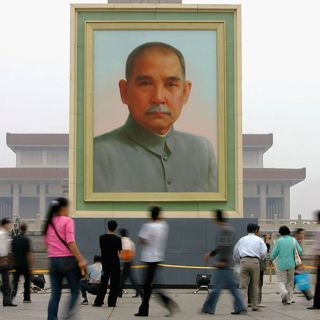
Walking around Taipei a couple of years ago, I spotted a familiar sight – a bronze statue of a moustachioed man, cane in his right hand, left leg striding forward. The man is Sun Yat-sen, considered m...

10 Maalis 202543min

What China's planned mega-dam means for Asia

What China's planned mega-dam means for Asia

Just before the end of 2024, Chinese state media Xinhua slipped out an announcement – the long discussed mega-dam in Medog County, Tibet, has been greenlit. When built, it will generate three times mo...

24 Helmi 202528min

Have America's chips controls backfired?

Have America's chips controls backfired?

Beginning in the first Trump presidency and expanded under Joe Biden, the US has taken a strategy of technologically containing China through restricting its access to cutting edge semiconductors. As ...

10 Helmi 202557min

What is China's 'United Front' agenda?

What is China's 'United Front' agenda?

** Chinese Whispers is nominated in the Political Podcast Awards 2025. Vote for it to win the People's Choice category here **When Chinese spy scandals break, like the latest involving Prince Andrew a...

27 Tammi 202533min

Suosittua kategoriassa Politiikka ja uutiset

uutiscast
aikalisa
ootsa-kuullut-tasta-2
politiikan-puskaradio
rss-ootsa-kuullut-tasta
tervo-halme
rss-vaalirankkurit-podcast
rss-podme-livebox
et-sa-noin-voi-sanoo-esittaa
rss-asiastudio
otetaan-yhdet
the-ulkopolitist
rss-hyvaa-huomenta-bryssel
rss-merja-mahkan-rahat
aihe
rikosmyytit
rss-kaikki-uusiksi
rss-raha-talous-ja-politiikka
rss-aijat-hopottaa-podcast
rss-polikulaari-pitka-kiekko-ja-muut-ts-podcastit