

The Tao Te Ching ~ The Book of the Way ~ Lao Tzu
A reading for meditation of selected verses from the The Tao Te Ching - translation by Tolbert McCarrollThe Tao Te Ching or Dào Dé Jīng, ('Classic of the Way and its Virtue'), is an ancient Chinese classic text, becoming a foundational work of Taoism. It is traditionally credited to the sage Lao Tzu, though with some several early versions recovered, the texts' authorship and dates of composition and compilation are debated. The oldest excavated portion dates to the late 4th century BCE. While tradition places Laozi earlier, modern versions of the text could more conservatively be estimated to date back to the late Warring States period (475 – 221 BCE), not having been recovered that early.The Tao Te Ching is central to both philosophical and religious Taoism, and has been highly influential on Chinese philosophy and religious practice in general. 🙏 May whatever goodness arises from these readings/offerings be for the benefit of all sentient beings.🔆 Thank you to everyone who has written to inquire about offering a donation or gift. You are welcome to do so, and all offerings will go towards supporting monastic requisites and overheads at Viveka Hermitage.There are two options to donate using this email address: vivekahermitage@gmail.com with PayPalor using this link: https://paypal.me/VivekaHermitage Alternatively, donations can also be made via 𝐖𝐈𝐒𝐄 - wise.com/pay/me/margarets448
7 Tammi 22min

Saint Symeon the New Theologian ~ From my Silence
A reading of reflections and poems of Saint Symeon taken from various sources and translations including:~ The Book of Mystical Chapters: Meditations on the Soul's Ascent from the Desert Fathers and Other Early Christian Contemplatives, Translated by John Anthony McGuckin~ The Enlightened Heart: An Anthology of Sacred Poetry, by Stephen Mitchell~ The Fire rises in Me - English version by Ivan M. GrangerSaint Symeon the New Theologian (949 -1022 AD) was an Eastern Orthodox monk and poet who was one of the three saints canonized by the Eastern Orthodox Church and given the title of "Theologian." "Theologian" was not applied to Symeon in the modern academic sense of theological study; the title was intended only to recognise someone who spoke from personal experience of the vision of God. One of his principal teachings was that humans could and should experience theoria (literally "contemplation," or direct experience of God).Symeon was born into the Byzantine nobility and given a traditional education. At age fourteen, he met Symeon the Studite, a renowned monk of the Monastery of Stoudios in Constantinople, who convinced him to give his own life to prayer and asceticism under the elder Symeon's guidance. By the time he was thirty, Symeon the New Theologian became the abbot of the Monastery of Saint Mamas, a position he held for twenty-five years. He attracted many monks and clergy with his reputation for sanctity, though his teachings brought him into conflict with church authorities, who would eventually send him into exile. Symeon is recognized as the first Eastern Christian mystic to share his own mystical experiences freely. Some of his writings are included in the Philokalia, a collection of texts by early Christian mystics on contemplative prayer and hesychast teachings. Symeon wrote and spoke frequently about the importance of experiencing directly the grace of God, often talking about his own experiences of God as divine light. Another common subject in his writings was the need of putting oneself under the guidance of a spiritual father. The authority for many of his teachings derived from the traditions of the Desert Fathers, early Christian monks and ascetics. Symeon's writings include Hymns of Divine Love, Ethical Discourses, and The Catechetical Discourses.Photography: George Digalakis ~ The Sound of Silence / georgedigalakisphotography https://www.digalakisphotography.com/Music: "Let My Love Be Heard" by Jake Runestad. Performed by the Bob Cole Conservatory Chamber Choir. • Let My Love Be Heard - Jake Runestad Cousin Silas - Slow Rotations https://cousinsilas1.bandcamp.com/With thanks to Pat for his kind permission to use his music for this channel.🙏 May whatever goodness arises from these readings/offerings be for the benefit of all sentient beings.🔆 These podcasts are not monetized. If you benefit from these podcasts and would like to support our nun's hermitage, there are two options to donate - via Paypal using this email address: vivekahermitage@gmail.com with PayPal or using this direct link: https://paypal.me/VivekaHermitageor we have a WISE account with the above email address.
29 Joulu 202520min

John Muir ~ Come to the Woods! (Video)
A reading of selected musings from the great John Muir with nature video montage for your contemplation and relaxation.John Muir (April 21, 1838 – December 24, 1914), also known as "John of the Mountains" and "Father of the National Parks", was a Scottish-born American naturalist, author, environmental philosopher, botanist, zoologist, glaciologist, and early advocate for the preservation of wilderness in the United States.His books, letters and essays describing his adventures in nature, especially in the Sierra Nevada, have been read by millions. His activism helped to preserve the Yosemite Valley and Sequoia National Park, and his example has served as an inspiration for the preservation of many other wilderness areas. The Sierra Club, which he co-founded, is a prominent American conservation organization. In his later life, Muir devoted most of his time to his wife and the preservation of the Western forests._________________________________🙏 May whatever goodness arises from these readings/offerings be for the benefit of all sentient beings.🔆 Thank you to everyone who has written to inquire about offering a donation or gift. You are welcome to do so, and all offerings will go towards supporting monastic requisites and overheads at Viveka Hermitage.There are two options to donate using this email address: vivekahermitage@gmail.com with PayPalor using this link: https://paypal.me/VivekaHermitage Alternatively, donations can also be made via 𝐖𝐈𝐒𝐄 - wise.com/pay/me/margarets448
17 Joulu 202513min
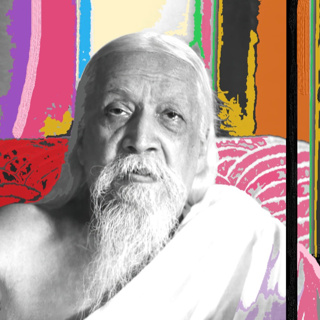
Sri Aurobindo ~ The Mother (The Seminal Text)
Sri Aurobindo's seminal text The Mother (1928) is a concise, foundational work in Integral Yoga, outlining the Divine Mother's crucial role, her four great aspects (Maheshwari, Mahakali, Mahalakshmi, Mahasaraswati), and the path to divine transformation on Earth, emphasizing sincerity, self-opening, and the descent of the supramental consciousness, with later comments from the Mother herself adding depth to its principles of spiritual evolution and world change. In essence, The Mother serves as a concise manual for understanding and connecting with the Divine Mother's presence and power, essential for humanity's spiritual evolution towards a divine life on Earth. The Mother is one of Sri Aurobindo's most popular and influential works, often read alongside his larger magnum opus, Savitri.Ebooks resources:https://www.motherandsriaurobindo.in/Sri Aurobindo (born Aurobindo Ghose; 15 August 1872 – 5 December 1950) was an Indian philosopher, yogi, maharishi, poet, mystic, and Indian nationalist. He joined the movement for India's freedom from British rule and for a duration (1905–10), became one of its most important leaders, before turning to developing his own vision and philosophy of human progress and spiritual evolution.At Pondicherry, Sri Aurobindo developed a spiritual practice he called Integral Yoga. The central theme of his vision was the evolution of human life into a divine life in a divine body. He believed in a spiritual realisation that not only liberated but transformed human nature, enabling a divine life on earth. In 1926, with the help of his spiritual collaborator, Mirra Alfassa (referred to as "The Mother"), Sri Aurobindo Ashram was founded.Sri Aurobindo was nominated twice for the Nobel prize, in 1943 for the Nobel award in Literature and in 1950 for the Nobel award in Peace.
10 Joulu 20251h 39min
Ryokan ~ The Timeless Essence ~ Zen Buddhism
Ryōkan Taigu (1758–1831) was a quiet and unconventional Sōtō Zen Buddhist monk who lived much of his life as a hermit. Ryōkan is remembered for his poetry and calligraphy, which present the essence of Zen life. He renounced the world at an early age to train at nearby Sōtō Zen temple Kōshō-ji, refusing to meet with or accept charity from his family.These selected excerpts and poems by Ryokan have been taken from the text "Great Fool" translated by Ryuichi Abé & Peter Haskel.🙏 May whatever goodness arises from these readings/offerings be for the benefit of all sentient beings.🔆 These podcasts are not monetized. If you benefit from these podcasts and would like to support our nun's hermitage, there are two options to donate - via Paypal using this email address: vivekahermitage@gmail.com with PayPal or using this direct link: https://paypal.me/VivekaHermitageor we have a WISE account with the above email address.
3 Joulu 202511min

Dilgo Khyentse Rinpoche ~ The Empty Nature of Thoughts ~ Dzogchen
A selection of profound pointers taken from the text 'The Heart Treasure of the Enlightened Ones' by Dilgo Khyentse Rinpoche.H.H. Khyentse (1910-1991) was born in the Dergé region of Kham, Eastern Tibet and was recognized as the mind emanation of Jamyang Khyentse Wangpo. Regarded by many as one of the greatest Dzogchen masters of the twentieth century, and the very embodiment of Padmasambhava, Dilgo Khyentse Rinpoche was the teacher of many of the important lamas of today.🙏 May whatever goodness arises from these readings/offerings be for the benefit of all sentient beings.🔆 These podcasts are not monetized. If you benefit from these podcasts and would like to support our nun's hermitage, there are two options to donate - via Paypal using this email address: vivekahermitage@gmail.com with PayPal or using this direct link: https://paypal.me/VivekaHermitageor we have a WISE account with the above email address.
26 Marras 202512min
St John of the Cross ~ The Unknowing ~ Christian Mystics
A reading for meditation of the St John of the Cross poem - "I Entered the Unknown."John of the Cross (1542 -1591) was a Spanish Catholic priest, mystic, and a Carmelite friar of converso origin. John became a priest in 1567 and considered joining the Carthusian Order where monks lived cloistered in individual cells. He was attracted by the simple and quiet life. However, he encountered Theresa of Avila, a charismatic Carmelite nun. On Nov. 28, 1568, Theresa founded a new monastery. The same day, John changed his name again to John of the Cross. Within a couple years, John and his fellow friars, relocated to a larger site for their monastery. He remained at this location until 1572.🙏 May whatever goodness arises from these readings/offerings be for the benefit of all sentient beings.🔆 These podcasts are not monetized. If you benefit from these podcasts and would like to support our nun's hermitage, there are two options to donate - via Paypal using this email address: vivekahermitage@gmail.com with PayPal or using this direct link: https://paypal.me/VivekaHermitageor we have a WISE account with the above email address.
20 Marras 20258min
Harada Sekkei Roshi ~ The Original Condition ~ Zen Buddhism
Harada Sekkei Roshi (1926-2020) was the abbot of Hosshin-ji, a Soto Zen training monastery and temple, in Fukui Prefecture, near the coast of central Japan. He was born in 1926 in Okazaki, near Nagoya, and was ordained at Hosshin-ji in 1951. In 1953, he went to Hamamatsu to practice under Zen Master Inōe Gien (1894-1981), and received inkashomei (certification of realization) in 1957.In 1974, he was installed as resident priest and abbot of Hosshin-ji and was formally recognized by the Soto Zen sect as a certified Zen master (shike) in 1976. Since 1982, Harada traveled abroad frequently, teaching in such countries as Germany, France, the United States, and India. He also led zazen groups within Japan, in Tokyo and Saitama. From 2003-2005, he was Director of the Soto Zen Buddhism Europe Office located in Milan.Harada Sekkei Roshi died on Saturday, June 20, 2020 at the age of 93. He had been in hospice care for more than a year at a small hospital run by one of his students in the town of Obama, Fukui Prefecture.These selected pointers have been taken from various newsletters as well as the text, The Essence of Zen: The Teachings of Sekkei Harada.https://www.amazon.com.au/Essence-Zen...Music: Swami Madhuram - 'Rainy Day Retreat'.For more of Swamiji's music please find it here: https://insighttimer.com/swamimadhuram🙏 May whatever goodness arises from these readings/offerings be for the benefit of all sentient beings.🔆 These podcasts are not monetized. If you benefit from these podcasts and would like to support our nun's hermitage, there are two options to donate - via Paypal using this email address: vivekahermitage@gmail.com with PayPal or using this direct link: https://paypal.me/VivekaHermitageor we have a WISE account with the above email address.
9 Marras 202515min