Wasps: Victims of an Often Undeserved Reputation
Backyard Ecology™18 Helmi 2021

Wasps: Victims of an Often Undeserved Reputation

Like many people, I grew up with a healthy…. apprehension (ok, fear) of wasps. And, of course, I've seen all the memes on social media vilifying wasps and calling them names that I'm not going to repeat on this podcast.

But, those fears and concerns are mostly unfounded and misplaced. Wasps generally aren't going to bother you, especially when they are on flowers, and they definitely aren't the evil villains they are often portrayed as. Instead, they are a vital part of the ecosystem that helps control many different insect and arachnid populations, as well as, helps with the pollination of some plants.

In this episode of the Backyard Ecology podcast, we talk with Heather Holm. Heather is a pollinator conservationist and award-winning author. As of this recording, her book, Wasps: Their Biology, Diversity, and Role as Beneficial Insects and Pollinators of Native Plants, has just been published. Because wasps are such diverse organisms, her book focuses on the wasps that we are most likely to find visiting flowers.

Of course, I had to start our conversation by asking Heather the obvious question – "Why wasps?" Her answer was that as pollinator gardens become more popular, more people are beginning to notice wasps visiting the flowers. Her goal with this book is to help people better understand and appreciate those wasps, instead of being afraid of them.

In many ways, wasps are just like bees. In fact, bees evolved from wasps. Most adult wasps feed on nectar and other sugary substances like honeydew and tree sap. However, unlike bees which gather pollen to feed to their larvae, wasps hunt for prey to feed their larvae. The specific type of prey they hunt for depends on the species of wasp.

Wasps can be very specific with the prey they capture. For example, the cicada killer only hunts cicadas. In some cases, the cicada she captures may be 2-3 times her size! Another species of wasp, called the queen ant kidnapper ant, only eats queen ants that still have their wings and are coming back from their nuptial flights. There are also a number of wasp species that hunt spiders.

Just about every type of insect, plus spiders, is on the menu for some species of wasp and this has led to a wide diversity of wasp species. There are way more species of wasps than bees. And because their prey is so specific, you may find several different species of wasps nesting in close proximity to each other because their different diets mean that they aren't competing with each other.

Like bees, most of our wasps are solitary which means that each female must create and provision her own nest(s). This doesn't leave them much time, or desire, to defend their nests. Also like bees, wasps can be found nesting below ground, in standing dead trees, in logs, and in pithy or hollow stems. Some wasps even build nests made entirely of mud. Some of these mud structures can be very beautiful and delicate pots that look like they should be ceramic vessels in a dollhouse.

Despite their many similarities to bees, wasps are a group of animals that many people love to hate. However, they are rarely as bad as they are made out to be, especially when they are feeding on flowers. As Heather puts it, "the flower restaurant isn't defended." And in some ways, wasps can be easier to identify than bees. If you want to identify the wasps that you find on your flowers, Heather suggests taking lots of pictures including a top-down view, a sideview, and a head-on view. Using your flash can also be helpful for picking up details and reducing the blur if the wasp doesn't sit perfectly still for you.

I encourage anyone who is interested in learning more about wasps, including how to identify them, to take a look at Heather's book. And if you aren't quite ready to venture into the world of wasps, then I still encourage you to take a look at Heather's website. It is a treasure trove of free educational resources on pollinators, especially native bees. (In addition to her new wasp book, she has several other books on bees, pollinators, and native plants.)

Links:

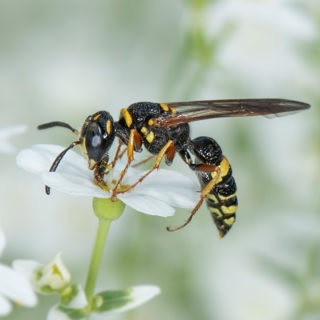
Episode image:

Bee wolf (Philanthus gibbosus) drinking nectar and serving as a pollinator
Photo credit: Heather Holm

Jaksot(115)

More than just a forest: Our surprisingly diverse eastern ecosystems

More than just a forest: Our surprisingly diverse eastern ecosystems

Summary The general impression that many people have is that prior to European settlement the whole eastern U.S. was one giant old growth forest. But that wasn't the case. Using an interdisciplinary a...

18 Helmi 21min
How to Be Successful with Your Habitat Goals

How to Be Successful with Your Habitat Goals

Summary When it comes to creating habitat, having a written set of goals can be extremely helpful in moving a task from the "I'll get to it someday" category to the "I'm actually going to get this don...

8 Tammi 10min
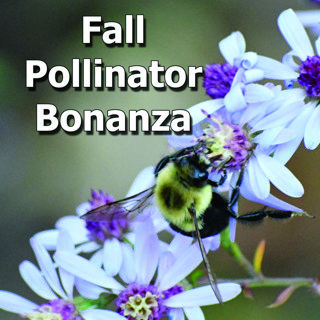
Short's aster: A beautiful late season extravaganza for pollinators

Short's aster: A beautiful late season extravaganza for pollinators

Summary Late blooming native plants are crucial sources of pollen and nectar for pollinators. One of my favorite species that blooms in October, and often into early November, is Short's aster (Symphy...

23 Loka 20257min
The Science Behind "Leave the Leaves"

The Science Behind "Leave the Leaves"

Summary "Leave the leaves" has become an increasingly common mantra each fall. However, until recently little to no scientific research had been done to quantify impacts of leaving your leaves in a ty...

9 Loka 202547min
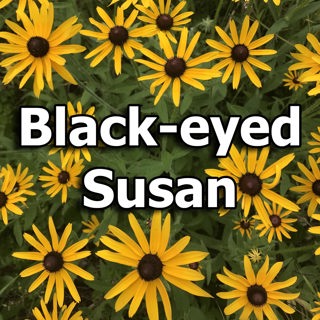
Black-eyed Susan: A must-have for the pollinator garden

Black-eyed Susan: A must-have for the pollinator garden

Summary Black-eyed Susan (Rudbeckia hirta) is a beautiful native plant that can be found throughout most of the eastern U.S. and makes a great addition to pollinator and native plant gardens. It can g...

25 Syys 20259min
A Bad Naturalist's Journey to Restore a Mountaintop Meadow

A Bad Naturalist's Journey to Restore a Mountaintop Meadow

Summary Paula Whyman shares her journey of trying to restore and manage a remnant prairie located on a Virginia mountaintop. Our conversation touches upon some of the challenges she faced, lessons she...

11 Syys 20251h 22min
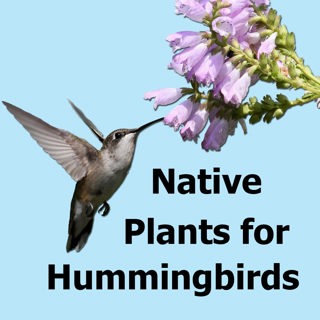
Native Plants That Attract Hummingbirds to Eastern U.S. Gardens

Native Plants That Attract Hummingbirds to Eastern U.S. Gardens

Summary Hummingbirds are probably one of the most beloved groups of birds that people want to attract to their yards. In this episode, I share 10 of my favorite native plants for attracting hummingbir...

28 Elo 202513min
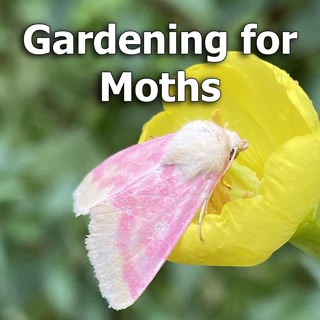
Gardening for Moths: Why It's Important for Backyard Conservation

Gardening for Moths: Why It's Important for Backyard Conservation

Summary In this episode, we focus on the fascinating world of moths and why gardening for moths is so im-portant for any backyard ecologist. We also talk about specific native plants grow to attract m...

7 Elo 20251h 11min

Suosittua kategoriassa Tiede

tiedekulma-podcast
rss-mita-tulisi-tietaa
rss-poliisin-mieli
utelias-mieli
rss-duodecim-lehti
rss-metsantuntijat-podcast
mielipaivakirja
filocast-filosofian-perusteet
rss-astetta-parempi-elama-podcast
rss-luontopodi-samuel-glassar-tutkii-luonnon-ihmeita
university-of-eastern-finland
docemilia
menologeja-tutkimusmatka-vaihdevuosiin
rss-bios-podcast
rss-tiedetta-vai-tarinaa
rss-ylistys-elaimille
rss-lapsuuden-rakentajat-podcast
rss-sosiopodi
rss-miljonaarien-tasavalta