Quantum-Classical Hybrid: Oak Ridge's Diamond-Powered Breakthrough

Quantum-Classical Hybrid: Oak Ridge's Diamond-Powered Breakthrough

This is your Quantum Computing 101 podcast.

It’s September 2025, and I have to say—this week, the hum in the air at Oak Ridge National Laboratory is more than HVAC and supercomputers. It’s the charge of a breakthrough echoing worldwide. I’m Leo, your trusty Learning Enhanced Operator, and today on Quantum Computing 101, we peel back the quantum veil on the most promising trend shaking up both research labs and industry: the quantum-classical hybrid solution.

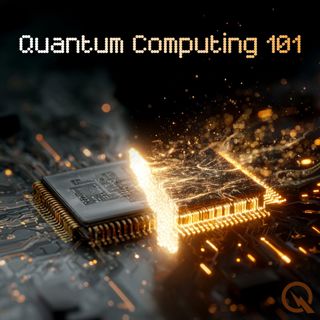
Picture this: a GPU-sized diamond quantum processor, its surface shimmering faintly beneath the flicker of LEDs, tucked next to racks of humming CPUs and GPUs inside a next-generation data center. That’s not just a gleaming metaphor—it’s the heart of Quantum Brilliance’s latest hybrid quantum system, now live at Oak Ridge National Laboratory. Australian and German talent, diamond-based quantum chips, and world-class classic HPC—this is not a vision of tomorrow; it’s live code running today.

So, what exactly is this quantum-classical hybrid? Think of it like an orchestra, where quantum processors—the QPUs—play the elusive notes that classical machines can’t quite reach. QPUs excel at tasks like simulating quantum molecules or optimizing puzzles that classical computers can barely grasp, while CPUs and GPUs handle massive parallel tasks, memory management, and all the “everyday” heavy lifting. Together, these systems form workflows where information dances between quantum and classical units, each processing piece of the puzzle it’s best at.

Here’s where it gets dramatic. Oak Ridge just launched a new platform from Quantum Brilliance that tightly integrates diamond quantum systems directly with their legendary HPC infrastructure. This means quantum devices aren’t just isolated testbeds—they’re computational peers, working side-by-side with the world’s fastest machines to push the edge of chemistry, AI, and cryptography. As Travis Humble, director of the Department of Energy’s Quantum Science Center, put it, “Our research into quantum-HPC integration is a fundamental part of the lab strategy.” The goal: hundreds, even millions, of these systems, each accelerating some molecular simulation, optimization, or machine-learning challenge—sometimes so complex it would take longer than the age of the universe on a classical machine alone.

If you could peek inside the lab, you’d see teams orchestrating quantum-classical experiments where a routine optimization task hands its gnarliest part off to the QPU, which returns the result in a whisper of time. Back and forth, bit by quantum bit.

What makes this week’s news extraordinary? The seamless, dynamic adaptation. The Quantum Brilliance platform can parallelize workloads, adapt to changes in hardware, and future-proof applications as both quantum and classical systems evolve. It’s the birth of a modular, transformable software ecosystem—think of it as the grand unification between quantum enigma and digital muscle.

Here’s the big idea: we’re moving toward a world where quantum and classical are not rivals, but collaborators, each amplifying the strengths of the other. Just as our lives are hybrid—balancing intuition and logic, big visions and granular tasks—so too is the coming age of computation.

Thank you for joining me, Leo, for another pulse of Quantum Computing 101. Got questions, hot topics, or quantum quandaries? Email me anytime at leo@inceptionpoint.ai. Don’t forget to subscribe, and for more on today’s show, head to quiet please dot AI. This has been a Quiet Please Production.

For more http://www.quietplease.ai


Get the best deals https://amzn.to/3ODvOta

This content was created in partnership and with the help of Artificial Intelligence AI

Jaksot(276)

Quantum Meets AI: How PhysVEC Hybrid Systems Are Cracking Crypto and Fixing the Qubit Noise Problem

Quantum Meets AI: How PhysVEC Hybrid Systems Are Cracking Crypto and Fixing the Qubit Noise Problem

This is your Quantum Computing 101 podcast.Imagine this: just days ago, Google Quantum AI unleashed a bombshell whitepaper, revealing they can shatter 256-bit elliptic curve cryptography—the backbone ...

5 Huhti 3min

Quantum-Classical Hybrids: How Genesis Mission Fuses AI, Supercomputing and Qubits to Double US Research Power

Quantum-Classical Hybrids: How Genesis Mission Fuses AI, Supercomputing and Qubits to Double US Research Power

This is your Quantum Computing 101 podcast.Imagine this: just days ago, on April 2nd, King's College London spotlighted Professor Roger Colbeck's breakthrough in device-independent quantum cryptograph...

3 Huhti 3min

Quantum Leap Forward: How Classiq and Nvidia CUDA-Q Hybrid Computing Could Crack RSA Encryption by 2030

Quantum Leap Forward: How Classiq and Nvidia CUDA-Q Hybrid Computing Could Crack RSA Encryption by 2030

This is your Quantum Computing 101 podcast.Imagine this: just days ago, on March 31st, Classiq unveiled their integration with Nvidia's CUDA-Q at GTC, a hybrid quantum-classical powerhouse that lets d...

1 Huhti 3min

Quantum-Classical Hybrid Computing: The 303-Atom Protein That Changed Everything

Quantum-Classical Hybrid Computing: The 303-Atom Protein That Changed Everything

This is your Quantum Computing 101 podcast.# Quantum Computing 101: The Hybrid RevolutionGood afternoon, and welcome back to Quantum Computing 101. I'm Leo, and today we're talking about something tha...

30 Maalis 3min

Quantum Hybrid Revolution: How IBM and NVIDIA Merged Qubits with GPUs to Crack Impossible Chemistry Problems in 2026

Quantum Hybrid Revolution: How IBM and NVIDIA Merged Qubits with GPUs to Crack Impossible Chemistry Problems in 2026

This is your Quantum Computing 101 podcast.Imagine this: just days ago, on March 26, 2026, IBM's quantum team at Yorktown Heights stunned the world by simulating the magnetic crystal KCuF3 on their He...

29 Maalis 3min

Hybrid Quantum Revolution: How NVIDIA and ORCA Fused Light Speed Qubits With GPU Power at GTC 2026

Hybrid Quantum Revolution: How NVIDIA and ORCA Fused Light Speed Qubits With GPU Power at GTC 2026

This is your Quantum Computing 101 podcast.Imagine this: just days ago at NVIDIA's GTC 2026, ORCA Computing's photonic quantum systems fused with NVIDIA's cuTensorNet software right there at Imperial ...

27 Maalis 4min

QIAPO Hybrid Revolution: How German Quantum-Classical Fusion Solves Real Logistics and Chip Manufacturing Nightmares

QIAPO Hybrid Revolution: How German Quantum-Classical Fusion Solves Real Logistics and Chip Manufacturing Nightmares

This is your Quantum Computing 101 podcast.Imagine you're deep in a Saarland University lab, the hum of cryostats vibrating like a cosmic heartbeat, lasers slicing through the chill as neutral atoms d...

25 Maalis 3min

Quantum Meets GPU: How Hybrid Computing Just Cracked the Drug Discovery Code at GTC 2026

Quantum Meets GPU: How Hybrid Computing Just Cracked the Drug Discovery Code at GTC 2026

This is your Quantum Computing 101 podcast.Imagine this: just days ago, at NVIDIA's GTC 2026 in San Jose, UCL researchers, partnering with NVIDIA, Technical University of Munich, LMU, and IQM Quantum ...

23 Maalis 3min

Suosittua kategoriassa Politiikka ja uutiset

uutiscast
aikalisa
politiikan-puskaradio
ootsa-kuullut-tasta-2
rss-ootsa-kuullut-tasta
tervo-halme
rss-podme-livebox
rss-vaalirankkurit-podcast
rss-asiastudio
otetaan-yhdet
rss-raha-talous-ja-politiikka
the-ulkopolitist
et-sa-noin-voi-sanoo-esittaa
rss-sinivalkoinen-islam
rss-hyvaa-huomenta-bryssel
aihe
rss-polikulaari-pitka-kiekko-ja-muut-ts-podcastit
rss-girls-finish-f1rst
rss-kovin-paikka
rss-tasta-on-kyse-ivan-puopolo-verkkouutiset