

Fawning: Our Appeasing & “Protecting” Others Is Hurting Us All w/ Dr. Ingrid Clayton

Fawning: Our Appeasing & “Protecting” Others Is Hurting Us All w/ Dr. Ingrid Clayton

We all have a primary pattern of dealing with relational conflict. There are a scant few, in my experience, who do it with health and peace. The rest tend to fall into what psychologists have labeled, Fight, Flight, or Freeze tendencies. I’m not a fighter, and viewed myself as generally freezing in the moment of conflict, masked by thinking I was just being cool and calm, waiting for it to just end so I could take flight and remove myself. I thought I was valiant for my lack of fighting. Righteous and unshakable. And I thought I was protecting everyone, myself included. I did whatever it took to, choose your word: appease, placate, tolerate, or put up with. What I realize now is I was just being dishonest to myself and everyone, and while I thought I was being strong, I now view it as being incredibly weak. Again, dishonest. And what was really happening is I grew bitter and was slowly building walls with each brick of appeasing. The new term for this and what I now relate to, is Fawning. And this is the podcast today. I sat down with Dr. Ingrid Clayton who is a licensed clinical psychologist with a master’s in transpersonal psychology and a Ph.D. in clinical psychology. She’s had a thriving private practice for more than sixteen years and is a regular contributor to Psychology Today, where her blog “Emotional Sobriety” has had more than a million views. She has now come out with the first ever, commercial book on this concept of fawning, it’s titled, FAWNING: Why the Need to Please Makes Us Lose Ourselves—and How to Find our Way Back. Fawning is a hallmark of codependency, and often occurs when we can’t fight or flee because we have to remain in relationship with the person or situation we are struggling with. It is highly relevant to why we stay in bad jobs, fall into unhealthy partnerships, and tolerate dysfunctional environments, even when it seems obvious to others we should go or take drastic steps to try and correct things. Ingrid says fawning can serve a purpose as an emergency adaptive strategy that protects us from losing connection with people we depend on, but it becomes a real problem when it turns from the emergency coping mechanism to compulsory in our day to day lives. The good news of course is we can break the pattern of chronic fawning once we see the trauma response for what it is. I was incredibly excited to talk with Ingrid and this conversation proved invaluable for me. I hope it will be for you as well, as my feeling is that most of us suffer from aspects of fawning in certain relationships and circumstances in our lives. Connect with Ingrid on IG @ingridclaytonphd and find the new book Fawning that is hitting bookstores now. Coming up next, my conversation with Dr Ingrid Clayton on the pervasiveness of Fawning and how to get out of this insidious trauma response. Sign up for your $1/month trial period at shopify.com/kevin Go to shipstation.com and use code KEVIN to start your free trial Learn more about your ad choices. Visit megaphone.fm/adchoices

Jaksot(1662)

Discovering A More Authentic Self When We Can’t Discount The Influence of Our Upbringing w/ Renowned Marriage & Family Therapist Vienna Pharaon

Discovering A More Authentic Self When We Can’t Discount The Influence of Our Upbringing w/ Renowned Marriage & Family Therapist Vienna Pharaon

I have never wanted to give much credit to genetics or my upbringing. I wanted to feel, and really did, like I’m my own person. Until sometime in my 40s when I realized I kept repeating some patterns ...

27 Maalis 1h 15min

How To Deepen Relationships With Well Constructed Questions w/ Experience Design Architect Topaz Adizes

How To Deepen Relationships With Well Constructed Questions w/ Experience Design Architect Topaz Adizes

Cultural testimony is that while we are in more contact with people than ever, but we are also feeling more isolated, disconnected, and lonely than ever. That’s not a broad brush opinion but I continu...

23 Maalis 1h 10min

How To Recover When Things Can’t Ever Be The Same w/ Mental Health Celebrity Neeta Bhushan

How To Recover When Things Can’t Ever Be The Same w/ Mental Health Celebrity Neeta Bhushan

I recorded this episode three years ago. Before I’d experienced the greatest traumas of my life. I make different meaning from the message now. The idea of recovering from a trauma or tragedy is diffe...

20 Maalis 58min

How To Design A Meaningful Life w/ Stanford Prof Bill Burnett

How To Design A Meaningful Life w/ Stanford Prof Bill Burnett

“People say that what we’re all seeking is a meaning for life. I don’t think that’s what we’re really seeking. I think that what we’re seeking is…to actually feel the rapture of being alive.” This is ...

16 Maalis 1h 3min

Understanding The Impact of Our Perception & Attitude Toward Money w/ Finance Celebrity Ken Honda

Understanding The Impact of Our Perception & Attitude Toward Money w/ Finance Celebrity Ken Honda

I seldom give focus to money in this podcast, and this episode has nothing to do with making more or managing your money. It’s on how we make meaning of money, which may dictate more about your money ...

13 Maalis 56min

The Case For Optimism As A Tool When Life Is Hard w/ Behavioral Scientist Dr. Deepika Chopra

The Case For Optimism As A Tool When Life Is Hard w/ Behavioral Scientist Dr. Deepika Chopra

I think the cultural perspective on optimism has decreased, even to the point of it being naive. It seems in vogue to be pessimistic and even cynical. The definition of optimism is, hopefulness and co...

9 Maalis 1h 10min

The Brain Science of Perception w/ Biz Mentor Michael Hyatt

The Brain Science of Perception w/ Biz Mentor Michael Hyatt

I give much devotion to how we perceive reality, our emotions, and our identity. I find it is now what we perceive, but how we perceive that makes the difference in our life satisfaction. In this epis...

7 Maalis 1h 18min
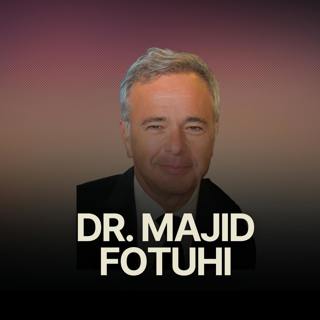
How Can We Best Help Our Brain Stay Sharp Till Our End w/ Neuroscientist Dr. Majid Fotuhi

How Can We Best Help Our Brain Stay Sharp Till Our End w/ Neuroscientist Dr. Majid Fotuhi

We are in the information age and I don’t believe there are any new topics and there is little, actual new information. But we can discover new insights and new angles and information that is more rel...

2 Maalis 1h 7min

Suosittua kategoriassa Koulutus

rss-murhan-anatomia
voi-hyvin-meditaatiot-2
psykopodiaa-podcast
rss-narsisti
adhd-podi
rahapuhetta
rss-rahamania
kesken
psykologia
rss-liian-kuuma-peruna
rss-niinku-asia-on
rss-eron-alkemiaa
rss-arkea-ja-aurinkoa-podcast-espanjasta
esa-saarinen-filosofia-ja-systeemiajattelu
rss-duodecim-lehti
rss-vapaudu-voimaasi
rss-luonnollinen-synnytys-podcast
rss-tietoinen-yhteys-podcast-2
rss-finnish-daily-dialogues
ihminen-tavattavissa-tommy-hellsten-instituutti