177: Apple’s 2025 Year-in-Review
On this year's final episode of The MacRumors Show, we take a look back at all of Apple's major announcements and new products from 2025. In February, Apple introduced the iPhone 16e, positioned as a replacement for the iPhone SE as a lower-cost model, starting at $599. It offers the A18 chip and a 48-megapixel camera in an iPhone 13-style design, but with matte back glass, a USB-C port, and no MagSafe. The device debuted Apple's custom C1 5G modem, replacing components from Qualcomm for the first time. In March, Apple refreshed several iPads and Macs. The standard iPad was updated with there A16 chip, and noticeably still lacks Apple Intelligence support. The 11-inch and 13-inch iPad Air was refreshed with M3 chip, and Apple released redesigned Magic Keyboard for it. Apple also updated the MacBook Air with the M4 chip and introduced a new Mac Studio with M4 Max and M3 Ultra chip options. At WWDC in June, Apple previewed its major software updates for the year. The biggest announcement was the introduction of Liquid Glass, an all-new design language for all of Apple's software platforms. iOS 26 redesigned apps such as Phone and Photos, and added Live Translation with AirPods, a host of new features for Messages, and a new Games app. iPadOS 26 introduced a new, Mac-like multitasking system with windows, while macOS 26 Tahoe revamped Spotlight with a clipboard history feature and quick commands. In September, Apple released its annual iPhone lineup update. The iPhone 17 features a larger display with ProMotion for refresh rates up to 120Hz and a 48-megapixel Fusion ultra-wide camera. The iPhone 17 Pro and iPhone 17 Pro Max tout a completely new aluminum unibody frame with a large, full-width camera plateau and vapor chamber cooling. The telephoto camera received a major upgrade to 48-megapixels, with options for 4x and 8x optical zoom. The iPhone Air arrived as a totally new iPhone option, replacing the "Plus" model in the lineup. Sitting between the iPhone 17 and the iPhone 17 Pro, the iPhone Air has a radically thin design with a polished titanium frame, and uses Apple's custom C1X and N1 connectivity chips. The device only has one rear camera, a single speaker, and supports eSIM only. All of the new iPhones feature an A19 or A19 Pro chip, Ceramic Shield 2, a 18-megapixel Centre Stage front-facing camera with a square sensor, and new color options. Apple also released updated charging and accessory products, including a new MagSafe battery designed specifically for the iPhone Air, TechWoven cases, and crossbody straps. Apple refreshed its wearable and audio lineups in the same month. Apple Watch SE was updated with the S10 chip and an always-on display. The aluminum Apple Watch Series 11 gained stronger front glass and a slightly bigger battery, while the Apple Watch Ultra 3 gains satellite connectivity for the first time. Cellular models of the new Apple Watches feature 5G connectivity. Apple also released the third generation of AirPods Pro, with improved active noise cancellation, a more refined design with ear tips that include foam, and heart-rate sensing. In October, Apple updated the iPad Pro, 14-inch MacBook Pro, and Vision Pro with the M5 chip. The new Vision Pro also gained a new dual knit headband, promising improved comfort, along with better battery life, higher-refresh rate displays, more rendered pixels. Try Notion, now with Notion Agent, at notion.com/macrumors Connect with quality therapists and mental health experts who specialize in you at https://www.rula.com/mac #rulapod
19 Joulu 1h 1min

176: Apple Has Been Quiet About Displays and That Might Be Ending
On this week's episode of The MacRumors Show, we talk through Apple's plans to refresh the Studio Display and Pro Display XDR. Apple's next-generation Studio Display is widely expected to feature the same 27-inch screen size as the current model, but with mini-LED technology instead of LCD. This upgrade would result in increased brightness and a higher contrast ratio compared to the current model, bringing it in line with the MacBook Pro, which has touted mini-LED since 2021. Leaked Apple code suggests that the new Studio Display will also feature an A19 chip. The Studio Display's chip supports features like Center Stage, Spatial Audio, and "Hey Siri" commands. The current Studio Display contains the A13 Bionic, a chip that started out in the iPhone 11 lineup back in 2019. The new model could also feature ProMotion for a refresh rate up to 120Hz, just like the MacBook Pro, along with HDR. Apple released the Studio Display in March 2022, alongside the first Mac Studio. The standalone display features a 27-inch LCD screen with a 5K resolution, a 60Hz refresh rate, up to 600 nits brightness, a built-in camera and speakers, a single Thunderbolt 3 port, and three USB-C ports. In the U.S., the monitor starts at $1,599. Reports suggest that the next-generation Studio Display will come out in early 2026, when we're also expecting new Macs with the M5 chip. Apple has been rumored to be working on an updated version of the display since 2022, adding an Apple silicon chip. As a result, the Pro Display XDR is likely to gain speakers, microphones, Hey Siri support, and a camera with Center Stage, just like the Studio Display. Further parity with upcoming Studio Display features such as mini-LED and ProMotion is also possible. At the very least, the new monitor is expected to feature the same quantum-dot display technology adopted by the MacBook Pro. The latest quantum-dot display films have equal to better color gamut support, and offer improved motion performance, compared to the KSF phosphor film that Apple uses for the existing Pro Display XDR and previous MacBook Pro models. This means the new Pro Display XDR should have improved color accuracy and faster response times compared to the current model. This holiday, give your loved ones the only gift that keeps on giving — health. Go to Superpower .com/gift to get a free $49 gift box with your gifted membership.
12 Joulu 32min

175: Galaxy Z Trifold vs. Apple’s Foldable iPhone
On this week's episode of The MacRumors Show, we discuss Samsung's new Galaxy Z TriFold smartphone and how it could compare to Apple's upcoming foldable iPhone. Samsung this week introduced the Galaxy Z TriFold, its first smartphone with two folding sections instead of one. When unfolded, the device presents a 10-inch screen, while the cover display measures 6.5 inches. Samsung says it has minimized visible creasing across the panels. The Galaxy Z TriFold uses an inward-folding design intended to protect the main display. The folding mechanism has been engineered with an alert system that notifies users if the device is being folded incorrectly. Samsung is using a titanium Armor FlexHinge with two differently sized hinges joined by a dual-rail structure. According to the company, this enables a smoother and more stable fold despite uneven panel weight distribution, and increases durability thanks to a thin metal reinforcement that protects the hinge assembly. A third of the unfolded display measures 3.9mm thick, increasing slightly around the triple-lens camera module. The center display section is 4.2mm thick, while the segment containing the side button is 4mm. The device includes a reinforced overcoat atop a shock-absorbing display layer for impact resistance, and an aluminum frame prevents the screens from coming into contact when closed. Samsung has equipped the Galaxy Z TriFold with a 5,600 mAh three-cell battery, with one cell behind each display panel. The company says this is the largest battery it has ever used in a smartphone. The rear camera system includes a 200-megapixel wide camera, a 12-megapixel ultra wide camera, and a 10-megapixel telephoto camera with 3x optical zoom. Two 10-megapixel selfie cameras are integrated into the cover display and the main display. The Galaxy Z TriFold supports three portrait-layout apps running side-by-side, multi-window resizing, full-screen video viewing, and a vertical reading mode. Samsung has also added standalone Samsung DeX, enabling up to four workspaces with five apps active simultaneously. Samsung apps have been optimized for the triple-panel layout, and Google's Gemini Live has been optimized as well. The Galaxy Z TriFold launches in Korea on December 12, followed by China, Taiwan, Singapore, and the UAE. It will arrive in the United States in the first quarter of 2026. Pricing has not yet been announced. Meanwhile, recent rumors suggest that Apple's first foldable iPhone will feature an industry-first 24-megapixel under-display camera for the inner display, as well as a Samsung-supplied OLED panel, virtually no crease, a hybrid titanium and aluminum frame, and a 5,400–5,800 mAh battery. Analyst estimates currently place pricing at around $2,400. The device is only expected to include two rear cameras, unlike the TriFold and all of Samsung's book-style foldables. Apple will likely use a wide and an ultra-wide camera, similar to the iPhone 17, while reserving a telephoto camera for the iPhone 18 Pro and Pro Max. Early information also suggests it will also not be as thin as Samsung's Galaxy Fold 7. We discuss the importance of rear camera set ups on foldables, the rumored price point of Apple's version, and the risk of it falling victim to some of the same pitfalls as the iPhone Air. To get 15% off your next gift, go to https://www.uncommongoods.com/mac today! Connect with quality therapists and mental health experts who specialize in you at https://www.rula.com/mac #rulapod
5 Joulu 51min
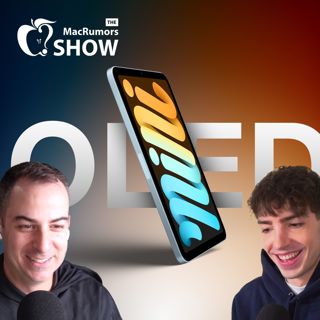
174: Apple’s Big Plans for iPad Mini
On this week's episode of The MacRumors Show, we talk through the latest rumors about Apple's upcoming iPad mini 8. The next-generation version of the iPad mini is expected to feature an OLED display, as part of Apple's plan to expand the display technology across many more of its devices. Apple's first OLED device was the Apple Watch in 2015, followed by the iPhone in 2017 and the iPad Pro in 2024. It now apparently plans to bring the technology to more devices, such as the iPad Air, MacBook Air, and MacBook Pro, and could start with the iPad mini next year. The current iPad mini has a Liquid Retina LCD display, just like the iPad Air. OLED offers higher contrast with true blacks, wider viewing angles, faster response times, better efficiency, and generally better perceived picture quality than LCD. The current iPad mini came out in 2024, with the main upgrade over the previous version being the A17 Pro chip and Apple Intelligence support. The previous generation introduced a complete redesign and the A15 Bionic chip. In August, Apple mistakenly shared code that revealed key information about the next-generation iPad mini with the codename J510/J511: The device features the A19 Pro chip, which is used in the iPhone Air, iPhone 17 Pro, and iPhone 17 Pro Max. The current iPad mini uses a version of the A17 Pro chip from the iPhone 15 Pro with a five-core GPU. The A19 Pro used in the iPhone Air also has a five-core GPU, as opposed to the full six-core version in the iPhone 17 Pro models, so it seems likely that this binned version of the chip will be the one used in the next iPad mini. Bloomberg claims that Apple is working on a version of the iPad mini that has a more water resistant design, making it the first iPad with a water resistance rating. While the iPhone has IP68 water resistance that allows it to withstand submersion in water up to six meters deep for 30 minutes, it is not yet known what IP rating the iPad mini might feature. The iPad mini's updated casing is expected to offer water resistance similar to the iPhone, making it safe for casual use in wet environments like a bath or a pool area. Apple has reportedly developed a new speaker system for the iPad mini that uses vibration-based technology, allowing for the speaker holes in the device to be removed. Removing the speaker holes would cut down on areas where water could get into the crevices of the iPad mini. For the iPhone, Apple uses adhesive and gaskets to protect the speaker holes and other ingress points from water intrusion, so the iPad mini's design would be radically different. The current iPad mini does not have an official water resistance rating and it is not safe to get it wet. With an OLED display, water resistance, a new speaker system, and a faster chip, the device is expected to be more expensive, and Apple could charge up to $100 more for the device. The iPad mini is currently priced starting at $499. Apple will purportedly launch the iPad mini 8 with OLED display in the third quarter of next year at the earliest. We also discuss further thoughts on the M5 Vision Pro, weighing up its utility for travel and day-to-day use-case, and take a look at the growing differentiation and optionality within Apple's product lineups. This episode is sonsored by uncommon goods and notion. Visit the links below for more details: Visit https://www.uncommongoods.com/mac for 15% off Visit https://www.notion.com/macrumors to try Notion and Notion Agent today!
28 Marras 46min

173: iPhone 18 Pro Looks Like a Huge Upgrade
On this week’s episode of The MacRumors Show, we talk through all of the new features and improvements expected to come to next year’s iPhone 18 Pro and iPhone 18 Pro Max models. Apple’s next-generation iPhones are less than a year away and we already have a good idea about what to expect based on corroborated leaks, rumors, and reports from reliable sources. While the overall design of the iPhone 18 Pro is expected to remain largely the same as that of the iPhone 17 Pro, it could feature translucent or color-matched rear glass, as well as a thicker design to accommodate a bigger battery. Apple is rumored to be testing at least three new color options for the iPhone 18 Pro models, including burgundy, brown, and purple, but only one of these is expected to be carried forward to production. The front of the device is expected to see Face ID moved under the display for the first time, resulting in a smaller Dynamic Island and potentially a left-aligned punch-hole camera. The front-facing camera is also expected to see a bump up to 24-megapixels. The main rear camera could receive a new three-stack image sensor from Samsung and it is highly likely to get a variable aperture. A variable-aperture system physically adjusts the lens opening, letting more light in for low-light shots or narrowing the opening for brighter scenes and deeper depth of field. Apple is also expected to "simplify" the Camera Control by removing its capacitive functions, moving it to rely on pressure alone. It should also sport the A20 Pro chip, which will be Apple’s first based on TSMC’s 2nm process for enhanced performance and efficiency. A custom "C2" chip is expected to displace Qualcomm’s 5G modem, with support for mmWave 5G in the United States. In addition, Apple apparently plans to add support for 5G networks that operate via satellites rather than Earth-based towers. The iPhone 18 Pro and iPhone 18 Pro Max are expected to debut in the fall of 2026 alongside the first foldable iPhone. The iPhone 18e, iPhone 18, and iPhone Air 2 are likely to follow in the spring of 2027.
21 Marras 34min

172: iPhone Pocket Launches and iPhone Air 2 Delayed
On this week's episode of The MacRumors Show, we discuss Apple's new iPhone Pocket accessory, the future of Apple Fitness+, and the iPhone Air 2's delayed launch. Apple this week announced the iPhone Pocket, a 3D-knitted limited edition accessory made in collaboration with Japanese fashion house ISSEY MIYAKE. The accessory is like a stretchy pocket, similar to an iPod Sock, but elongated to form a strap made of a ribbed, elastic textile. The iPhone Pocket comes in two versions. There's a short strap design available in eight colors for $149.95, and a long strap design in three colors for $229.95. The iPhone Pocket can be used in a variety of ways – handheld, tied onto bags, or worn directly on the body. The limited-edition release is now available on Apple's online store and at select flagship Apple Store locations worldwide. Bloomberg's Mark Gurman recently reported that the future of Apple Fitness+ is "under review." The service apparently suffers from high churn and little revenue, remaining one of the company's "weakest digital offerings." As a result, Fitness+ is now said to be in the process of receiving new management, with Apple health vice president Sumbul Desai taking control of the service. The health division, now including Apple Fitness+, will report directly to services chief Eddy Cue. The reorganization is likely to lead to added pressure to improve the service. In other news, it emerged this week that Apple's second-generation iPhone Air is to be delayed on account of the device's low sales, pushed back from the original target launch of fall 2026. Since the iPhone Air launched in September, there have been a multitude reports of poor sales and significant production cuts. Apple has responded by scaling back shipments and winding down the supply chain, with all production expected to cease by the end of this month. Apple now plans to introduce a more substantially redesigned iPhone Air 2 model in the future, perhaps alongside the iPhone 18e and iPhone 18 in the spring of 2027. The new device could feature an additional rear camera with an ultra-wide lens, vapor-chamber cooling, reduced weight, a larger battery, and a new chip. This episode is sponsored by Shopify — the commerce platform that helps you start, run, and grow your business all in one place. Sign up for your $1-per-month trial and start selling today at shopify.com/mac.
14 Marras 39min

171: AirPods Pro 3 and What's Coming Next
On this week's episode of The MacRumors Show, we discuss the AirPods Pro 3 and the future of the AirPods lineup as a whole. Apple introduced the AirPods Pro 3 in September, featuring a more refined design, improved active noise cancelation (ANC), enhanced sound quality, foam ear tips in five sizes, and heart rate monitoring for workouts. After using the AirPods Pro 3 for two months, we talk through our experience with the noticeably different fit, improved ANC, and more. We also discuss the reports from some users who are experiencing an ongoing static issue with the AirPods Pro 3. Apple does seem to be replacing affected units for customers who are bothered by the noise, which appears to be audible when ANC is active but no sound is playing. Other users have been hearing a high-pitched whine when on airplanes, which could be related to pressure. Not all AirPods Pro 3 units are experiencing the issue, but it sounds like Apple is investigating. Looking to the future, another version of the AirPods Pro 3 are expected to launch next year featuring infrared cameras for gesture controls and improved Vision Pro integration. This model is likely to be a more premium offering available alongside the current model at a higher price point. Apple is believed to be working on a next-generation H3 chip for future AirPods models. The AirPods 5 are in development, with two models just like the current version. The AirPods Max 2 are also in the works, touting a lighter design and likely a newer chip with features that are now noticeably absent from the device such as adaptive transparency and Siricommands. They are reportedly due to enter mass production in 2027 at the earliest. Connect with quality therapists and mental health experts who specialize in you at https://www.rula.com/mac #rulapod
7 Marras 41min

170: Giving Apple Vision Pro Another Chance
On this week's episode of The MacRumors Show, we dive back into the Vision Pro. Apple's new Vision Pro headset features the M5 chip for better performance and efficiency, 10% more rendered pixels, a refresh rate of up to 120Hz, longer battery life, and an all-new counterweighted Dual Knit headband with a focus on improved comfort. Arriving 20 months after the original model, the Vision Pro now runs visionOS 26 and offers widgets, hands-free scrolling, enhanced Mac Virtual Display mode, significantly improved Personas, a broader selection of immersive content, and more. We discuss how much better the new version really is and whether it's finally time to give Apple's spatial computing device another chance. Try Notion, now with Notion Agent, at notion.com/macrumors
31 Loka 39min