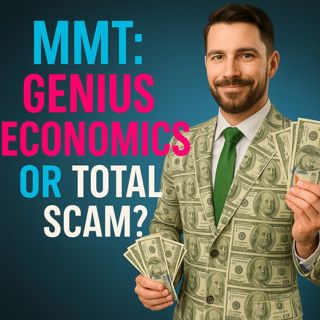

E172: MMT Is Going Mainstream - Right as the AI Bubble Is About to Pop: Explained by Dr. Maggiori
El Podcast9 Des 2025

E172: MMT Is Going Mainstream - Right as the AI Bubble Is About to Pop: Explained by Dr. Maggiori

A wide-ranging conversation with economist and AI consultant Dr. Emmanuel Maggiori on why Modern Monetary Theory overpromises a “free lunch,” what really causes inflation, how Bitcoin and AI are misunderstood, and why seductive economic stories are so dangerous.

GUEST BIO:
Emmanuel Maggiori is an armchair economist, computer scientist, and AI consultant based in the UK. Originally from Argentina, he has a PhD (earned in France), works with companies to build AI systems, and writes widely about economics and artificial intelligence. He is the author of several books, including If You Can Just Print Money, Why Do I Pay Taxes? Modern Monetary Theory Distilled and Debunked in Plain English, Smart Until It’s Dumb, and The AI Pocket Guide, and has a large following on LinkedIn and X/Twitter.

TOPICS DISCUSSED:

  • What Modern Monetary Theory (MMT) actually claims
  • How money is created in modern economies (broad money vs reserves)
  • Why MMT’s “taxes don’t fund spending” story is misleading
  • Stephanie Kelton’s accounting error and the “deficit myth”
  • The Cantillon effect and who really pays for money printing
  • Argentina, Venezuela, Zimbabwe, and real-world inflation episodes
  • Javier Milei, austerity, and Argentina’s recent disinflation
  • Government debt, “we owe it to ourselves,” and default via inflation
  • Bitcoin as a supposed solution to monetary problems
  • Who really created Bitcoin and what it’s actually good for
  • The current AI boom, why it’s a bubble on the business side, and unit economics
  • OpenAI, DeepSeek, Nvidia, and why foundational models lack a moat
  • How AI will change the labor market (coders, translators, blue-collar work)
  • AI, Hollywood/TV writing, and the gap between “good enough” and truly excellent work
  • Final cautions about seductive economic theories and AI hype

MAIN POINTS:

  • MMT in a nutshell: MMT says a government with its own currency can always create money to pay for spending and debt, and that taxes exist mainly to control inflation, create demand for the currency, and shape behavior—not to “fund” spending.
  • Accounting problems in MMT: Emmanuel argues that key MMT figures (especially Stephanie Kelton) made basic accounting errors about government bank accounts and money aggregates like M1, then papered over them with exceptions (e.g., temporary overdrafts at central banks).
  • Why taxes really matter: Even if a government could print money, in practice you need taxes before spending because the Treasury’s accounts can’t just go endlessly negative—and politically, raising taxes fast enough to control inflation is extremely unlikely.
  • Cantillon effect & asset swaps: Paying off debt with newly created money is not a harmless “asset swap.” It channels new money first to financial institutions, inflates asset prices and credit, and ultimately erodes the real value of ordinary people’s cash savings.
  • Real-world inflation is not an accident: In cases like Argentina, Venezuela, Zimbabwe, or Weimar Germany, there were real triggers (droughts, war reparations, commodity shocks), but the hyperinflation came from repeated resort to money printing as the default response.
  • Argentina as a warning: Emmanuel’s personal experiences—suitcases of cash for a normal dinner, unusable mortgages, dollarized house purchases—illustrate how chronic money printing and price controls destroy trust, planning, and basic economic functioning.
  • Javier Milei & austerity: Milei sharply cut deficits and money printing; inflation has fallen quickly. Critics say it’s just recession-driven demand collapse, but Emmanuel notes history shows disinflation often follows when governments stop printing and cut spending.
  • Debt and “we owe it to ourselves”: Government debt is a real intertemporal deal: some people give up current consumption so the state can use resources now, in exchange for more consumption later. Unexpected inflation is an economic default on those savers.
  • Bitcoin skepticism: Bitcoin solves a fascinating technical problem (a decentralized, hard-to-alter ledger), but Emmanuel questions its use as a stable store of value (because of huge volatility) and notes there are other ways to protect savings (equities, etc.).
  • AI bubble dynamics: AI as a technology is here to stay and genuinely useful, but foundational model providers have thin or no moats—methods are public, competitors catch up, and models become commodities competing on price with brutal compute costs.
  • Nvidia and the “shovel sellers”: Chip makers selling GPUs may fare better than model labs, but there are worrying signs (like unsold inventory) that they may be over-producing “shovels” for a gold rush that can’t all pay off.
  • AI startups on top of models: Most AI-powered apps (wrappers for therapy, yoga, productivity, etc.) have almost no defensible edge. Anyone can build similar products, so profits will be squeezed and many will fail.
  • Work & careers in the AI age: He wouldn’t steer a kid away from computer science—but urges them to be at the intersection of business and tech, not just a narrow coder. Routine “good enough” work (like basic translation) is more at risk than high-end, high-touch work.
  • Blue-collar and “boring” businesses: Physical, unsexy businesses (plumbing, soundproofing, trades) look very robust and lucrative; in London, plumbers often bill more than many white-collar professionals.
  • AI as an imitator, not an oracle: Large models are brilliant imitators trained on oceans of human text (Reddit, etc.), not machines designed for truth. They’ll keep sounding confident and sometimes being wrong.

TOP 3 QUOTES:

  • “MMT is like a theory that promises you a free lunch—and even MMT economists themselves use the phrase ‘free lunch.’ If it sounds like that, you should be very suspicious.”
  • “All these rules that stop governments from just printing money exist for a reason: we do not trust politicians with a blank check on the public purse.”
  • “AI is an incredible imitator. It’s trained on a massive pile of human text, and it’s very good at sounding right—but that doesn’t mean it’s true, or high-end work, or that it understands what it’s saying.”

🎙 The Pod is hosted by Jesse Wright
💬 For guest suggestions, questions, or media inquiries, reach out at https://elpodcast.media/
📬 Never miss an episode – subscribe and follow wherever you get your podcasts.
⭐️ If you enjoyed this episode, please rate and review the show. It helps others find us.

Thanks for listening!

Episoder(186)

1 in 20 Deaths: Inside Canada’s Assisted Dying System - Dr. Ramona Coelho

1 in 20 Deaths: Inside Canada’s Assisted Dying System - Dr. Ramona Coelho

Canada’s MAiD program has expanded rapidly—Dr. Ramona Coelho argues the system increasingly serves vulnerable people, with uneven safeguards and serious ethical, legal, and social risks. Guest bio: Dr...

24 Feb 1h

The Eavesdropper Economy: How Surveillance Built AI (E186)

The Eavesdropper Economy: How Surveillance Built AI (E186)

A lively tour from Cold War “The Thing” to today’s surveillance capitalism—showing how audio capture, too much data, and automation pressures helped turn listening into AI.Guest bios:Dr. Toby Heys — P...

18 Feb 1h

Managerial Class Ruined Tech (E185) - Darryl Campbell

Managerial Class Ruined Tech (E185) - Darryl Campbell

A former Silicon Valley insider explains how MBA-style “spreadsheet management” is breaking software—and why it’s making tech, AI, and everyday products worse.Guest bio:Darryl Campbell is a former tec...

10 Feb 1h 13min

55% of MIT Faculty Self-Censor — Here’s Why (E184)

55% of MIT Faculty Self-Censor — Here’s Why (E184)

MIT Free Speech Alliance president Wayne Stargardt explains how a few high-profile cancellations can drive widespread faculty self-censorship—even at a STEM powerhouse like MIT.Guest bio:Wayne Stargar...

5 Feb 52min

E183: Why Corporate America Will Never De-Woke | Law Prof Explains

E183: Why Corporate America Will Never De-Woke | Law Prof Explains

In this episode, Jesse talks with Fordham University School of Law corporate-law professor Sean J. Griffith about why “go woke, go broke” hasn’t really played out—and why big, publicly traded firms ca...

3 Feb 59min
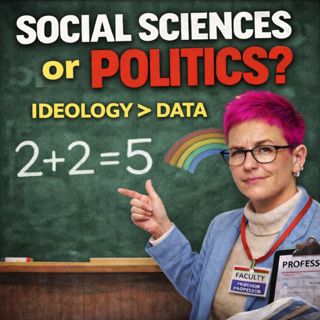
E181: Politics Is the Best Predictor of Academic Research — Prof Mark Horowitz

E181: Politics Is the Best Predictor of Academic Research — Prof Mark Horowitz

Political beliefs often matter more than data or methods in shaping how social scientists think about controversial issues. In this episode, sociologist Dr. Mark Horowitz explains why many professors ...

27 Jan 1h 8min

E180: Attraction & Disgust: Evolutionary Psychology Explained (Dr. Deb Lieberman)

E180: Attraction & Disgust: Evolutionary Psychology Explained (Dr. Deb Lieberman)

Evolutionary psychologist Debra Lieberman explains how “disgust” and other built-in mental programs shape attraction, kinship, morality, and even law—while modern technology and social media scramble ...

20 Jan 1h 3min

E179: Breaking the Gerontocracy: How Amanda Litman Is Getting Young People into Office

E179: Breaking the Gerontocracy: How Amanda Litman Is Getting Young People into Office

Amanda Litman argues U.S. leadership is too old, local races are dangerously uncontested, and the fastest fix is getting more young people to run—backed by better pay and campaign-finance reform.Guest...

16 Jan 50min

Populært innen Business og økonomi

stopp-verden
lydartikler-fra-aftenposten
dine-penger-pengeradet
e24-podden
rss-penger-polser-og-politikk
rss-borsmorgen-okonominyhetene
utbytte
pengesnakk
livet-pa-veien-med-jan-erik-larssen
finansredaksjonen
pengepodden-2
morgenkaffen-med-finansavisen
tid-er-penger-en-podcast-med-peter-warren
okonomiamatorene
rss-sunn-okonomi
liberal-halvtime
lederpodden
rss-markedspuls-2
rss-impressions-2
rss-investering-gjort-enkelt