

E180: Attraction & Disgust: Evolutionary Psychology Explained (Dr. Deb Lieberman)
El Podcast20 Jan

E180: Attraction & Disgust: Evolutionary Psychology Explained (Dr. Deb Lieberman)

Evolutionary psychologist Debra Lieberman explains how “disgust” and other built-in mental programs shape attraction, kinship, morality, and even law—while modern technology and social media scramble the cues those systems evolved to track.

Guest bio:

Dr. Debra Lieberman is a professor of psychology at the University of Miami and an evolutionary psychologist who studies how evolved “mental apps” shape social life—kinship, cooperation, morality, sexuality, and emotions. She’s the co-author of Objection: Disgust, Morality, and the Law.

Topics discussed:
  • What makes someone “hot”: symmetry, hormonal cues, and universal vs learned templates
  • Male vs female mate preferences (fertility cues; resource/provisioning cues; kindness/safety)
  • Disgust as an evolved system for pathogen avoidance (food, touch/contact, sex)
  • Incest avoidance, the Westermarck effect, kibbutzim and “minor marriages” evidence
  • Sexual reproduction, pathogens, and why “mixing the gene pool” matters
  • How disgust bleeds into moral judgment and law; coalitions and social leverage
  • Why modernity/tech changes the payoff of ancient intuitions
  • Gratitude as a “sleeper” universal emotion that jumpstarts friendship
  • Her evolutionary psychology textbook + MediaByte project
Main points:
  • Attraction isn’t “simple”—it’s output. Your brain runs hidden machinery that converts cues into a gut-level “hot/not.”
  • Symmetry functions like a health certificate. It’s hard to build a symmetric body; disruption from disease/mutations makes symmetry informative.
  • Men’s and women’s preferences differ on average, but share a template. Men track fertility-linked cues; women track resource acquisition/investment cues—plus kindness/safety as a major predictor.
  • Disgust is a multi-purpose regulator. It steers eating, contact, sex, and social avoidance by tracking contamination risk and other fitness costs.
  • Incest avoidance relies on cues, not DNA tests. Early co-residence can trigger “this is kin” psychology even when people aren’t related (Westermarck effect).
  • Modern abundance doesn’t erase ancient wiring. People calibrate to local “baselines” and still compete relative to that baseline.
  • Moral disgust can be weaponized. Disgust language can rally coalitions (“those people are disgusting/bad”) and support punishment, including via law.
  • Gratitude is an underappreciated social engine. It flags “this person values me more than expected,” helping form alliances beyond kin.
Top quotes:
  • Beauty is in the adaptation of the beholder.
  • “We’re not frogs… we have a very specific human operating system that guides us toward certain features and away from others.”
  • Symmetry is hard to build—it can act like a kind of health certificate.”
  • “Women track resource acquisition… but one of the most critical traits is kindness—it signals safety.”
  • “You smell something off and you don’t eat it—you’re not thinking ‘pathogens’… you’re thinking ‘ew’.”
  • “There’s no one-size-fits-all disgust; it depends on what you were calibrated to as ‘normal.’”
  • “If morality were just cooperation… why wouldn’t heterosexual men celebrate gay men for reducing competition?”
  • “Gratitude is triggered when someone shows they value you more than you expected—it jumpstarts friendship.”

🎙 The Pod is hosted by Jesse Wright
💬 For guest suggestions, questions, or media inquiries, reach out at https://elpodcast.media/
📬 Never miss an episode – subscribe and follow wherever you get your podcasts.
⭐️ If you enjoyed this episode, please rate and review the show. It helps others find us.

Thanks for listening!

Episoder(186)

1 in 20 Deaths: Inside Canada’s Assisted Dying System - Dr. Ramona Coelho

1 in 20 Deaths: Inside Canada’s Assisted Dying System - Dr. Ramona Coelho

Canada’s MAiD program has expanded rapidly—Dr. Ramona Coelho argues the system increasingly serves vulnerable people, with uneven safeguards and serious ethical, legal, and social risks. Guest bio: Dr...

24 Feb 1h

The Eavesdropper Economy: How Surveillance Built AI (E186)

The Eavesdropper Economy: How Surveillance Built AI (E186)

A lively tour from Cold War “The Thing” to today’s surveillance capitalism—showing how audio capture, too much data, and automation pressures helped turn listening into AI.Guest bios:Dr. Toby Heys — P...

18 Feb 1h

Managerial Class Ruined Tech (E185) - Darryl Campbell

Managerial Class Ruined Tech (E185) - Darryl Campbell

A former Silicon Valley insider explains how MBA-style “spreadsheet management” is breaking software—and why it’s making tech, AI, and everyday products worse.Guest bio:Darryl Campbell is a former tec...

10 Feb 1h 13min

55% of MIT Faculty Self-Censor — Here’s Why (E184)

55% of MIT Faculty Self-Censor — Here’s Why (E184)

MIT Free Speech Alliance president Wayne Stargardt explains how a few high-profile cancellations can drive widespread faculty self-censorship—even at a STEM powerhouse like MIT.Guest bio:Wayne Stargar...

5 Feb 52min

E183: Why Corporate America Will Never De-Woke | Law Prof Explains

E183: Why Corporate America Will Never De-Woke | Law Prof Explains

In this episode, Jesse talks with Fordham University School of Law corporate-law professor Sean J. Griffith about why “go woke, go broke” hasn’t really played out—and why big, publicly traded firms ca...

3 Feb 59min
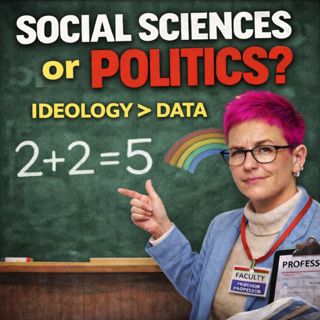
E181: Politics Is the Best Predictor of Academic Research — Prof Mark Horowitz

E181: Politics Is the Best Predictor of Academic Research — Prof Mark Horowitz

Political beliefs often matter more than data or methods in shaping how social scientists think about controversial issues. In this episode, sociologist Dr. Mark Horowitz explains why many professors ...

27 Jan 1h 8min

E179: Breaking the Gerontocracy: How Amanda Litman Is Getting Young People into Office

E179: Breaking the Gerontocracy: How Amanda Litman Is Getting Young People into Office

Amanda Litman argues U.S. leadership is too old, local races are dangerously uncontested, and the fastest fix is getting more young people to run—backed by better pay and campaign-finance reform.Guest...

16 Jan 50min

Populært innen Business og økonomi

stopp-verden
lydartikler-fra-aftenposten
dine-penger-pengeradet
e24-podden
rss-penger-polser-og-politikk
rss-borsmorgen-okonominyhetene
utbytte
pengepodden-2
pengesnakk
livet-pa-veien-med-jan-erik-larssen
rss-sunn-okonomi
morgenkaffen-med-finansavisen
tid-er-penger-en-podcast-med-peter-warren
okonomiamatorene
finansredaksjonen
lederpodden
liberal-halvtime
rss-markedspuls-2
rss-impressions-2
rss-andelige-tanker-med-camillo