Nigeria: Killings, land and cattle
On Christmas Day 2025, the US carried out missile strikes on suspected Islamist militants in Nigeria. They came after President Trump said he would intervene to protect Christians amid controversial claims of a “Christian genocide” in the country. The Nigerian government rejects such claims, saying both Muslim and Christian communities have been affected by insecurity in the country. Alex Last visits Plateau state in central Nigeria one area where ethnic and sectarian violence that has been the focus of US concern, to hear from both sides and meet those trying to bring peace.This episode of The Documentary comes to you from Assignment, investigations and journeys into the heart of global events.
27 Jan 29min
Mrinalini Mukherjee: Hemp sculptures
Art from the circle of friends, family and teachers of artist Mrinalini Mukherjee is now on show at London's Royal Academy, alongside her giant hemp sculptures. Sheetal Parmar hears about the planning behind transporting such delicate works and about the influences behind the creation of her natural forms. This episode of The Documentary, comes to you from In the Studio, exploring the processes of the world’s most creative people.
26 Jan 26min
US foreign policy in five doctrines
Looking back at five big US foreign policy shifts from the Monroe doctrine in the 19th Century to the post-9/11 strategies of the Bush doctrine in the early 2000s. Justin Webb and his guests examine how America’s approach to the world has constantly changed over time, to help answer a really big question - how radical is the way President Donald Trump deals with the world? Is he really an outlier in US history? Or do his actions reflect the changing patterns of American power?
25 Jan 56min
Living in Greenland
Described by Donald Trump as “a giant piece of ice,” the world’s largest island has found itself at the centre of global attention. The president’s demands to take over the self-governing Danish territory, potentially even by force, led to a diplomatic crisis and the president threatened economic sanctions against European allies for opposing his plans. Despite now ruling out military action, US intentions are still uncertain. We bring together young Greenlanders to discuss what they make of President Trump’s proposal to take it over and share their experiences of living in Greenland. This episode of The Documentary, comes to you from BBC OS Conversations, bringing together people from around the world to discuss how major news stories are affecting their lives.
24 Jan 23min
Daughters of thunder
In small towns and rural areas across the south of the United States traditional family churches have long been key guardians of black culture, memory and community spirit. Until very recently women called to preach in these communities faced opposition ranging from grudging acceptance at best to total ostracisation. But now an increasing number of women are winning acceptance as preachers, pastors and community leaders in Baptist and United Methodist Churches, becoming the vital glue which binds changing, rural black communities together.Alvin Hall asks some of these women about the lengths they have gone to to follow their calling, driving hundreds of miles to carry the word of God in touring ministries reminiscent of the male Circuit Riders of Alvin’s childhood. In Paducah, Kentucky he meets Baptist pastors Donna G Hawkins, LaRita Horton Addison and James Lee Hudson to explore their individual journeys towards acceptance. Alvin also meets Associate Pastor, Reverend Vanessa Skillion who has travelled 216 miles to join Donna in preaching at Macedonia Missionary Baptist Church. Meanwhile in Nashville, Tennessee Alvin hears the perspectives of two United Methodist Ministers, Reverend Dr Jacqui King and Reverend Dr Paula Smith.In life stories, preaching, prayers and music we encounter communities uplifted and worship subtly altered by the spirits of women.Music performed by Donna G. Hawkins and the congregation of Macedonia Missionary Baptist Church, Paducah, KY.
23 Jan 26min
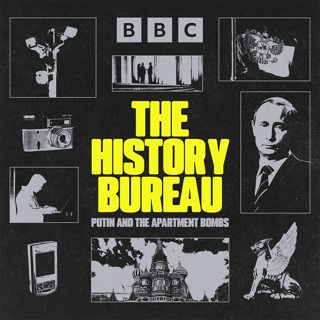
Bonus: Introducing: The History Bureau
If journalism is the first draft of history, what happens if that draft turns out to be flawed? The History Bureau revisits the defining stories of our times with the reporters who first covered them. What did they get right first time around? And, in the chaos and confusion of unfolding events, what did they miss?Season 1: Putin and the Apartment Bombs. In September 1999, just weeks after a 46-year-old Vladimir Putin became Prime Minister, four bombs blew up four apartment buildings across Russia, killing hundreds of people while they slept. The attacks plunged the country into panic. Families fled their homes. Residents patrolled their blocks around the clock. An entire nation paralyzed by fear. But who did it? It's a mystery that has fuelled some chilling theories. The government blamed Chechen militants. Many reporters agreed. But then the whispers started. Was something even more sinister going on? If you're in the UK, listen first to The History Bureau on BBC Sounds - or elsewhere in the world, listen on BBC.com or wherever you get your podcasts.
21 Jan 28min
Greece: Rescuers on trial
In a case with profound implications for European migration policy, two dozen former volunteer humanitarian workers have been on trial on the Greek island of Lesbos. Seven years ago, they were arrested after rescuing thousands of migrants from the sea. Now, following many delays, a court case involving charges of facilitating illegal entry of foreigners, membership of a criminal organisation and money laundering has finally gone ahead. Among the defendants facing a possible 20 years in jail have been the Syrian refugee and former competitive swimmer Sara Mardini - and Irish human rights activist and lawyer Sean Binder. They've denied the charges - and argued that the prosecution was an attempt by the Greek authorities to criminalise help to asylum seekers.Tim Whewell reports on the trial and its outcome - and on the consequences for Lesbos. Back in 2015, when as many as 800,000 migrants arrived on the island after crossing the narrow strait from Turkey, local people were proud of their efforts to rescue and support refugees. But later, attitudes towards migrants changed. And NGOs stopped their rescue work - for fear more aid workers might be prosecuted. Now, far fewer migrants attempt the crossing to Greece. But those who do sometimes die in shipwrecks. And there are allegations, denied by Greece, that its police are illegally pushing asylum seekers back - putting them back on boats and abandoning them at sea.What will the verdicts in this trial mean for Greece, for other European states that have been tightening their immigration policies - and for the defendants whose lives have been on hold for the last seven years?This episode of The Documentary comes to you from Assignment, investigations and journeys into the heart of global events.
20 Jan 28min