189: For the Ancestors

189: For the Ancestors

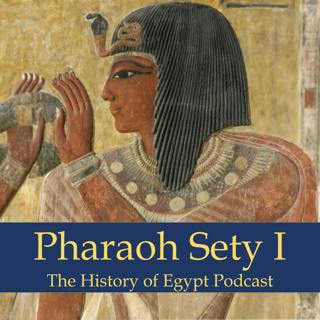
Sety at Abydos (Part 4). Finishing our tour of Sety’s Great Temple at Abydos, we explore a few more sanctuaries and facilities. Then, we discuss the monument overall. Sety invested huge resources into his building projects at Abydos, and these monuments connect to some truly ancient traditions. What were the King’s priorities, what was he trying to achieve? Photos of monuments described in this episode: Sety’s Temple: Kairoinfo4u. Sety’s Temple: Wikimedia. Chapel of Ramesses I: Metropolitan Museum of Art. Umm el-Qa’ab, pottery sherds from ancient offerings: Soloegipto. Interpreting the temple complex and adjacent facilities: David, Temple Ritual at Abydos (2018). O’Connor, Abydos: Egypt’s First Pharaohs and the Cult of Osiris (2009). Verner, Temple of the World: Sanctuaries, Cults, and Mysteries of Ancient Egypt (2013). Additional details and sources: Date: c.1300 BCE—1292 BCE. Website: www.egyptianhistorypodcast.com. Support the show via Patreon www.patreon.com/egyptpodcast. Make a one-time donation via PayPal payments. Music intro and interludes: Luke Chaos. Music outro: Ancient Lyric. Sistrum interludes: Tahya / Hathor Systrum. Select Bibliography: P. J. Brand, ‘The Monuments of Seti I and Their Historical Significance: Epigraphic, Historical and Art Historical Analysis’, Unpublished PhD. Thesis, University of Toronto (1998). P. J. Brand, The Monuments of Seti I: Epigraphic, Historical and Art Historical Analysis (2000). A. M. Calverley, The Temple of King Sethos I at Abydos Volume I: The Chapels of Osiris, Isis, and Horus (1933). A. M. Calverley, The Temple of King Sethos I at Abydos Volume II: The Chapels of Amen-Re, Re-Harakhti, Ptah, and King Sethos (1935). A. M. Calverley, The Temple of King Sethos I at Abydos Volume III: The Osiris Complex (1938). A. M. Calverley, The Temple of King Sethos I at Abydos Volume IV: The Second Hypostyle Hall (1958). J. Capart, Abydos: Le Temple de Seti Ier (1912). A. S. G. T. Caulfeild, The Temple of the Kings at Abydos (Sety I) (1989). R. David, Temple Ritual at Abydos (2018). K. J. Eaton, ‘The Festivals of Osiris and Sokar in the Month of Khoiak: The Evidence from Nineteenth Dynasty Royal Monuments at Abydos’, Studien zur Altägyptischen Kultur 35 (2006), 75–101. A. el-Sawi, ‘Ramesses II Completing a Shrine in the Temple of Sety I at Abydos’, Studien zur Altägyptischen Kultur 10 (1983), 307–10. H. Frankfort, The Cenotaph of Seti I at Abydos (1933). F. Ll. Griffith, ‘The Abydos Decree of Seti I at Nauri’, The Journal of Egyptian Archaeology 13 (1927), 193–208. K. Hamilton, ‘The Osireion: A Layman’s Guide’ (2018). C. H. Herzer Jr, ‘Study of the Osireion at Abydos: Code Book and Source Document for the Birth House of Isis’ (2022). K. A. Kitchen, Ramesside Inscriptions Translated and Annotated: Notes and Comments, I (1993). K. A. Kitchen, Ramesside Inscriptions Translated and Annotated: Translations Volume I: Ramesses I, Sethos I and Contemporaries (Second Publication edn, 2017). A. Leahy, ‘The Osiris “Bed” Reconsidered’, Orientalia 46 (1977), 424–34. A. Mariette, Abydos: Description des fouilles (1869). M. A. Murray, Egyptian Temples (2005). D. O’Connor, Abydos: Egypt’s First Pharaohs and the Cult of Osiris (2009). D. B. Redford, Pharaonic King-Lists, Annals, and Day-Books: A Contribution to the Study of the Egyptian Sense of History (1986). O. Sety and H. el Zeini, Abydos: Holy City of Ancient Egypt (1981). M. Smith, Following Osiris: Perspectives on the Osirian Afterlife from Four Millenia (2017). M. Verner, Temple of the World: Sanctuaries, Cults, and Mysteries of Ancient Egypt (2013). R. H. Wilkinson, The Complete Temples of Ancient Egypt (2000). R. H. Wilkinson, The Complete Gods and Goddesses of Ancient Egypt (2003). H. E. Winlock, Bas-Reliefs from the Temple of Ramesses I at Abydos (1921). Learn more about your ad choices. Visit megaphone.fm/adchoices

Episoder(408)

230: Khaemwaset & the Book of Thoth

230: Khaemwaset & the Book of Thoth

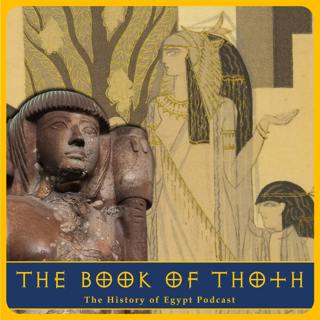
The prince Kha-em-Waset (lived c.1260 BCE) was a learned man, and an accomplished priest. Centuries after his death, storytellers remembered the prince as a sage and magician. They told tales of his a...

16 Mar 35min
229: The First Egyptologist? Khaemwaset & the Apis Bulls

229: The First Egyptologist? Khaemwaset & the Apis Bulls

In 1263 BCE, priests announced the death of the APIS BULL. Sacred to Ptah, the bull dwelled in the temple at Men-nefer (Memphis). Now, in year 30 of Ramesses II, the King's son KHA-EM-WASET would lead...

9 Mar 24min
228: Three Funerals & a Sed Festival

228: Three Funerals & a Sed Festival

Loss and rejuvenation. Ramesses third decade in power was a time of death. The King's Great Wife Nefertari passed around year 25. Almost simultaneously, his mother Tuya, his second wife Iset-Nofret, a...

2 Mar 31min
227: The One Where Iset Poisons Ra

227: The One Where Iset Poisons Ra

What is the true name of god? Once upon a time, Ra ruled the earth directly. But the great goddess Iset/Isis desired to know his private name, the one hidden from all outsiders. A name that, if known,...

16 Feb 34min
226: Nefertari's Tomb and Book of the Dead

226: Nefertari's Tomb and Book of the Dead

The tomb of Queen Nefertari is one of the masterpieces of New Kingdom funerary monuments. The tomb is stunningly preserved, with an array of exquisite images, evocative texts (from the Book of the Dea...

9 Feb 28min
225: Nefertari Beloved of Mut

225: Nefertari Beloved of Mut

Around 1300 BCE, King Sety I selected a group of "beauties" for his son, to marry and produce children. One of these was Nefertari (Nefret-Iry, "She Has Become Beautiful"). A girl of unknown origins (...

2 Feb 49min
Abu Simbel: Nefertari's Temple & Ramesses' Nubian Empire

Abu Simbel: Nefertari's Temple & Ramesses' Nubian Empire

Livestream recording about the Abu Simbel Temples, with a particular focus on Nefertari's monument (Part 1) and the political-religious context of Ramesses' Nubian monuments (Part 2). We also have a f...

26 Jan 32min
Dinosaurs of Egypt (2026 Revised Edition)

Dinosaurs of Egypt (2026 Revised Edition)

In the Cretaceous Period (c.100 million years ago) Egypt and North Africa were radically different environments. With vast tidal flats and mangroves, and a shallow sea, the continent fostered numerous...

12 Jan 30min

Populært innen Samfunn

rss-spartsklubben
giver-og-gjengen-vg
aftenpodden
konspirasjonspodden
aftenpodden-usa
popradet
rss-nesten-hele-uka-med-lepperod
rss-henlagt-andy-larsgaard
lydartikler-fra-aftenposten
min-barneoppdragelse
grenselos
wolfgang-wee-uncut
synnve-og-vanessa
frokostshowet-pa-p5
rss-dette-ma-aldri-skje-igjen
rss-dannet-uten-piano
fladseth
alt-fortalt
198-land-med-einar-trnquist
relasjonspodden-med-dora-thorhallsdottir-kjersti-idem