The Power and Control Wheel

The Power and Control Wheel

In this episode Stephen Herd and I discuss the Power and Control Wheel: a widely used tool to help understand the dynamics of family violence and identify ways to address it.

The Power and Control Wheel was developed by a group of activists in Duluth, Minnesota, in the 1980s, who recognised the need for a comprehensive approach to address family violence. The Duluth Model is based on the belief that domestic violence is a result of the abuser's desire for power and control over their partner.

According to the Duluth Model, domestic violence is not caused by anger, substance abuse, or mental illness. Instead, it is a deliberate tactic used by abusers to control and dominate their partners. The Duluth Model identifies several different types of abuse, including physical abuse, sexual abuse, emotional abuse, economic abuse, and psychological abuse. These are presented in the Power and Control Wheel as a circular diagram that outlines the different tactics used by abusers.

The Power and Control Wheel helps to illustrate the cyclical nature of family violence. The abuser may use a combination of different tactics to gain control over their partner, and the victim may respond with different coping strategies, such as walking on eggshells or trying to appease the abuser. Over time, the abuse can escalate, and the victim may feel trapped and unable to escape the cycle of violence.

The Duluth Model and Power and Control Wheel are useful tools for understanding the dynamics of family violence and identifying ways to address it. They help to shift the focus away from the victim and onto the abuser, recognizing that family violence is a result of a deliberate choice made by the abuser to maintain power and control.

There are several different approaches to addressing family violence, including criminal justice interventions, civil protective orders, and community-based interventions. The Duluth Model emphasizes the need for a coordinated community response to address family violence, including law enforcement, the court system, and community-based organizations.

One of the strengths of the Duluth Model and Power and Control Wheel is that they recognize the importance of a multi-disciplinary approach to addressing family violence. Family violence is a complex issue that requires a coordinated response from multiple sectors, including the criminal justice system, social services, healthcare, and education.

Discussions and comments in our videos are for informational purposes only and should not replace the advice of your medical professional. Please consult with your doctor before making any changes to your medical treatment or lifestyle.

Latest Blogs

https://www.meducate.com.au/blog

About Meducate ®

Meducate provides online education for doctors, clinicians, health professionals and the public.

See the website to browse the many different talks and courses available https://www.meducate.com.au

Episoder(238)

Dopamine, Relapse, and Recovery: Why Addiction Needs Long-Term Management

Dopamine, Relapse, and Recovery: Why Addiction Needs Long-Term Management

A lot of people still think addiction recovery is just about willpower.But addiction neuroscience tells a different story: dopamine, the reward system, and relapse risk all help explain why recovery o...

25 Mar 5min
Why You Can Be Detoxed and Still Addicted

Why You Can Be Detoxed and Still Addicted

Addiction neuroscience, dopamine, cravings: detox ends withdrawal, but it does not end addiction.The MythA common myth in addiction recovery is that once detox is over, the problem is solved. Many peo...

18 Mar 5min
Relapse Happens to Everyone: Here's the Science Why - Addiction Basics 06

Relapse Happens to Everyone: Here's the Science Why - Addiction Basics 06

Dr. Fergal Armstrong reframes relapse in addiction, explaining why it's not a personal failure but a common part of the recovery journey, comparable to chronic illnesses. Understanding the neuroscienc...

11 Mar 5min
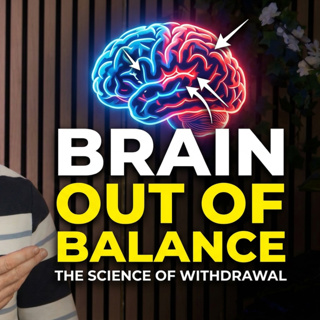
The Science of Withdrawal: What's Actually Happening? - Addiction Basics #5

The Science of Withdrawal: What's Actually Happening? - Addiction Basics #5

Withdrawal is one of the most feared parts of addiction recovery.But neuroscience shows something important:Withdrawal isn’t a failure of willpower — it’s the brain restoring balance after long-term c...

4 Mar 5min

Addiction vs Dependence vs Tolerance: The Critical Medical Difference

Addiction vs Dependence vs Tolerance: The Critical Medical Difference

🚨 TOLERANCE ≠ ADDICTION 🚨Most people — even healthcare professionals — use these terms incorrectly.And that confusion is hurting patients.In this episode, we break down:🧠 The real definition of add...

25 Feb 5min

Why Buprenorphine Is Safer Than Full Opioid Agonists

Why Buprenorphine Is Safer Than Full Opioid Agonists

Most people think methadone is the only real option for opioid addiction.Wrong.Buprenorphine — especially long-acting injectable depot — is flipping the entire system upside down.No daily pharmacy vis...

23 Feb 28min

How Cravings Work: Limbic System vs Prefrontal Cortex - Addiction Basics EP3

How Cravings Work: Limbic System vs Prefrontal Cortex - Addiction Basics EP3

Addiction neuroscience explains why wanting to quit isn’t the same as being able to quit. Dopamine reshapes the brain’s reward system.In Episode 3 of Addiction Basics, we tackle one of the most painfu...

18 Feb 6min
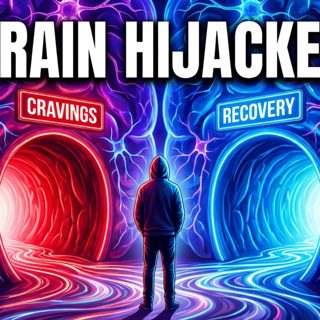
Dopamine and Addiction: The Science of Cravings - Addiction Basics EP2

Dopamine and Addiction: The Science of Cravings - Addiction Basics EP2

Addiction neuroscience explained. Dopamine, cravings, brain recovery, and neuroplasticity — backed by research.If you’ve ever wondered how addiction works in the brain, this is the science most people...

12 Feb 6min

Populært innen Helse

lydartikler-fra-aftenposten
fastlegen
hvordan-har-du-det-mann
rss-gukild-johaug
psykodrama
relasjonspodden-med-dora-thorhallsdottir-kjersti-idem
leger-om-livet
rss-garne-damer
foreldreradet
morten-ramm-lar-kakla-ga-til-du-sovner
rss-lopedrommen
bak-fasaden-en-reise-i-livet-med-sykepleier-ine
hjernesterk
klimaks
hormonelle-frida
g-punktet
sinnsyn
helsetipspodden
hverdagspsyken
treningsprat