160. Managing power, coping with weakness

160. Managing power, coping with weakness

Salisbury had a fairly accurate view of just what Britain could and couldn’t do on its own, given the limitations on British power itself, but also the blocks caused by domestic political opposition . He equally had a clear notion of just what massive damage the new generations of weapons might do in a war in which both sides had them, essentially a war between great powers. Finally, he also understood that the point of empire wasn’t sentiment, it was business.

All this made him deeply suspicious of the Jingoist spirit of many who wanted to push Britain’s imperial interests ever further forward. Instead, however much the Jingoes might criticise him for it, he preferred to concede to rivals in areas where he felt no vital interest was at stake.

On the other hand, where such an interest was on the table, he was more than prepared to fight. He’d decided, in particular, that given his colleagues’ fear of taking on Turkey, the best way to protect the Suez Canal, the vital link to India, was through Britain’s control of Egypt. But Egypt depended on the Nile, and that river ran through Sudan. That’s why, while Salisbury avoided war over West Africa, or over holdings grabbed by other powers in China, or with the US over the Guyana-Venezuela border dispute, he stood firm over Sudan and sent Kitchener in there to win his victory of Omdurman and then against the remaining Mahdist forces as he swept southwards.

Control of the Nile Valley was a goal he felt Britain could achieve and which would be key to its imperial interests. So it was worth fighting for. Even, as we’ll discover next week, when that brought him into conflict with a great power.


Illustration: The main gate to the munitions depot in Quingdao, after the German occupation, in 1898. From the Bundesarchiv of the Federal Republic of Germany.

Music: Bach Partita #2c by J Bu licensed under an Attribution-NonCommercial-No Derivatives (aka Music Sharing) 3.0 International License.


Episoder(274)

273. From a humble address to a royal arrest

273. From a humble address to a royal arrest

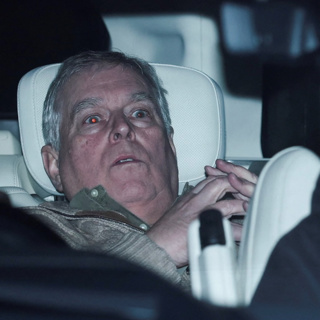
Well, we’re living in curious times.For the first time in four centuries, a member of the British royal family has been arrested in connection with a criminal investigation. Andrew Mountbatten-Windsor...

22 Feb 14min
272. What a fine mess you've got us into

272. What a fine mess you've got us into

This is the last episode in this main series of A History of England. I may add others on specific topics – by all means use the comments to suggest any you’d like me to examine – or in response to in...

20 Des 202543min

271. Breaking records

271. Breaking records

Following the rather grim comedy of Boris Johnson, the Conservatives gave Britain the even more ridiculous spectacle of Liz Truss. She proceeded to push the British economy to the edge of the abyss, a...

7 Des 202514min
270. Phenomenal Boris

270. Phenomenal Boris

It’s the time of Boris. This episode tracks Boris Johnson’s character, starting with a less than complimentary report from his housemaster at Eton to this parents, through his time in the rich kids’ B...

30 Nov 202514min
269. Brexit

269. Brexit

In 2015, Cameron returned to office with a majority of his own even if it wasn’t particularly huge. At least it meant he no longer needed to be in a coalition with the Lib Dems, who’d taken a terrible...

23 Nov 202514min
268. The winners and the damned: peacetime coalition

268. The winners and the damned: peacetime coalition

It’s 2007, and Tony Blair is out. In his place is Gordon Brown, who’d proved his capacity as a Chancellor. Sadly, he was now to show that promotion to Prime Minister was one step too many , since he s...

16 Nov 202514min
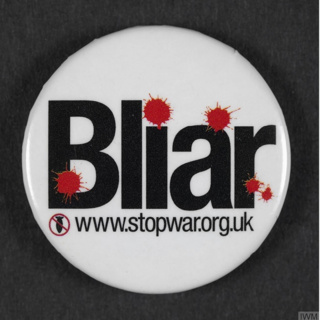
267. Bliar

267. Bliar

As the title of this episode suggests, this is where we look at how Tony Blair’s reputation was wrecked by the growing awareness that he’d produced infamously bad justifications to launch Britain into...

9 Nov 202514min

266. A time of dodgy dossiers

266. A time of dodgy dossiers

When Tony Blair took Britain to war in Iraq in 2003, as part of a US-led and rather limited coalition of nations, it was against the will of large numbers of Brits expressed in possibly the biggest de...

2 Nov 202514min

Populært innen Historie

rss-dette-ma-aldri-skje-igjen
historier-som-endret-norge
rss-katastrofe
rss-benadet
historier-som-endret-verden
henrettelsespodden
aftenposten-historie
rss-nadelose-nordmenn-gestapo
sektledere
med-egne-oyne
rss-strid-de-norske-borgerkrigene
rss-frontkjemperne
taakeprat
rss-historiske-romanser-svik-drap-og-kjarlighet
rss-gamle-greier
historiepodden
rss-historier-fra-gudbrandsdalen
liberal-halvtime
historiepodden-ww2
rss-bisarr-historie