172. Liberals back, great power tensions too

172. Liberals back, great power tensions too

Arthur Balfour’s intention in resigning as Prime Minister but without a general election was probably to oblige Liberal leader Henry Campbell-Bannerman to form a government, which might force their divisions to the surface. That would weaken their chances in an election that was bound to be held soon.

There was a curious symmetry between the divisions in the main parties. The Liberals were split three ways over the Boer War. Liberal Imperialist right wing backed Britain’s military intervention, while the left, sometimes called pro-Boer, opposed it, and in the middle a group around the leader accepted the need for war but denounced its most brutal aspects (such as the concentration camps).

Meanwhile, the Unionists were split three ways over tariff reform. The ‘wholehoggers’ backed a full system of import tariffs to protect British trade, the free traders wanted to stick with the old doctrine of tariff-free commerce, and a group around the leader accepted the need for reform but wanted to proceed more cautiously.

Unfortunately, tariff reform was topical while the war had been over for three years. The Liberals were able to unite in attacking the government, specifically over tariff reform. And they won their last landslide in the 1906 election.

Despite the end of the Boer War, the new Liberal government faced a world haunted by the spectre of renewed war. There was uncertainty over who the enemy would be if a new war broke out. The traditional enemy was France, and Britain likes its traditions. But an increasing threat was now coming from across the North Sea in Germany. Politicians and even novelists (the latter best represented by Erskine Childers and his Riddle of the Sands) were beginning to warn that the German threat was the more serious.

The entente cordiale with France in 1904 showed Britain beginning to move closer to France and further away from Germany. Then Kaiser Wilhelm II of Germany showed up in Tangier in Morocco, making a speech designed to provoke France, and tensions quickly grew. The conference that ended the crisis failed to address Germany’s issues. That made Tangier just the first of a series of crises that set two groupings of European great powers increasingly at odds with each other.

Finally, this episode also talks about a small step forward in the ugliest of the European colonies in Africa, Congo. Again with a link to a novel.


Illustration: A 1904 British cartoon on the Entente cordiale: John Bull (Britain) walking off arm-in-arm with Marianne (France), turning their back on Wilhelm II of Germany, whose sabre is poking out of his coat. A Punch cartoon by John Bernard Partridge.


Music: Bach Partita #2c by J Bu licensed under an Attribution-NonCommercial-No Derivatives (aka Music Sharing) 3.0 International License.


Episoder(274)

273. From a humble address to a royal arrest

273. From a humble address to a royal arrest

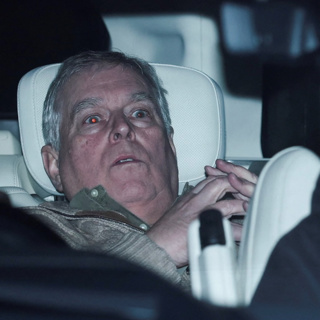
Well, we’re living in curious times.For the first time in four centuries, a member of the British royal family has been arrested in connection with a criminal investigation. Andrew Mountbatten-Windsor...

22 Feb 14min
272. What a fine mess you've got us into

272. What a fine mess you've got us into

This is the last episode in this main series of A History of England. I may add others on specific topics – by all means use the comments to suggest any you’d like me to examine – or in response to in...

20 Des 202543min

271. Breaking records

271. Breaking records

Following the rather grim comedy of Boris Johnson, the Conservatives gave Britain the even more ridiculous spectacle of Liz Truss. She proceeded to push the British economy to the edge of the abyss, a...

7 Des 202514min
270. Phenomenal Boris

270. Phenomenal Boris

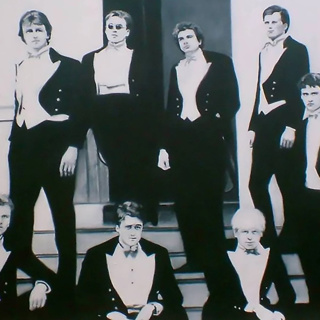
It’s the time of Boris. This episode tracks Boris Johnson’s character, starting with a less than complimentary report from his housemaster at Eton to this parents, through his time in the rich kids’ B...

30 Nov 202514min
269. Brexit

269. Brexit

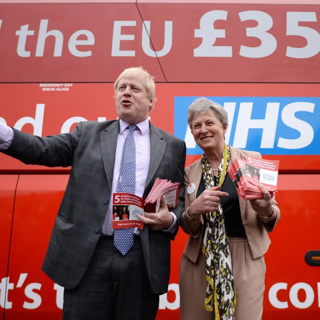
In 2015, Cameron returned to office with a majority of his own even if it wasn’t particularly huge. At least it meant he no longer needed to be in a coalition with the Lib Dems, who’d taken a terrible...

23 Nov 202514min
268. The winners and the damned: peacetime coalition

268. The winners and the damned: peacetime coalition

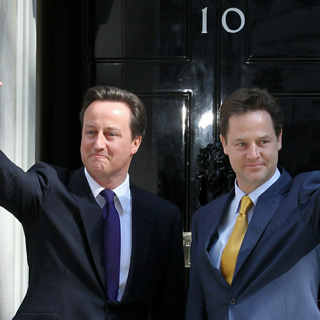
It’s 2007, and Tony Blair is out. In his place is Gordon Brown, who’d proved his capacity as a Chancellor. Sadly, he was now to show that promotion to Prime Minister was one step too many , since he s...

16 Nov 202514min
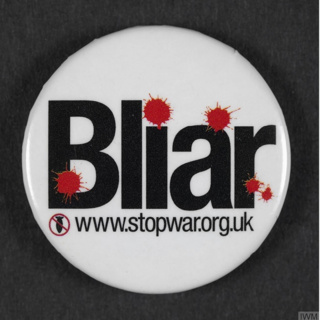
267. Bliar

267. Bliar

As the title of this episode suggests, this is where we look at how Tony Blair’s reputation was wrecked by the growing awareness that he’d produced infamously bad justifications to launch Britain into...

9 Nov 202514min
266. A time of dodgy dossiers

266. A time of dodgy dossiers

When Tony Blair took Britain to war in Iraq in 2003, as part of a US-led and rather limited coalition of nations, it was against the will of large numbers of Brits expressed in possibly the biggest de...

2 Nov 202514min

Populært innen Historie

rss-dette-ma-aldri-skje-igjen
historier-som-endret-norge
rss-katastrofe
rss-benadet
henrettelsespodden
historier-som-endret-verden
sektledere
aftenposten-historie
rss-nadelose-nordmenn-gestapo
med-egne-oyne
rss-strid-de-norske-borgerkrigene
rss-frontkjemperne
taakeprat
rss-gamle-greier
historiepodden
historiepodden-ww2
rss-historier-fra-gudbrandsdalen
liberal-halvtime
rss-politisk-preik
vare-historier