Britain Should Not Have Fought in the First World War

Britain Should Not Have Fought in the First World War

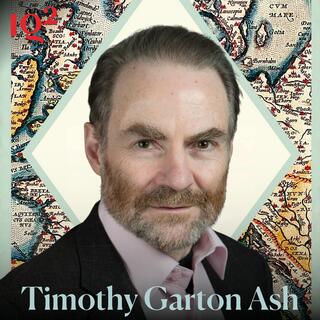
The First World War is not called the Great War for nothing. It was the single most decisive event in modern history, as well as one of the bloodiest: by the time the war ended, some nine million soldiers had been killed. It was also a historical full stop, marking the definitive end of the Victorian era and the advent of a new age of uncertainty. By 1918, the old order had fallen: the Bolsheviks had seized power in Russia; the German, Austro-Hungarian and Ottoman empires had been destroyed; and even the victorious Allied powers had suffered devastating losses. It was supposed to be the war to end all wars. And yet barely two decades later, the world was again plunged into conflict. Little wonder then that historians still cannot agree whether Britain's engagement was worth it. For some, the war was a vitally important crusade against Prussian militarism. Had we stayed out, they argue, the result would have been an oppressive German-dominated Europe, leaving the British Empire isolated and doomed to decline. And by fighting to save Belgium, Britain stood up for principle: the right of a small nation to resist its overbearing neighbours. For others, the war was a catastrophic mistake, fought at a catastrophic human cost. It brought Communism to power in Russia, ripped up the map of Europe and left a festering sense of resentment that would fuel the rise of Nazism. We often forget that, even a few days before Britain entered the war, it seemed likely that we would stay out. H. H. Asquith's decision to intervene changed the course of history. But was it the right one? Arguing for the motion in this Intelligence Squared debate were John Charmley, Professor of Modern History at the University of East Anglia; and Dominic Sandbrook, historian, columnist and broadcaster. Arguing against them were Max Hastings, historian, journalist and former newspaper editor; and Margaret MacMillan, Warden of St Antony’s College and Professor of International History at the University of Oxford. The debate was chaired by senior editor at The Economist, Edward Lucas. Support this show http://supporter.acast.com/intelligencesquared. See acast.com/privacy for privacy and opt-out information. Learn more about your ad choices. Visit podcastchoices.com/adchoices

Episoder(1535)

Sex, Gender and Christianity: A 3,000 Year History, with Diarmaid MacCulloch and Mary Beard (Part Two)

Sex, Gender and Christianity: A 3,000 Year History, with Diarmaid MacCulloch and Mary Beard (Part Two)

In the twenty-first century, Christianity or historically Christian societies have witnessed one of the most extraordinary revolutions in attitudes to sex and gender in human history, bringing liberat...

18 Mar 37min

Sex, Gender and Christianity: A 3,000 Year History, with Diarmaid MacCulloch and Mary Beard (Part One)

Sex, Gender and Christianity: A 3,000 Year History, with Diarmaid MacCulloch and Mary Beard (Part One)

In the twenty-first century, Christianity or historically Christian societies have witnessed one of the most extraordinary revolutions in attitudes to sex and gender in human history, bringing liberat...

16 Mar 34min

Is the Russia–Ukraine War a Failure of Strategy? With Lawrence Freedman

Is the Russia–Ukraine War a Failure of Strategy? With Lawrence Freedman

In an age of grinding wars, nuclear brinkmanship, and political volatility, what does strategy really mean - and how do leaders make decisions when the world feels chaotic? In this episode, Lawrence ...

15 Mar 50min

What Is Really at Stake at the North Pole? With Neil Shea

What Is Really at Stake at the North Pole? With Neil Shea

What Do Wolves, Caribou, and Global Superpowers Have in Common? In this episode, Professor Helen Czerski speaks to journalist and author Neil Shea about the Arctic’s changing face and the struggles t...

13 Mar 48min

Sotheby's Talks | How Do Objects Achieve Iconic Status, with Grayson Perry and Xa Sturgis

Sotheby's Talks | How Do Objects Achieve Iconic Status, with Grayson Perry and Xa Sturgis

On today’s episode, an episode from our friends at Sotheby's exploring the question: How do objects achieve iconic status? Taking inspiration from the book Icons: 100 Extraordinary Objects from Sotheb...

11 Mar 46min

Fiona Hill: The World in 2026 (Part Two)

Fiona Hill: The World in 2026 (Part Two)

Fiona Hill is one of the most authoritative voices on the forces reshaping global politics today. Born in County Durham, from 2017 to 2019 she was a senior adviser on European and Russian Affairs at t...

9 Mar 34min

Fiona Hill: The World in 2026 (Part One)

Fiona Hill: The World in 2026 (Part One)

Fiona Hill is one of the most authoritative voices on the forces reshaping global politics today. Born in County Durham, from 2017 to 2019 she was a senior adviser on European and Russian Affairs at t...

8 Mar 36min

How has American hubris shaped Iran? With Scott Anderson

How has American hubris shaped Iran? With Scott Anderson

Scott Anderson is a veteran foreign reporter and war correspondent, and a contributing writer for The New York Times. Over his career he has reported from Bosnia, Libya, Palestine and across the Middl...

6 Mar 33min

Populært innen Politikk og nyheter

giver-og-gjengen-vg
aftenpodden
aftenpodden-usa
forklart
i-retten
stopp-verden
popradet
lydartikler-fra-aftenposten
rss-gukild-johaug
nokon-ma-ga
fotballpodden-2
det-store-bildet
dine-penger-pengeradet
rss-ness
aftenbla-bla
hanna-de-heldige
frokostshowet-pa-p5
rss-dannet-uten-piano
rss-penger-polser-og-politikk
rss-utenrikskomiteen-med-bogen-og-grasvik