The Sunday Debate: Assisted Dying Should Be Legalised

The Sunday Debate: Assisted Dying Should Be Legalised

Autonomy, dignity and compassion. We wish to experience these things in our lives, so why shouldn’t we experience them in our deaths? That’s the argument made by those who support a change in the law to legalise assisted dying in the UK. People who are suffering intractably, they claim, but who are too ill to self-administer life-ending medication should have the right to be helped to end their lives. This would give choice and control to people with a terminal illness, marking a change from the current situation in which they must either take their own lives while they still have the capacity to do so, or continue to live in the knowledge that they are likely to become trapped in a state of intolerable suffering, which they cannot be helped out of. Of course we need to be aware of the so-called ‘slippery slope’ argument, which holds that a change in the law would lead to a situation where it becomes acceptable to kill people who do not wish to die. But with proper safeguards in place, claim its supporters, legalised assisted dying would be the hallmark of a civilised society. Quite the reverse, argue those who would keep the law unchanged. Assisted suicide is not the private act of an individual, they say, but one that involves relatives, friends, healthcare staff and society at large. The ‘right to die’, they insist, imposes a ‘duty to kill’ on someone else, most likely a doctor, imposing restrictions on that person’s autonomy. And then there is the risk of coercion by family members who stand to gain by a relative’s death. All too easily, the ‘right to die’ can become the ‘duty to die’, as people who are sick or disabled feel they should stop being a financial or emotional burden on those around them. Assisted dying would make death not something that we must simply accept when the time comes but a decision that each individual is responsible for – a move that would be deeply damaging to our society. Should assisted dying be viewed as a human right or as a danger to the most vulnerable people in our society? Arguing in favour of the motion were A. C. Grayling, Founder and Principal of New College of the Humanities at Northeastern University, and Professor of Philosophy; and Henry Marsh, a neurosurgeon and bestselling author, who was diagnosed with advanced prostate cancer in 2021. Arguing against the motion were Anne Atkins, novelist and broadcaster; and Katherine Sleeman, Laing Galazka Chair in Palliative Care at King's College London and an honorary consultant in Palliative Medicine at King's College Hospital NHS Trust. The debate was chaired by paediatric doctor and TV presenter Guddi Singh. Learn more about your ad choices. Visit podcastchoices.com/adchoices

Episoder(1534)

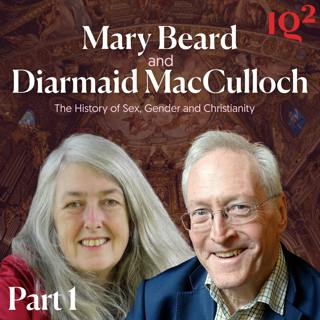
Sex, Gender and Christianity: A 3,000 Year History, with Diarmaid MacCulloch and Mary Beard (Part One)

Sex, Gender and Christianity: A 3,000 Year History, with Diarmaid MacCulloch and Mary Beard (Part One)

In the twenty-first century, Christianity or historically Christian societies have witnessed one of the most extraordinary revolutions in attitudes to sex and gender in human history, bringing liberat...

16 Mar 34min
Is the Russia–Ukraine War a Failure of Strategy? With Lawrence Freedman

Is the Russia–Ukraine War a Failure of Strategy? With Lawrence Freedman

In an age of grinding wars, nuclear brinkmanship, and political volatility, what does strategy really mean - and how do leaders make decisions when the world feels chaotic? In this episode, Lawrence ...

15 Mar 50min

What Is Really at Stake at the North Pole? With Neil Shea

What Is Really at Stake at the North Pole? With Neil Shea

What Do Wolves, Caribou, and Global Superpowers Have in Common? In this episode, Professor Helen Czerski speaks to journalist and author Neil Shea about the Arctic’s changing face and the struggles t...

13 Mar 48min
Sotheby's Talks | How Do Objects Achieve Iconic Status, with Grayson Perry and Xa Sturgis

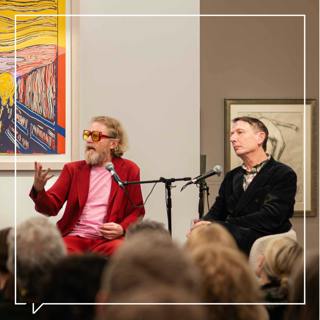
Sotheby's Talks | How Do Objects Achieve Iconic Status, with Grayson Perry and Xa Sturgis

On today’s episode, an episode from our friends at Sotheby's exploring the question: How do objects achieve iconic status? Taking inspiration from the book Icons: 100 Extraordinary Objects from Sotheb...

11 Mar 46min

Fiona Hill: The World in 2026 (Part Two)

Fiona Hill: The World in 2026 (Part Two)

Fiona Hill is one of the most authoritative voices on the forces reshaping global politics today. Born in County Durham, from 2017 to 2019 she was a senior adviser on European and Russian Affairs at t...

9 Mar 34min

Fiona Hill: The World in 2026 (Part One)

Fiona Hill: The World in 2026 (Part One)

Fiona Hill is one of the most authoritative voices on the forces reshaping global politics today. Born in County Durham, from 2017 to 2019 she was a senior adviser on European and Russian Affairs at t...

8 Mar 36min

How has American hubris shaped Iran? With Scott Anderson

How has American hubris shaped Iran? With Scott Anderson

Scott Anderson is a veteran foreign reporter and war correspondent, and a contributing writer for The New York Times. Over his career he has reported from Bosnia, Libya, Palestine and across the Middl...

6 Mar 33min
What Does It Take to Run Goldman Sachs During a Meltdown? With Former CEO Lloyd Blankfein

What Does It Take to Run Goldman Sachs During a Meltdown? With Former CEO Lloyd Blankfein

What does it take to lead one of the world’s most powerful banks when the global financial system is on the brink of collapse? As CEO for Goldman Sachs from 2006 to 2018, Lloyd Blankfein was at the h...

4 Mar 44min

Populært innen Politikk og nyheter

giver-og-gjengen-vg
aftenpodden
aftenpodden-usa
forklart
i-retten
stopp-verden
popradet
lydartikler-fra-aftenposten
rss-gukild-johaug
fotballpodden-2
det-store-bildet
dine-penger-pengeradet
nokon-ma-ga
rss-ness
hanna-de-heldige
aftenbla-bla
frokostshowet-pa-p5
rss-dannet-uten-piano
rss-penger-polser-og-politikk
e24-podden