Quantum-Classical Hybrids: Bridging the Gap to the Future

Quantum-Classical Hybrids: Bridging the Gap to the Future

This is your Quantum Computing 101 podcast.

Welcome to Quantum Computing 101. I'm Leo, your Learning Enhanced Operator, and today we're diving into the fascinating world of quantum-classical hybrid solutions.

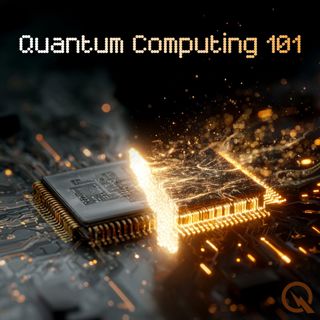
Just yesterday, I was at the University of Delaware, witnessing a groundbreaking demonstration of their latest quantum-classical hybrid model. Picture this: a sleek quantum processor, its superconducting qubits glistening under the lab's harsh fluorescent lights, working in perfect harmony with a bank of classical supercomputers. The air was thick with anticipation as researchers from across the globe gathered to see this fusion of quantum and classical computing in action.

The team, led by Dr. Isabella Safro, has developed a hybrid algorithm that leverages quantum parallelism for specific tasks while using classical computers for data preprocessing and optimization. It's like watching a virtuoso pianist and a master violinist perform a duet – each instrument shines in its own right, but together, they create something truly extraordinary.

As I stood there, watching the quantum-classical hybrid system tackle a complex molecular simulation problem, I couldn't help but draw parallels to the upcoming NVIDIA GTC conference. In just a few days, on March 20th, NVIDIA will host its first-ever Quantum Day. It's a testament to how far we've come in the quantum computing field that a tech giant like NVIDIA is now fully embracing this technology.

But let's get back to the hybrid solution I witnessed. The quantum part of the system was tasked with exploring a vast space of potential molecular configurations, utilizing its unique ability to exist in multiple states simultaneously. Meanwhile, the classical computers were crunching through terabytes of data, optimizing the search parameters and interpreting the results.

The result? A simulation of a complex protein folding process that would have taken months on a classical system alone was completed in a matter of hours. It was like watching evolution unfold before our eyes, each quantum-classical iteration bringing us closer to unraveling the mysteries of life itself.

This breakthrough couldn't have come at a better time. With the recent announcement of NVIDIA's Quantum Day, the spotlight is on quantum-classical hybrid solutions like never before. Industry leaders from companies like Quantinuum, IonQ, and D-Wave will be discussing the future of quantum computing and its integration with classical systems.

As I watched the University of Delaware team celebrate their success, I couldn't help but think about the broader implications. This quantum-classical hybrid approach isn't just about solving academic problems faster. It's about revolutionizing drug discovery, optimizing supply chains, and maybe even cracking the code of climate change.

The beauty of this hybrid approach is that it allows us to harness the power of quantum computing without waiting for fully fault-tolerant quantum systems. It's like having a taste of the future while still keeping our feet firmly planted in the present.

As we stand on the brink of this quantum revolution, I'm reminded of a quote by the great Richard Feynman: "Nature isn't classical, dammit, and if you want to make a simulation of nature, you'd better make it quantum mechanical." With quantum-classical hybrid solutions, we're finally starting to heed Feynman's advice, creating a bridge between the classical world we know and the quantum realm we're just beginning to understand.

Thank you for tuning in to Quantum Computing 101. If you have any questions or topics you'd like discussed on air, please email leo@inceptionpoint.ai. Don't forget to subscribe to Quantum Computing 101. This has been a Quiet Please Production. For more information, check out quietplease.ai.

For more http://www.quietplease.ai


Get the best deals https://amzn.to/3ODvOta

This content was created in partnership and with the help of Artificial Intelligence AI

Episoder(275)

Quantum-Classical Hybrids: How Genesis Mission Fuses AI, Supercomputing and Qubits to Double US Research Power

Quantum-Classical Hybrids: How Genesis Mission Fuses AI, Supercomputing and Qubits to Double US Research Power

This is your Quantum Computing 101 podcast.Imagine this: just days ago, on April 2nd, King's College London spotlighted Professor Roger Colbeck's breakthrough in device-independent quantum cryptograph...

3 Apr 3min

Quantum Leap Forward: How Classiq and Nvidia CUDA-Q Hybrid Computing Could Crack RSA Encryption by 2030

Quantum Leap Forward: How Classiq and Nvidia CUDA-Q Hybrid Computing Could Crack RSA Encryption by 2030

This is your Quantum Computing 101 podcast.Imagine this: just days ago, on March 31st, Classiq unveiled their integration with Nvidia's CUDA-Q at GTC, a hybrid quantum-classical powerhouse that lets d...

1 Apr 3min

Quantum-Classical Hybrid Computing: The 303-Atom Protein That Changed Everything

Quantum-Classical Hybrid Computing: The 303-Atom Protein That Changed Everything

This is your Quantum Computing 101 podcast.# Quantum Computing 101: The Hybrid RevolutionGood afternoon, and welcome back to Quantum Computing 101. I'm Leo, and today we're talking about something tha...

30 Mar 3min

Quantum Hybrid Revolution: How IBM and NVIDIA Merged Qubits with GPUs to Crack Impossible Chemistry Problems in 2026

Quantum Hybrid Revolution: How IBM and NVIDIA Merged Qubits with GPUs to Crack Impossible Chemistry Problems in 2026

This is your Quantum Computing 101 podcast.Imagine this: just days ago, on March 26, 2026, IBM's quantum team at Yorktown Heights stunned the world by simulating the magnetic crystal KCuF3 on their He...

29 Mar 3min

Hybrid Quantum Revolution: How NVIDIA and ORCA Fused Light Speed Qubits With GPU Power at GTC 2026

Hybrid Quantum Revolution: How NVIDIA and ORCA Fused Light Speed Qubits With GPU Power at GTC 2026

This is your Quantum Computing 101 podcast.Imagine this: just days ago at NVIDIA's GTC 2026, ORCA Computing's photonic quantum systems fused with NVIDIA's cuTensorNet software right there at Imperial ...

27 Mar 4min

QIAPO Hybrid Revolution: How German Quantum-Classical Fusion Solves Real Logistics and Chip Manufacturing Nightmares

QIAPO Hybrid Revolution: How German Quantum-Classical Fusion Solves Real Logistics and Chip Manufacturing Nightmares

This is your Quantum Computing 101 podcast.Imagine you're deep in a Saarland University lab, the hum of cryostats vibrating like a cosmic heartbeat, lasers slicing through the chill as neutral atoms d...

25 Mar 3min

Quantum Meets GPU: How Hybrid Computing Just Cracked the Drug Discovery Code at GTC 2026

Quantum Meets GPU: How Hybrid Computing Just Cracked the Drug Discovery Code at GTC 2026

This is your Quantum Computing 101 podcast.Imagine this: just days ago, at NVIDIA's GTC 2026 in San Jose, UCL researchers, partnering with NVIDIA, Technical University of Munich, LMU, and IQM Quantum ...

23 Mar 3min

Classiq CUDA-Q Fusion: How 31 Qubits Slashed Options Pricing From 67 Minutes to 2.5 on NVIDIA GPUs

Classiq CUDA-Q Fusion: How 31 Qubits Slashed Options Pricing From 67 Minutes to 2.5 on NVIDIA GPUs

This is your Quantum Computing 101 podcast.Imagine this: just days ago, on March 16th, Classiq unveiled their game-changing integration with NVIDIA's CUDA-Q, slashing a 31-qubit financial options-pric...

22 Mar 4min

Populært innen Politikk og nyheter

giver-og-gjengen-vg
aftenpodden
aftenpodden-usa
lydartikler-fra-aftenposten
popradet
forklart
stopp-verden
fotballpodden-2
rss-gukild-johaug
dine-penger-pengeradet
det-store-bildet
rss-ness
nokon-ma-ga
hanna-de-heldige
aftenbla-bla
rss-penger-polser-og-politikk
rss-dannet-uten-piano
rss-utenrikskomiteen-med-bogen-og-grasvik
e24-podden
ta-dokumentar