Quantum-Classical Fusion: Hybrid Computing's Electrifying Rise

Quantum-Classical Fusion: Hybrid Computing's Electrifying Rise

This is your Quantum Computing 101 podcast.

Lightning rarely strikes the same place twice, but in the realm of quantum computing, each week feels like a thunderstorm of discovery. Just five days ago, IBM flung open the doors to their new IBM Quantum Data Center and, with dramatic flourish, laid out their vision for the world’s first large-scale, fault-tolerant quantum computer. I’m Leo—Learning Enhanced Operator—your resident quantum enthusiast. Today, I’m electrified not only by these major headlines, but by a particular development: the rise of today’s most intriguing quantum-classical hybrid solutions and how they’re fusing the best of both computational worlds.

Let’s dive right in: If classical computing is a master chess player—logical, deterministic, brilliant at brute force—quantum computing is the master illusionist, performing feats with uncertainty, entanglement, and superposition. Imagine, then, the power of both minds working in tandem. That’s the hybrid approach sweeping through labs and startups as we speak.

Yesterday at the IBM Quantum Data Center, I watched as physicist Jerry Chow and the Starling engineering team demonstrated a live optimization problem—something unthinkable just a few years ago. Their new breed of hybrid solution harnesses IBM’s Loon quantum chip, a processor that now leverages both c-couplers for far-reaching qubit connections and a local processing unit (LPU) for direct, rapid classical-quantum handoffs. Picture two orchestras, one classical and one quantum, playing side by side, each lending its unique timbre to a single, captivating composition.

How does this hybrid actually work? Take molecular simulation: A classical computer first crunches the heavy, deterministic pre-processing—sorting data, modeling initial conditions, and keeping track of boundaries. Then, the baton is passed; quantum processors enter, deploying qLDPC error-correcting codes to explore a multitude of molecular states simultaneously. As results stream back, classical post-processing filters, validates, and visualizes. Together, the partnership achieves an accuracy and speed that neither paradigm could touch alone.

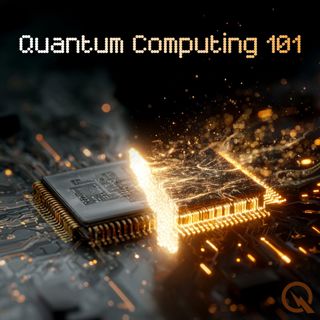
Let me paint you a scene: The quantum lab thrums with a low hum—the cooling systems breathe icy air onto a five-ton dilution refrigerator. You see the Loon chip, shimmering beneath a tangle of gold wires. Cryogenic engineers in midnight-blue coats gesture animatedly at their screens, watching as molecular simulation data flows—first through terabytes of classical RAM, then into qubits flickering in and out of entanglement. The solution, a new molecule for battery storage, is seconds away. The air in the room feels charged, as if the uncertainty principle itself is dancing on your skin.

Why hybrids, and why now? IBM isn’t alone. Microsoft, Google, and Rigetti have all outlined similar roadmaps—the integration of quantum with classical infrastructure is their bridge to commercial quantum advantage. It’s not just about raw speed. Hybrid solutions reduce error rates, maximize scarce quantum resources, and allow us to solve real-world industrial problems long before we’ve reached the holy grail of fully fault-tolerant quantum computers.

Last week, Google’s Majorana 1 processor took a bow. This hardware, while designed for ultimately scaling to a million qubits, is already being used in hybrid setups to solve complex logistics challenges—think global supply chains, energy grid optimization, and even healthcare portfolio management. Each company brings its own dramatic twist, but the structure is the same: Classical workflows and quantum algorithms interlaced, each compensating for the other’s weaknesses, amplifying their respective strengths.

If you reflect on this moment—from the crystal-clear vision mapped out on IBM’s Innovation Roadmap to the feverish collaboration seen at data centers around the world—there’s a hint of something bigger. In the quantum world, superposition lets a qubit be both here and there, zero and one, possibility and reality. Today’s hybrid solutions mirror that principle: bridging two worlds, creating a synergy that lets us leap over boundaries that once felt immovable.

As I close today’s episode, consider this—each time you hear of a new hybrid quantum-classical breakthrough, you’re witnessing a preview of the future itself: one where humankind learns not just to compute harder, but to compute smarter, turning paradox into progress at the very edge of what’s possible.

Thank you for joining me, Leo, on Quantum Computing 101. If you have questions, or a topic you want unraveled right here on air, just send me an email at leo@inceptionpoint.ai. Don’t forget to subscribe to Quantum Computing 101—this has been a Quiet Please Production. For more, check out quietplease.ai. Until next time, may your qubits stay entangled and your algorithms ever elegant.

For more http://www.quietplease.ai


Get the best deals https://amzn.to/3ODvOta

This content was created in partnership and with the help of Artificial Intelligence AI

Episoder(276)

Quantum Meets AI: How PhysVEC Hybrid Systems Are Cracking Crypto and Fixing the Qubit Noise Problem

Quantum Meets AI: How PhysVEC Hybrid Systems Are Cracking Crypto and Fixing the Qubit Noise Problem

This is your Quantum Computing 101 podcast.Imagine this: just days ago, Google Quantum AI unleashed a bombshell whitepaper, revealing they can shatter 256-bit elliptic curve cryptography—the backbone ...

5 Apr 3min

Quantum-Classical Hybrids: How Genesis Mission Fuses AI, Supercomputing and Qubits to Double US Research Power

Quantum-Classical Hybrids: How Genesis Mission Fuses AI, Supercomputing and Qubits to Double US Research Power

This is your Quantum Computing 101 podcast.Imagine this: just days ago, on April 2nd, King's College London spotlighted Professor Roger Colbeck's breakthrough in device-independent quantum cryptograph...

3 Apr 3min

Quantum Leap Forward: How Classiq and Nvidia CUDA-Q Hybrid Computing Could Crack RSA Encryption by 2030

Quantum Leap Forward: How Classiq and Nvidia CUDA-Q Hybrid Computing Could Crack RSA Encryption by 2030

This is your Quantum Computing 101 podcast.Imagine this: just days ago, on March 31st, Classiq unveiled their integration with Nvidia's CUDA-Q at GTC, a hybrid quantum-classical powerhouse that lets d...

1 Apr 3min

Quantum-Classical Hybrid Computing: The 303-Atom Protein That Changed Everything

Quantum-Classical Hybrid Computing: The 303-Atom Protein That Changed Everything

This is your Quantum Computing 101 podcast.# Quantum Computing 101: The Hybrid RevolutionGood afternoon, and welcome back to Quantum Computing 101. I'm Leo, and today we're talking about something tha...

30 Mar 3min

Quantum Hybrid Revolution: How IBM and NVIDIA Merged Qubits with GPUs to Crack Impossible Chemistry Problems in 2026

Quantum Hybrid Revolution: How IBM and NVIDIA Merged Qubits with GPUs to Crack Impossible Chemistry Problems in 2026

This is your Quantum Computing 101 podcast.Imagine this: just days ago, on March 26, 2026, IBM's quantum team at Yorktown Heights stunned the world by simulating the magnetic crystal KCuF3 on their He...

29 Mar 3min

Hybrid Quantum Revolution: How NVIDIA and ORCA Fused Light Speed Qubits With GPU Power at GTC 2026

Hybrid Quantum Revolution: How NVIDIA and ORCA Fused Light Speed Qubits With GPU Power at GTC 2026

This is your Quantum Computing 101 podcast.Imagine this: just days ago at NVIDIA's GTC 2026, ORCA Computing's photonic quantum systems fused with NVIDIA's cuTensorNet software right there at Imperial ...

27 Mar 4min

QIAPO Hybrid Revolution: How German Quantum-Classical Fusion Solves Real Logistics and Chip Manufacturing Nightmares

QIAPO Hybrid Revolution: How German Quantum-Classical Fusion Solves Real Logistics and Chip Manufacturing Nightmares

This is your Quantum Computing 101 podcast.Imagine you're deep in a Saarland University lab, the hum of cryostats vibrating like a cosmic heartbeat, lasers slicing through the chill as neutral atoms d...

25 Mar 3min

Quantum Meets GPU: How Hybrid Computing Just Cracked the Drug Discovery Code at GTC 2026

Quantum Meets GPU: How Hybrid Computing Just Cracked the Drug Discovery Code at GTC 2026

This is your Quantum Computing 101 podcast.Imagine this: just days ago, at NVIDIA's GTC 2026 in San Jose, UCL researchers, partnering with NVIDIA, Technical University of Munich, LMU, and IQM Quantum ...

23 Mar 3min

Populært innen Politikk og nyheter

giver-og-gjengen-vg
aftenpodden
aftenpodden-usa
popradet
forklart
lydartikler-fra-aftenposten
stopp-verden
dine-penger-pengeradet
rss-gukild-johaug
det-store-bildet
rss-ness
nokon-ma-ga
hanna-de-heldige
fotballpodden-2
aftenbla-bla
rss-penger-polser-og-politikk
rss-dannet-uten-piano
rss-utenrikskomiteen-med-bogen-og-grasvik
e24-podden
bt-dokumentar-2