Quantum Leap: NVIDIA, Quantum Machines, and Diraq Fuse Classical and Quantum Computing in Real-Time

Quantum Leap: NVIDIA, Quantum Machines, and Diraq Fuse Classical and Quantum Computing in Real-Time

This is your Quantum Computing 101 podcast.

I’m Leo, your Learning Enhanced Operator, and I’m sitting here in my lab at Inception Point, the hum of servers blending with the faint, electric scent of liquid helium still lingering from last night’s run. You can feel history being made lately—like the world is holding its breath at the edge of a quantum precipice. Just last week, the team at NVIDIA, in partnership with Quantum Machines and the Diraq laboratory, hit a milestone that’s got everyone talking: real-time, ultra-low-latency integration between classical supercomputers and a quantum processor. This isn’t just about big numbers—it’s about bringing together the best of both worlds, the classical and the quantum, in a way that actually matters for how we’ll solve tomorrow’s problems.

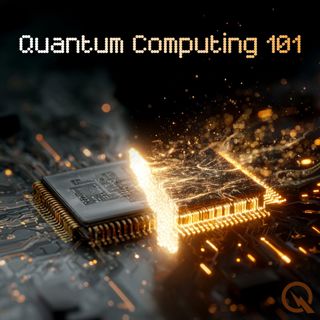
Let me set the scene: imagine you’re running an experiment where a quantum chip—let’s say a silicon spin qubit array from Diraq, right here in sunny Sydney—is spinning out entangled states at lightning speed. But quantum systems, as precise as they are, drift. Noise creeps in. Decoherence kicks the table. Normally, classical feedback—calibrations, error correction, adaptive measurements—would happen after the experiment, or at best, with noticeable lag. But now? The NVIDIA DGX Quantum system couples a Grace Hopper superchip to Quantum Machines’ OPX1000 controller—and get this—the round-trip latency between the classical and quantum sides is under four microseconds. That’s shorter than the blink of a hummingbird’s wing, and it means classical AI, decoding, and even machine learning can now dance in real-time with quantum pulses.

What does this look like in the lab? Picture a feedback loop: a quantum circuit executes, the output is measured, and before the qubits even have a chance to forget their state, the results are whisked away to the GPU. Machine learning models retrained on-the-fly, calibrations updated before the next pulse fires, and parameters tweaked dynamically to keep the experiment in tune. Just last week, the Diraq team demoed four experiments in as many days—correlated measurements, closed-loop optimization of Rabi oscillations, and heralded initialization, all thanks to this hybrid sync.

This is where the analogy hits me: it’s like an orchestra where the conductor—the classical supercomputer—not only hears every note instantly, but can change the tempo, key, and dynamics on the fly. If one violin—or qubit—goes out of tune, the conductor doesn’t wait for the movement to end; they adjust mid-note. That’s the edge hybrid systems are giving us. We’re not just bridging two worlds; we’re fusing them into a single, adaptive instrument.

Now, let’s talk software. The OPX1000, with its deterministic pulse control, is the quantum rhythm section: it’s fast, it’s reliable, and it’s programmable. Dean Poulos from Quantum Machines recently walked through a real case where a three-qubit GHZ state was optimized using reinforcement learning—live, on stage. The software framework here is growing too: QUA parameters and observation streams feed directly into GPU and CPU algorithms. CUDA-Q integration is on the horizon, and suddenly, we’re looking at libraries and workflows that can be reused across experiments. That’s not just a technical win; it’s a cultural one—we’re seeing classical programmers and quantum physicists speak the same language.

But let’s step back from the lab bench for a second. Last

For more http://www.quietplease.ai


Get the best deals https://amzn.to/3ODvOta

This content was created in partnership and with the help of Artificial Intelligence AI

Episoder(275)

Quantum-Classical Hybrids: How Genesis Mission Fuses AI, Supercomputing and Qubits to Double US Research Power

Quantum-Classical Hybrids: How Genesis Mission Fuses AI, Supercomputing and Qubits to Double US Research Power

This is your Quantum Computing 101 podcast.Imagine this: just days ago, on April 2nd, King's College London spotlighted Professor Roger Colbeck's breakthrough in device-independent quantum cryptograph...

3 Apr 3min

Quantum Leap Forward: How Classiq and Nvidia CUDA-Q Hybrid Computing Could Crack RSA Encryption by 2030

Quantum Leap Forward: How Classiq and Nvidia CUDA-Q Hybrid Computing Could Crack RSA Encryption by 2030

This is your Quantum Computing 101 podcast.Imagine this: just days ago, on March 31st, Classiq unveiled their integration with Nvidia's CUDA-Q at GTC, a hybrid quantum-classical powerhouse that lets d...

1 Apr 3min

Quantum-Classical Hybrid Computing: The 303-Atom Protein That Changed Everything

Quantum-Classical Hybrid Computing: The 303-Atom Protein That Changed Everything

This is your Quantum Computing 101 podcast.# Quantum Computing 101: The Hybrid RevolutionGood afternoon, and welcome back to Quantum Computing 101. I'm Leo, and today we're talking about something tha...

30 Mar 3min

Quantum Hybrid Revolution: How IBM and NVIDIA Merged Qubits with GPUs to Crack Impossible Chemistry Problems in 2026

Quantum Hybrid Revolution: How IBM and NVIDIA Merged Qubits with GPUs to Crack Impossible Chemistry Problems in 2026

This is your Quantum Computing 101 podcast.Imagine this: just days ago, on March 26, 2026, IBM's quantum team at Yorktown Heights stunned the world by simulating the magnetic crystal KCuF3 on their He...

29 Mar 3min

Hybrid Quantum Revolution: How NVIDIA and ORCA Fused Light Speed Qubits With GPU Power at GTC 2026

Hybrid Quantum Revolution: How NVIDIA and ORCA Fused Light Speed Qubits With GPU Power at GTC 2026

This is your Quantum Computing 101 podcast.Imagine this: just days ago at NVIDIA's GTC 2026, ORCA Computing's photonic quantum systems fused with NVIDIA's cuTensorNet software right there at Imperial ...

27 Mar 4min

QIAPO Hybrid Revolution: How German Quantum-Classical Fusion Solves Real Logistics and Chip Manufacturing Nightmares

QIAPO Hybrid Revolution: How German Quantum-Classical Fusion Solves Real Logistics and Chip Manufacturing Nightmares

This is your Quantum Computing 101 podcast.Imagine you're deep in a Saarland University lab, the hum of cryostats vibrating like a cosmic heartbeat, lasers slicing through the chill as neutral atoms d...

25 Mar 3min

Quantum Meets GPU: How Hybrid Computing Just Cracked the Drug Discovery Code at GTC 2026

Quantum Meets GPU: How Hybrid Computing Just Cracked the Drug Discovery Code at GTC 2026

This is your Quantum Computing 101 podcast.Imagine this: just days ago, at NVIDIA's GTC 2026 in San Jose, UCL researchers, partnering with NVIDIA, Technical University of Munich, LMU, and IQM Quantum ...

23 Mar 3min

Classiq CUDA-Q Fusion: How 31 Qubits Slashed Options Pricing From 67 Minutes to 2.5 on NVIDIA GPUs

Classiq CUDA-Q Fusion: How 31 Qubits Slashed Options Pricing From 67 Minutes to 2.5 on NVIDIA GPUs

This is your Quantum Computing 101 podcast.Imagine this: just days ago, on March 16th, Classiq unveiled their game-changing integration with NVIDIA's CUDA-Q, slashing a 31-qubit financial options-pric...

22 Mar 4min

Populært innen Politikk og nyheter

giver-og-gjengen-vg
aftenpodden
aftenpodden-usa
lydartikler-fra-aftenposten
popradet
forklart
stopp-verden
fotballpodden-2
rss-gukild-johaug
dine-penger-pengeradet
det-store-bildet
rss-ness
nokon-ma-ga
hanna-de-heldige
aftenbla-bla
rss-penger-polser-og-politikk
rss-dannet-uten-piano
rss-utenrikskomiteen-med-bogen-og-grasvik
e24-podden
ta-dokumentar