

Water, climate and adaptation: a conversation with Dr Aditi Mukherji
Devpolicy Talks1 Nov 2025

Water, climate and adaptation: a conversation with Dr Aditi Mukherji

Dr Aditi Mukherji, Principal Scientist at the International Livestock Research Institute and coordinating lead author of the Intergovernmental Panel on Climate Change's water chapter, discusses her career spanning groundwater management, climate adaptation and the urgent challenge of the 1.5-degree threshold. From her groundbreaking work challenging conventional wisdom about groundwater in eastern India — which led to policy changes benefiting 200,000 farmers — to rehabilitating dying springs in the Himalayas, Mukherji reveals how climate change is transforming every component of the water cycle. She explains why adaptation measures are losing effectiveness as temperatures rise, what the IPCC's water assessment tells us about climate impacts on agriculture, and how pastoral communities in the Global South require different approaches to livestock and climate policy.

The conversation begins with Mukherji's entry into water and climate research, shaped by her childhood experiences in the climate-vulnerable Sundarbans region of India and her family's involvement in agriculture. After completing her master's degree, she joined the International Water Management Institute's IWMI-Tata program, which set her on a path to Cambridge University as a Gates Cambridge scholar.

Mukherji's early research challenged prevailing assumptions about groundwater scarcity in eastern India. Working in West Bengal, a region receiving three to four times more rainfall than water-scarce areas like Punjab, she discovered that the fundamental problem wasn't water scarcity but restrictive policies. Farmers needed permission from distant government departments to connect to the electricity grid for irrigation, leading to bureaucratic delays and corruption. Her research demonstrated that with metered electricity pricing and proper incentives, farmers could sustainably use groundwater while transitioning away from diesel pumps. This work culminated in a change to groundwater law following a state government transition, resulting in electricity connections for approximately 200,000 farmers.

Her subsequent work in the Himalayas addressed a different water crisis: the drying of mountain springs that serve as the sole water source for upland communities. Despite the Himalayas being the water towers of Asia, settlements in the middle elevations — too far from glaciers and too high above river valleys — faced acute scarcity. Mukherji's research revealed that springs were drying primarily due to infrastructure development rather than climate change directly. Road construction and hydropower dam building disrupted the underground flow paths between recharge and discharge points. Using a combination of hydrogeological science, isotope tracing and indigenous knowledge, her team identified recharge areas and implemented rehabilitation programs. This work has influenced major government spring rehabilitation initiatives across India, though she notes that without better planning of infrastructure projects, solutions remain piecemeal.

As coordinating lead author of the IPCC's water chapter, Mukherji synthesises five critical findings. First, every component of the water cycle — rainfall, permafrost, glaciers, groundwater — has been transformed by anthropogenic climate change, with largely negative impacts. Second, because water is used across all economic sectors, climate impacts are felt everywhere, particularly in agriculture, the largest consumptive water user. Third, these impacts disproportionately affect vulnerable populations, especially in the Global South where agriculture has become "the parking lot for the poor". Fourth, while water-related adaptation is happening extensively worldwide, its effectiveness varies significantly due to limitations in finance and technology. Fifth, water must be recognised in mitigation discussions, as greenhouse gas reduction strategies — such as bioenergy crops — have substantial water implications.

The conversation turns to the declining effectiveness of adaptation as temperatures rise. Mukherji emphasises that 1.5 degrees above pre-industrial levels is not merely aspirational but represents a critical threshold, particularly for Pacific island nations where it means the difference between staying afloat and sinking. She provides a stark example from India's 2022 heat wave, which struck in early March when wheat was flowering — far earlier than historical patterns. Temperatures of 47-48 degrees during this critical growth stage overwhelmed even heat-tolerant seed varieties and irrigated systems. Breeders struggle to develop varieties that can withstand such extreme heat during flowering, illustrating the physical limits of adaptation.

Reflecting on Australia's potential contributions, Mukherji highlights three areas: expanded research collaboration leveraging Australia's extensive scientific networks (universities, CSIRO, ACIAR); increased funding support for less-resourced regions; and sharing knowledge about low-emission agricultural pathways to help developing countries avoid mistakes made during earlier Green Revolution eras. She notes Australia's own experience managing water scarcity, while acknowledging imperfections, offers valuable lessons.

Mukherji concludes by explaining her recent transition to the International Livestock Research Institute, where she leads the Livestock and Climate Solutions hub. She argues that livestock discourse must differ between the Global North and Global South. For pastoral populations in Africa, livestock is not just livelihood but culture and a crucial protein source. Her role focuses on ensuring Global South pastoral communities' voices are recognised in climate discussions, avoiding a one-size-fits-all narrative about livestock emissions while addressing the severe droughts these communities face — droughts bearing distinct climate change fingerprints.

Devpolicy Talks is the podcast of the Australian National University's Development Policy Centre.

Read and subscribe to our daily blogs at devpolicy.org.

Learn more about our research and join our public events at devpolicy.anu.edu.au.

Follow us on Twitter, Facebook, LinkedIn and Instagram for latest updates on our blogs, research and events.

You can send us feedback, and ideas for episodes too, to devpolicy@anu.edu.au.

Episoder(348)

Navigating China and the Global South: a conversation with Eric Olander

Navigating China and the Global South: a conversation with Eric Olander

Eric Olander, Editor-in-Chief of the China Global South Project, offers a nuanced perspective on China’s engagement with developing countries across Africa, Southeast Asia, Latin America and the Pacif...

15 Des 20251h 34min

Pacific democracy: global indices and lived realities

Pacific democracy: global indices and lived realities

This episode explores the state of democracy in the Pacific, focusing on a joint report by International IDEA and the Australia National University's Department of Pacific Affairs (DPA). The report, r...

6 Des 20251h 18min

Global public goods and the architecture of cooperation: a conversation with Inge Kaul

Global public goods and the architecture of cooperation: a conversation with Inge Kaul

Inge Kaul, pioneering development economist and architect of the global public goods framework, discusses her groundbreaking work on international cooperation and development financing in this 2015 in...

14 Nov 20252h 12min
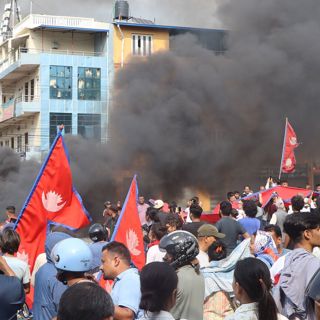
Youth uprisings: understanding the protests in Indonesia and Nepal

Youth uprisings: understanding the protests in Indonesia and Nepal

In August and September 2024, thousands of young people took to the streets across Southeast and South Asia in unprecedented displays of protest. This episode examines the youth-led demonstrations tha...

17 Okt 202546min

From Vanuatu's challenges to Melanesian cooperation: a conversation with Gregoire Nimbtik

From Vanuatu's challenges to Melanesian cooperation: a conversation with Gregoire Nimbtik

The conversation begins with Nimbtik's background as head of Vanuatu's Prime Minister's Department and Deputy Director General of the Melanesian Spearhead Group Secretariat. He provides context for un...

10 Okt 202535min

From serendipity to global impact: a conversation with Glenn Denning

From serendipity to global impact: a conversation with Glenn Denning

Glenn Denning, Professor of Practice at Columbia University's School of International and Public Affairs and founding Director of the Master of Public Administration in Development Practice program, r...

2 Sep 20251h 6min

The Pacific Engagement Visa: what you need to know about the 2025 ballot

The Pacific Engagement Visa: what you need to know about the 2025 ballot

The Pacific Engagement Visa offers a life-changing opportunity for up to 3,000 Pacific Islanders and Timorese citizens annually to gain permanent residency in Australia. In this episode, Development P...

13 Aug 202529min

Populært innen Politikk og nyheter

giver-og-gjengen-vg
aftenpodden
aftenpodden-usa
forklart
stopp-verden
i-retten
popradet
lydartikler-fra-aftenposten
rss-gukild-johaug
fotballpodden-2
det-store-bildet
dine-penger-pengeradet
nokon-ma-ga
rss-ness
hanna-de-heldige
aftenbla-bla
frokostshowet-pa-p5
rss-dannet-uten-piano
e24-podden
rss-penger-polser-og-politikk